

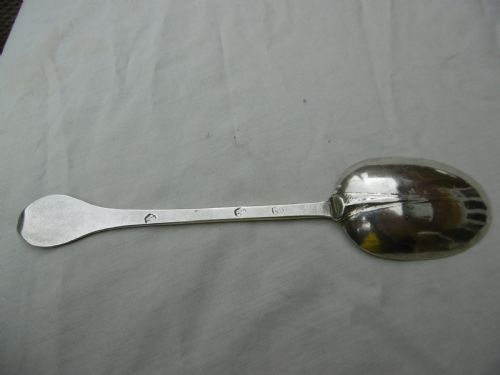


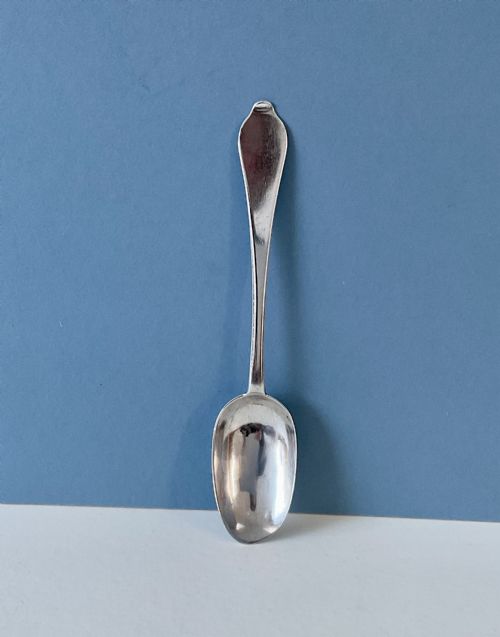


Silver Dognose Flatware
Silver dognose flatware comprises early English spoons and table forks with characteristic rounded, notched terminals dating from the turn of the eighteenth century.
Silver Dognose Flatware
Silver dognose flatware represents an important transition in British dining history, bridging the heavier trifid style and the later Hanoverian pattern. When you search for silver dognose flatware, you encounter early dining implements spanning the late seventeenth century through the reign of Queen Anne. The pieces listed on this page include tablespoons, table forks and rattail spoons fashioned in sterling and Britannia silver.
The form derives its colloquial name from the notched, upturned terminal resembling a dog's nose, appearing alongside provincial and regional British hallmarks. Scottish, West Country and provincial English centres produced notable variations during this period, alongside metropolitan London makers. These survivors from the reigns of William III and Queen Anne offer a direct tactile link to the domestic interiors of the era.
How they were made
Silversmiths of this era worked primarily in Britannia silver and standard sterling silver, hammering ingots down into flat sheet metal before cutting the basic spoon or fork silhouette. The distinctive rattail spine was forged directly onto the reverse of the bowl to strengthen the joint where the stem met.
Makers added decorative elements like lace-back engraving and armorial crests by hand using small chisels and gravers. Provincial smiths relied on local assay offices or struck their own maker marks directly into the metal while shaping the distinct canine-nosed terminal.
Silver Dognose Flatware Retail Price Guide 2026
Typical asking prices for silver dognose flatware among the pieces listed under this phrase on Sellingantiques today, from the lower quarter to the upper quarter. They describe what is for sale here now, not the wider market.
The listings span the late seventeenth century through the early eighteenth century, encompassing both William III and Queen Anne periods.
What varies in quality
Quality in silver dognose flatware rests upon the crispness of the rattail attachment, the legibility of the maker and assay marks, and the survival of original bowl metal without excessive thinning from centuries of polishing. Superior examples retain their original terminal shape without distortion and display sharp, deep hallmarks near the top of the stem.
Isaac Davenport·John Smith·John Pike·Richard Rae·Lawrence Coles·J Ladyman
The Silver Dognose Flatware Glossary
- Dognose
- A flatware pattern featuring an upturned rounded terminal with a central notch, popular from the late seventeenth century to the early eighteenth century. This design directly preceded the Hanoverian pattern.
- Rattail
- A tapering dorsal spine extending down the back of a spoon bowl from the stem. It provides structural reinforcement to the junction.
- Britannia Silver
- A higher standard of silver alloy introduced by parliamentary act in England to discourage the melting of coinage for plate. It contains a higher purity proportion of pure silver than standard sterling.
- Lace-back
- A decorative engraved foliate or scroll pattern on the reverse of a spoon bowl. This ornamentation characterises specific provincial types from the period.
- Table Fork
- A dining implement with prongs used for piercing food, appearing in early silver forms alongside spoons during the late seventeenth century. These early forks typically feature two or three parallel tines.
Silver Dognose Flatware: Frequently Asked Questions
What is silver dognose flatware?
Silver dognose flatware refers to antique eating utensils made during the late seventeenth and early eighteenth centuries, featuring a distinctive rounded and notched terminal.
These pieces bridge the transition between the earlier trifid style and the later Hanoverian pattern.
What is Britannia silver?
Britannia silver is a higher purity alloy containing more pure silver than standard sterling, introduced by law in England.
Pieces made from this metal often display a distinctive figural hallmark representing Britannia alongside the maker's mark.
Were forks used in this period?
Silver table forks began to appear alongside spoons during the late seventeenth century as dining habits shifted.
These early forms typically feature multi-tined designs with matching dognose terminals and armorial crests.