





Small Walnut Commode
A small walnut commode offers elegant low storage in rich timber, combining compact proportions with classic decorative design.
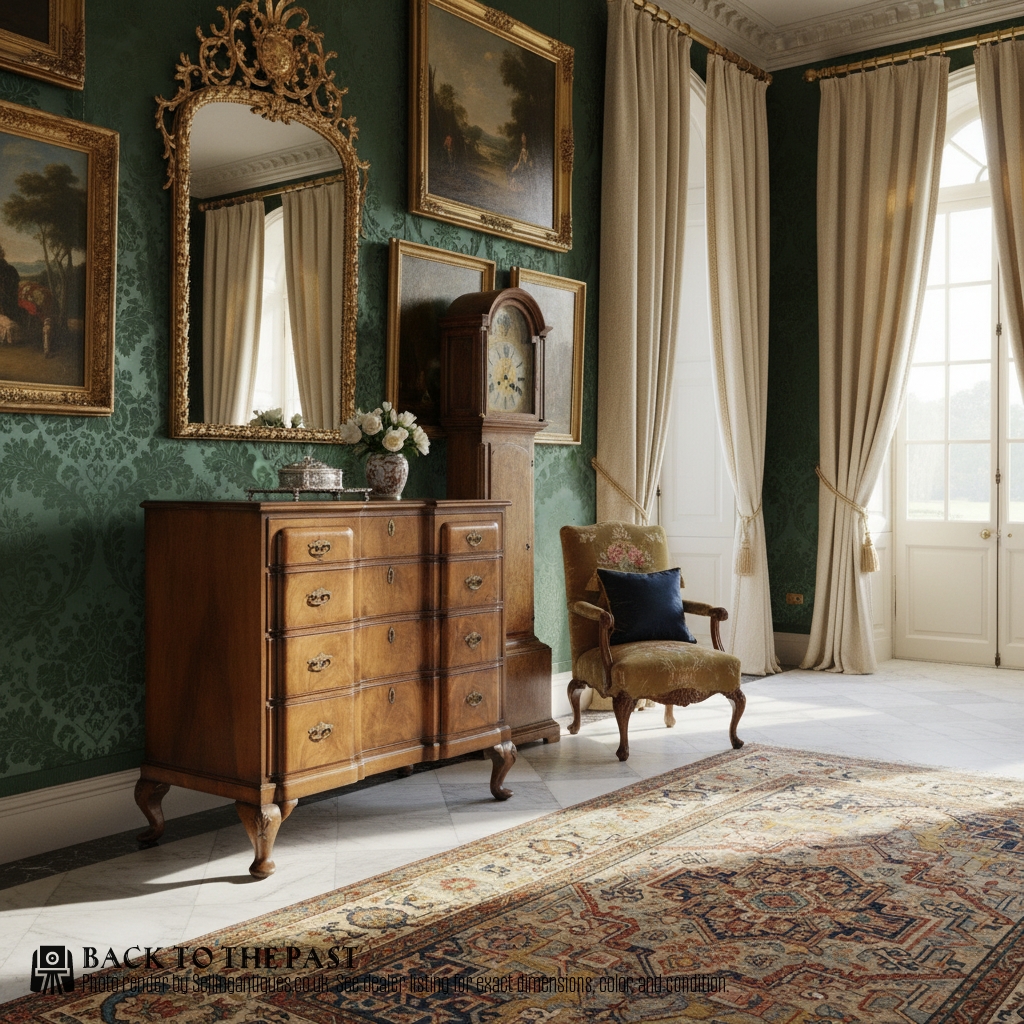
Small Walnut Commode
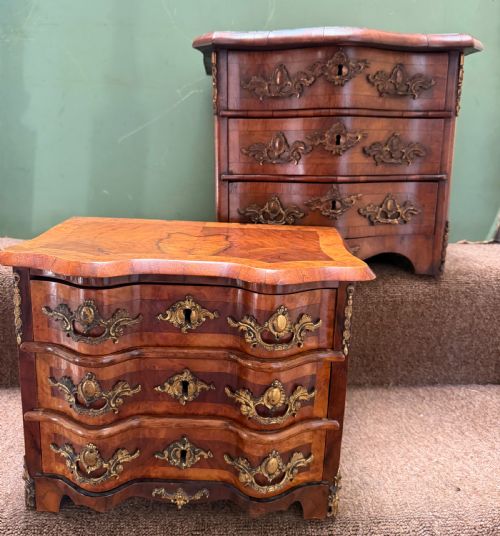
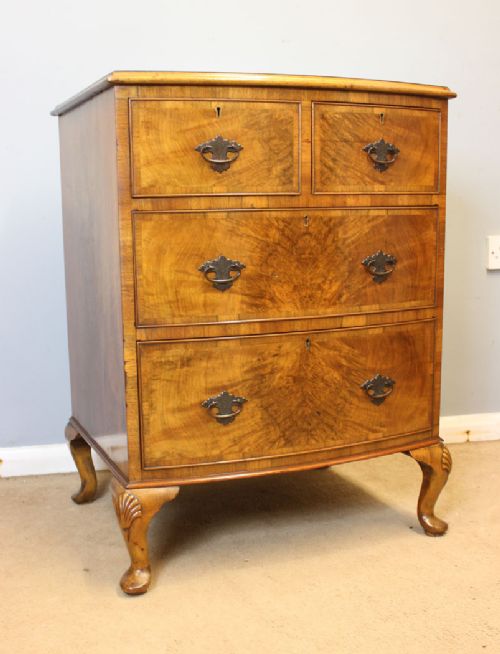
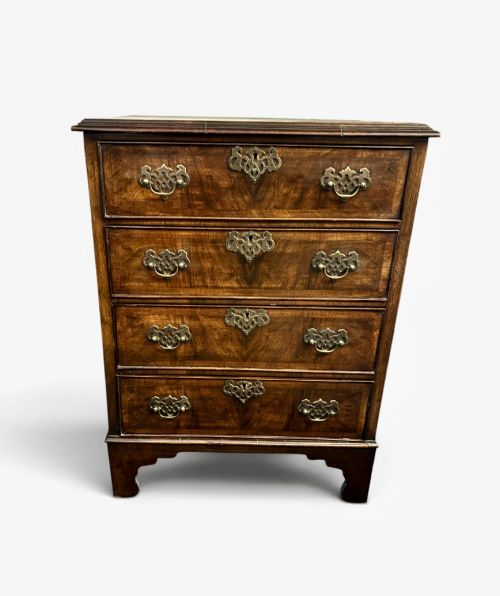
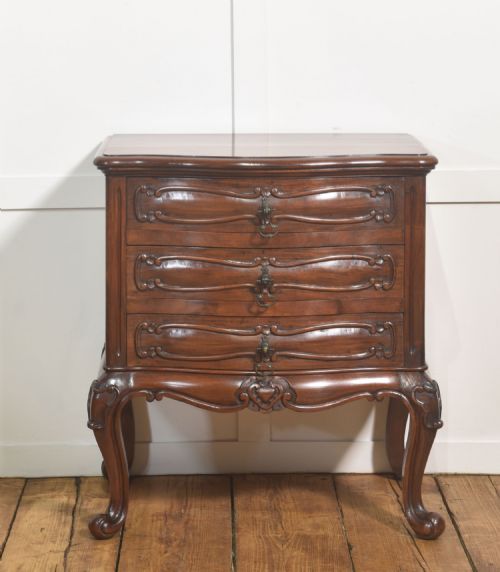
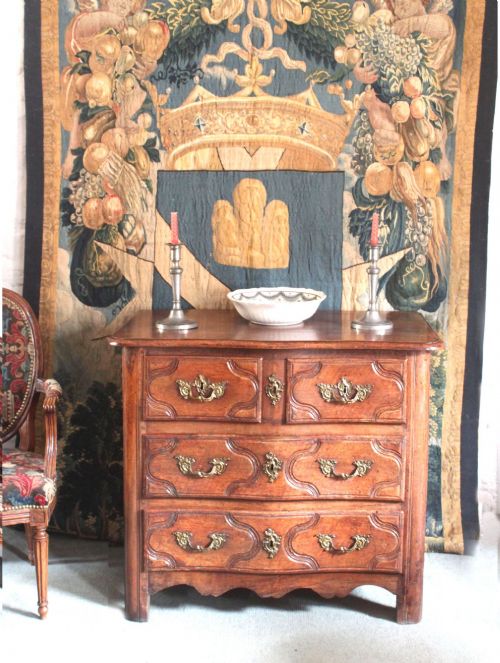
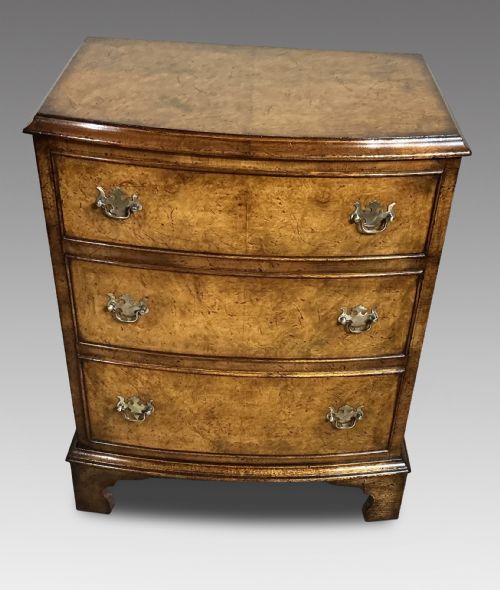
A small walnut commode is a compact set of drawers or a bedside chest designed for intimate spaces, originating primarily from French, Italian and British workshops. These pieces span the eighteenth, nineteenth and early twentieth centuries, capturing periods from Louis XVI and Directoire to Queen Anne, Georgian and Louis XV revivals.
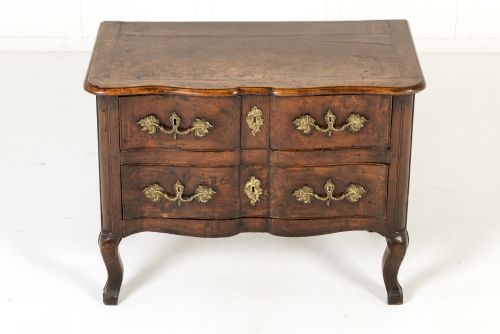
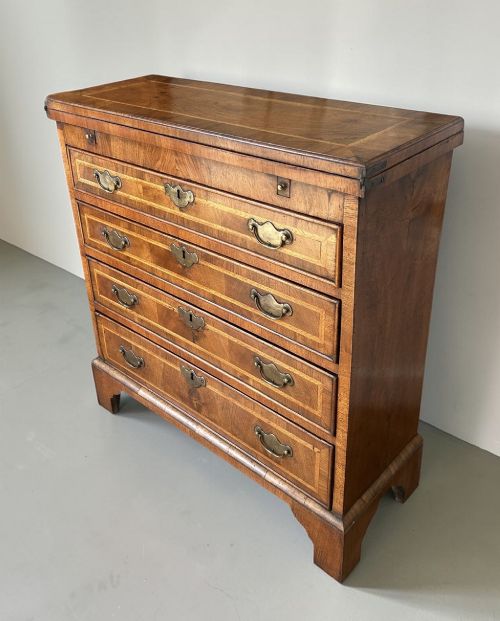
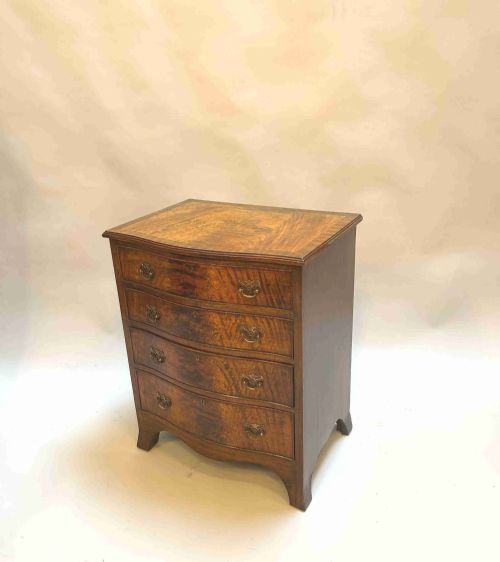
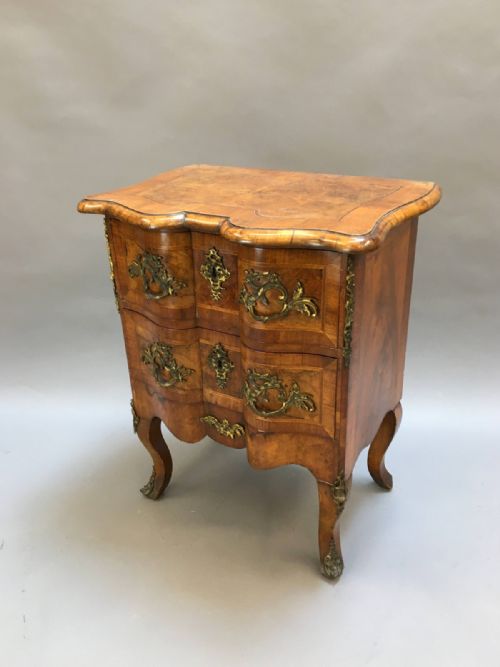
Buyers encounter variations featuring serpentine fronts, demilune shapes, or rectilinear forms with brass hardware. Many examples incorporate figured walnut, burr walnut veneers, or contrasting inlaid marquetry, while specific continental iterations feature marble tops.
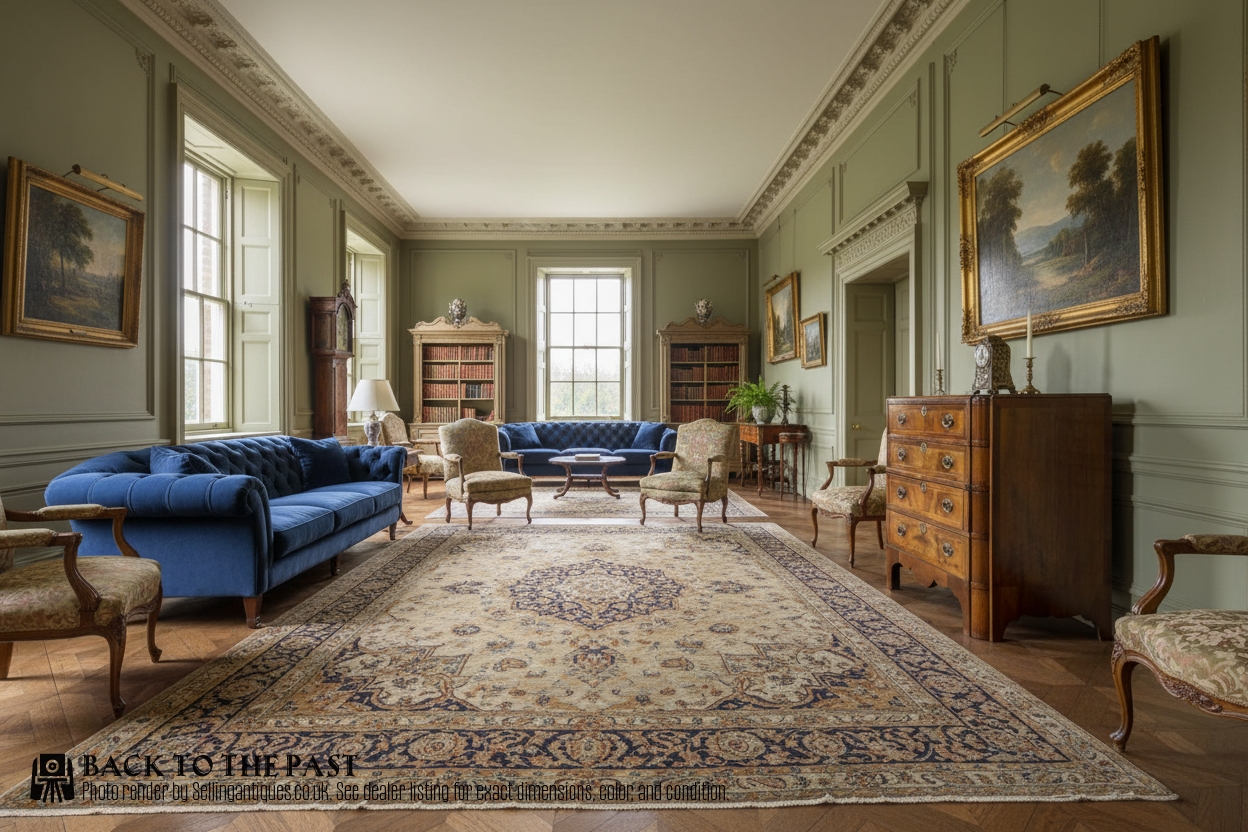
Materials and construction
Cabinetmakers utilised solid walnut and decorative veneers such as burr walnut applied over secondary woods like oak. Surfaces often received intricate marquetry inlay, whilst brass mounts and handles provided functional and decorative accents.
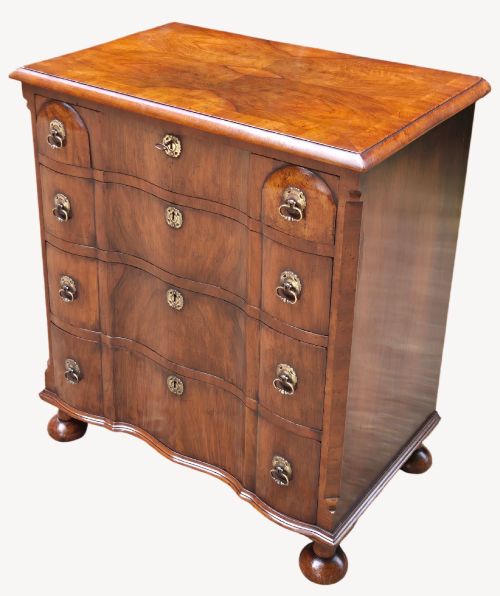
Structural designs range from serpentine and demilune carcases to block fronts, housing multiple drawers supported on slender or cabriole legs. Marble slabs frequently form the upper surface on continental examples.
Small Walnut Commode Retail Price Guide 2026
Typical asking prices for small walnut commode among the pieces listed under this phrase on Sellingantiques today, from the lower quarter to the upper quarter. They describe what is for sale here now, not the wider market.
The archive records pieces dated from the eighteenth century through to nineteen-ten.
Judging quality and craftsmanship
Quality rests in the selection of timber, where tightly figured burr walnut or carefully matched veneer patterns elevate the visual impact of the carcase. The refinement of the carving, the crispness of any marquetry, and the integration of brass mounts distinguish superior examples.
Proportion and execution drive value, as cabinetmakers balancing compact dimensions with complex serpentine or demilune curves demonstrate exceptional skill. The handling of secondary timbers like oak within the drawer construction further separates standard production from finer work.
The Small Walnut Commode Glossary
- Commode
- A low chest of drawers or cabinet originating in France, prized for domestic storage and decorative presence. These pieces typically feature multiple drawers beneath a polished top.
- Burr walnut
- A prized timber harvested from tree growths, yielding highly decorative swirling grain patterns. Cabinetmakers reserve this material for prominent exterior surfaces.
- Serpentine front
- A furniture front characterised by a central convex curve flanked by two concave curves. This contour requires precise woodworking skill.
- Marquetry
- The art of applying pieces of veneer to a structure to form decorative patterns and pictures. Craftsmen use various woods to achieve tonal contrast.
Small Walnut Commode: Frequently Asked Questions
Where do small walnut commodes fit best?
These compact chests suit hallways, bedrooms, and drawing rooms where floor space is limited. Their modest dimensions provide useful surface area and storage without dominating the surrounding interior.
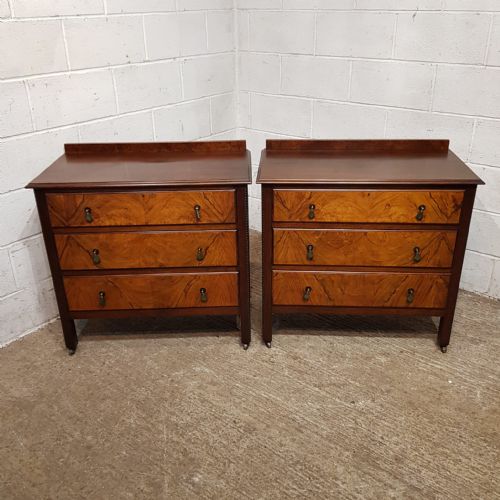
Pairs of these chests often function as bedside nightstands in larger master suites.
How do French and British commodes differ?
French examples frequently showcase serpentine or demilune shapes, occasional marble tops, and marquetry inlay influenced by Louis periods. British versions tend to favour rectilinear forms, figured veneers, and Queen Anne or Georgian revival styles.
Both traditions maintain a focus on compact proportions suitable for smaller rooms.
What is burr walnut?
Burr walnut is a specialised wood cut from tree burls or growths, displaying dense, swirling patterns. This grain structure makes each piece entirely unique.
Cabinetmakers apply it as a veneer across the drawer fronts and top surfaces to create visual depth.
How do I date a walnut commode?
Dating relies on stylistic markers such as cabriole legs, brass handle designs, and construction techniques visible in the drawer linings. Eighteenth-century pieces display hand-cut joints and native timbers, while revival pieces from the early twentieth century show more uniform machine assistance.
Comparing the silhouette to known period styles like Louis XVI or Georgian helps narrow the decade.