



Queen Anne Revival Chest
These queen anne revival chest examples bring understated early eighteenth-century elegance into twentieth-century rooms with rich walnut timbers and classical proportions.
Queen Anne Revival Chest
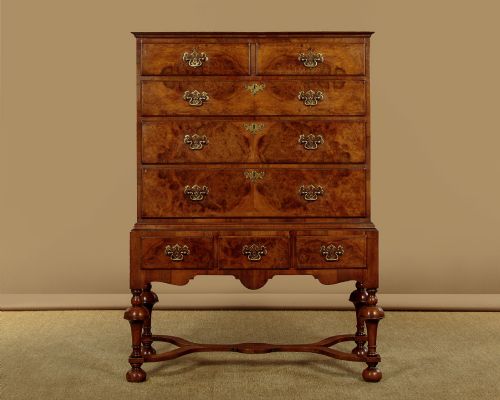
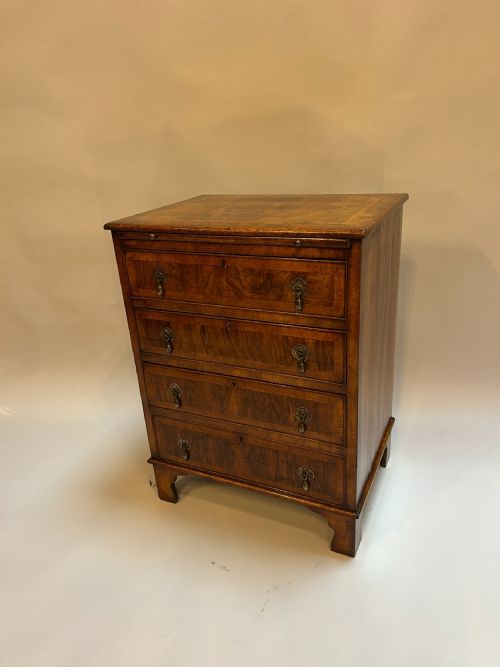
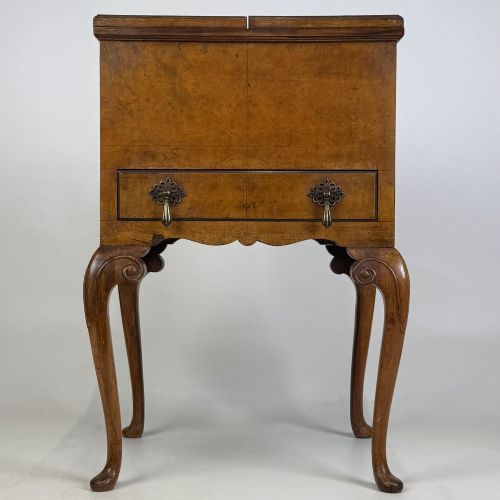
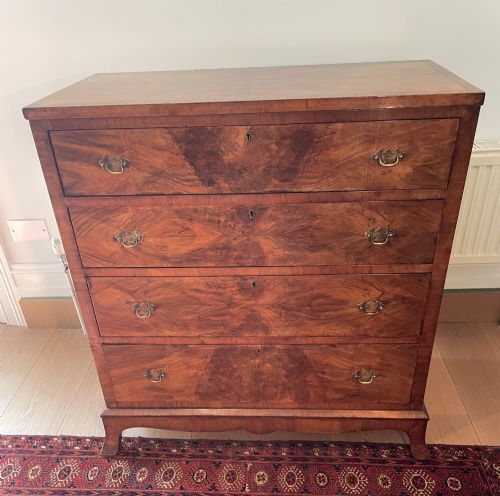
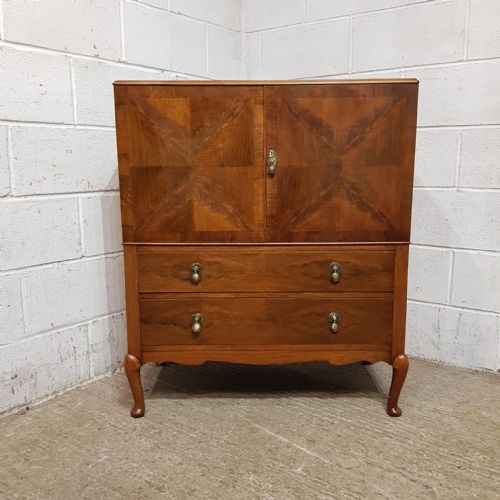
A queen anne revival chest reproduces the understated grace of earlier Georgian designs using early twentieth-century cabinet-making. These pieces typically take the form of chests of drawers, chests on stand, and chests on chest constructed during the 1910s, 1920s, and 1930s.
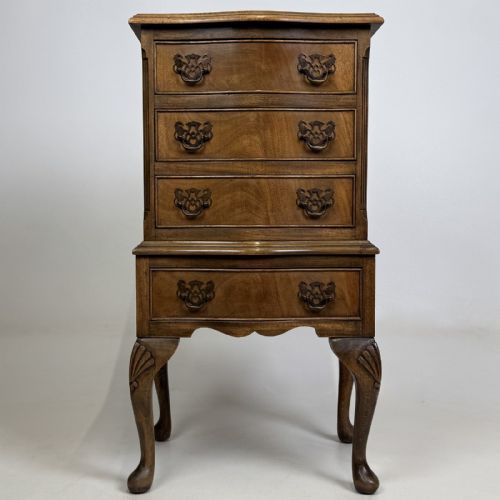
Buyers browsing this selection frequently encounter walnut, burr walnut, and figured walnut finishes alongside oak and pine secondary timbers. The scale ranges from small antique chests of drawers to taller five-height configurations and shaped front designs.
Originating during the George V era and the early twentieth century, these items channel the distinct aesthetic of the Queen Anne revival style. The forms prioritise clean lines and rich wood grain over heavy carving.
How they were made
Makers utilised choice timber selections, pairing oak and pine carcases with decorative veneers of walnut, burr walnut, and figured walnut. These surfaces display intricate grain patterns that catch the light naturally.
Hardware consists primarily of brass handles and escutcheons secured to drawer fronts configured in various heights. Construction relies on traditional joinery techniques suited to early twentieth-century workshops.
Queen Anne Revival Chest Retail Price Guide 2026
Typical asking prices for queen anne revival chest among the pieces listed under this phrase on Sellingantiques today, from the lower quarter to the upper quarter. They describe what is for sale here now, not the wider market.
Early twentieth-century craftsmen cleverly hid extra drawers inside towering chests on stand just to surprise unsuspecting future owners.
What varies in quality
The visual hierarchy of a queen anne revival chest rests chiefly on the choice of surface veneer. Highly figured burr walnut commands attention through its dense, swirling patterns, contrasting with simpler plain walnut or oak examples.
Proportion and form dictate the distinction between standard drawer units and more complex architectural configurations like chests on stand or chests on chest. The integration of shaped fronts and brass hardware further separates everyday utility pieces from finer decorative expressions.
The Queen Anne Revival Chest Glossary
- Burr walnut
- A prized timber cut from the abnormal growths of walnut trees, yielding intricate swirling grain patterns. It decorates the drawer fronts and primary surfaces of finer revival furniture.
- Figured walnut
- Wood grain showing distinctive natural patterns and light reflection without the tight knots of burr timber. Cabinet-makers select this for a sophisticated yet restrained finish.
- Chest on stand
- A tall drawer section elevated on a separate framework with legs. This form lifts storage off the floor to create a lighter silhouette.
- Chest on chest
- A two-part storage unit featuring a smaller upper chest stacked directly upon a wider lower section. It maximises vertical capacity while maintaining classical proportions.
- Bow front
- A convex, outwardly curved cabinet face that softens linear room angles. It adds a subtle sculptural quality to revival case pieces.
Queen Anne Revival Chest: Frequently Asked Questions
What is a queen anne revival chest?
A queen anne revival chest is an early twentieth-century piece inspired by eighteenth-century furniture designs. These items reproduce classical proportions using walnut and other period timbers.
Craftsmen built these units during the 1910s, 1920s, and 1930s to satisfy a renewed interest in Georgian aesthetics.
How do I date a revival chest?
Dating relies on construction methods, timber choices, and specific revival periods such as the George V era. Most pieces in this style date from the early decades of the twentieth century.
Examining the secondary woods like oak and pine inside the drawers helps confirm the era of manufacture.
Where should I place it?
These chests suit bedrooms, living rooms, and hallways where their rich walnut grain adds warmth. Smaller proportions fit easily into compact modern spaces without dominating the room.
Keep the furniture away from direct sunlight and strong heat sources to protect the delicate wood veneers.
How do I care for walnut veneer?
Maintain the finish by dusting gently with a soft, dry cloth and avoiding harsh chemical polishes. Applying occasional natural wax preserves the moisture and sheen of the wood.
Stable indoor humidity prevents the burr walnut veneer from lifting or cracking over time.