


Small Wall Clock
A small wall clock brings practical timekeeping and compact period craftsmanship directly into domestic spaces.
Small Wall Clock
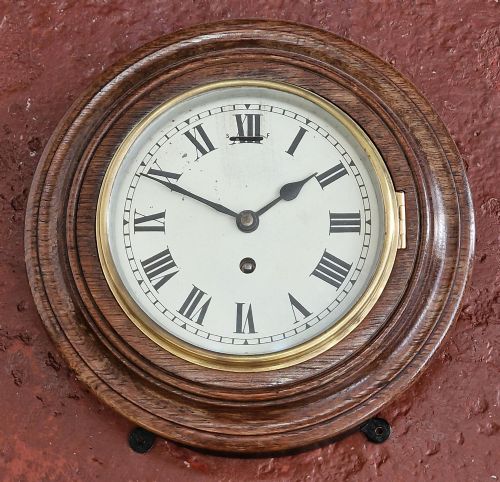
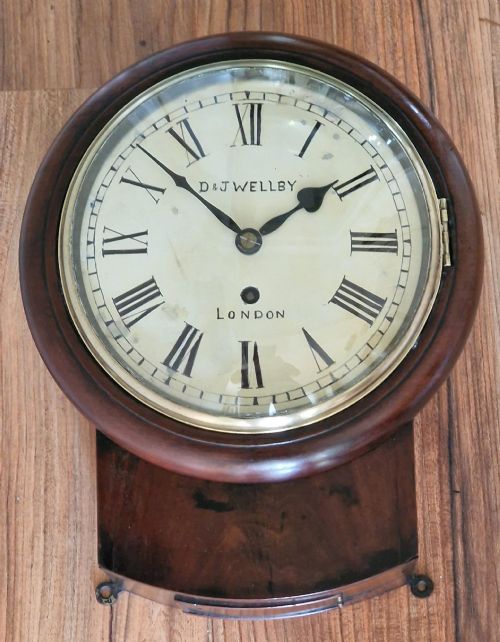
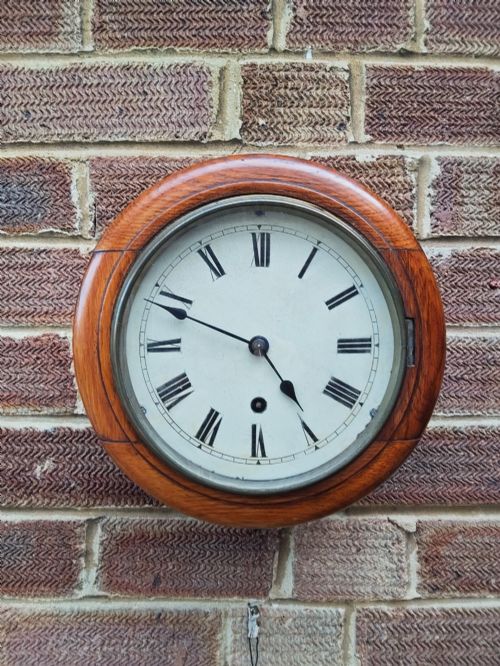
A small wall clock comprises compact timepieces designed to hang securely in domestic rooms, hallways, and offices. The selection frequently includes English fusee drop-dial variants, oak school clocks, and mahogany dial pieces spanning the nineteenth and early twentieth centuries.
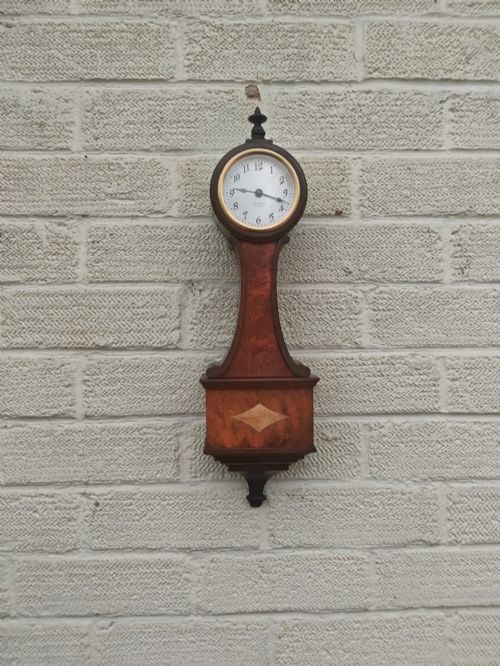
Buyers encounter numerous regional variations, from Dutch Frisian stoelkloks to Vienna regulators and banjo timepieces. These objects combine utilitarian purpose with period aesthetic movements ranging from Victorian severity to Dutch folk art.
Dial sizes typically measure between six and ten inches, housing mechanical movements driven by weights, springs, or fusee mechanisms. Such dimensions allow these timepieces to fit narrow wall spaces where standard grandfathers or large tavern clocks prove impractical.
Materials and Construction
Cabinet makers utilised dense hardwoods including mahogany, oak, and walnut to construct sturdy outer cases that protected delicate internal movements. Cases often featured glazed doors, brass bezels, and carved or turned wooden surrounds.
Listings feature mahogany, oak, and walnut small wall clocks spanning the nineteenth and twentieth centuries.
Assessing Craftsmanship and Condition
Superior examples demonstrate crisp execution in the dial lettering, well-proportioned case timbers with retained original finishes, and high-grade mechanical movements bearing maker signatures. Inferior pieces often exhibit replaced dials, mismatched components, or clumsy case repairs.
The sophistication of the movement dictates much of the standing, with fusee mechanisms and anchor escapements representing higher standards of horological engineering compared to standard spring-driven alternatives.
Seth Thomas·D&J Wellby·Harrods·Camerer Kuss·Clerke of London·E Sermon·George Pearce·Partington of London·George Buckmaster·Ambrose Vowell·Kelsey of Barnet·Joyce of Whitchurch·H Williamson Ltd·Gabriel·Camerer Cuss·John Higgs
The Small Wall Clock Glossary
- Fusee
- A conical pulley used in spring-driven clocks to equalise the torque of the mainspring as it unwinds. This mechanism ensures consistent power delivery to the escapement for improved timekeeping accuracy.
- Drop-dial
- A clock case configuration where a circular dial sits above an extended wooden box, often shaped with a chisel bottom, to accommodate the downward sweep of the pendulum.
- Dial clock
- A wall timepiece featuring a prominent face enclosed by a glass-fronted bezel and a simple wooden surround. They were standard fixtures in offices, railway stations, and domestic halls during the nineteenth century.
- Regulator
- A precision pendulum clock designed for high accuracy. These pieces typically feature elongated glass panels in the trunk to display the swinging pendulum and weights.
- Verge escapement
- An early type of clock escapement utilising a vertical rod with pallets that engage with a crown wheel. It represents traditional mechanical construction found in older pocket and wall timepieces.
Small Wall Clock: Frequently Asked Questions
How do I wind a fusee wall clock?
Insert the winding key into the dial aperture and turn it gently clockwise until firm resistance indicates the spring is fully tensioned. Avoid over-winding to protect the historical mechanism from undue stress.
Ensure the key matches the arbor size precisely to prevent slippage. Most eight-day variants require weekly attention to maintain accurate timekeeping.
Where should I hang a dial clock?
Select an interior wall free from dampness, direct sunlight, and excessive vibration from heavy footsteps or passing traffic. Solid masonry walls provide the most stable mounting surface for mechanical timepieces.
Ensure the clock hangs completely vertical so the pendulum swings with an even beat. An out-of-plumb installation causes the movement to stop prematurely.
What is the difference between a timepiece and a clock?
A timepiece refers specifically to a clock that indicates hours and minutes without a striking mechanism to chime the hours. They typically require less internal depth and fewer gear trains.
Clocks incorporate bells, gongs, or rack-strike mechanisms to sound the passing hours. Both types utilise identical pendulum or spring-driven power sources.
How do I identify a Victorian wall clock?
Examine the case timber, dial typography, and hardware for manufacturing traits characteristic of the nineteenth century. Oak and mahogany cases with Roman numerals on painted wooden or metal dials are common indicators.
Many Victorian pieces also feature drop-dial configurations or fusee movements stamped with maker details. Checking archive records and maker signatures helps confirm the production decade.