
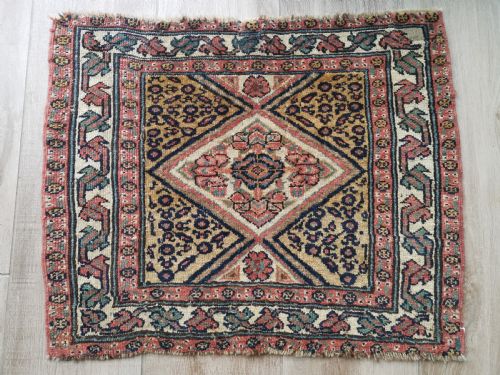
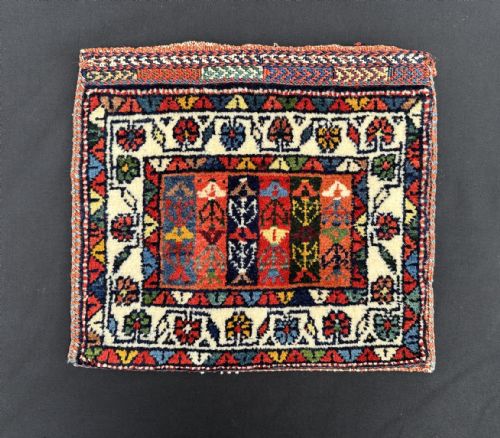
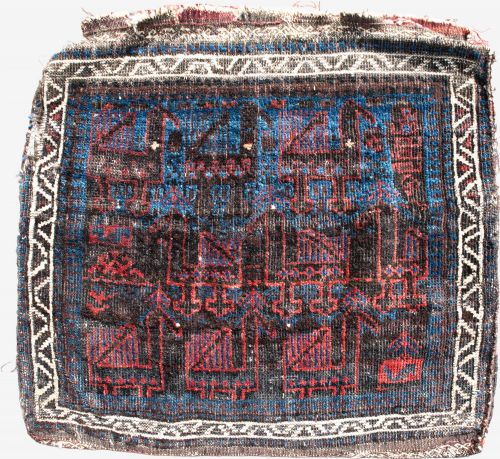
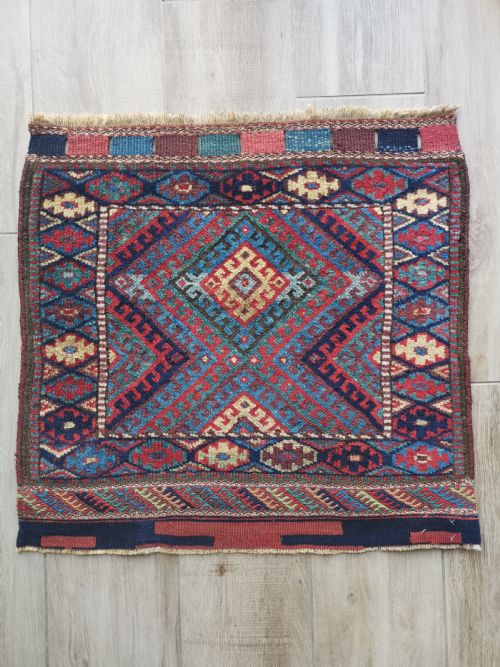


Small Tribal Rug Face
A small tribal rug face represents the surviving front panel of a larger nomadic storage bag or saddlebag, prized by collectors for its concentrated design.
Small Tribal Rug Face
A small tribal rug face is typically encountered as a torba, chuval, chanteh, or saddlebag face originating from nineteenth-century Persian, Turkmen, and Central Asian weaving traditions. These pieces represent the decorative front panels of utilitarian household containers that were originally used for nomadic storage and transport.
The selection on this page spans from the early nineteenth century into the early twentieth century, showing distinct regional patterns such as Saryk, Tekke, Yomut, Afshar, Baluch, and Jaf Kurd. Each piece reflects the specific tribal identity and weaving vocabulary of the nomadic or village group that produced it.
Materials and Techniques
These textiles are constructed primarily from hand-spun wool foundation yarns and pile, occasionally supplemented with cotton details or crimson silk highlights.
Weavers relied on natural dyes to create deep reds, blues, and browns, applying knotting techniques that produced dense, durable pile surfaces designed for everyday utility.
Listings span the nineteenth and early twentieth centuries, featuring wool, cotton, and natural dye materials across Persian and Turkmen tribal styles.
Variations in Quality
Quality in these fragments is defined by the tightness of the knotting and the crispness of the tribal motifs, such as guls, animal forms, or medallion layouts. Pieces with exceptionally fine weaves and well-preserved natural dye palettes stand apart from standard utilitarian examples.
The precision of the secondary borders and the complexity of the elem designs at the lower panels further distinguish master-woven bag faces from simpler village work.
The Small Tribal Rug Face Glossary
- Torba
- A small Turkmen storage bag used for household goods inside a yurt. These often feature wide horizontal proportions.
- Chuval
- A large Turkmen tent storage bag designed for bedding and clothing. The faces of these bags are frequently preserved independently.
- Chanteh
- A small personal carrier or vanity bag woven by nomadic groups. They often feature highly concentrated medallion or tile designs.
- Gul
- A primary medallion motif repeated across Turkmen carpets and bag faces. Different tribal groups utilised distinct gul variations for identification.
- Elem
- The decorative lower skirt panel of a Turkmen bag face or rug. This area often contains floral or ikat-inspired secondary patterns.
Small Tribal Rug Face: Frequently Asked Questions
What is a small tribal rug face?
A small tribal rug face is the decorative front panel removed from a larger nomadic storage bag or saddlebag. These textiles were made by various tribes for utilitarian purposes inside tents.
Over time, many of these functional containers were separated into individual panels to preserve the intricate face designs for display purposes.
How were these bag faces used?
Nomadic groups utilised these bags inside tents and on animals for storing clothing, bedding, and personal belongings. Saddlebag faces specifically hung across the flanks of pack animals.
When the containers wore out around the edges or backs, the sturdy front panels were salvaged for their decorative properties.
How do I identify different tribal patterns?
Identification relies on recognising specific geometric motifs, colour palettes, and structural layouts unique to each region. Turkmen pieces often display repeating guls, while Persian tribal pieces may feature central medallions or animal figures.
Comparing structural elements like knot density and wool texture helps isolate specific groups such as the Yomut, Tekke, or Afshar.
How should I display a rug face at home?
These small panels suit wall mounting due to their manageable dimensions and complete composition. Proper framing or gentle hanging supports the textile without placing strain on the antique wool foundation.
Keep them away from direct sunlight to protect the natural dyes from fading over time.