
Small Red Area Rug
A small red area rug anchors a room with saturated warmth, bringing grounded village character and centuries of tribal weaving traditions to your floor.
Small Red Area Rug
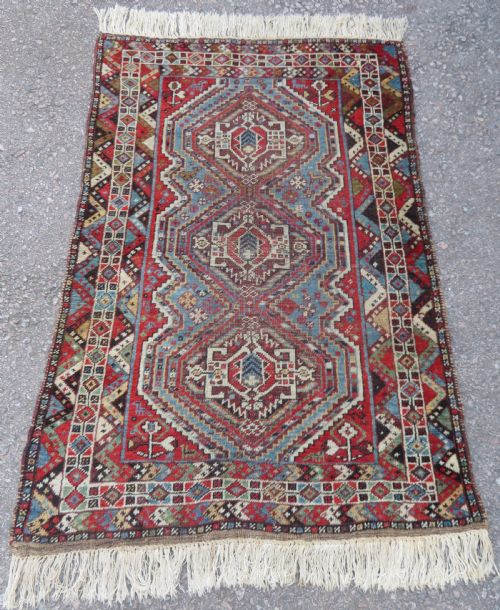
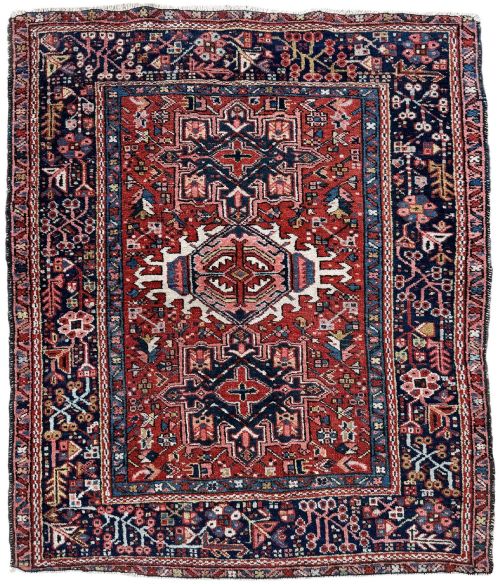
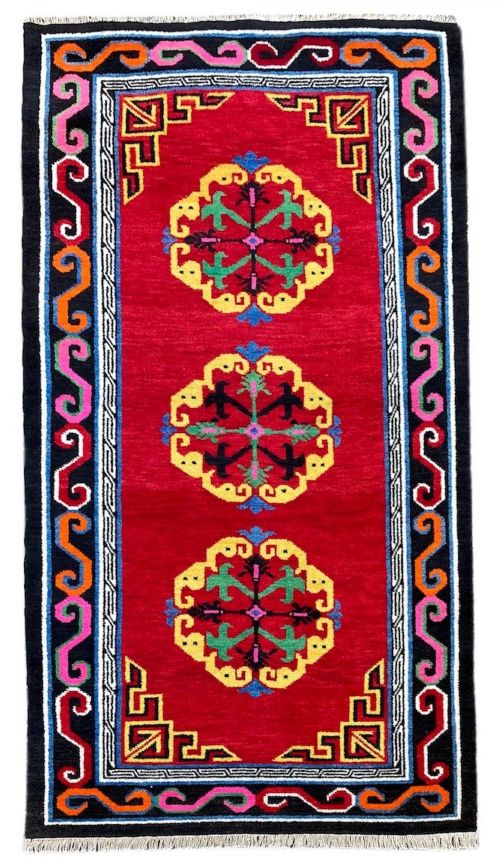
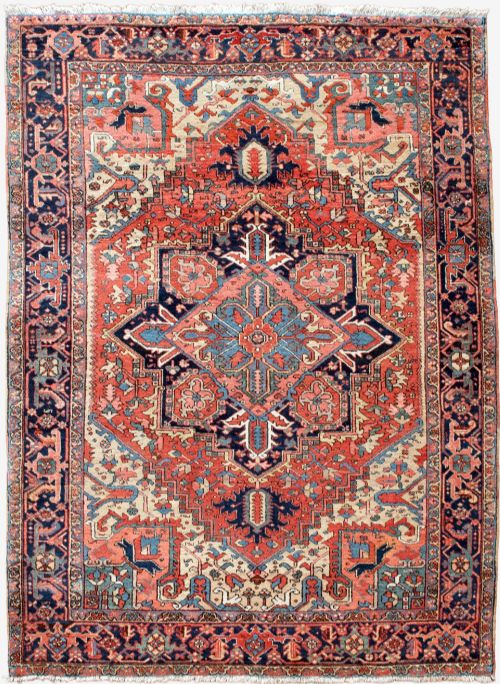
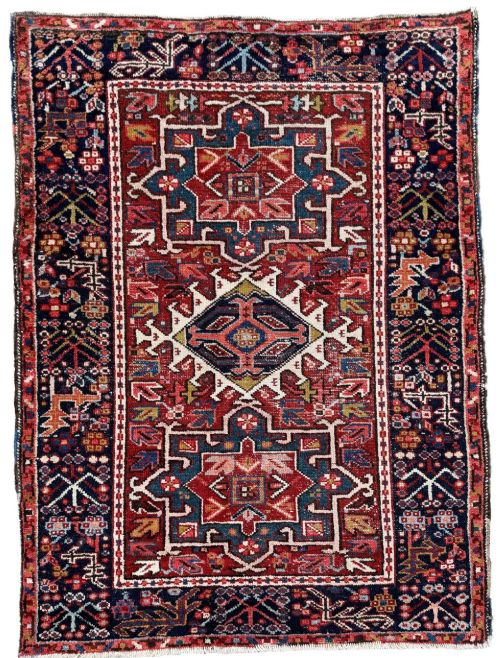
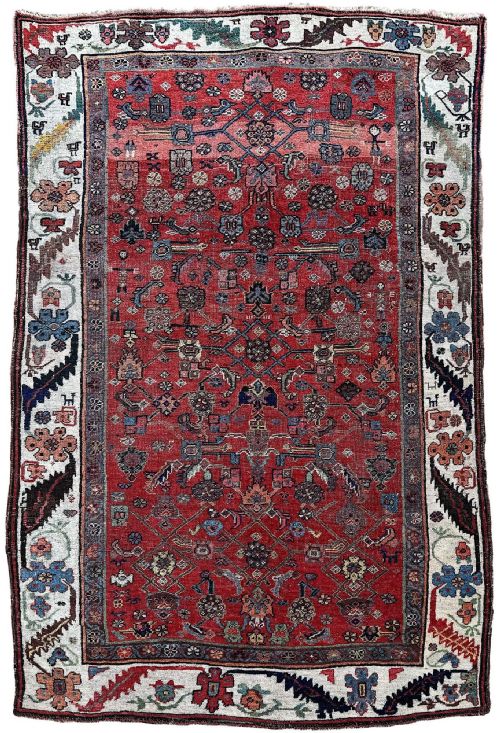
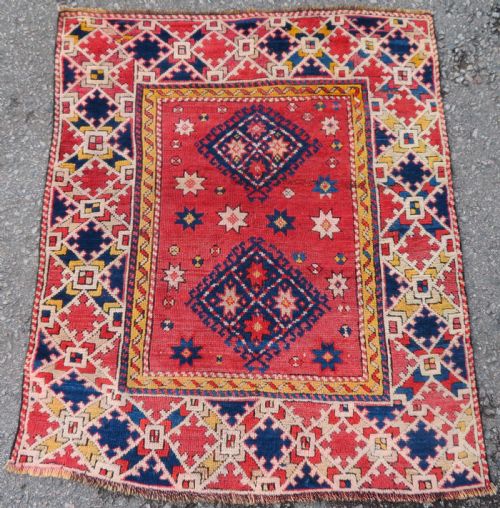
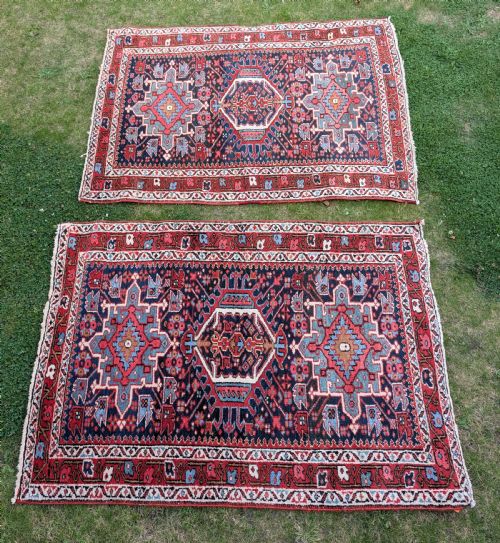
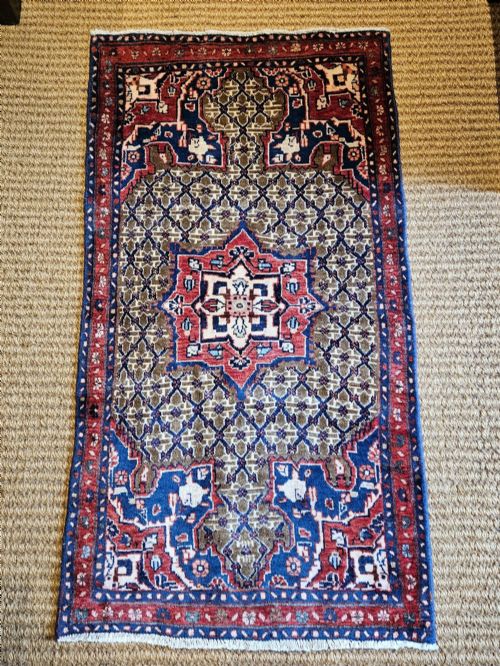
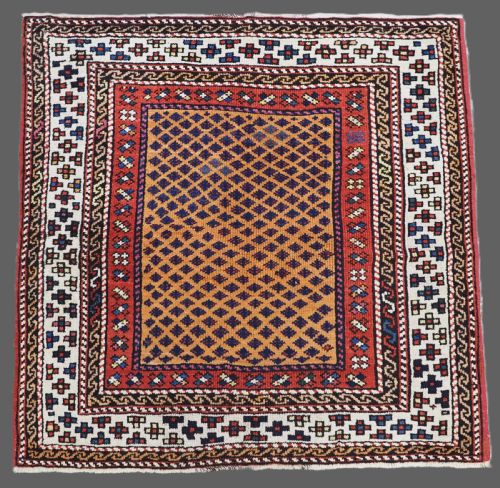
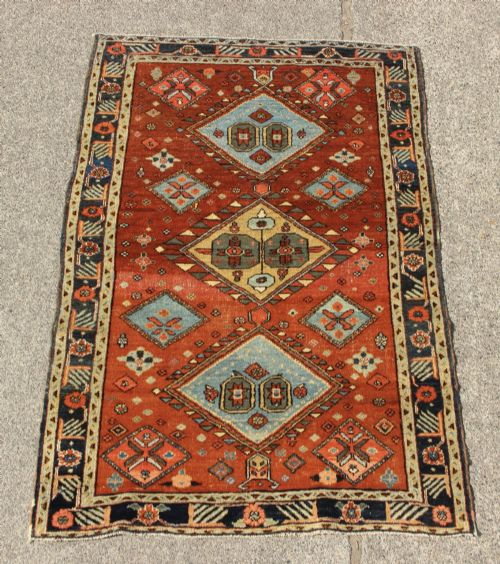
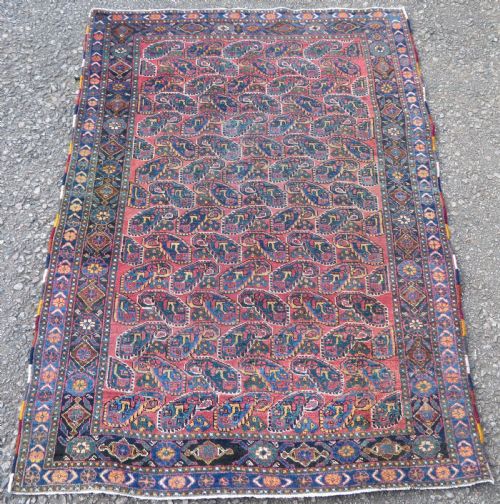
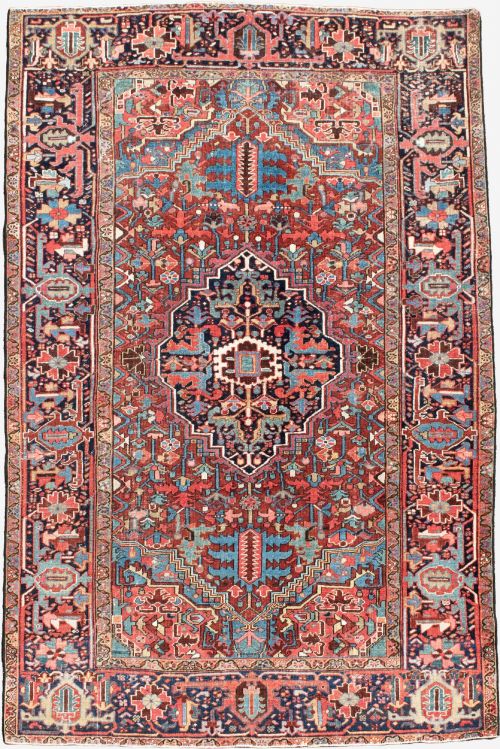
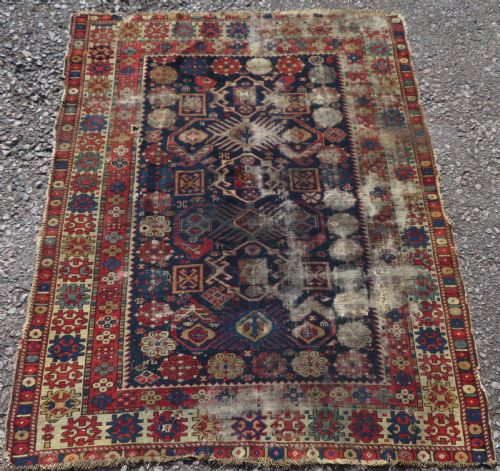
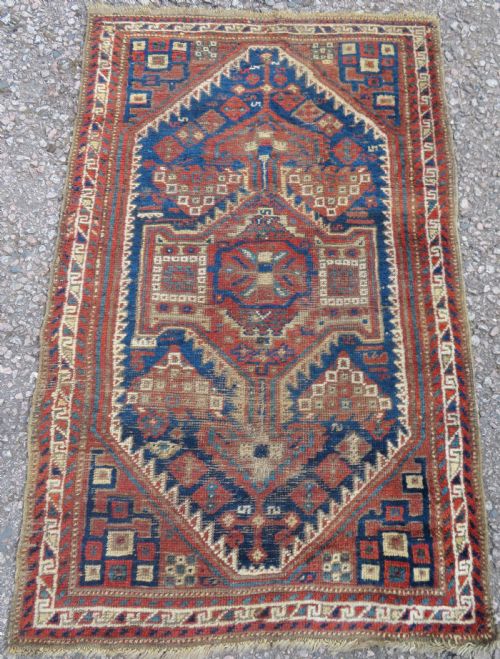
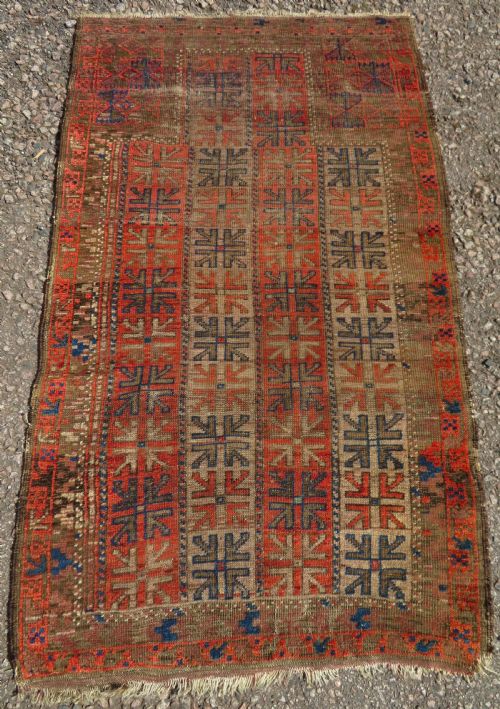
A small red area rug on this page encompasses antique village and tribal textile productions spanning the nineteenth and early twentieth centuries. These pieces originate primarily from Persian, Anatolian, Caucasian, and Turkmen weaving traditions, taking forms such as prayer rugs, square formats, and hearth-sized floor coverings.
Buyers encounter regional subtypes including Heriz, Karaja, Bidjar, Afshar, Baluch, and Bergama village rugs. These formats deliver concentrated bursts of madder-red tones combined with geometric medallions, latch-hooks, and traditional tribal motifs.
Materials and construction
Weavers constructed these pieces using hand-spun wool pile knotted onto foundations of cotton or wool warp and weft. Artisans relied upon natural dyes, notably rich madder reds derived from plant roots, which yield depth and tonal variation across the surface.
Village and nomadic workshops utilised sturdy knotting techniques designed for daily durability. These time-honoured methods result in dense woolen piles that wear evenly over decades of domestic use.
Several nomadic weavers tucked small protective amulets directly into the wool pile.
Assessing quality
Quality rests upon the handled execution of the natural dye palette and the crispness of the tribal geometry. Superior examples exhibit profound colour saturation and harmonious transitions in the madder red fields.
The fineness of the knotting and the integrity of the wool foundation separate standard village weaving from exceptional collector pieces. Denser pile construction and balanced proportions elevate the visual impact within compact formats.
The Small Red Area Rug Glossary
- Madder
- A natural red dye extracted from the root of the Rubia tinctorum plant. This dye produces the characteristic earthy reds found in antique village textiles.
- Warp
- The vertical threads stretched tightly on the loom before knotting begins. Cotton warp threads provide structural stability to many nineteenth-century carpets.
- Prayer rug
- A textile featuring a central mihrab or niche design historically used for daily devotions. These formats often display focused symbolic motifs pointing toward a specific direction.
- Chuval
- A traditional Turkmen storage bag face woven with repeating gul motifs. Collectors prize these fragments for their intricate tribal iconography and dense wool quality.
Small Red Area Rug: Frequently Asked Questions
Where should I place a small red area rug?
These compact formats suit entryways, hearths, and bedside placements where concentrated colour and texture transform small floor spaces. Their resilient wool construction handles moderate foot traffic with ease.
Position them to define specific zones within larger rooms, such as beneath a reading chair or accent table, allowing the rich red tones to anchor the surrounding interior scheme.
How do I care for antique wool rugs?
Maintain the wool pile through gentle, regular vacuuming without rotating brush heads that might catch vintage knotting. Professional specialist cleaning preserves the natural lanolin and dye stability.
Keep these textiles away from direct, prolonged sunlight to prevent fading of the natural madder red tones over time.
What is the difference between village and tribal rugs?
Village rugs originate from settled communities operating communal looms, often displaying structured geometric layouts and regional border designs. Their patterns reflect shared local traditions passed down through generations of makers.
Tribal pieces stem from nomadic or semi-nomadic groups whose designs incorporate memory-based motifs and spontaneous field arrangements. These works showcase individual weaver expression within traditional tribal vocabularies.
How do natural dyes age over time?
Natural dyes mellow gracefully through decades of exposure to light and air, developing a nuanced patina known as abrash. This subtle tonal variation adds depth and visual movement across the red wool fields.
Unlike synthetic dyes, plant-derived colours soften harmoniously without losing their foundational richness or turning harsh as the textile ages.