


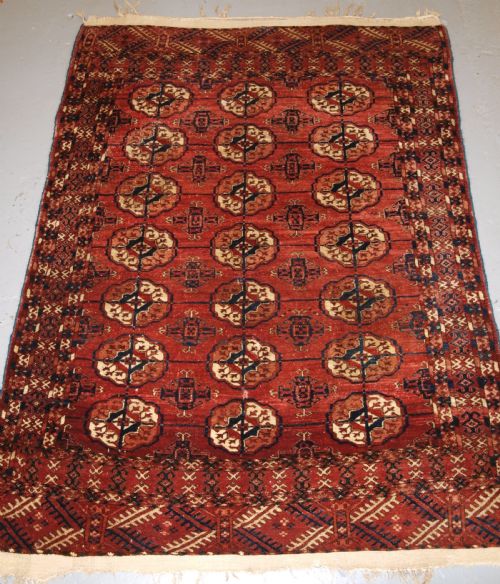
Antique Tekke Dowry Rug
An antique tekke dowry rug is a Central Asian tribal textile created for a wedding, offering dense geometric patterns and soft wool that collectors prize.
Antique Tekke Dowry Rug
An antique tekke dowry rug originates from Central Asian tribal traditions, specifically made as wedding dowry pieces by Turkmen weavers during the nineteenth century. These items appear as small rugs, square formats, and torbas, reflecting the utilitarian and ceremonial needs of nomadic life.
Most examples encountered date from eighteen seventy through to nineteen hundred, showing distinct tribal motifs tied to Central Asian weaving traditions. The designs include traditional gul patterns, ovoid guls, and aina gul arrangements that distinguish individual tribal groups.
How they were made
Weavers constructed these textiles using wool and silk, often incorporating soft wool foundations and silk highlights to add subtle contrast to the pile. Dyes such as cochineal provided deep, lasting colour across the surface.
The production relied on very fine weave techniques executed on small looms suited to nomadic output. Artisans knotted the wool densely to ensure durability while maintaining a pliable handle suitable for daily use or ceremonial display.
Nomadic weavers packed these small wedding squares onto camels, carrying centuries of tribal geometry across Central Asian plains.
What varies in quality
Quality rests upon the fineness of the weave and the precision of the gul motifs, where tighter knots create sharper pattern definition. The handle of the wool also dictates standard, with softer wool indicating superior material selection.
Colour retention and dye saturation drive the visual impact, particularly where cochineal or silk highlights remain vibrant. Pieces displaying scarce formats or unusual ovoid and aina guls separate standard examples from finer collector items.
The Antique Tekke Dowry Rug Glossary
- Gul
- A primary octagonal medallion motif repeated across Turkmen carpets and rugs. It serves as the central tribal insignia for the weaving group.
- Torba
- A small hanging bag or torba utilised within nomadic dwellings for storage. These pieces share the same fine weave and iconography as larger dowry rugs.
- Cochineal
- A natural red dye derived from insects, producing rich crimson and magenta tones in nineteenth-century textiles. Its presence indicates specific dyeing traditions.
- Aina Gul
- A specific mirror-patterned gul design found on wedding dowry rugs. This motif holds symbolic meaning within Turkmen tribal weaving.
- Silk highlights
- Accents woven in silk rather than wool to emphasise specific details within the design. These highlights catch the light and add depth to the pile.
Antique Tekke Dowry Rug: Frequently Asked Questions
What is an antique tekke dowry rug?
An antique tekke dowry rug is a traditional Central Asian tribal weaving created by Turkmen communities for wedding ceremonies. These textiles typically feature small or square formats decorated with geometric gul motifs.
Weavers produced them during the nineteenth century using wool and silk materials. They served both ceremonial marriage functions and domestic decorative roles within nomadic life.
How were these rugs used originally?
Nomadic families utilised these textiles primarily as wedding dowry furnishings and ceremonial marriage items. They functioned as decorative elements inside tents or as part of the bride's portable property.
Smaller formats and torbas were also employed for domestic storage or as hanging bags. Their durable wool construction suited the practical demands of a mobile existence.
How do you identify a tekke rug?
Identification relies on recognising traditional design elements such as the repeating tekke gul or specialised ovoid and aina gul patterns. The palette often includes cochineal reds combined with dark grounds characteristic of Central Asian tribal work.
Fine knotting and the inclusion of silk highlights help differentiate genuine nineteenth-century examples. The format is typically small and square or rectangular.
How should I live with one?
Living with these textiles involves placing them in low-traffic areas to protect the delicate wool and silk pile from heavy wear. Displaying them on walls or using them as light floor coverings in quiet rooms preserves their condition.
Keep them away from direct sunlight to prevent fading of natural cochineal and wool dyes. Gentle vacuuming without a rotating brush maintains the surface without pulling the knots.