


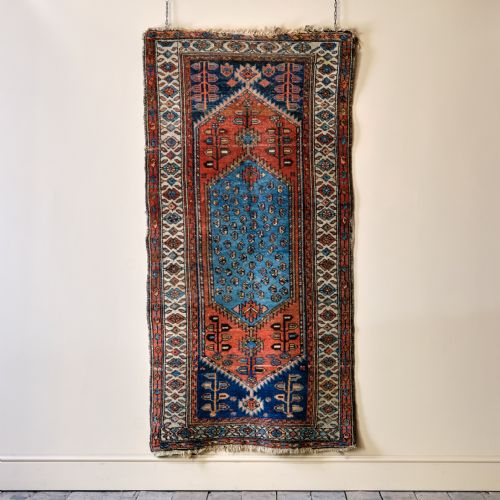

Vintage Oriental Hearth Rug
A vintage oriental hearth rug brings grounding texture and rich colour to a fireplace, offering a compact piece of weaving history.
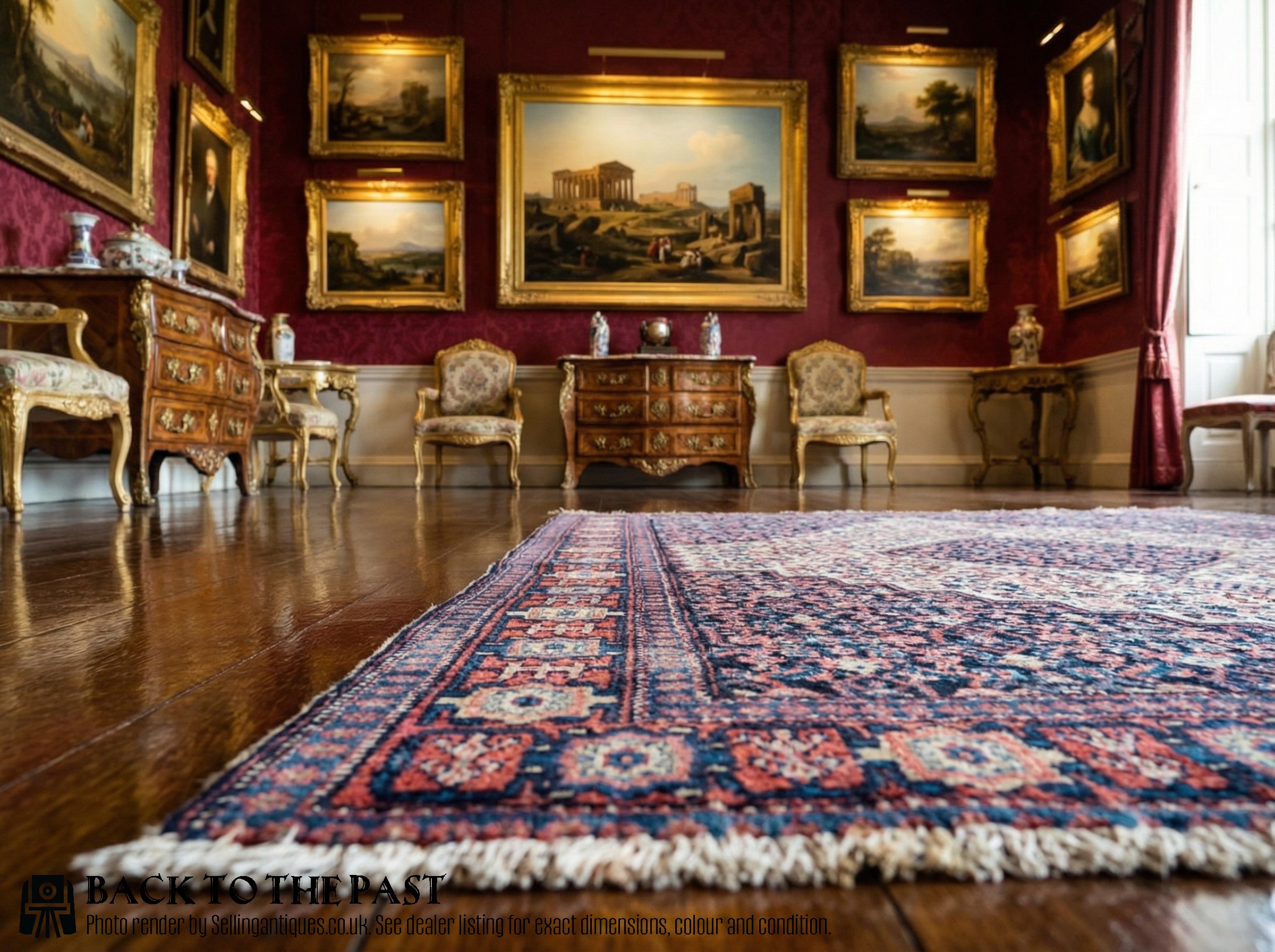
Vintage Oriental Hearth Rug
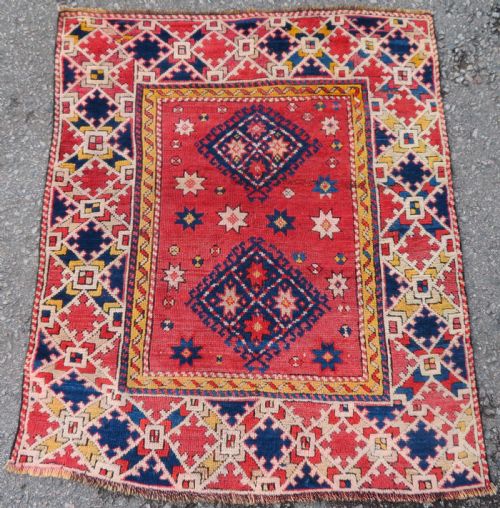
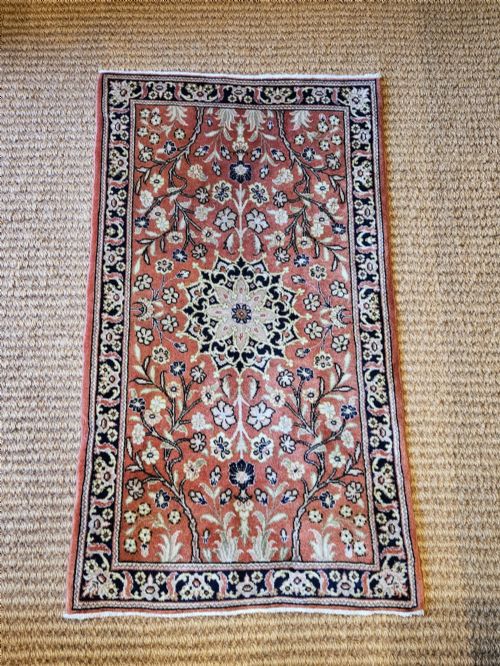
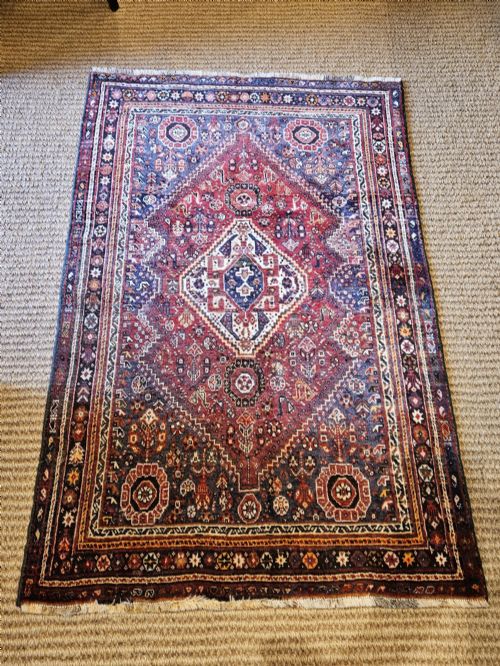
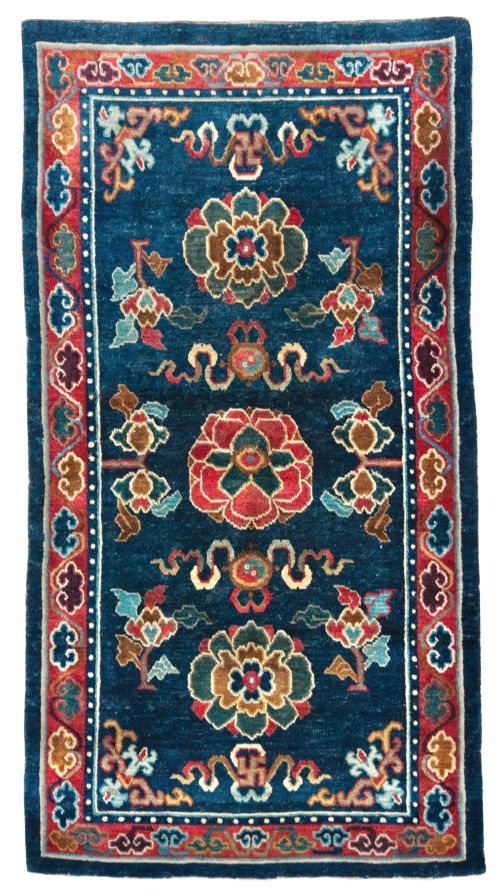
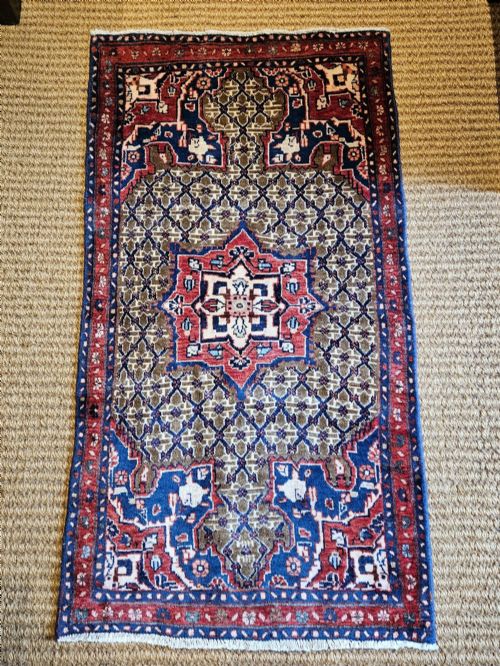
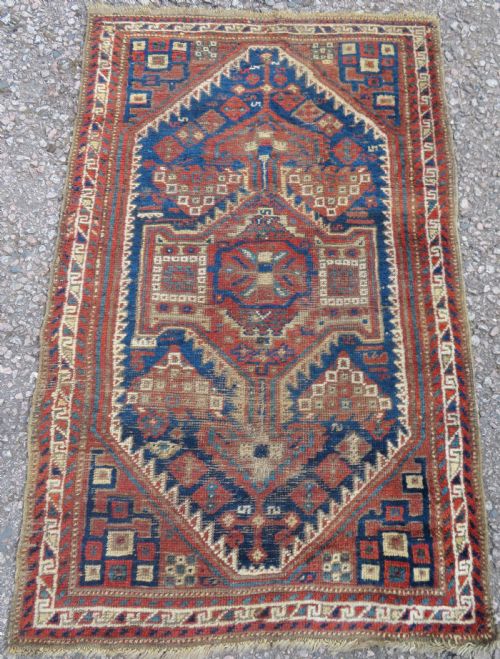
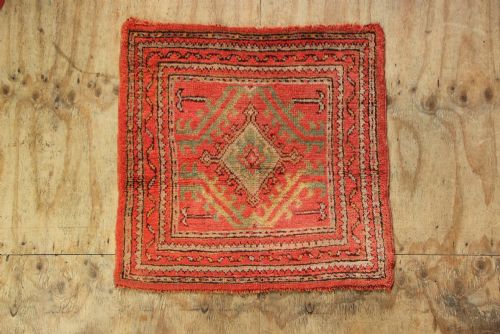
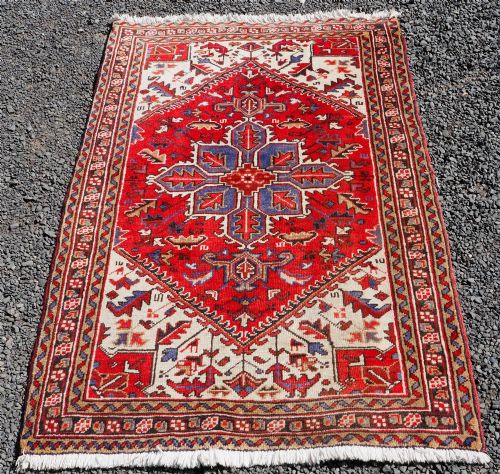
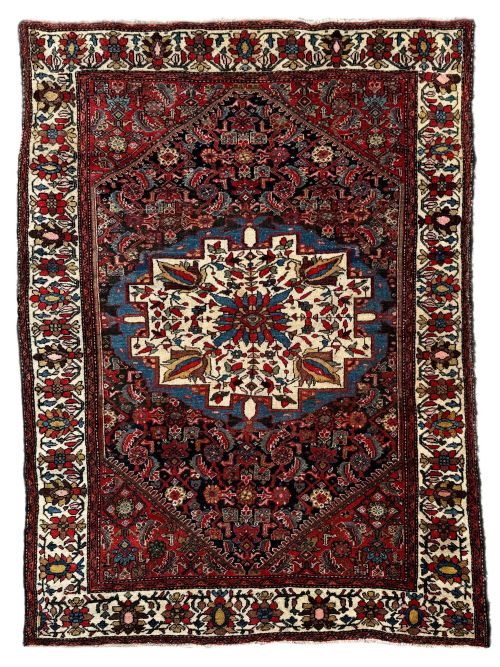
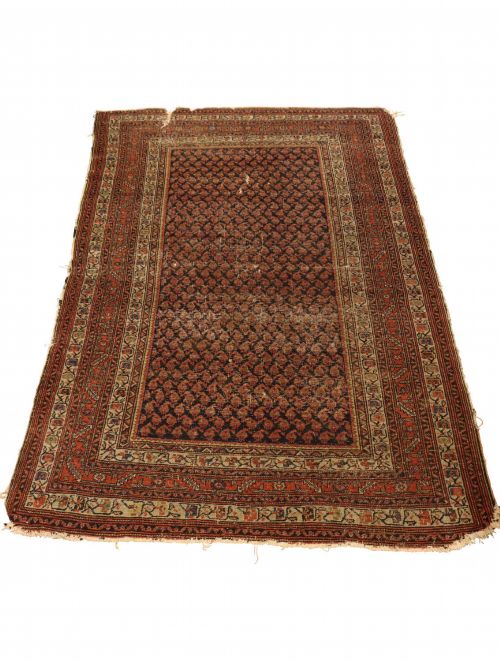
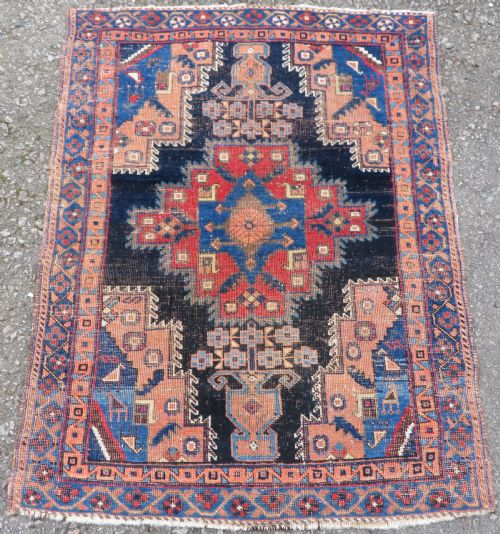
A vintage oriental hearth rug is a smaller format floor covering designed to sit in front of a fireplace, though these pieces work equally well as accent rugs in compact spaces. When searching this phrase, a buyer encounters hand-knotted village and tribal rugs originating from Persia, Anatolia, the Caucasus, and Central Asia.
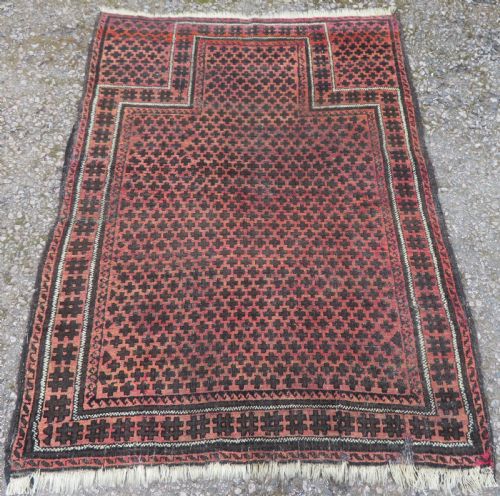
The selection includes specific regional types such as Heriz, Bidjar, Sarouk, and prayer rugs woven in wool. These formats typically span the late nineteenth and early twentieth centuries, encompassing Edwardian and period village productions.
Most examples measure under two metres in length, fitting narrow hearth spaces or smaller rooms where standard carpets overwhelm the floor plan. The designs range from geometric tribal medallions and star motifs to classic all-over boteh patterns.
Materials and construction
These textiles rely predominantly on wool pile knotted by hand onto cotton warps or hand-spun wool foundations. The choice of materials dictates the weight and flexibility of each piece, with dense wool providing a resilient surface for high-traffic areas.
Weavers utilised natural dyes in many nineteenth-century and early twentieth-century examples, resulting in deep rusts, indigos, and muted earth tones that age gracefully. Hand-knotting techniques vary by region, producing distinct back structures and pile densities across Persian, Anatolian, and Caucasian workshops.
Vintage Oriental Hearth Rug Retail Price Guide 2026
Typical asking prices for vintage oriental hearth rug among the pieces listed under this phrase on Sellingantiques today, from the lower quarter to the upper quarter. They describe what is for sale here now, not the wider market.
Some small village rugs retain charming irregularities where the weaver clearly lost count of a border motif.
Judgement of quality
Quality in these rugs rests upon the tightness of the knotting and the crispness of the design execution. Tighter knots allow intricate geometric or floral motifs to retain sharp definition over decades of use.
The choice of wool and the depth of the dye saturation further separate standard village pieces from finer workshop productions. A supple foundation and balanced proportions elevate certain small formats into exceptional examples of regional weaving.
The Vintage Oriental Hearth Rug Glossary
- Boteh
- A stylised almond or pear-shaped motif representing a-shoot or cypress tree. This ancient symbol appears frequently in Persian and Anatolian weaving.
- Medallion
- A central ornamental design motif placed in the middle of the rug field. Regional weavers often anchor their entire symmetrical layout around this focal shape.
- Prayer rug
- A small format textile featuring a distinctive architectural arch or mihrab design at one end. Historically, these pieces oriented the user toward Mecca during daily prayers.
- Warp
- The vertical threads stretched lengthwise on the loom before knotting begins. Cotton warps provide structural stability, while wool warps offer a softer handle.
Vintage Oriental Hearth Rug: Frequently Asked Questions
Where should I place a hearth rug?
These compact rugs suit narrow floor spaces directly in front of a fireplace, where their shorter length avoids obstructing furniture.
They also function effectively as bedside mats, hallway accents, or wall hangings in smaller rooms.
How do I identify a tribal rug?
Tribal pieces often display geometric patterns, hooked polygons, and spontaneous colour shifts woven from memory rather than strict cartoons.
Nomadic and village weavers produced these textiles using local wool and traditional regional motifs passed down through generations.
Are these rugs suitable for daily use?
Hand-knotted wool construction gives these historical pieces remarkable durability for everyday foot traffic in domestic settings.
Placing a proper underlay beneath the rug prevents slipping and reduces fibre wear on hard floors.
How do I date an older rug?
Dating relies on assessing the dye palette, wool quality, structural asymmetry, and stylistic markers consistent with nineteenth or early twentieth-century production.
Examining the selvages and fringe wear offers further clues regarding the age and origin of the piece.