
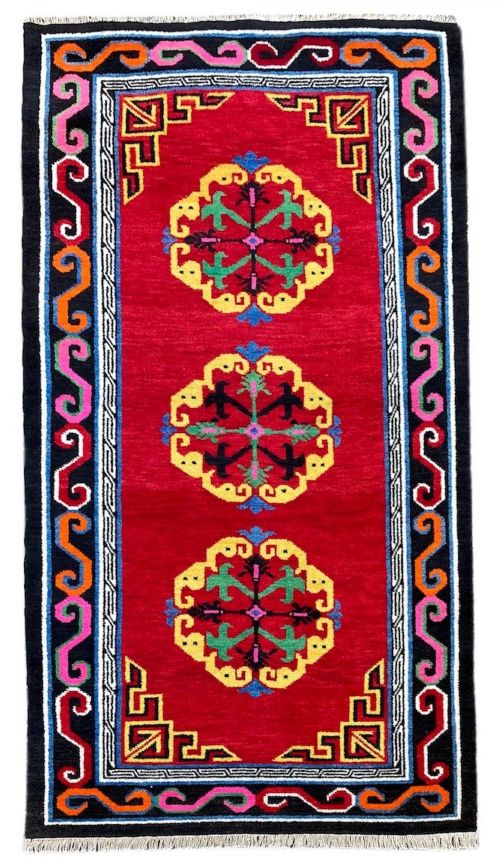
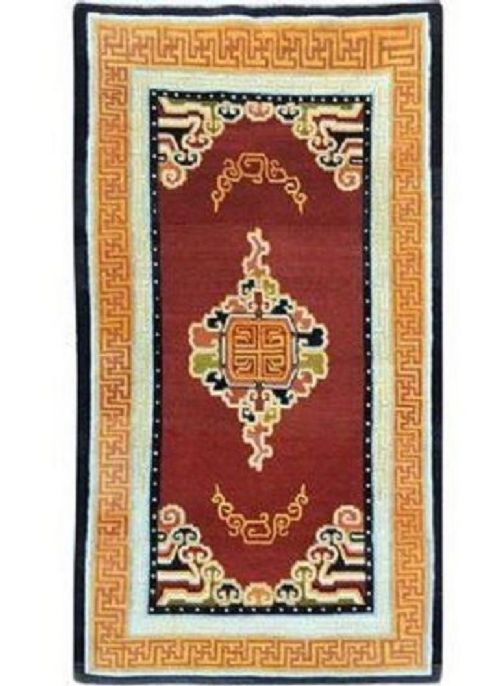
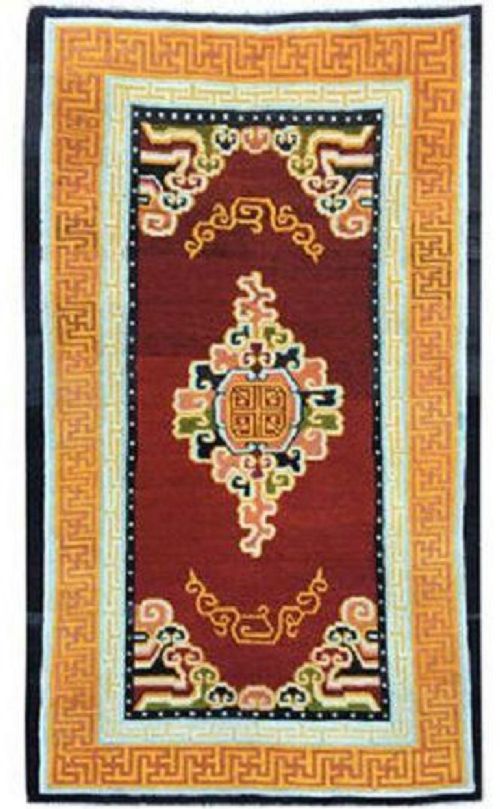
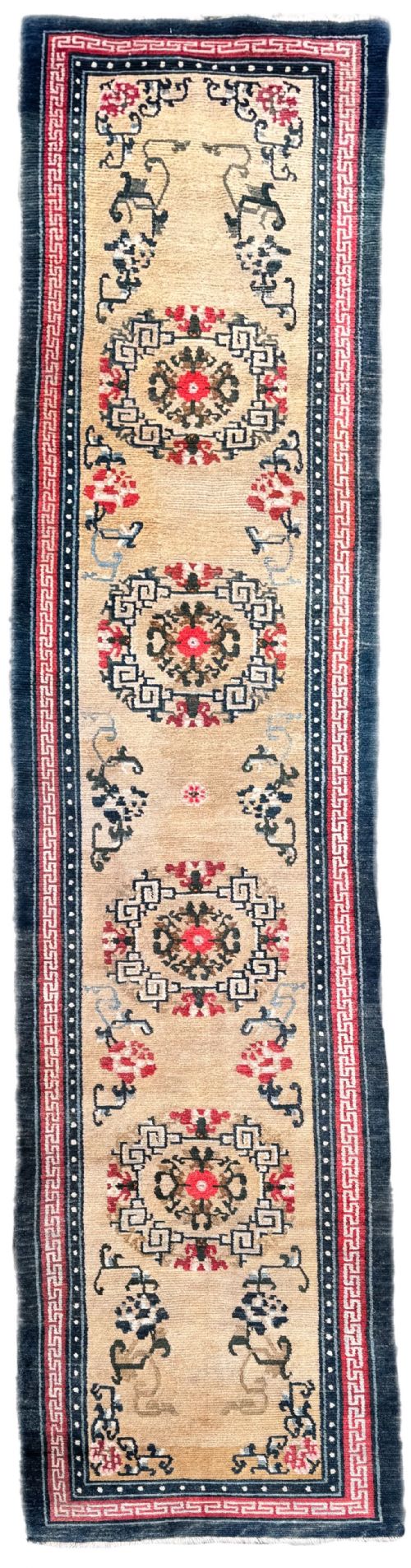


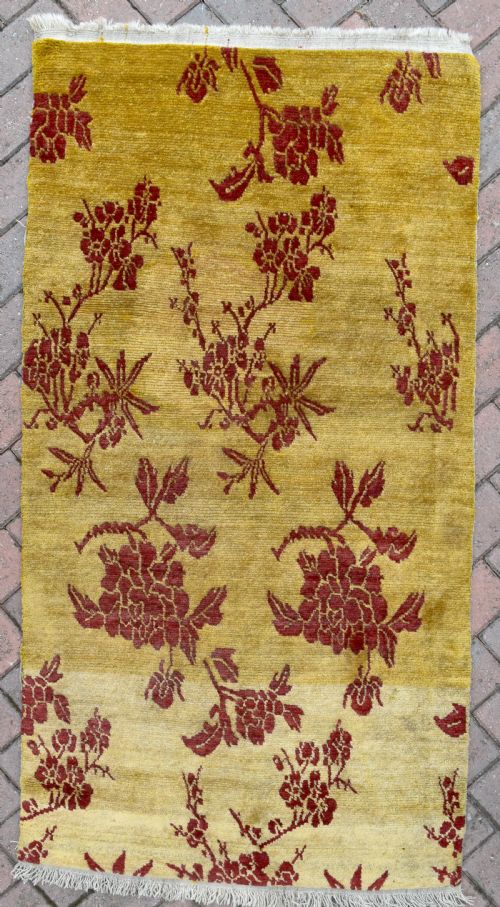
Tibetan Wool Carpet
A tibetan wool carpet brings the rich texture and distinct visual tradition of Inner Asia straight to your floor.
Tibetan Wool Carpet
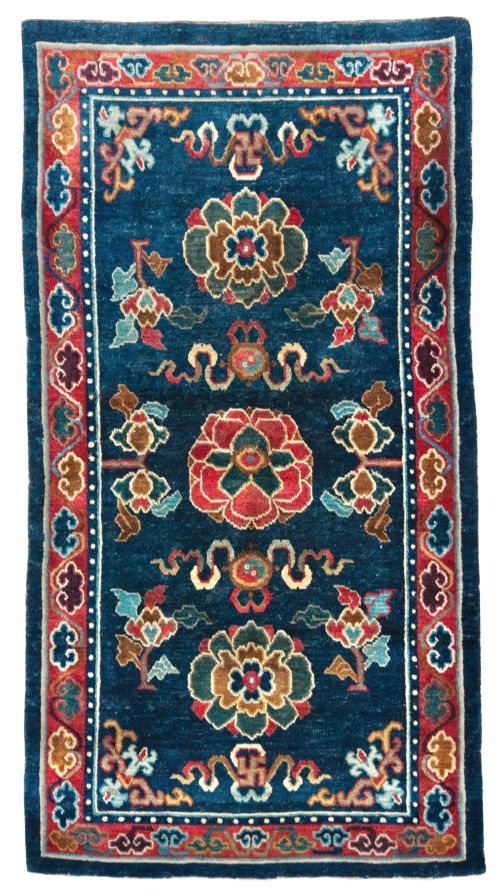
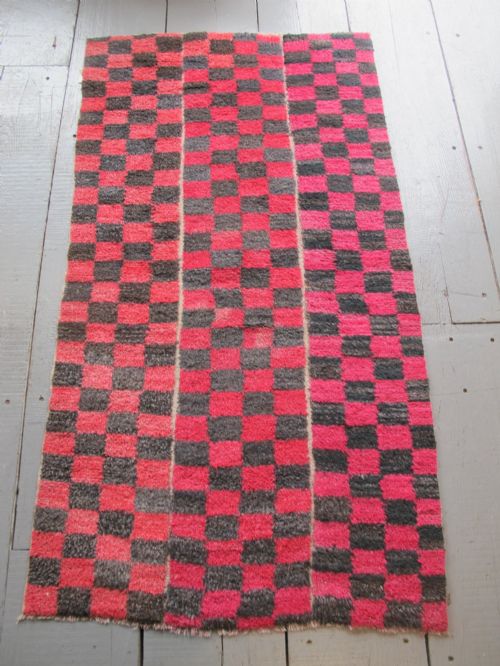
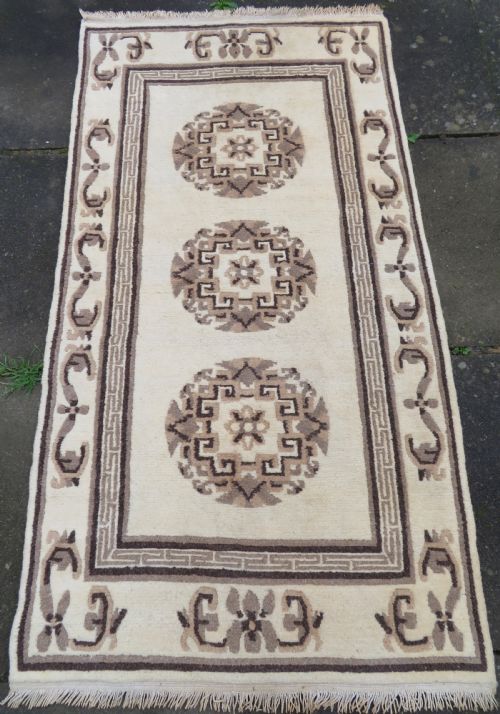
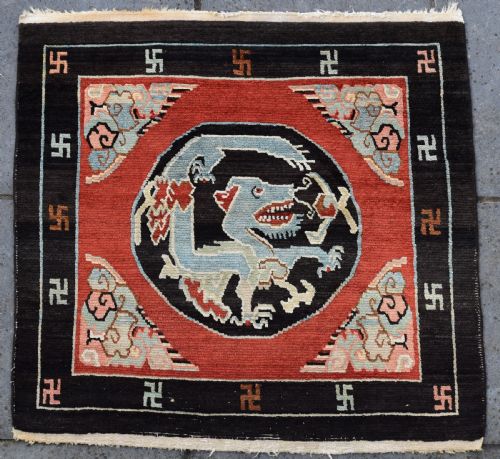
A tibetan wool carpet encompasses dense floor coverings, runners, meditation mats, and saddle covers originating from Himalayan regional workshops and border areas. These pieces range from square formats to long runners, reflecting practical uses across domestic and monastic spaces in Inner Asia.
The selections available here span the late nineteenth century through the 1930s, featuring traditional Tibetan, folk art, and Nepalese styles. Buyers most frequently encounter vintage and antique rugs that display the characteristic pile and border arrangements of the region.
Materials and construction
Makers utilised thick wool combined with cotton foundations to create durable floor coverings suited to cold mountain climates. Leather elements also appear on specific forms like saddle covers, adding structural reinforcement where required.
Weaving traditions relied on distinctive knotting techniques executed by hand, producing dense piles that held vibrant motifs. The integration of local wool and cotton warp threads defines the physical structure of these historic textiles.
Some survivors spent their youth strapped to a horse rather than resting quietly on a floor.
Assessing quality and execution
Quality rests in the density of the wool pile and the precision of the traditional pattern execution across the surface. Superior examples maintain structural integrity in the cotton foundation and show careful handling of regional motifs.
The depth of the wool and the preservation of original borders distinguish finer specimens from simpler utilitarian pieces. Condition of the pile and the exactness of the folk art design indicate the skill of the original weaver.
The Tibetan Wool Carpet Glossary
- Khaden
- A traditional Tibetan sleeping or sitting rug, usually made in smaller dimensions for domestic use. These pieces often feature specific iconography suited for placement on raised platforms.
- Meditation rug
- A small format rug traditionally used in monasteries or homes for seated contemplation. They typically present square or compact rectangular proportions.
- Saddle cover
- A specialised textile designed to fit over an animal saddle, frequently finished with leather edges. They share the same dense wool construction and pattern vocabulary as larger carpets.
- Runner
- A long, narrow carpet format intended for hallways, corridors, or narrow spaces. These pieces maintain consistent width while extending significantly in length.
- Inner Asia
- The broad geographical region encompassing Tibet, Nepal, and adjacent autonomous border regions. This area shares distinct textile aesthetics that set it apart from other Asian weaving traditions.
Tibetan Wool Carpet: Frequently Asked Questions
What is a tibetan wool carpet?
A tibetan wool carpet is a hand-knotted textile created in the Himalayan region using local wool and cotton.
These pieces range from domestic rugs to meditation mats and runners, reflecting centuries of regional weaving culture.
How were these carpets used historically?
Historic examples served as floor coverings, seating pads, and bedding in homes, monasteries, and travel gear.
Specialised forms like saddle covers were tailored for equestrian use across mountain terrain.
How do I date a vintage carpet?
Dating relies on examining structural wear, material composition, and traditional design markers recorded across periods from the late nineteenth century to the 1930s.
Comparing knot structure and wool characteristics helps place pieces within this historical window.
How do I care for antique wool rugs?
Gentle vacuuming without a rotating brush helps preserve the dense wool pile without pulling the cotton foundation.
Professional textile cleaners experienced in historic rugs should handle any washing requirements.