
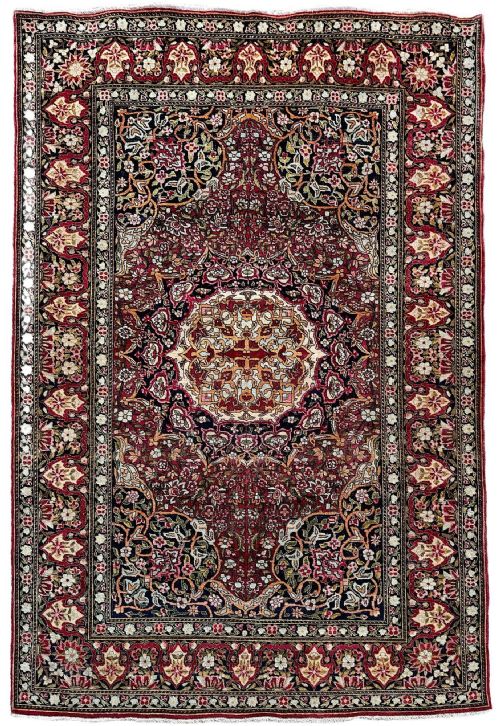
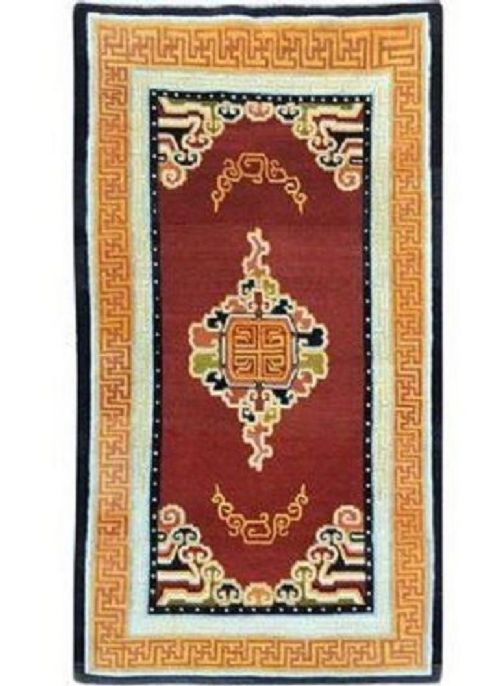
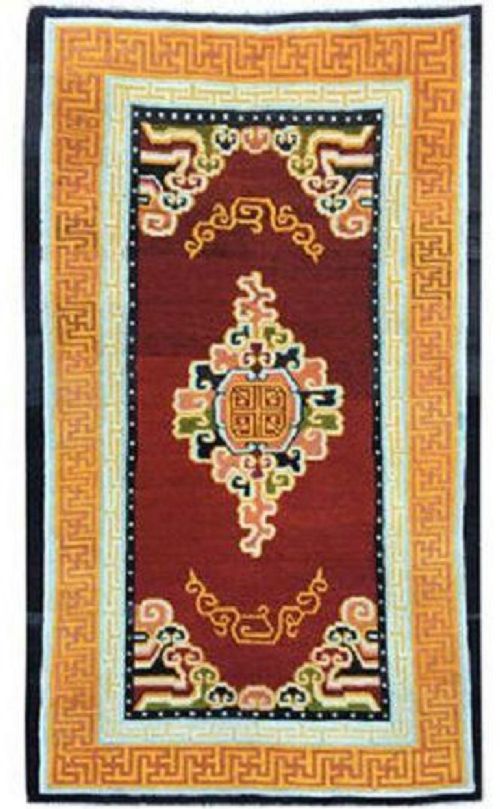
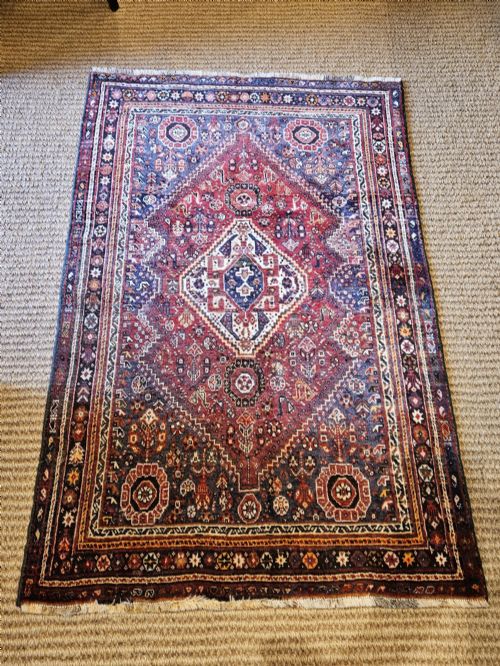
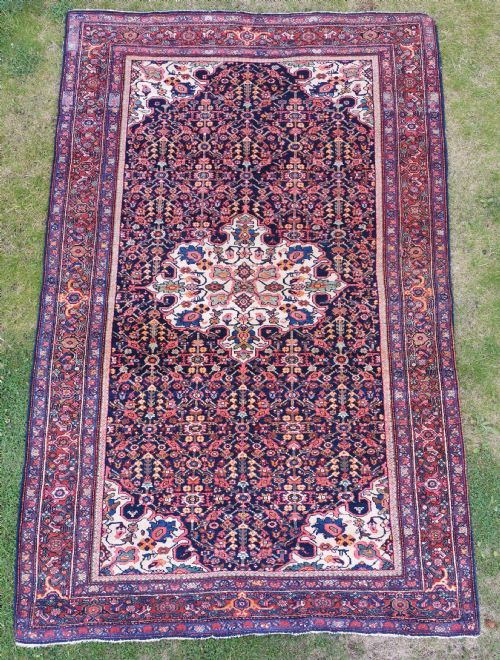
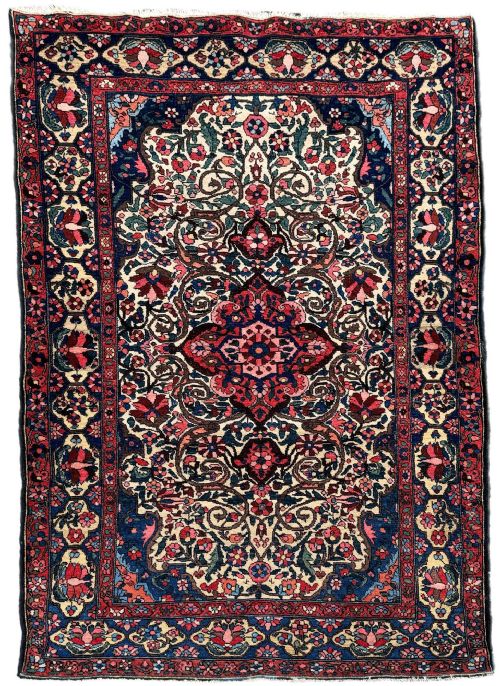
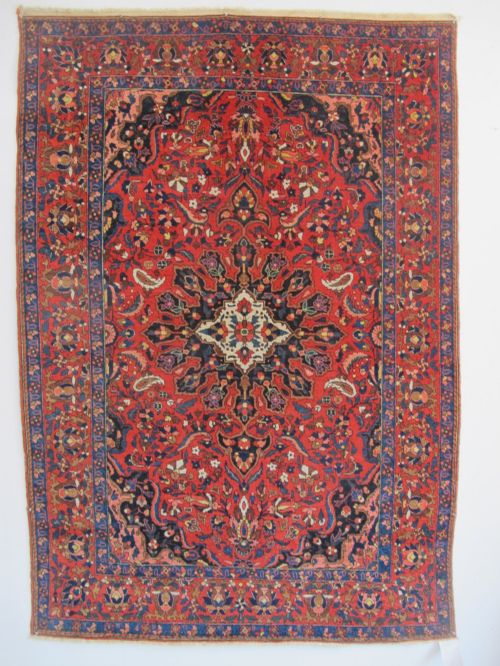
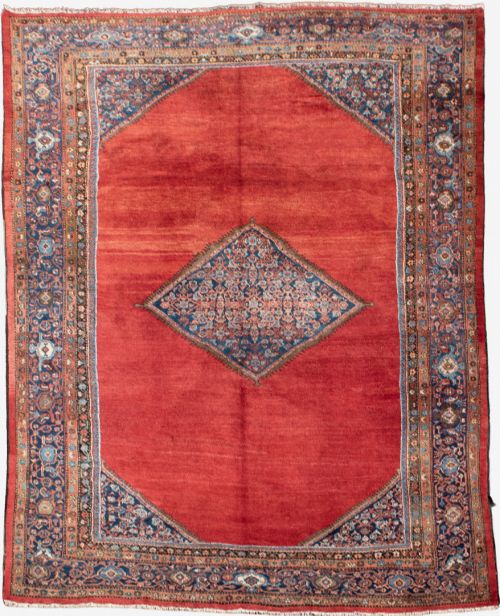
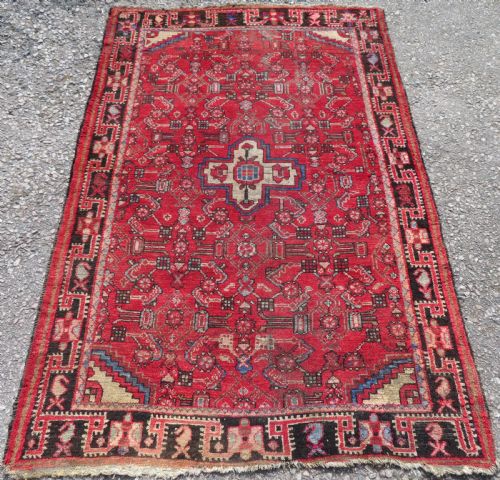
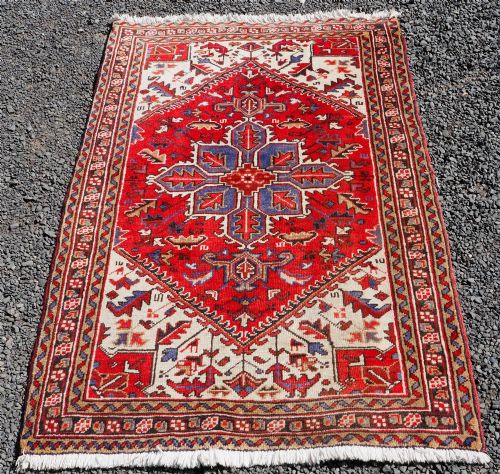
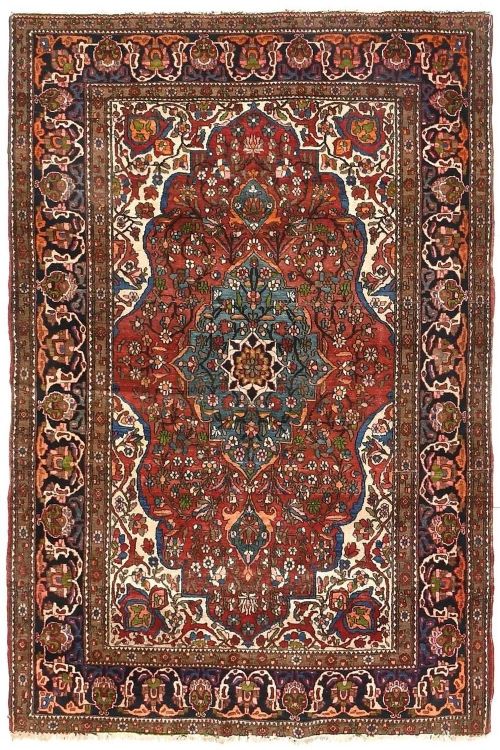
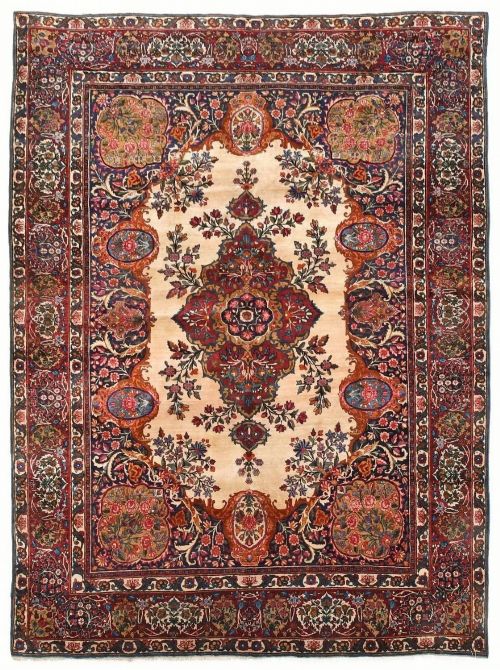
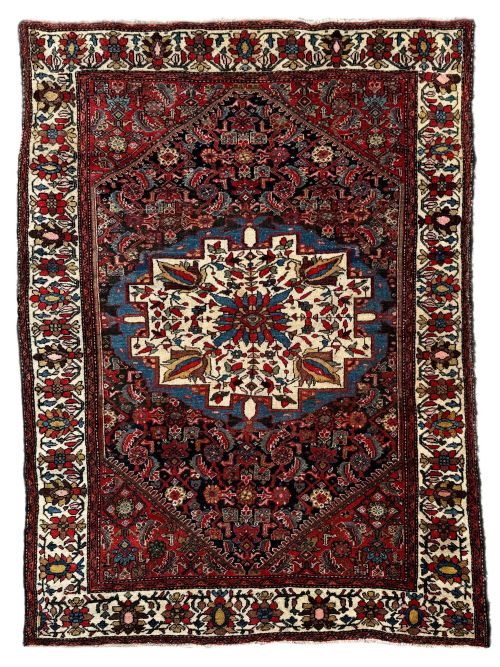


Red Central Medallion Rug
These red central medallion rug examples bring centuries of Persian and Tibetan weaving tradition directly into a room.
Red Central Medallion Rug
A red central medallion rug anchors a space with a prominent geometric or floral motif positioned precisely in the middle of the field. These textiles encompass room-size carpets, area rugs, and smaller floor coverings originating mainly from Persian and Tibetan traditions.
The pieces available span from the late nineteenth century through to the 1930s, displaying traditional styles such as Isfahan, Bakhtiar, Kashan, and Qashqai. Buyers will frequently encounter traditional Persian regional weaves alongside vintage Tibetan examples and Uzbek suzanis.
Makers utilised various formats, ranging from compact formats like the Kurdish Senneh rug to expansive room-size Ferahan and Kirman carpets. Each piece relies on the central anchor motif to draw the eye and structure the surrounding field and border patterns.
How they were made
Weavers constructed these textiles primarily using wool, cotton, and silk, occasionally incorporating angora wool for added texture. Foundations typically consist of sturdy cotton or wool warp and weft threads supporting the dense pile.
Dyers employed natural methods to achieve the characteristic red grounds and contrasting medallion tones seen across Isfahan, Tabriz, and Bidjar pieces. Artisans knotted the pile by hand, creating durable structures that withstand generations of foot traffic.
Red Central Medallion Rug Retail Price Guide 2026
Typical asking prices for red central medallion rug among the pieces listed under this phrase on Sellingantiques today, from the lower quarter to the upper quarter. They describe what is for sale here now, not the wider market.
Listings feature Persian, Tibetan, and Uzbek regions, spanning materials from pure silk and angora wool to traditional cotton foundations.
What varies in quality
Knot density and structural tightness dictate the precision of the medallion geometry and the crispness of floral details in regional pieces like Kashan and Sarouk. Finer examples display meticulous execution in the curvilinear or geometric drawing of the central motif against the field.
The choice of fibre influences the handle and sheen of the textile, with pure silk or fine wool variants demonstrating superior tactile depth. Preserved pile height and the integrity of the original foundational weave further distinguish the higher tier of these carpets.
The Red Central Medallion Rug Glossary
- Medallion
- The central ornamental design motif placed in the middle of the rug field. It serves as the primary visual anchor for the entire composition.
- Kelleh
- A long, rectangular format of carpet traditionally used in large Persian room layouts. This shape accommodates elongated hallway or gallery spaces.
- Suzani
- An embroidered textile panel originating from Central Asia, typically featuring floral designs on a cotton ground. These decorative hangings utilise silk threadwork.
- Warp
- The vertical threads stretched tightly on the loom that form the structural foundation of the rug. Wefts are then interwoven across these stationary threads.
- Pile
- The upright cut or loop yarn surface of the textile that forms the soft top layer. Pile density contributes directly to the durability and weight of the piece.
Red Central Medallion Rug: Frequently Asked Questions
How do I identify a Bakhtiar rug?
Bakhtiar rugs often display distinctive garden compartment designs or bold central medallions executed in robust wool. They originate from the Bakhtiari region in Persia and are recognised by their sturdy construction.
Examine the back of the rug to observe the dense weave and distinctive knotting style typical of these tribal workshops. The palette frequently includes deep reds alongside contrasting blues and ivories.
What is a Ferahan carpet?
Ferahan carpets are fine Persian weaves produced in the Markazi region, celebrated for their delicate floral motifs and balanced compositions. They often feature sophisticated Herati patterns surrounding a central medallion.
These carpets generally utilise high-quality wool on a cotton foundation, yielding a supple handle. The colour palette traditionally relies on rich madder reds and deep indigos.
Where were Uzbek suzanis made?
Uzbek suzanis are embroidered tribal textiles created by nomadic and village women in Central Asia. They were traditionally produced as dowry pieces or decorative wall hangings.
These textiles feature hand-stitched silk embroidery on cotton grounds, showcasing bold floral and medallion motifs. Their vibrant red backgrounds make them striking decorative focal points.
How should I care for an antique wool rug?
Protect antique wool rugs by placing them in low-moisture areas away from direct, harsh sunlight to preserve natural dye integrity. Regular gentle vacuuming without a beater bar prevents dust accumulation in the pile.
Rotate the rug periodically to ensure even wear across the surface from foot traffic and furniture placement. Professional cleaning should be undertaken sparingly by specialists experienced in antique textiles.