
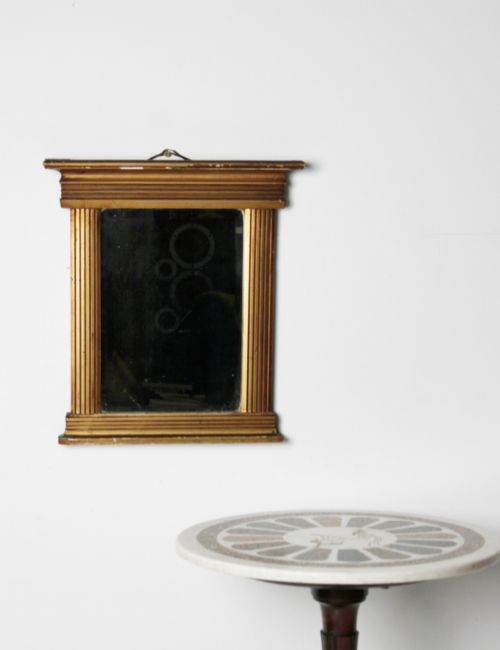


Small Overmantel Mirror
A small overmantel mirror brings compact period scale to a chimneypiece, offering the reflective presence of a larger glass without dominating the wall.
Small Overmantel Mirror
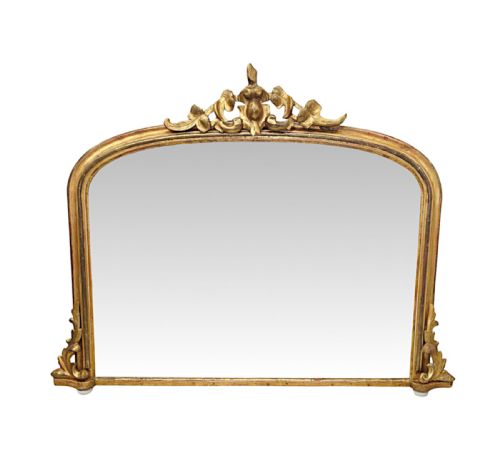
A small overmantel mirror is designed specifically to sit above a fireplace, taking proportions suited to narrower chimney breasts or lower mantel shelves. The search phrase covers pieces intended for this domestic placement rather than general wall hanging.
The selections span the nineteenth century, Regency, Victorian, and Edwardian eras. Buyers encounter archtop profiles, rectilinear frames, and classical mouldings reflecting the architectural shifts of these periods.
Materials range from gilded woods to mahogany, walnut, oak, and birds-eye maple veneers. These woods and finishes connect the mirrors directly to the interior joinery of their respective decades.
Construction and materials
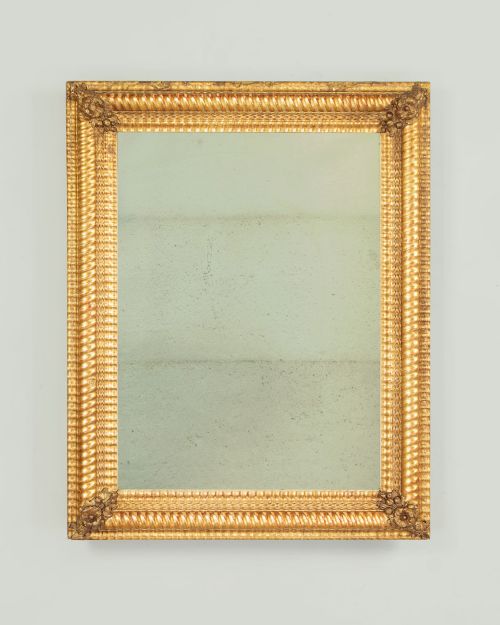
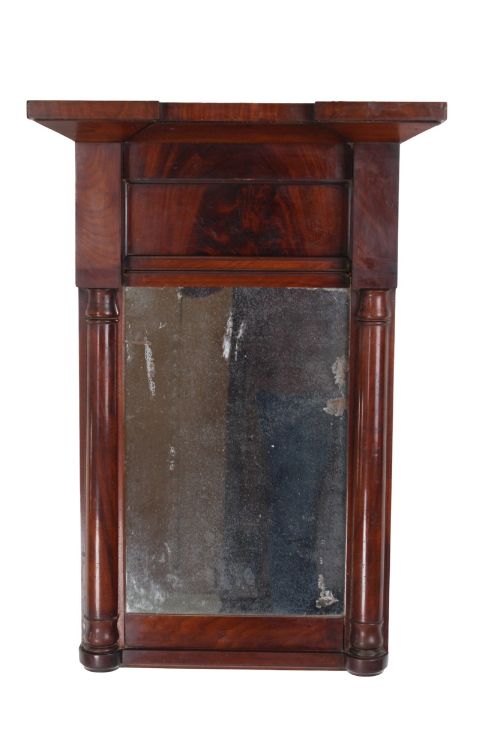
Makers utilised solid timbers such as mahogany, walnut, and oak alongside flame mahogany veneer and birds-eye maple to build the foundational carcases. Giltwood and composition ornaments were frequently applied over wooden frames to achieve decorative surface relief.
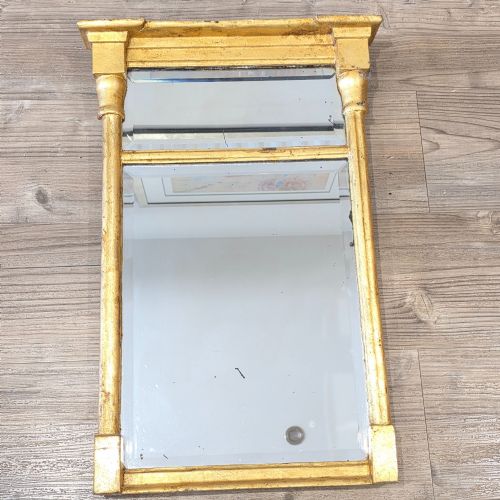
Gilding techniques involved the application of gold leaf or gilt finishes over gesso and carved wood surfaces. This created the characteristic reflective metallic sheen seen on Regency and Victorian examples.
Some Victorian mirrors hide neat marquetry details that reward a close look.
Assessing quality and craftsmanship
Quality rests in the crispness of the carved wood, the depth of the gilding, and the integrity of the underlying gesso. Finer pieces display sharply defined reeding, delicate moulding, and well-executed joinery rather than heavy, indistinct ornamentation.
The choice of timber and veneer grain also marks the distinction between standard production and superior craftsmanship. Select examples feature figured flame mahogany or birds-eye maple that has been carefully matched across the frame.
The Small Overmantel Mirror Glossary
- Overmantel mirror
- A looking glass specifically proportioned to hang above a fireplace mantel. These mirrors often repeat the architectural lines of the chimneypiece below them.
- Giltwood
- Timber coated with gold leaf or metallic powder applied over a prepared gesso ground. It provides a bright, reflective surface popular in formal interior schemes.
- Gesso
- A plaster-like mixture applied to wood frames to create a smooth surface for gilding or to take moulded ornamentation. It allows for intricate relief details.
- Pier mirror
- A glass designed to hang on the wall space between two windows. Their narrow proportions sometimes overlap with the dimensions of smaller fireplace glasses.
- Reeding
- Parallel convex moulding strips carved or applied to a timber frame. This classical decorative detail appears frequently on Regency pieces.
Small Overmantel Mirror: Frequently Asked Questions
Where should a small overmantel mirror be hung?
These mirrors traditionally sit directly above the fireplace mantelpiece to reflect light and fill the vertical wall space. Their compact dimensions suit modest rooms or secondary hearths.
They also function effectively on plain walls away from a fireplace where a narrower vertical accent is required. The scale allows them to fit into tighter wall spaces than standard grand salon glasses.
How do I identify a Regency period mirror?
Regency pieces often incorporate classical motifs such as reeding, ebonised details, and giltwood finishes. The frames tend to show clean architectural lines reflecting early nineteenth-century design.
Looking closely at the timber and the application of gesso helps distinguish these from later Victorian interpretations. The overall proportions remain restrained and balanced.
What woods were commonly used for these mirrors?
Cabinetmakers utilised mahogany, walnut, oak, and maple, frequently selecting figured veneers like flame mahogany or birds-eye maple. These timbers matched the prevailing furniture of the room.
Giltwood and composition mouldings were also widely applied over pine or hardwood carcases. This provided a luxurious metallic finish without relying entirely on solid costly woods.
How do Victorian mirrors differ from Edwardian ones?
Victorian examples frequently feature rich giltwood frames, arched tops, and walnut marquetry. They lean towards decorative warmth and elaborate surface detailing.
Edwardian pieces often return to simpler formats in oak or mahogany. Their construction reflects lighter domestic tastes at the turn of the twentieth century.