
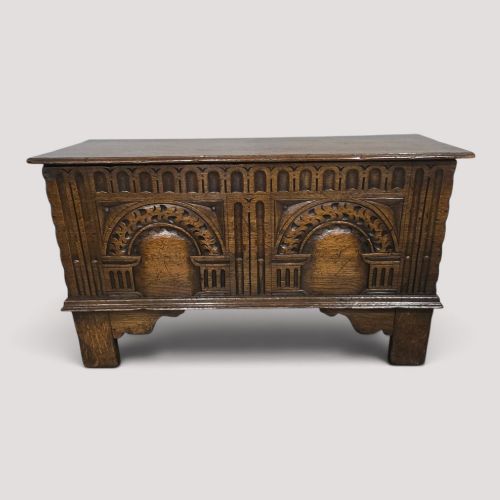
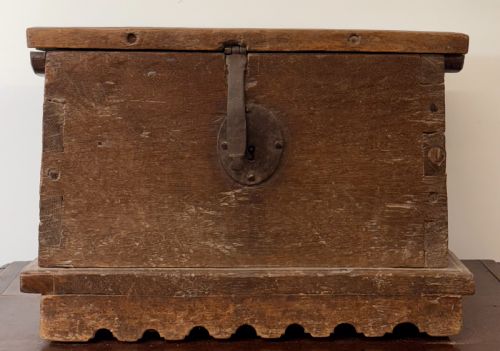
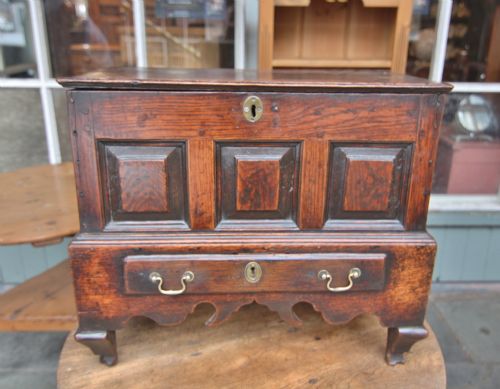
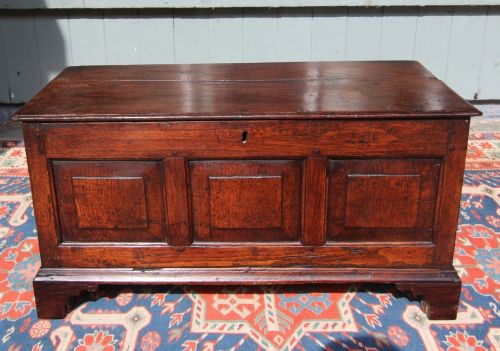

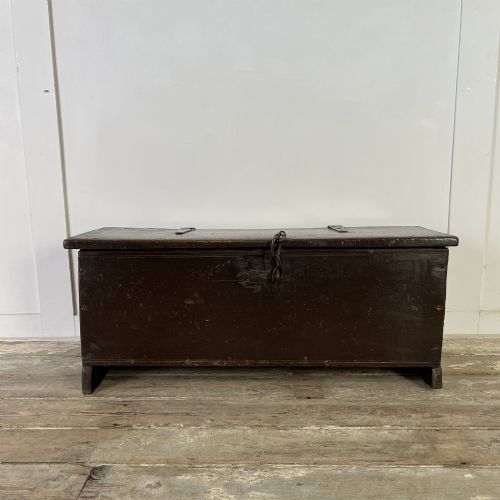


Small Oak Blanket Box
A small oak blanket box brings centuries of utilitarian craftsmanship and compact storage into a modern room.
Small Oak Blanket Box
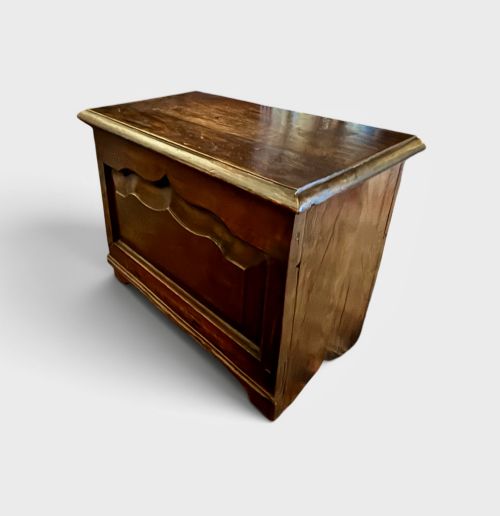
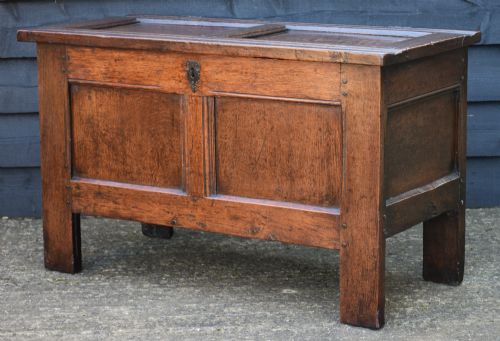
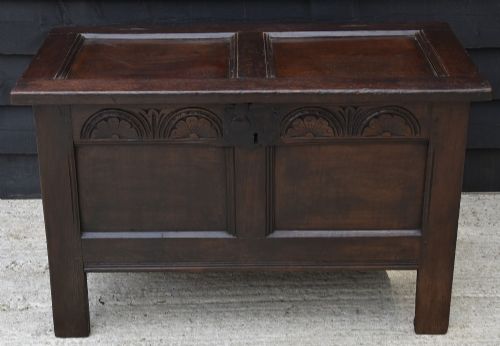
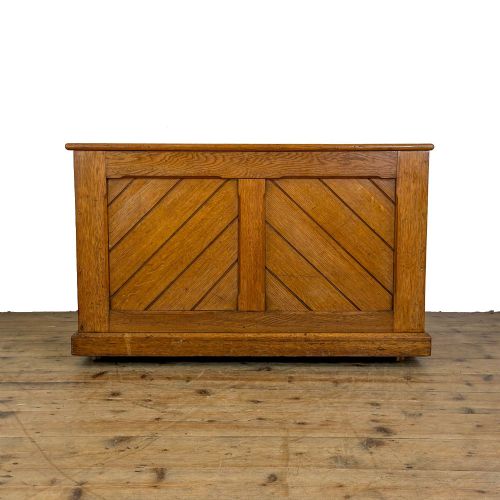
A small oak blanket box serves as a compact storage chest, often found in forms such as coffers, coffer baches, mule chests, and kists. These pieces date across the 16th, 17th, 18th, and 19th centuries, reflecting English, Welsh, French, and Flemish country origins.
Buyers most frequently encounter regional domestic furniture, including Welsh coffer baches and panelled English coffers in reduced proportions. They range from utilitarian storage bins to carved box stools and miniature chests designed for desktop or fireside use.
How they were made
Solid oak forms the primary structural material, shaped through traditional carpentry and joined utilising timber framing techniques. Iron and brass hardware, including hinges and locks, secure the lids and compartments.
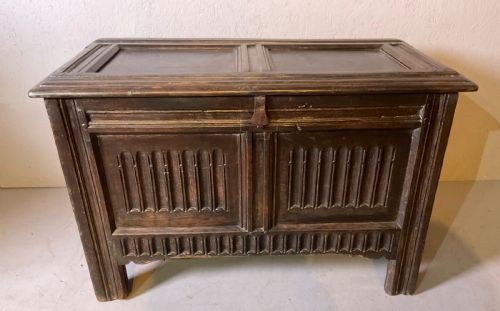
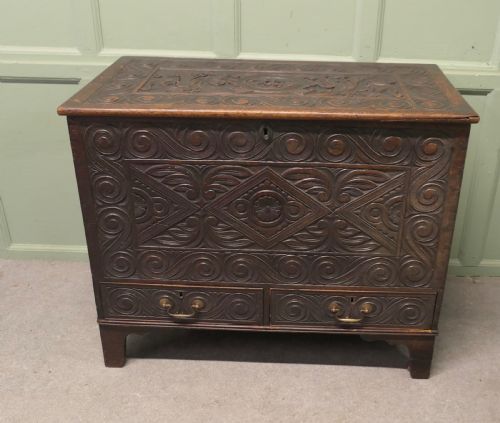
Surface decoration relies on wood inlay, linen fold panels, painted wood, and carved details such as Green Man motifs. Artisans also constructed smaller examples with turned feet and applied mouldings.
Listings span the 16th, 17th, 18th, and 19th centuries, utilising solid oak complemented by brass, iron, and painted wood finishes.
What varies in quality
The degree of hand-carving and the crispness of panel details distinguish simpler utility pieces from finer vernacular examples. Proportions and original hardware integration also influence the character of each box.
The survival of original surfaces, whether unpainted timber or early painted wood, affects the integrity of the piece. Construction depth, such as joined framing versus basic assembly, marks the distinction between standard and superior craftsmanship.
The Small Oak Blanket Box Glossary
- Coffer bach
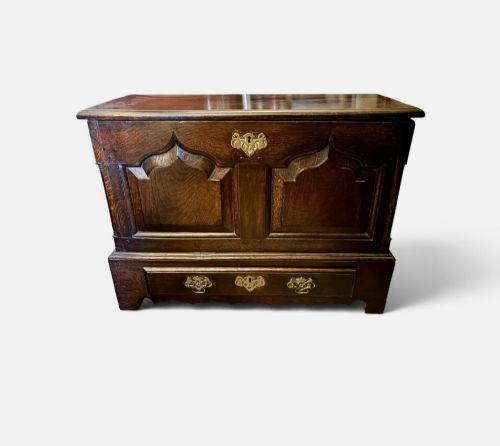
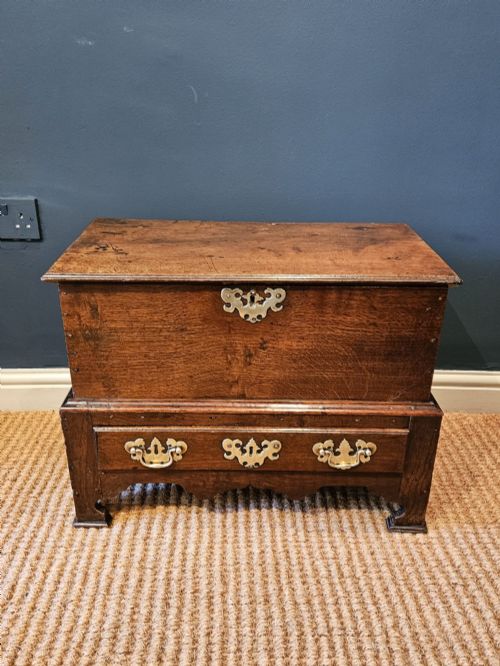
- A traditional Welsh miniature chest or coffer, often featuring a drawer beneath the main compartment. These small storage pieces date primarily to the 18th century.
- Mule chest
- A storage chest fitted with one or more drawers at the base beneath the primary trunk space. This form bridges the evolution from simple coffers to drawer chests.
- Linen fold
- A carved wood panel style resembling folded linen cloth. This decorative technique appears frequently on 17th-century panels.
- Kist
- A regional term of Norse origin for a chest or box used for domestic storage. They appear in compact sizes across country vernacular traditions.
- Box stool
- A multi-functional seating item featuring a hinged seat opening to a storage cavity. These items combine chair and coffer forms.
Small Oak Blanket Box: Frequently Asked Questions
What is a coffer bach?
A coffer bach is a small Welsh miniature chest traditionally used to store valuables or textiles. These pieces often incorporate a single drawer beneath the main box.
They date largely through the Georgian and 18th-century periods, resting on bracket or turned feet. Their diminutive scale makes them distinct from standard storage chests.
How were these chests used?
These boxes provided secure storage for household blankets, linens, and personal documents. Their compact proportions allowed them to sit near fireplaces or on tabletops.
Over time, owners also utilised them as occasional tables, window seats, or bedside boxes. Their sturdy construction supported dual functions in smaller historic interiors.
How do you date an oak coffer?
Dating relies on examining construction methods, panel styles, and ironwork hinges. Early examples feature hand-riven timber and pegged joints rather than modern fasteners.
Stylistic markers such as linen fold carving, Elizabethan strapwork, or Georgian proportions further narrow the period of origin. Secondary wood types inside drawers also offer clues to the date of manufacture.
Where were these boxes made?
Carpenters and vernacular makers produced these pieces across England, Wales, and parts of Europe including France and Flanders. Regional workshops adapted local timber to domestic storage needs.
Welsh pieces often display distinct proportions and drawer configurations compared to English country examples. Flemish and French items introduce alternative carving traditions and joinery details.