
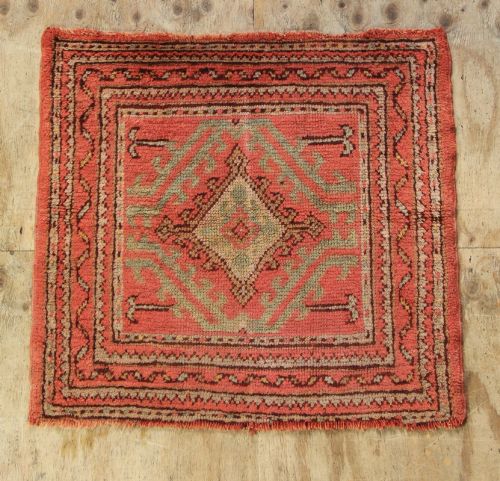


Small Anatolian Rug
A small anatolian rug brings centuries of weaving heritage into a room, offering geometric motifs and rich wool textures from Turkish villages.
Small Anatolian Rug
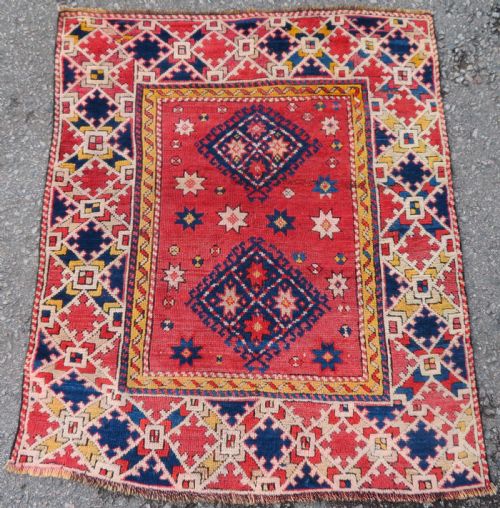
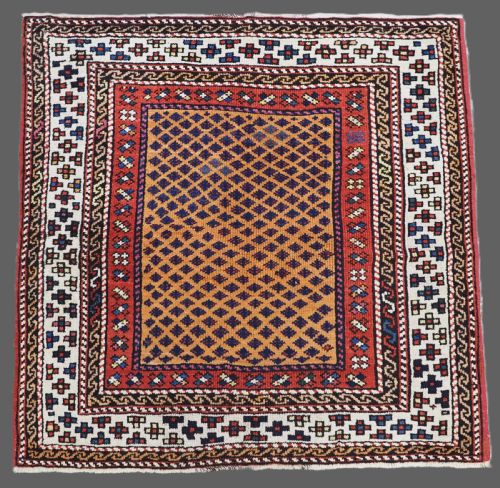
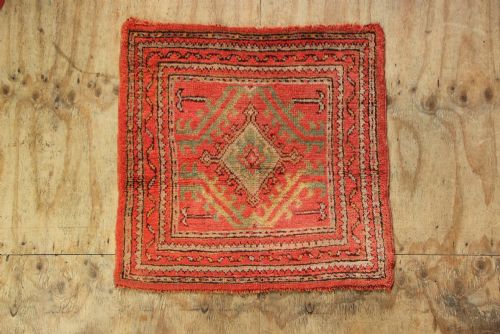
A small anatolian rug encompasses village and tribal floor coverings woven across various regions of Turkey, spanning periods from the early nineteenth century into the twentieth century. These pieces appear in formats such as mats, squares, and compact area rugs.
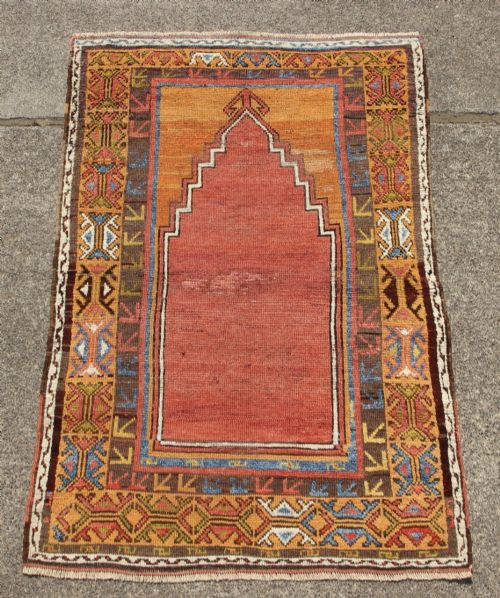
Makers in regions like Bergama, Konya, Kirsehir, Milas, and Oushak produced distinct regional layouts. Buyers frequently encounter formats incorporating prayer designs, central medallions, or lattice patterns.
Village workshops and nomadic weavers utilised traditional motifs passed down through generations. The resulting items function as practical floor coverings or wall hangings that anchor residential spaces.
Evaluating Quality and Execution
Quality rests in the precision of the knotting and the crispness of the geometric or floral motifs. Finer village pieces display disciplined drawing within medallions and borders.
The choice of wool impacts longevity and handle, with hand-spun varieties offering superior tactile depth. Preserved pile height and structural integrity also distinguish superior examples from heavily worn pieces.
Listings feature pieces spanning from the early nineteenth century through to the 1930s, utilising wool, cotton, and hand-spun wool.
The Small Anatolian Rug Glossary
- Prayer Rug
- A rug featuring a mihrab or arch design at one end, traditionally used for individual prayer. These pieces often direct the eye toward a central niche.
- Kelim
- A flat-woven carpet or rug made without a pile by interlocking warp and weft threads. These textiles offer a thinner profile than piled rugs.
- Medallion
- A central ornamental motif placed in the middle of the field. This design element anchors the composition of the entire textile.
- Warp
- The vertical threads stretched on the loom before weaving begins. Wefts are passed horizontally through these foundational strands.
- Yastic
- A small Turkish cushion face or small rug traditionally used on low seating. These formats measure compactly and display concentrated village designs.
Small Anatolian Rug: Frequently Asked Questions
How do I care for an antique rug?
Vacuum gently without a rotating brush bar to protect the wool pile from unnecessary friction and wear.
Keep the textile out of direct sunlight to prevent natural dyes from fading over the years.
Where were these village rugs made?
Weaving took place across various Anatolian districts, including Bergama, Konya, Kirsehir, and Oushak.
Specific towns and nomadic groups contributed distinct border patterns and colour combinations to their output.
Are these textiles suitable for high traffic?
Wool construction provides natural durability that handles moderate foot traffic in domestic living spaces.
Using an appropriate underlay helps secure the rug and reduces friction against hard flooring.