


Slope Top Box
A slope top box is a compact desk or storage container designed for correspondence and papers, combining timber construction with angled lids.
Slope Top Box
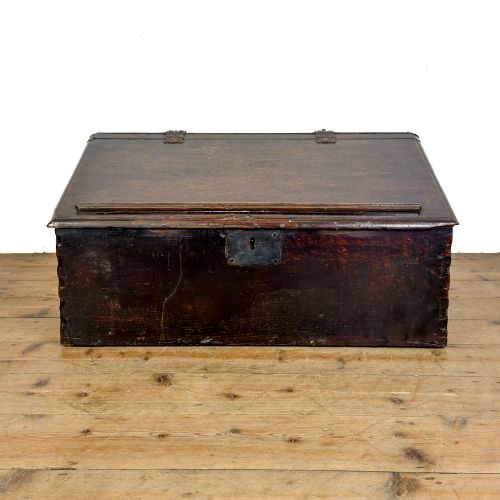
A slope top box serves as a portable desk or secure repository for documents, appearing across the seventeenth, eighteenth, and nineteenth centuries in forms such as writing slopes, bible boxes, and stationery cabinets. Buyers searching for a slope top box will encounter sturdy oak examples from earlier periods alongside polished mahogany, camphor wood, and walnut pieces from the Georgian and Victorian eras.
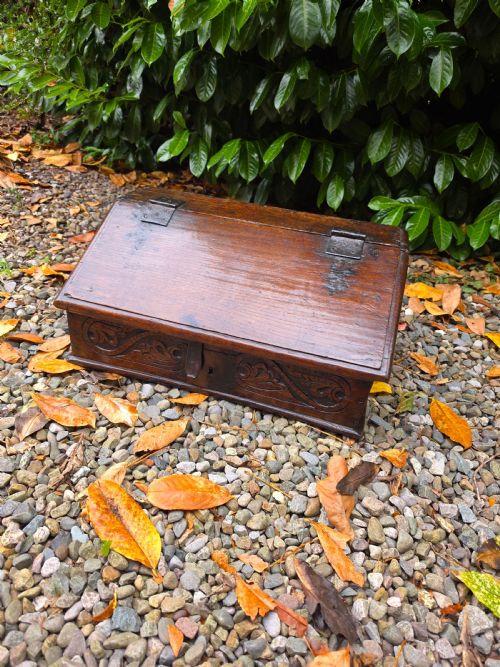
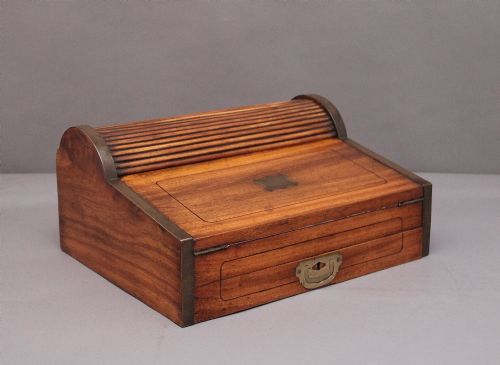
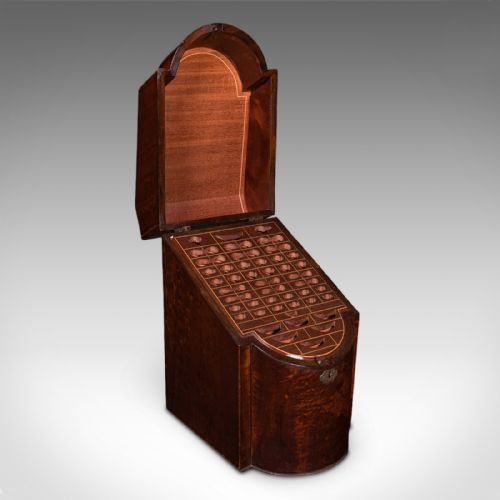
The utilitarian forms range from simple carved bible boxes to complex campaign writing slopes with brass mounts and metamorphic compartments. Table top bureaux and knife boxes also populate this category, reflecting the varied domestic and administrative needs of past households.
How they were made
Cabinetmakers utilised dense timbers including oak, mahogany, camphor wood, elm, and rosewood to construct these boxes, often applying wood inlay or parquetry for decoration. Many pieces incorporate robust iron and brass hardware, from simple hinges to structural corner straps and campaign bindings.
Internal arrangements demonstrate careful joinery, featuring small drawers, pigeon holes, and sloped writing surfaces lined with leather or velvet. Exterior surfaces frequently display carved friezes, burr veneers, or painted finishes depending on the period and regional origin.
Several boxes double as sewing or cutlery stores, proving our ancestors insisted their knife boxes pull double shifts.
What varies in quality
The standard of a slope top box rests upon the selection of timber and the precision of its construction, particularly in the fit of internal drawers and writing surfaces. Superior pieces display harmonious grain matching, intact brass or iron hardware, and original fitted interiors rather than later replacements.
Execution of decorative details such as carved friezes, inlay work, and dovetail joints distinguishes workshop production from simpler domestic carpentry. The presence of maker's labels or specialised campaign mechanisms further elevates the interest and standing of an individual box.
F Waller
The Slope Top Box Glossary
- Bible Box
- A small wooden chest traditionally used for storing religious texts and documents. These early pieces frequently feature sloping lids and carved decoration.
- Writing Slope
- A portable desk with an angled lid that opens to reveal a slanted writing surface and internal compartments for ink and paper. They were essential for correspondence before fitted home offices.
- Campaign Box
- Portable furniture constructed for travel, typically featuring recessed brass handles, reinforced corners, and robust timbers like camphor wood. These items were designed to withstand military transport.
- Stationery Cabinet
- An upright desk accessory with doors or a tambour front enclosing shelves and pigeon holes for paper storage. They became particularly popular during the Victorian period.
- Parquetry
- Geometric mosaic woodwork used for decorative veneer on box exteriors. It showcases the skill of the cabinetmaker through precise pattern work.
Slope Top Box: Frequently Asked Questions
What is a slope top box used for?
These boxes provided a portable writing surface and secure storage for letters, documents, and writing implements before the widespread use of fitted desks. The angled lid created a comfortable writing plane when placed on a table or placed across the knees.
Today, they serve as decorative desktop organisers or compact storage chests for modern correspondence, stationery, and small personal items.
How do I date a slope top box?
Dating relies upon timber selection, construction methods, and hardware styles across different periods. Seventeenth and eighteenth-century examples are predominantly oak with hand-cut joinery, while Georgian and Victorian pieces frequently utilise mahogany, rosewood, or camphor wood with more refined internal fittings.
Examining the hinges, locks, and internal drawer construction also helps determine the era in which the box was built.
How do I care for antique wood boxes?
Maintain these pieces by keeping them away from direct sunlight and sudden temperature changes that can cause timber to split or veneer to lift. Apply a suitable microcrystalline wax occasionally to nourish the wood and preserve the finish without building up heavy residues.
Ensure brass and iron hardware is kept dry and free from moisture to prevent corrosion.