


Slant Front Box
A slant front box provides a compact slope for writing or holding papers, combining practical storage with period craftsmanship.
Slant Front Box
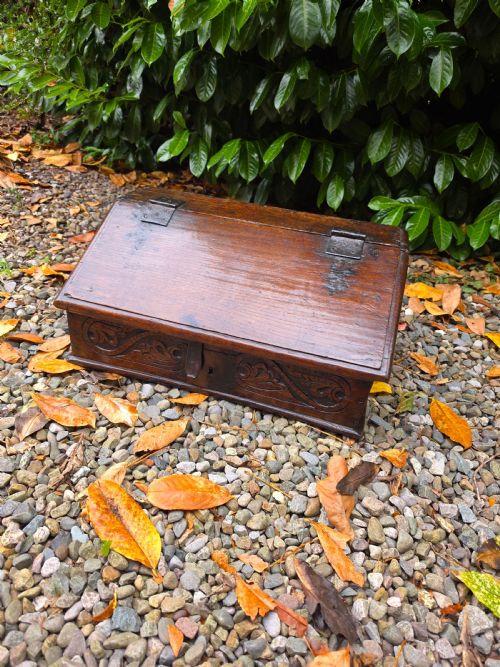
A slant front box covers portable writing surfaces, table top bureaus, and small cabinets spanning the 17th Century to the Victorian era. These pieces appear in forms such as oak Bible boxes, elm table top bureaus, and mahogany stationery boxes.
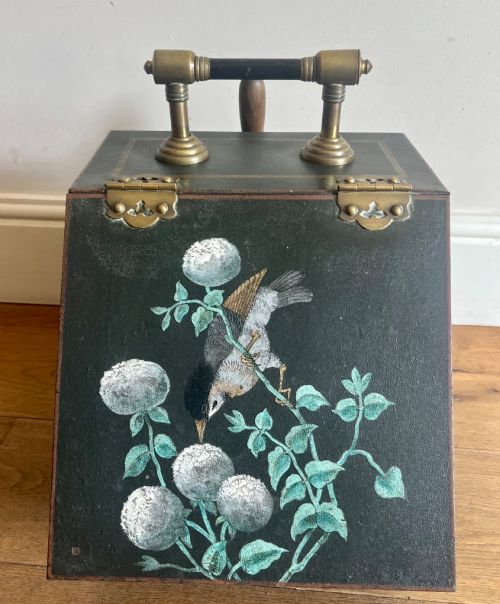
The selection ranges from early oak pieces bearing initials and dates to Victorian walnut stationery cabinets and brass-mounted coal boxes. Buyers encounter domestic writing equipment and fireside fuel containers grouped under this description.
Assessing quality
Quality depends upon the selection of timber grain and the integrity of the original construction. Pieces retaining their original stands, handles, and fitted interior compartments command greater attention.
Refined execution in carved decoration, dovetail joints, and brass mountings distinguishes superior examples from standard utility boxes.
Periods represented span from the 17th Century through Georgian and Victorian eras to Edwardian examples.
The Slant Front Box Glossary
- Bible box
- A small lidded desk box used originally for holding sacred texts and writing materials. These early pieces often date to the 17th Century in oak.
- Table top bureau
- A miniature desk with a slanted fall-front lid designed to sit upon a table or chest. They incorporate internal compartments for letters and papers.
- Stationery box
- A desk accessory structured to hold envelopes, paper, and writing implements upright or flat. Victorian examples frequently feature elaborate fitted interiors.
- Purdonium
- A domestic container designed for storing coal by the fireside, often constructed in oak or walnut with brass fittings. They include drop-front doors or lifting lids.
- Marquetry
- Inlays of different woods or materials fitted into a wooden background to create decorative patterns. This technique appears on Dutch toilet mirrors and desk furniture.
Slant Front Box: Frequently Asked Questions
What is a slant front box used for?
These boxes serve primarily as desktop writing surfaces or compact storage for stationery, letters, and documents. Some variations additionally encompass small slant-front bureaus and fireside fuel containers.
Historically, they provided a portable or space-saving alternative to full-sized standing desks in domestic settings.
How do I date an oak slant front box?
Dating relies upon construction methods, timber choice, and stylistic markers such as carved panelling or inscribed owner initials. Early 17th Century examples typically show pegged joints and heavy oak construction.
Later Victorian pieces introduce machine-sawn elements, varied internal fittings, and polished walnut or mahogany surfaces.
Are these boxes original or modified?
Survival over centuries means some pieces may feature associated stands or replacement hardware. Listings specify whether a desk rests on a later stand or retains its original fittings.
Careful inspection of the timber joints and interior surfaces helps determine the extent of past restoration.
Where were these pieces made?
Origin points span English, Welsh, Scottish, and continental workshops depending on the specific piece. Regional traits appear clearly in Welsh oak desks and Dutch marquetry items.
Local timber availability heavily influenced whether makers chose native oak, elm, or imported mahogany.