


Slanted Writing Bureau
A slanted writing bureau brings together domestic utility and fine cabinet-making, offering a fitted fall-front workspace that conceals letters and ledgers.
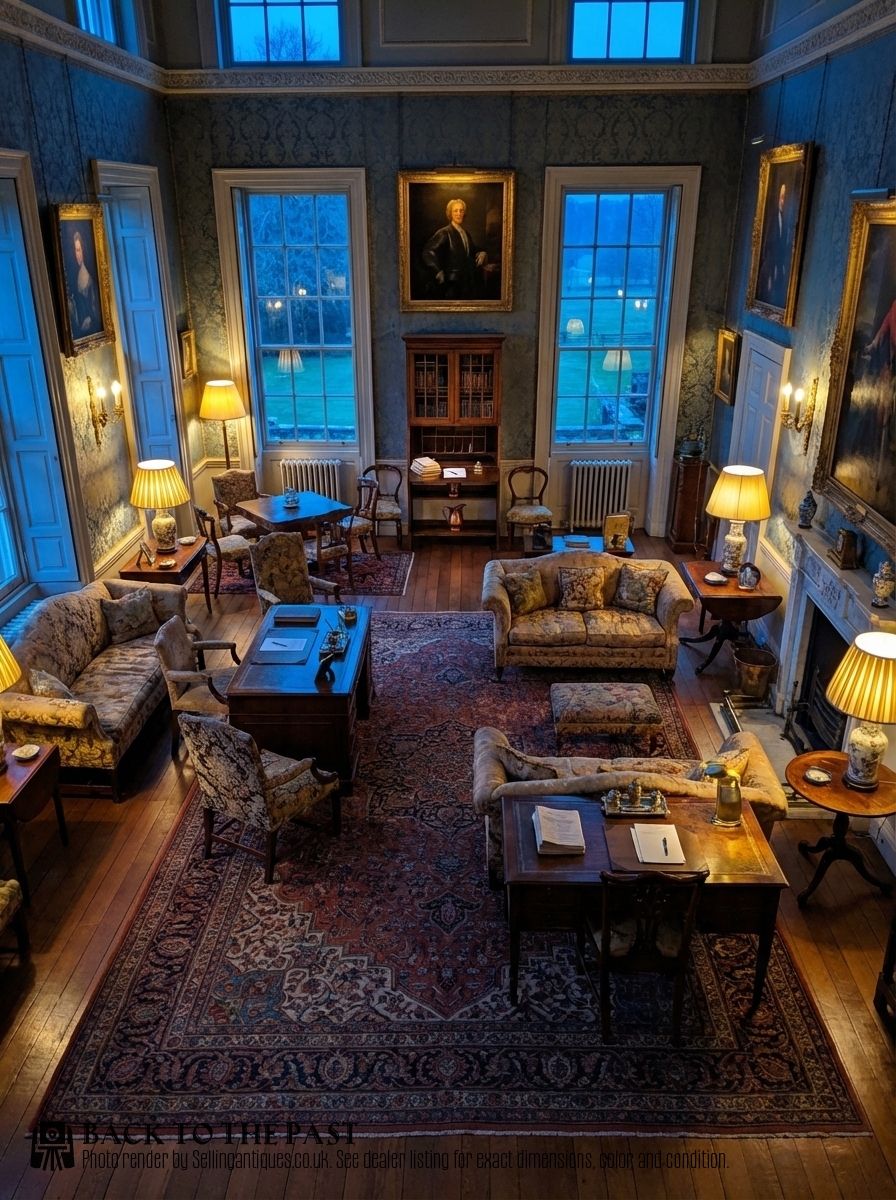
Slanted Writing Bureau
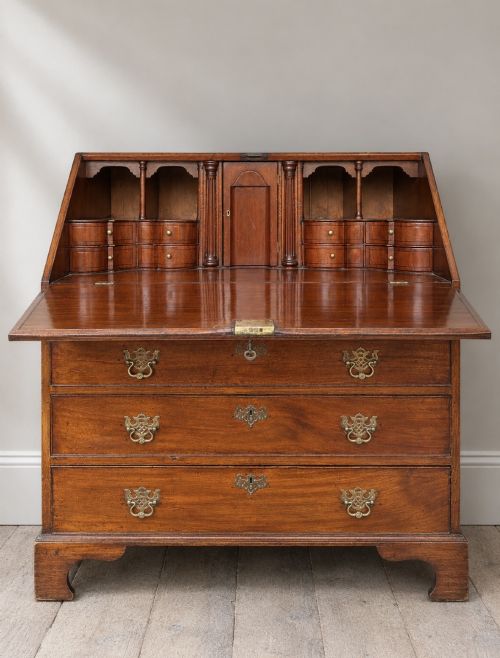
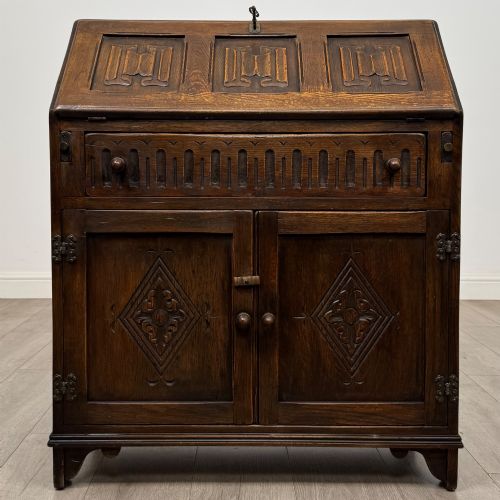
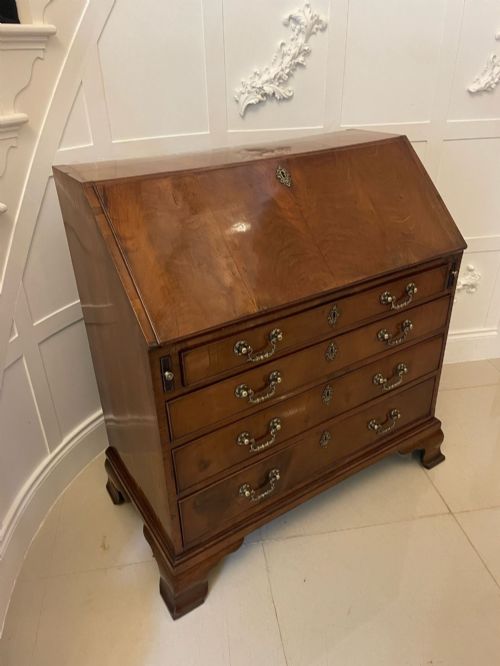
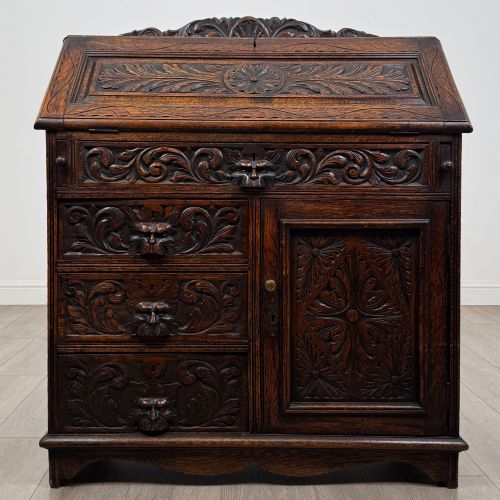
A slanted writing bureau is a dedicated writing cabinet defined by its sloping fall-front lid, which drops down to create a horizontal writing surface. Buyers encounter these forms across multiple centuries, ranging from early oak examples to later mahogany, walnut and Edwardian oak editions.
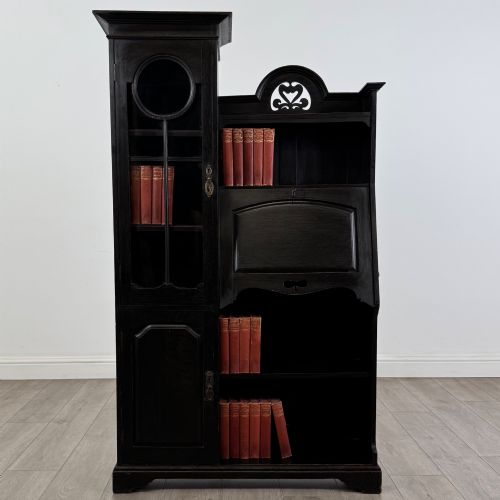
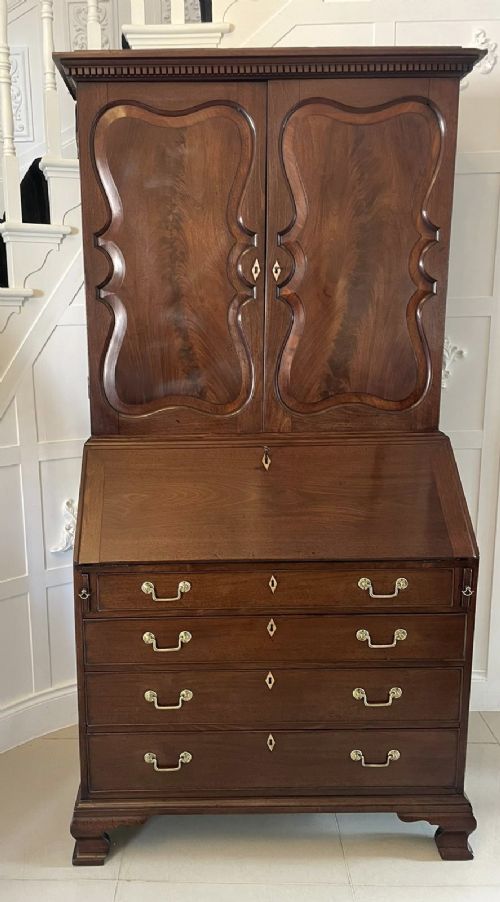
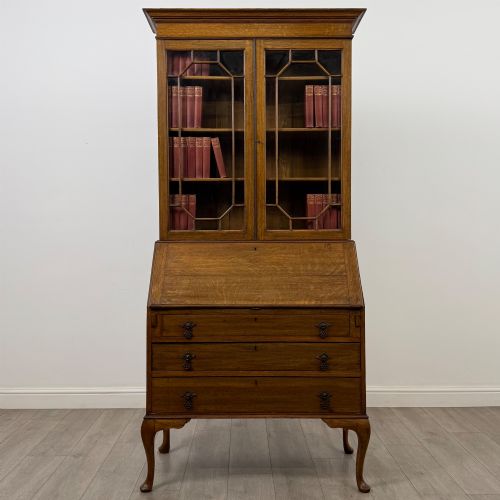
The interior typically reveals an arrangement of small drawers, pigeonholes and secret compartments hidden behind the drop-down flap. Below this writing slope, storage takes the form of graduated drawers, sometimes elevated on bracket feet, a stand or integrated into taller bureau bookcase configurations.
Materials and construction
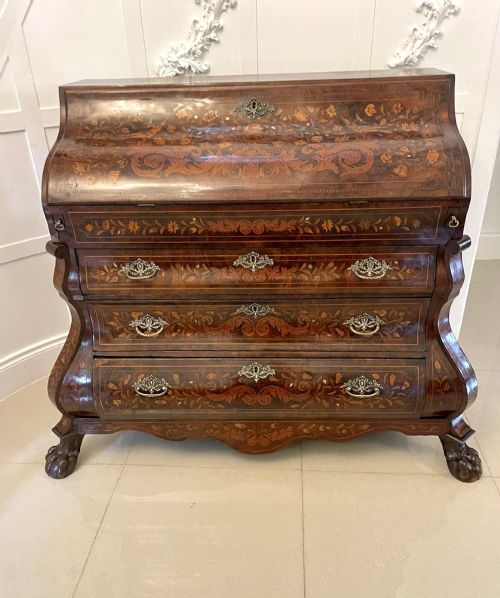
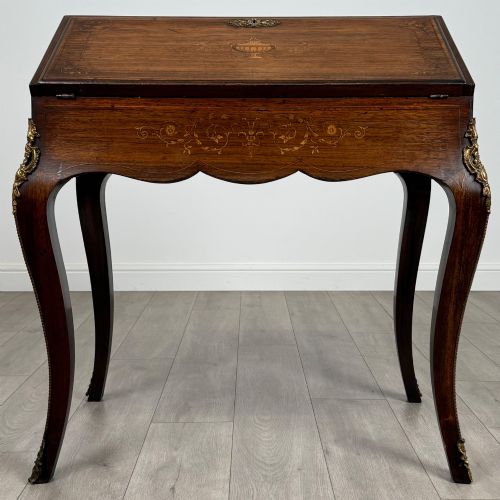
Cabinet-makers constructed these pieces using dense timbers such as mahogany, oak and walnut, frequently applying burr walnut veneers or floral marquetry to enhance the exterior surfaces. Brass handles, escutcheons and hinges provide functional hardware, while internal writing surfaces often incorporate inset leather.
Joinery techniques involve dovetailing for drawer construction and panel framing for carcases, allowing timber to move naturally with seasonal humidity changes. Specialised variants display ebonised finishes, hand-painted details or intricate parquetry patterns set into the fall-front lid.
Some early oak examples arrive with clever secret compartments hidden behind sliding pigeonhole partitions for holding hidden letters.
Evaluating quality and execution
Quality rests upon the selection of timber veneers, the precision of internal pigeonhole joinery and the integrity of the fall-front support mechanisms. Superior pieces exhibit continuous grain matching across drawer fronts and sophisticated interior configurations with secret compartments.
The refinement of exterior carving, such as crisp bracket feet or detailed marquetry inlay, distinguishes workshop execution. Lesser examples rely on plain secondary timbers and simpler internal layouts without secondary drawers or stepped compartments.
Heals of London·Gillows
The Slanted Writing Bureau Glossary
- Fall-front
- The hinged sloping panel that closes to conceal the writing interior and drops down to form a desk surface. It requires sturdy lopers or support arms to bear the weight.
- Bureau bookcase
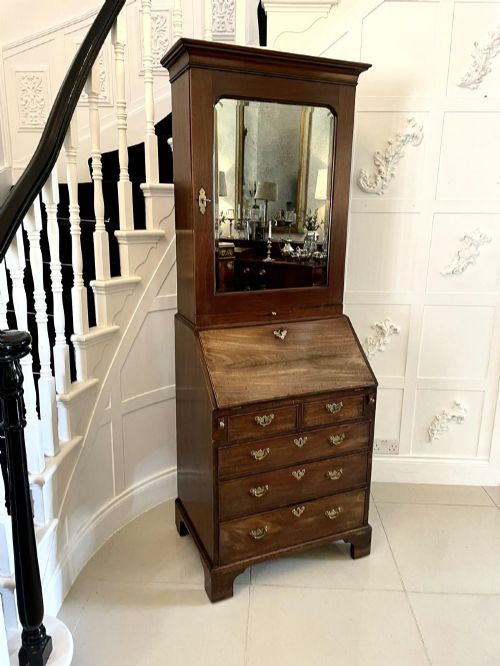
- A tall cabinet combining a slanted writing bureau base with an upper glazed or panelled shelved bookcase section. These dual-purpose pieces maximise vertical storage.
- Marquetry
- Decorative veneer patterns formed by fitting together thin pieces of wood, bone or shell to create pictorial designs. Floral motifs and geometric parquetry frequently decorate the fall-front lids.
- Davenport
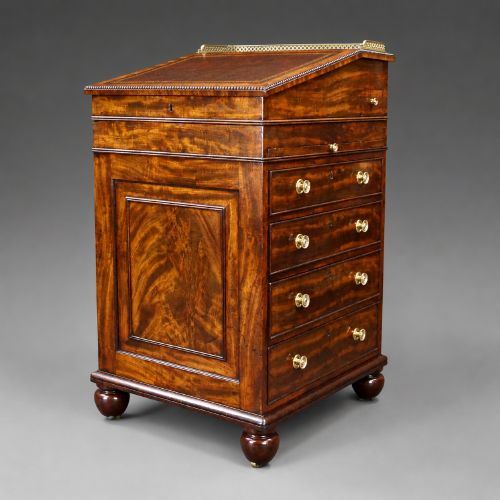
- A compact form of writing desk featuring a sloped top above a pedestal of side drawers. They emerged during the Regency period and offer smaller footprints than standard bureaus.
- Loper
- A wooden pull-out arm or slide positioned beneath the fall-front lid to support the writing flap when opened. Smooth operation indicates original joinery.
Slanted Writing Bureau: Frequently Asked Questions
What is a slanted writing bureau?
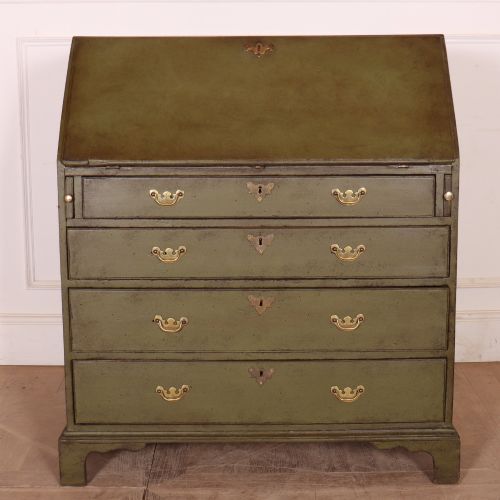
A slanted writing bureau is a freestanding wooden cabinet featuring an angled fall-front lid that opens to reveal a fitted interior of small drawers and pigeonholes. Below the writing flap, multiple drawers provide general storage for household documents and personal items.
These pieces developed to meet the demand for private correspondence spaces before the widespread use of dedicated freestanding desks. Their dual nature combines enclosed vertical storage with a functional fold-down writing surface.
How do I date an old bureau?
Dating relies on examining the secondary timbers used inside drawer linings, the style of the brass hardware, and construction methods such as hand-cut dovetails. Earlier pieces from the seventeenth and eighteenth centuries typically utilise oak or walnut, while later nineteenth-century examples frequently feature mahogany or rosewood.
Secondary clues include the complexity of the interior pigeonholes and the presence of bracket feet versus plinth bases. Stylistic markers such as marquetry inlay or linenfold carving align with specific periods like the Edwardian era or the Georgian epoch.
How were these bureaus used?
Owners used these cabinets for writing letters, managing household accounts, and storing important documents out of sight behind the locked fall-front flap. The internal compartments kept inkwells, quill pens, sealing wax and stationery organised.
When closed, the sloped lid kept unfinished correspondence protected and concealed from casual visitors. The lower drawers held larger papers, books or personal garments depending on the room where the bureau stood.
Where should I place a bureau?
A bureau suits a living room, study or bedroom where its compact footprint provides both surface workspace and enclosed storage. Placement requires sufficient clearance in front of the piece for the fall-front lid to drop down and a chair to be pulled up comfortably.
Keeping the timber away from direct heat sources and strong sunlight preserves the polished finish and prevents veneer shrinkage. Because the backboards on older pieces are often finished simply, positioning them flat against a wall works best.