
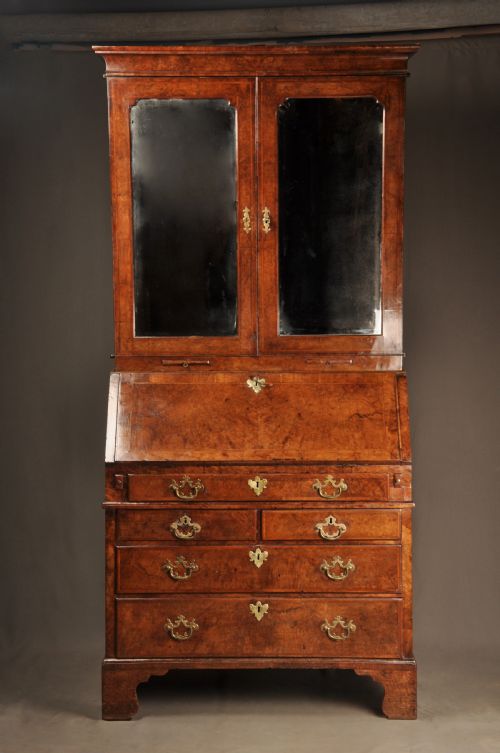
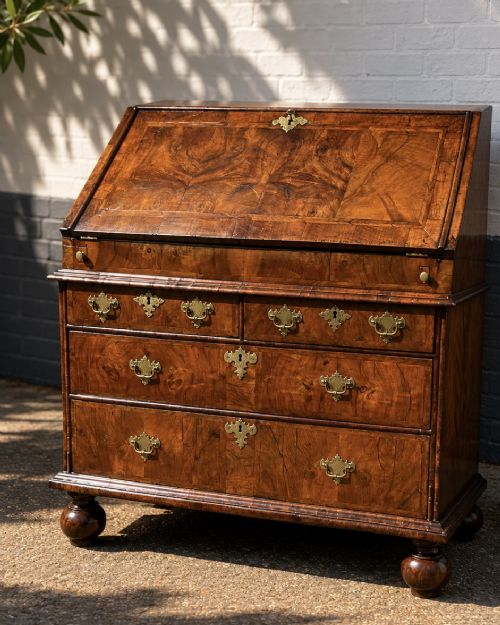

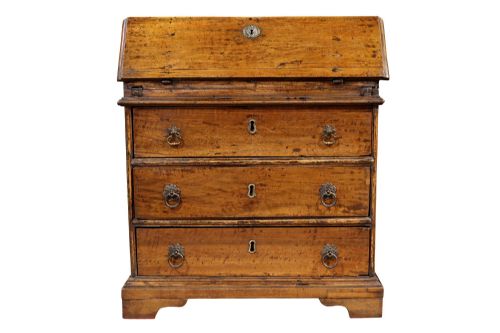


Early Georgian Secretary Desk
An early georgian secretary desk brings architectural presence and concealed storage to a room, offering a drop-front writing surface paired with upper shelving.
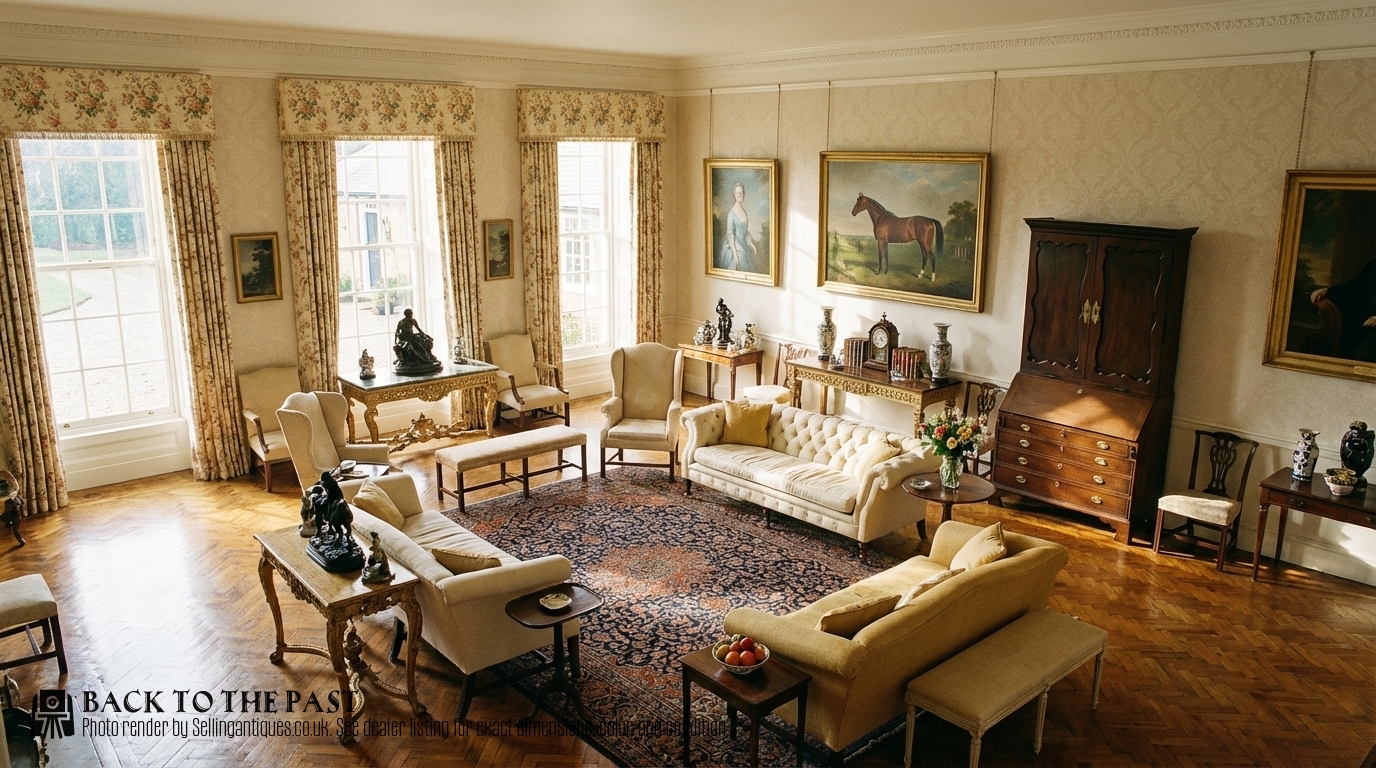
Early Georgian Secretary Desk
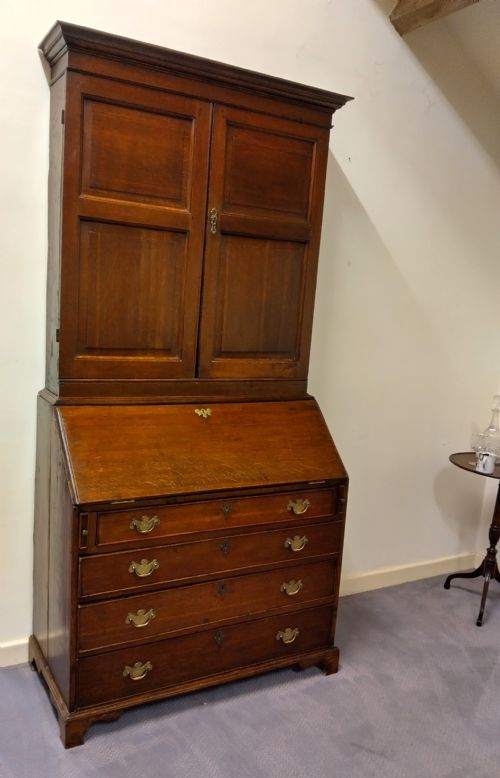
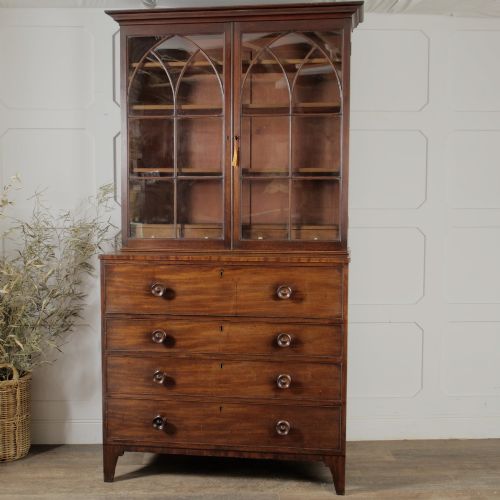
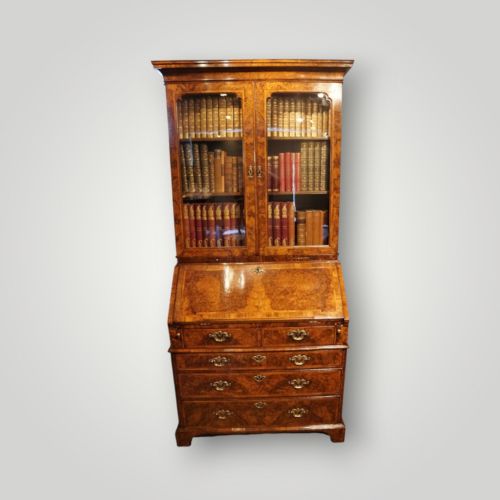
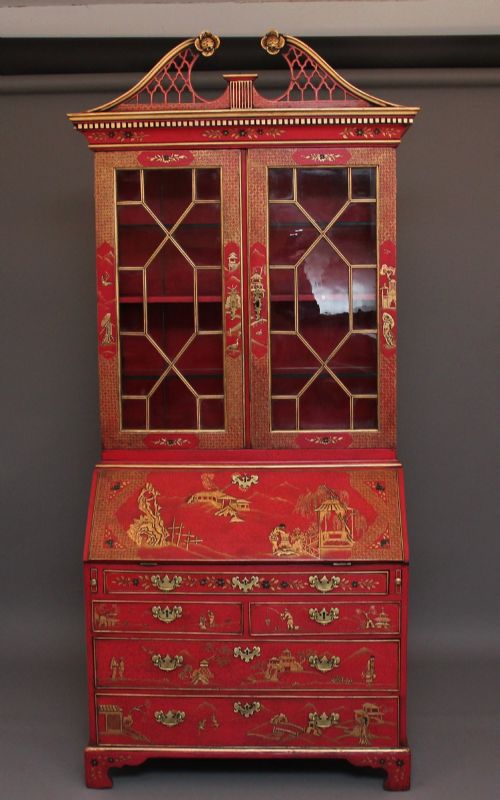
An early georgian secretary desk unites a lower writing chest with an upper glazed or panelled bookcase, often designated in period terms as a bureau bookcase or escritoire. The pieces on this page span the late seventeenth century through the early eighteenth century, alongside later revivals from the nineteenth and twentieth centuries.
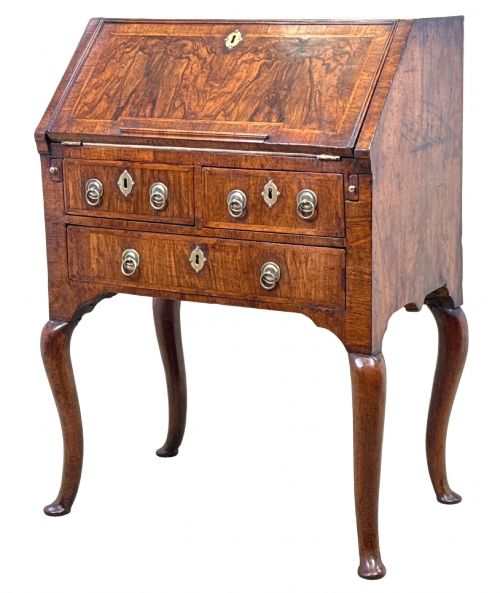
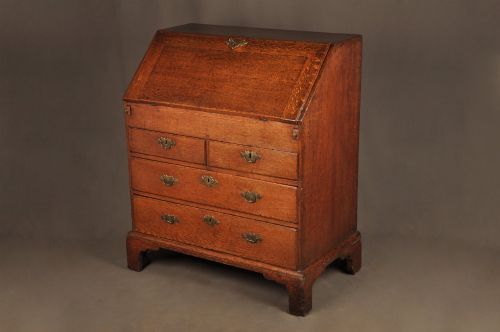
Buyers will encounter two primary configurations on this page: standalone drop-front bureaus resting on bracket feet or legs, and taller two-section bureau bookcases featuring fitted interior compartments and candle slides. Woods range from native oak and elm to highly figured walnut veneers.
How they were made
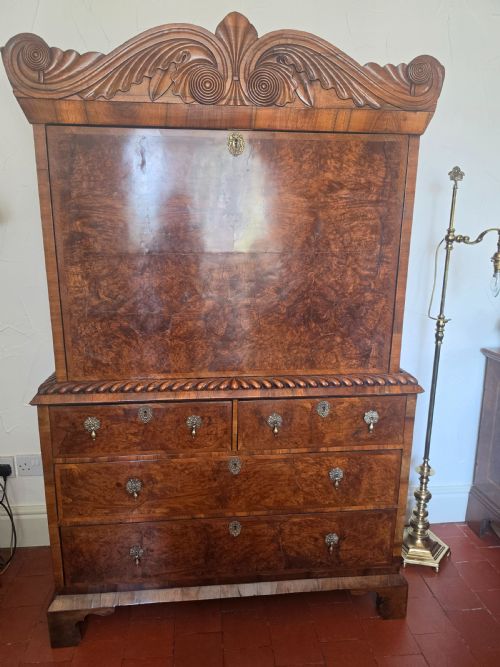
Cabinet makers utilised solid timbers alongside complex veneers, applying burr walnut, burr elm, and mulberry across carcases built from oak or pine. Grain matching demanded high skill, particularly on fall-front flaps and drawer fronts where concentric burl patterns form symmetrical displays.
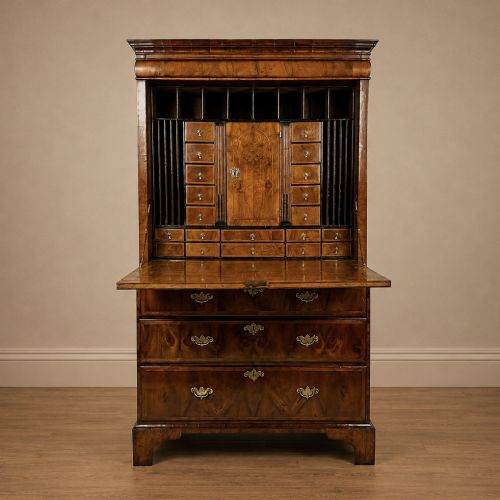
Joinery relied on dovetails for drawer construction and pegged mortise and tenon joints for the main housing. Secondary details include brass drop handles, escutcheons, and ironwork, paired with interior compartments featuring pigeonholes and secret drawers.
Listings feature walnut, oak, mahogany, burr elm, and burr walnut veneer across eighteenth-century, nineteenth-century, and twentieth-century periods.
What varies in quality
The degree of figuration in the wood and the integrity of the original surfaces separate standard examples from superior ones. Pieces retaining their early patination, original brass hardware, and unaltered interior fittings command greater attention from discerning collectors.
Proportion and scale also dictate worth, as smaller writing desks and three-section bureau bookcases require tighter structural harmony than larger, utilitarian counterparts. The complexity of the fitted interior, including sliding wells and carved document drawers, indicates the original commission tier.
The Early Georgian Secretary Desk Glossary
- Escritoire
- A writing cabinet featuring a fall-front flap that conceals drawers and pigeonholes. This term appears frequently in early eighteenth-century inventories.
- Bureau bookcase
- A dual-section furniture form combining a slant-front writing desk below and a glazed or panelled bookcase above. It served for both correspondence and library storage.
- Fall front
- The hinged writing flap of a desk that folds down to provide a horizontal surface. It often rests on lopers or pull-out supports when opened.
- Candle slide
- A pull-out wooden board mounted beneath the upper bookcase doors to hold lighting. These allowed users to read and write during evening hours.
- Burr walnut
- Timber harvested from walnut tree excrescences, producing intricate swirling grain patterns. Cabinet makers prized this material for veneering primary display surfaces.
Early Georgian Secretary Desk: Frequently Asked Questions
How were these desks used originally?
Users sat at the drop-front writing flap to write letters, manage household accounts, and read documents stored in the internal pigeonholes and secret compartments. The upper bookcase sections housed bound volumes and ledgers.
Candle slides pulled out from beneath the upper doors to provide illumination for evening writing before the advent of electric lighting.
How do I distinguish period pieces from later copies?
Examination of the secondary woods, dovetailing methods, and hardware impressions reveals the age of the construction. Eighteenth-century examples utilise hand-cut dovetails and native timbers like oak internally, showing natural wear patterns.
Later nineteenth and twentieth-century revivals often display machine-sawn elements, different internal locking mechanisms, and modern adhesives behind the primary veneers.
Where should I place a bureau bookcase?
These tall cabinet pieces require substantial wall space and benefit from placement in studies, libraries, or drawing rooms where their architectural height can be appreciated. Direct sunlight should be avoided to protect sensitive walnut and burr veneers from fading.
Stable indoor humidity prevents the timber from drying out and keeps the heavy panelled doors and fall fronts aligned properly.