
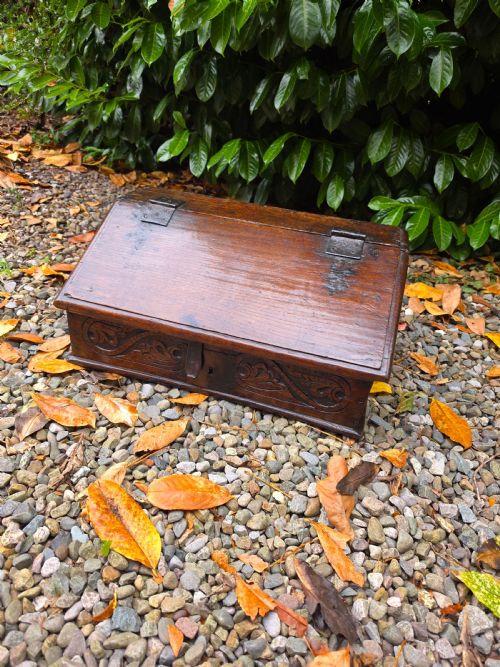


Slanted Oak Box
A slanted oak box offers practical storage built from robust timber, prized for its sloping lid and enduring everyday utility.
Slanted Oak Box
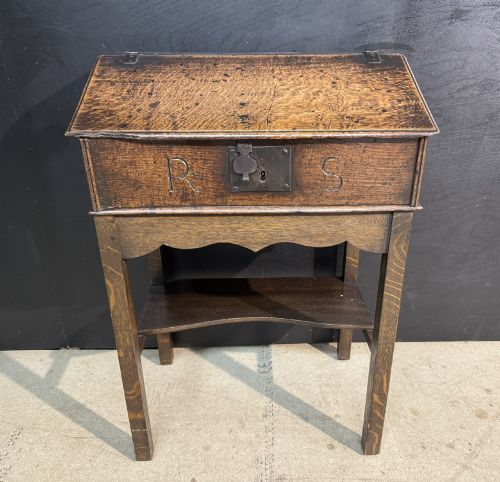
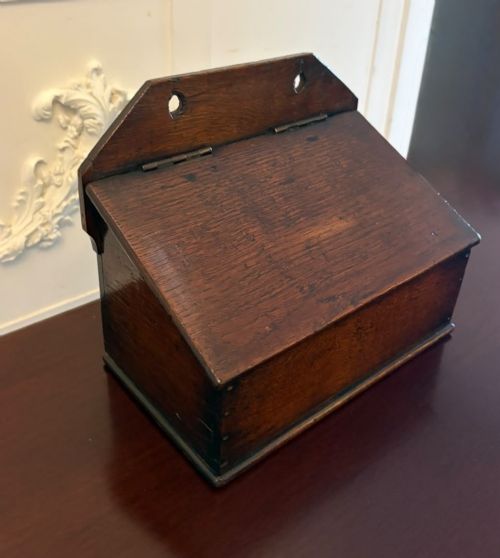
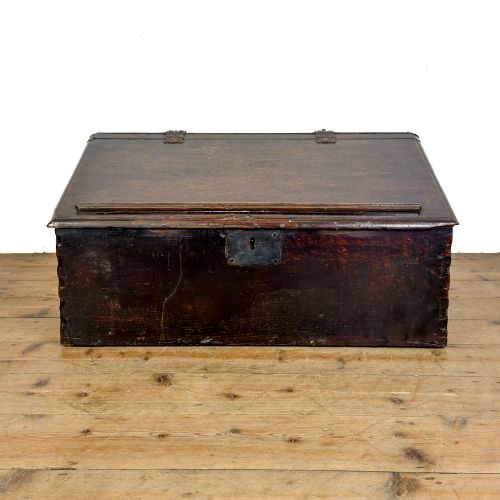
A slanted oak box encompasses practical pieces encountered in various forms across several centuries. Buyers searching for a slanted oak box frequently encounter writing slopes, Bible boxes, slant front bible boxes, and table top bureaux.
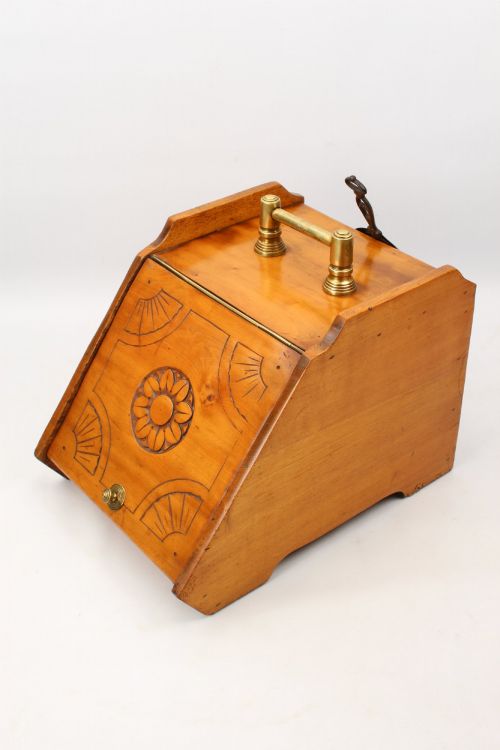
The material provenance spans the seventeenth, eighteenth, and nineteenth centuries, alongside Victorian, Edwardian, and Georgian eras. Examples range from early English and Welsh desk boxes to later stationery cabinets and coal boxes featuring brass mounts.
Makers and makers' dates extend from the seventeenth century through to William and Mary periods and George III examples. Function varies from desktop writing storage to wall-hanging candle boxes and larger coal bunkers.
Assessing quality
Quality differentiates through the integrity of the timber, the presence of original stands, and the subtlety of period carving. Pieces retaining their early brass furniture and untouched surface patination sit higher in the range.
Construction depth marks the distinction between standard utilitarian items and finer bespoke desks or miniature bureaux. Proportion, clean movement in slopes and drawers, and age-appropriate wear define the superior examples.
Several boxes retain their original owner's initials, carved into the oak centuries ago by hands unknown.
The Slanted Oak Box Glossary
- Bible Box
- A wooden box originally built to store a family Bible, often featuring a sloping lid that doubled as a reading rest. These compact containers date predominantly from the seventeenth and eighteenth centuries.
- Slant Front Bureau
- A desk featuring an angled hinged writing flap that opens to reveal internal compartments and pigeon holes. They appear both as table top models and on stands.
- Purdonium
- A specialised domestic container designed for holding coal near a fireplace, typically featuring a sloping front and an integrated shovel. Victorian examples frequently incorporate brass handles.
- Treen
- Small handmade wooden household objects and utilitarian items produced before the widespread adoption of plastics. The category covers boxes, desk accessories, and small treen containers.
- Stationery Cabinet
- A desktop cabinet engineered with internal partitions and pigeon holes for organising writing paper and correspondence. These pieces emerged more commonly during the Victorian and Edwardian periods.
Slanted Oak Box: Frequently Asked Questions
What is a slanted oak box used for?
These boxes served primarily for holding manuscripts, books, and writing materials in domestic or ecclesiastical settings. Their angled lids provided a convenient surface for reading or writing.
Over later periods, similar slanted forms were adapted for household storage, including coal and stationery. Their versatile design suited both office tasks and general room organisation.
How do I date an antique oak box?
Dating relies on examining the construction methods, joint types, hardware, and timber patination visible on the piece. Early seventeenth-century boxes often display hand-cut peg joinery and simpler hinges.
Later Victorian and Edwardian iterations introduce machine-sawn elements, varied internal fittings, and different brass styles. Comparing these details against known period styles helps establish an approximate timeline.
Are these boxes made from solid oak?
Most pieces in this category utilise solid oak as the primary structural timber, reflecting the material availability of early English and Welsh workshops. Secondary woods occasionally appear in internal partitions and drawer linings.
Metal components such as brass handles and iron hinges are typically original to the period of manufacture. The presence of mixed metals or replacement hardware can indicate later repairs.
How do I care for antique oak furniture?
Preserving these wooden pieces requires keeping them away from direct heat sources and dramatic humidity fluctuations. Stable environmental conditions prevent the oak timber from splitting or warping.
Regular dusting with a dry cloth maintains the surface finish without stripping the historical patina. Application of appropriate wax feeds the wood grain over time.