
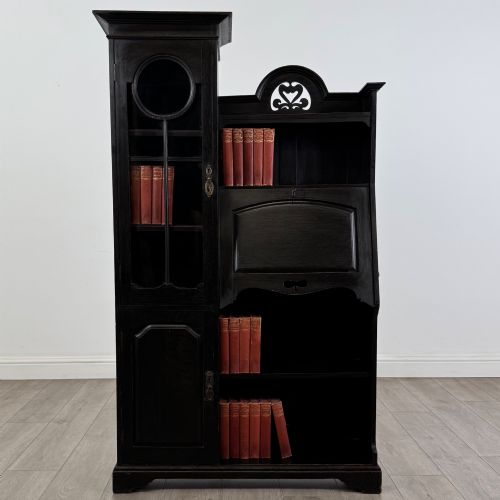
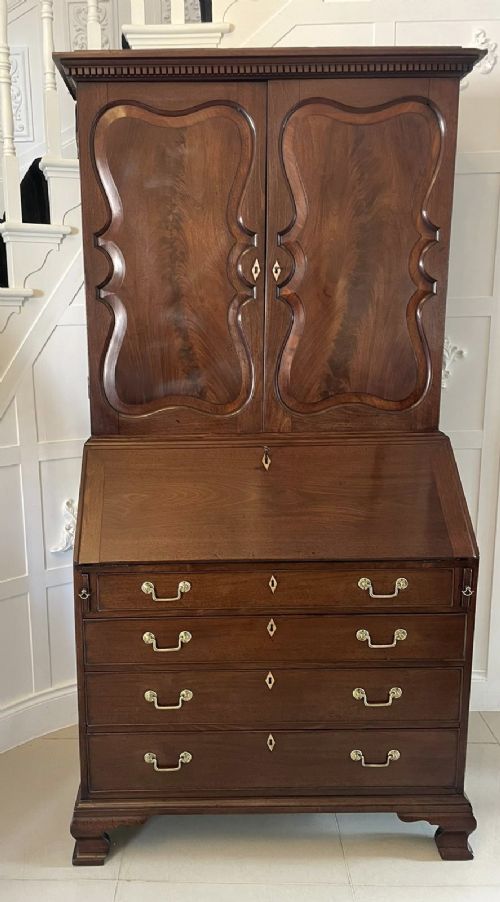
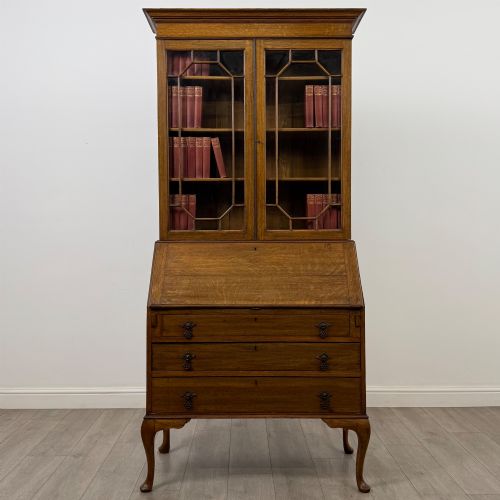
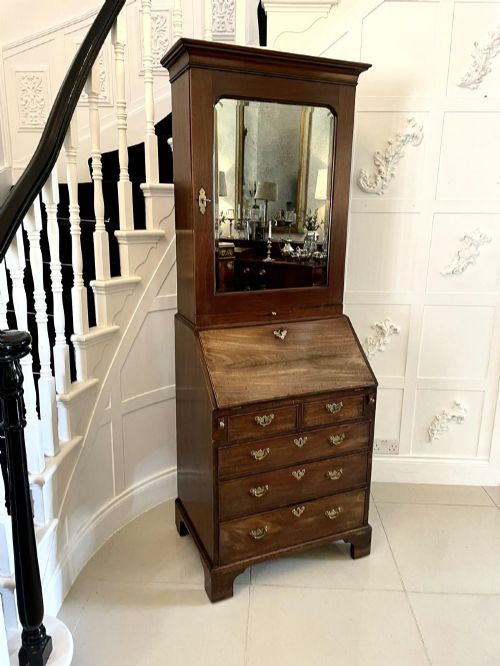


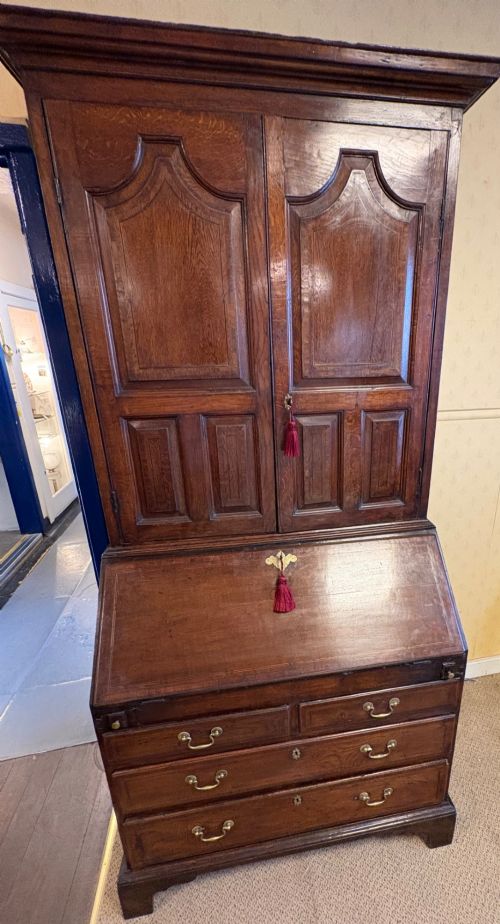
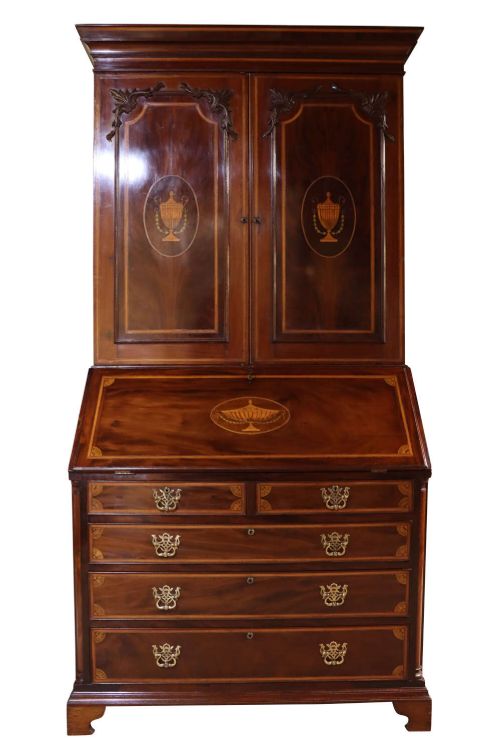
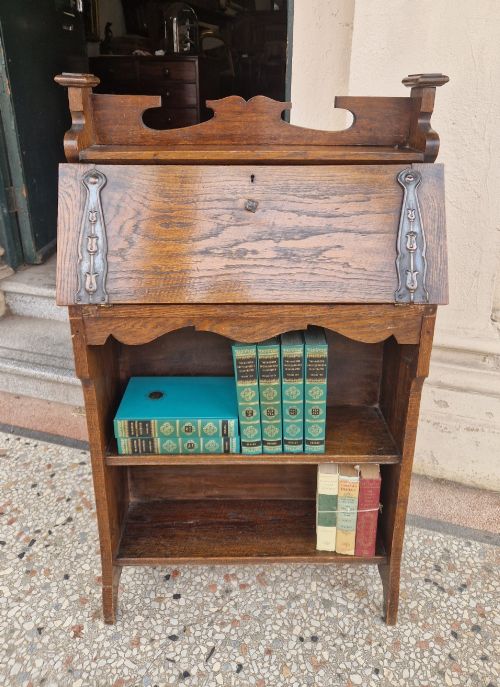
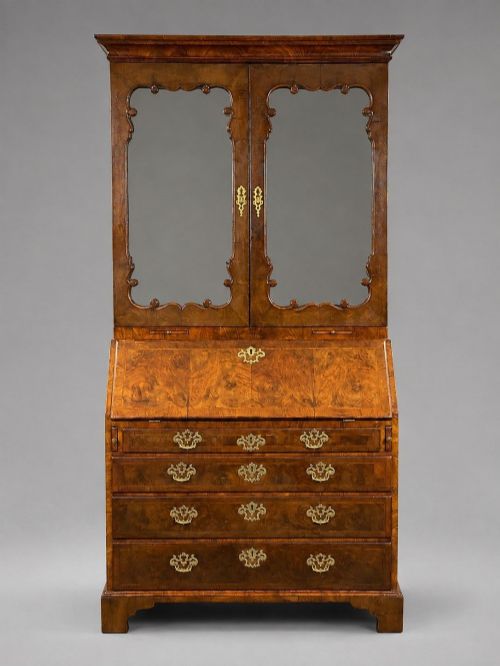
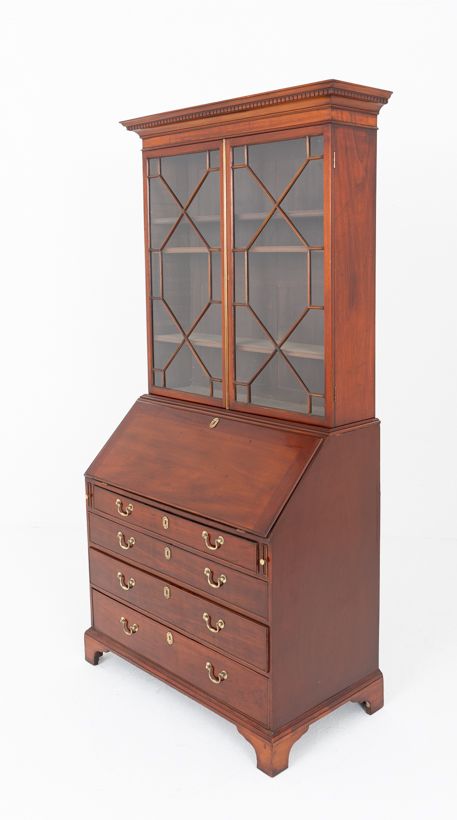
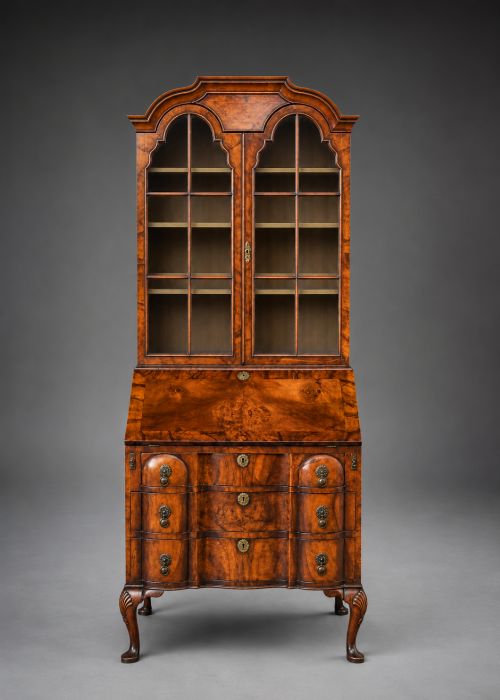
Slant Front Desk Bookcase
A slant front desk bookcase combines a shelved upper display with a sloping writing surface that conceals fitted compartments.
Slant Front Desk Bookcase
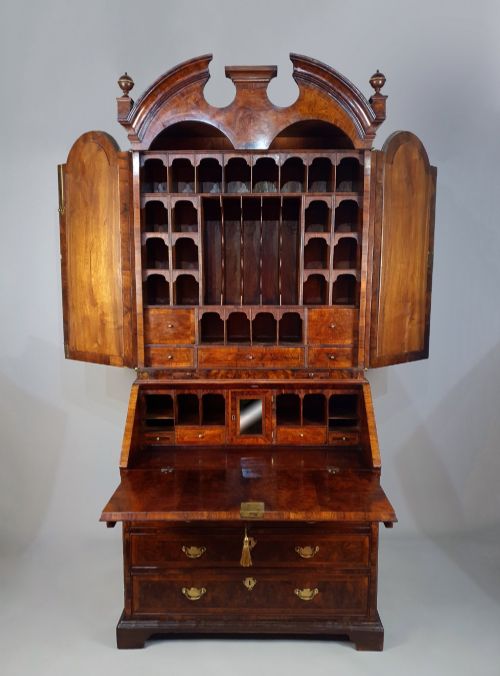
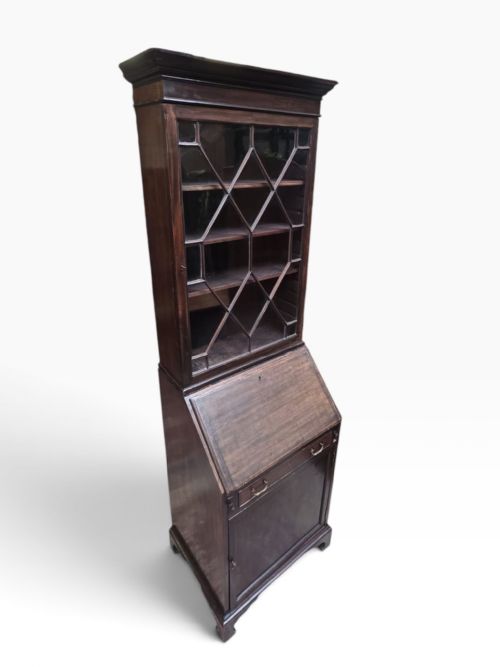
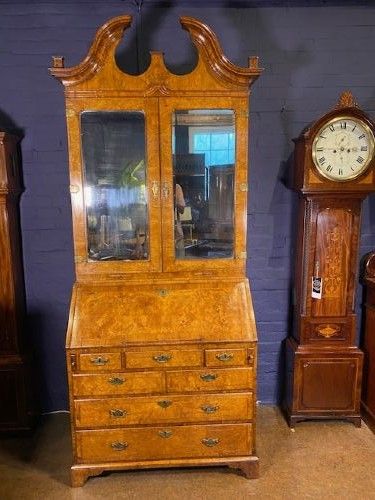
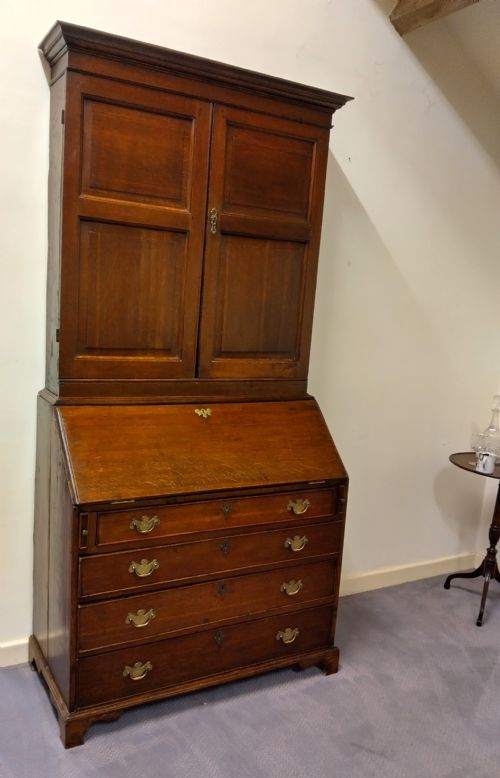
A slant front desk bookcase serves as a combined writing cabinet and upper display unit, housing books behind glazed or solid doors. When buyers search for a slant front desk bookcase, they encounter tall two-part furniture pieces spanning the seventeenth century through the Edwardian era. The lower section provides a hinged writing flap that opens above drawers, while the upper cabinet encloses shelves.
Most examples appearing in current selections date from the eighteenth century or the Edwardian period. Eighteenth-century versions typically display figured walnut or mahogany veneers, whereas Edwardian and later pieces frequently utilise oak or inlaid mahogany. The proportion remains commanding, uniting practical storage with formal display space in a single vertical structure.
Materials and Construction
Cabinetmakers constructed these pieces using solid timbers such as oak and walnut, alongside decorative veneers including burr walnut, mahogany and tulipwood. Wood inlay and brass hardware provided subtle ornamentation to the primary carcase.
Joiners built the upper bookcase and lower desk as separate sections, joining them with heavy mouldings. Interiors incorporated pigeonholes, small drawers, and candle slides to support correspondence.
The selection includes regional variations from English workshops alongside continental examples featuring marquetry and painted finishes.
Evaluating Craftsmanship
Quality rests upon the selection of timber veneers and the precision of the interior joinery. Finely figured burr walnut or mahogany with matching grain patterns distinguishes superior examples from plain utilitarian builds.
The sophistication of the fitted interior inside the writing flap indicates the maker's skill. Concealed compartments, well-turned pigeonholes and original brass pulls separate finer commissions from standard production pieces.
The Slant Front Desk Bookcase Glossary
- Bureau
- A writing desk with a sloping flap that encloses drawers and pigeonholes. It forms the lower half of these combined cabinets.
- Secretaire
- A cabinet or desk containing a drawer or flap that drops down to form a writing surface. This term often appears interchangeably with bureau.
- Candle slide
- A pull-out wooden board mounted beneath the upper section to hold a candle for illumination. They appear on early walnut and mahogany models.
- Marquetry
- Decorative patterns formed by inserting pieces of coloured wood into a veneer. Italian and English workshops utilised this technique on elite cabinets.
- Glazed top
- The upper bookcase portion fitted with glass panels in wooden framing. These doors protect books while allowing them to remain visible.
Slant Front Desk Bookcase: Frequently Asked Questions
How do I date a bureau bookcase?
Dating relies upon timber choice, hardware style and construction methods visible inside the drawers. Walnut predominates in pieces from the late seventeenth and early eighteenth centuries, while mahogany gains favour later in the Georgian period.
Secondary woods like oak or pine inside the carcase provide further clues. Dovetail joints and original brass handles corroborate the stylistic period of the exterior.
Were these cabinets made in sections?
Makers constructed these tall pieces in two separate stages to facilitate transport up staircases and into rooms. The lower desk unit stands independently with moulded edges designed to receive the upper bookcase.
This division means the upper glazed cabinet lifts away from the lower writing desk. Collectors check that the proportions and mouldings of both sections match precisely.
What is inside the sloping flap?
Lowering the writing flap reveals a fitted interior comprising small drawers, pigeonholes and sometimes a central locking cupboard. These compartments held stationery, inkwells and private documents.
Many examples feature a green baize or leather writing surface inset into the flat of the open flap. Some interiors also conceal secret compartments accessible by removing small inner drawers.
How do I care for walnut veneer?
Walnut veneer requires stable indoor humidity levels and protection from direct sunlight to prevent fading and lifting. Polishing with traditional beeswax maintains the lustre of the timber without sealing the surface.
Avoid placing these cabinets near heat sources or damp exterior walls. Gentle dusting with a soft cloth preserves the historic finish of the wood.