
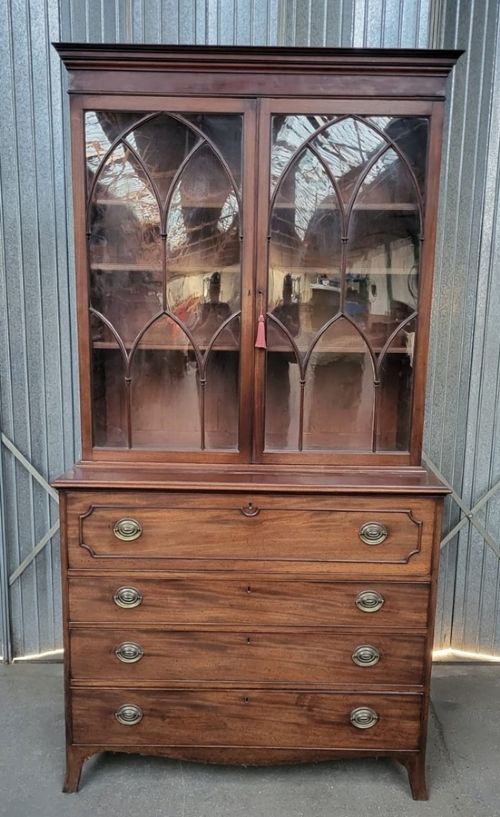
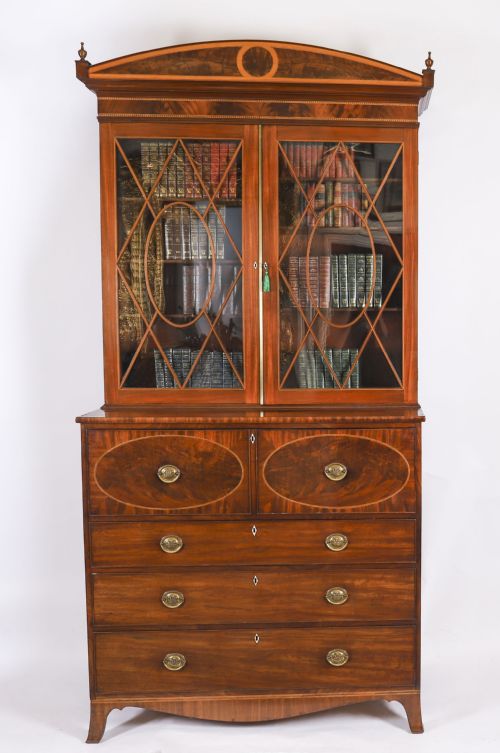

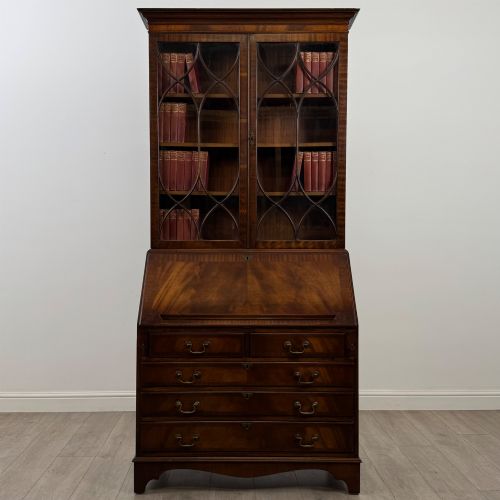
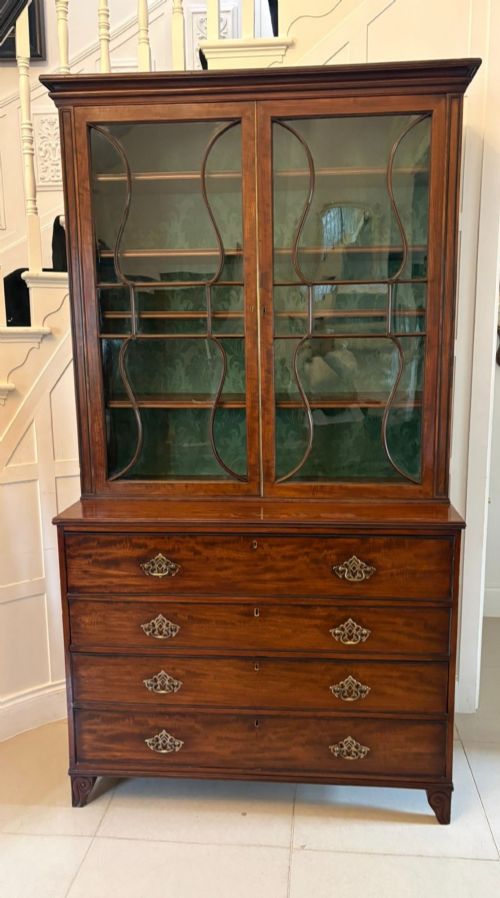
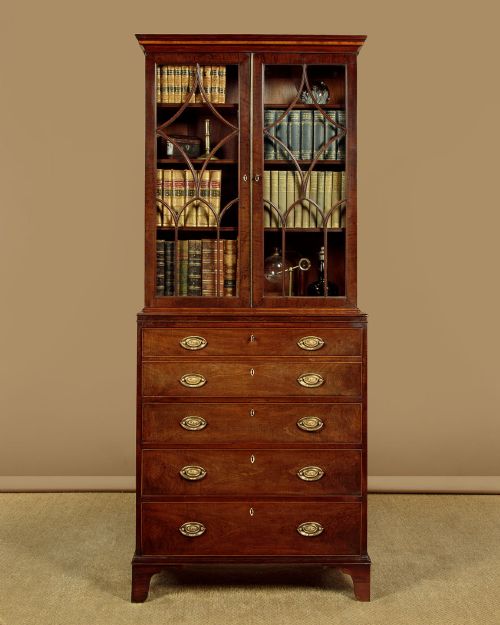
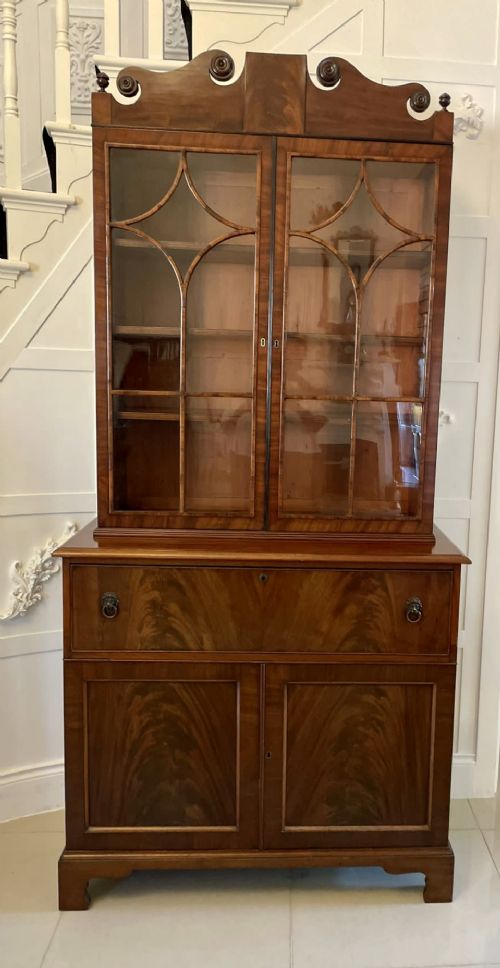
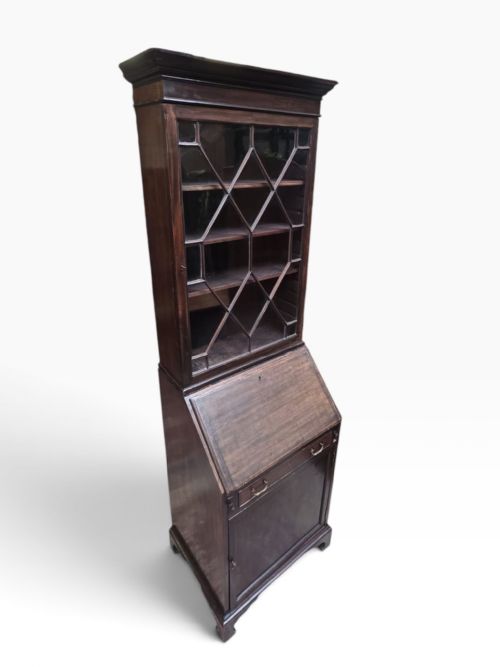
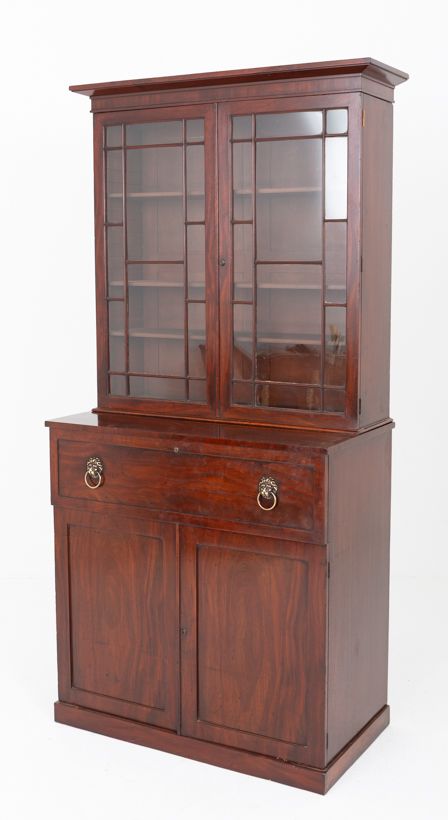
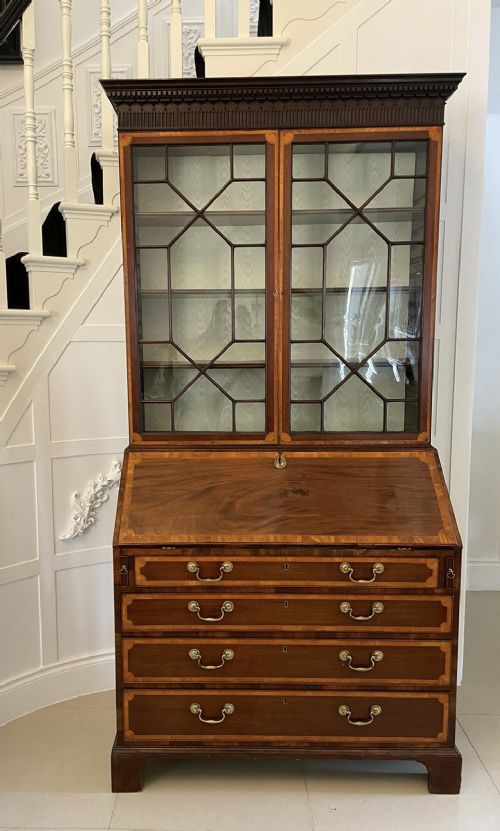
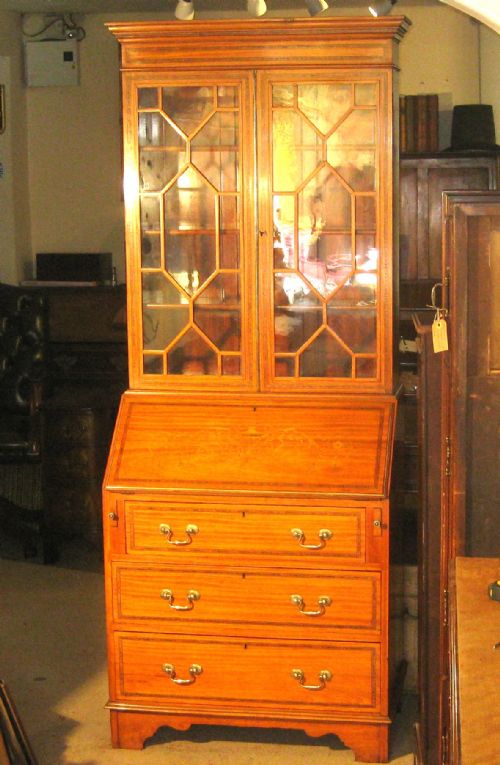
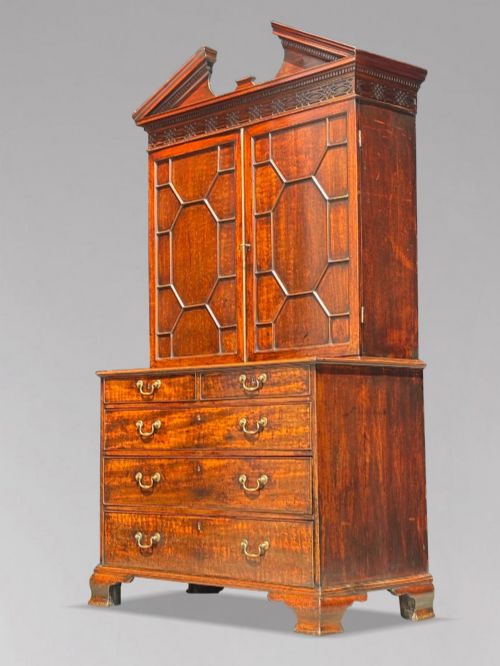
Astragal Glazed Bureau
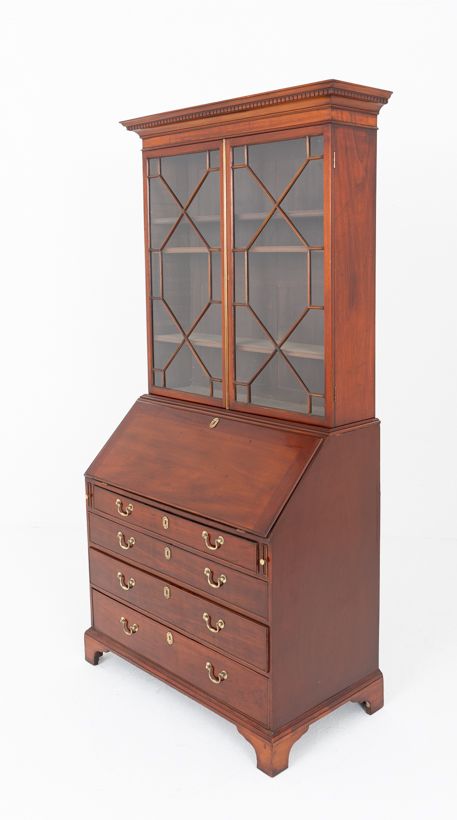
An astragal glazed bureau offers a fitted writing desk beneath shelved glass doors, combining library storage with a secure workspace.
Astragal Glazed Bureau
The pieces appearing on this page span the 18th century, the Georgian and Regency eras, through to the 19th and Edwardian periods. Mahogany and satinwood predominate, alongside oak, yew wood, and walnut, often ornamented with flame mahogany veneers or fine inlay.
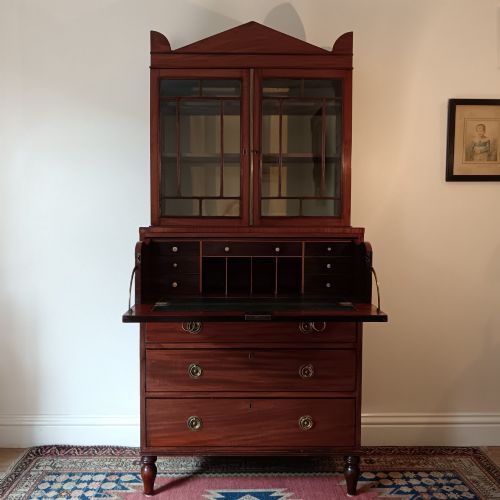
Forms vary from substantial library bookcases to slim writing cabinets and bureau bookcases on chests. Most examples provide multi-tier shelving behind glass doors paired with a drop-down writing flap supported by pull-out desk arms.
How they were made
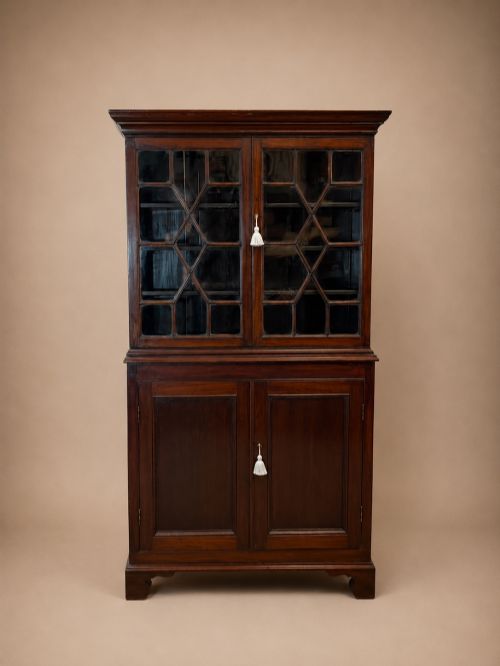
Cabinetmakers constructed these pieces primarily from solid timber and selected veneers, applying mahogany, satinwood, flame mahogany, and oak over sturdy secondary woods. The glass in the upper doors is held securely within geometric or intersecting astragal bars made from matching timber.
Interior fittings involved intricate joinery for small drawers, pigeonholes, and central compartments, frequently accompanied by leather writing inserts. Brass hardware such as escutcheons, handles, and hinges completed the construction of both the fall-front desk and the lower storage drawers.
Listings feature periods spanning the 18th century, Georgian, Regency, Victorian, Edwardian, and the 19th century.
What varies in quality
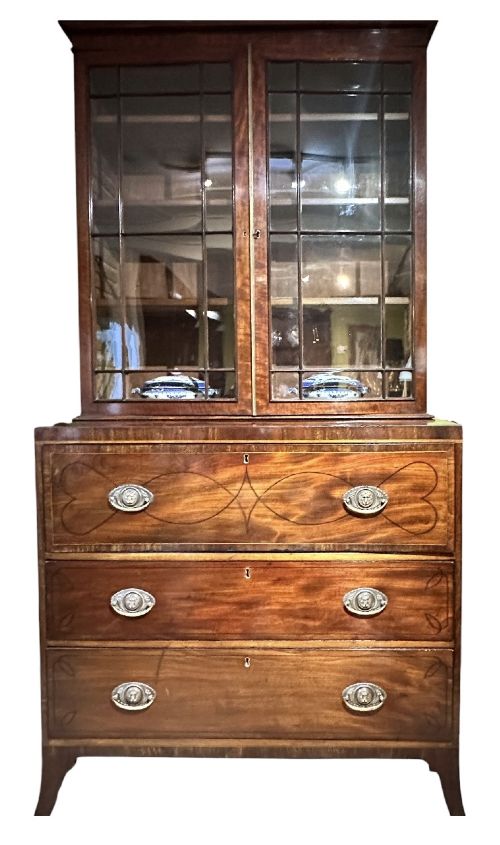
Quality rests upon the crispness of the astragal glazing bars and the selection of timber veneers across the facade. Pieces utilising highly figured flame mahogany or finely figured satinwood display superior visual depth.
The complexity of the interior fitments marks the difference between standard production and exceptional craftsmanship. Elaborate internal stationery drawers, hidden compartments, and well-executed boxwood stringing or marquetry inlay elevate the standing of a desk.
Thomas Chippendale·Tudor & Burrey·George Oakley·Gillows
The Astragal Glazed Bureau Glossary
- Astragal
- The moulded wooden bar that divides panes of glass within a cabinet door. These bars form intricate geometric patterns across the upper bookcase sections.
- Secretaire
- A piece of furniture containing a drawer or drop-front panel fitted for writing. In these bookcases, the secretaire drawer opens to reveal a writing surface and small pigeonholes.
- Flame mahogany
- A veneer cut from the fork of a mahogany tree where the grain pattern resembles flickering flames. It provides a highly decorative surface on drawer fronts and fall-front desks.
- Escutcheon
- A protective plate surrounding a keyhole, usually made of brass. They prevent the timber from wearing around the lock.
- Pigeonhole
- A small, open compartment within the desk interior designed for sorting letters and papers. These are frequently flanked by tiny drawers in higher-quality pieces.
Astragal Glazed Bureau: Frequently Asked Questions
What is an astragal glazed bureau?
An astragal glazed bureau is a combined writing cabinet and bookcase where the upper glass doors are divided by wooden glazing bars. It provides both enclosed shelving for books and a fold-down desk surface for correspondence.
Such pieces unite two distinct forms of furniture into a single tall case, allowing owners to display volumes behind glass while keeping writing materials concealed below.
How were these bureaus used?
Owners used the upper glass-fronted sections to store library books and display decorative volumes safely out of the dust. The drop-front desk provided a private writing surface complete with small drawers and slots for letters.
In period homes, these cabinets served as functional workspaces for household administration and correspondence before freestanding desks became common in the room layout.
How do I date an astragal glazed bureau?
Dating relies on observing the timber species, the thickness and profile of the glazing bars, and the construction methods used in the interior drawers. Georgian and 18th-century examples often feature lighter oak linings and hand-cut dovetails, while Edwardian pieces display later manufacturing traits.
The style of the bracket feet, the type of brass hardware, and the complexity of the interior satinwood or mahogany fitments also indicate the specific period of manufacture.
How do I live with one?
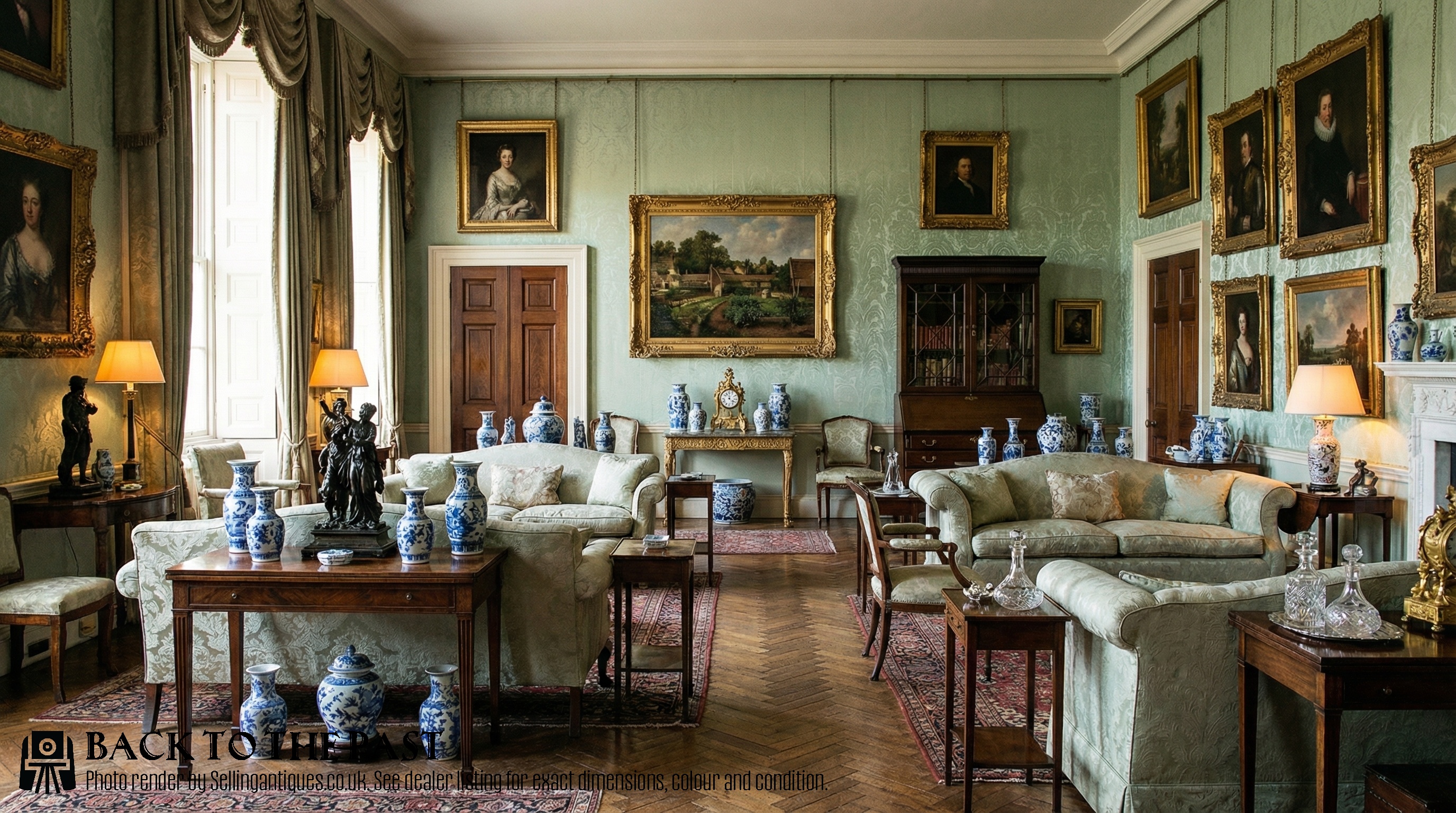
Living with an astragal glazed bureau requires positioning it against a sturdy wall where the fall-front desk can open fully without blocking room traffic. Regular dusting and careful handling of the historical glass doors help maintain the wood and glazing.
These pieces function effectively in studies, living rooms, or hallways, offering practical surface space alongside generous book storage within a traditional silhouette.