
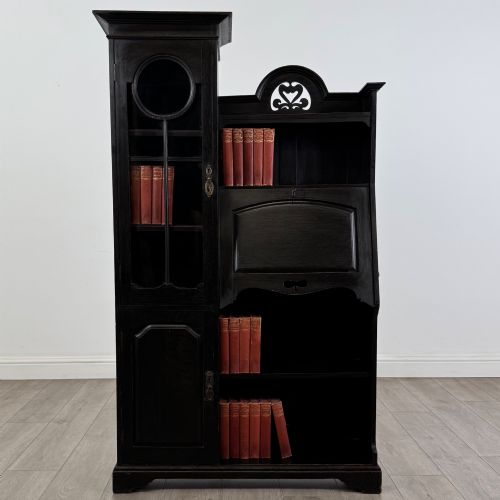
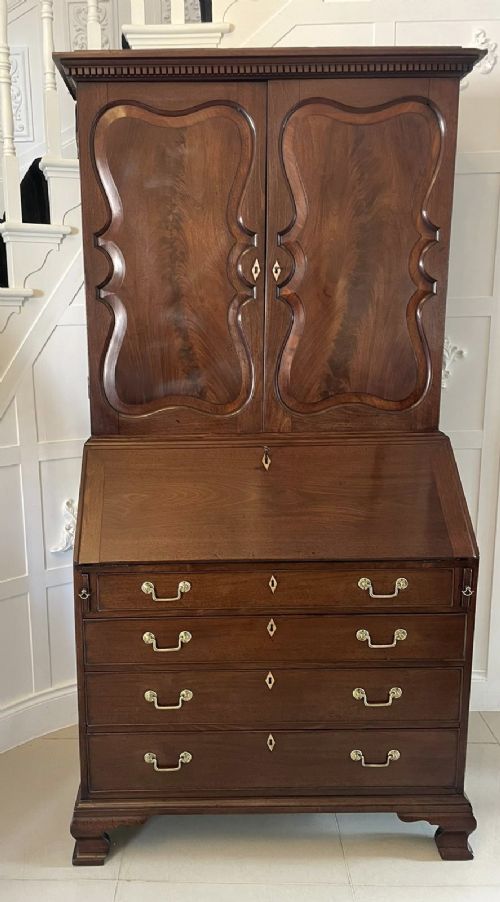
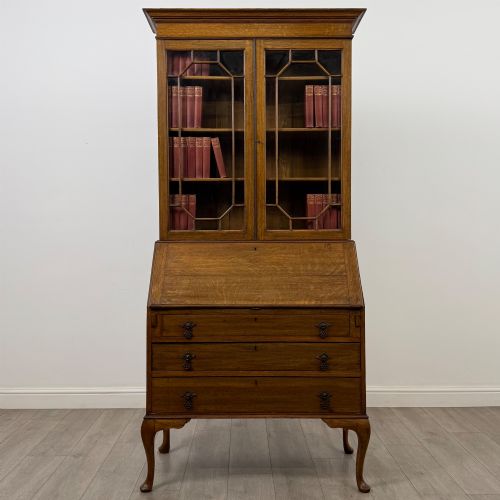
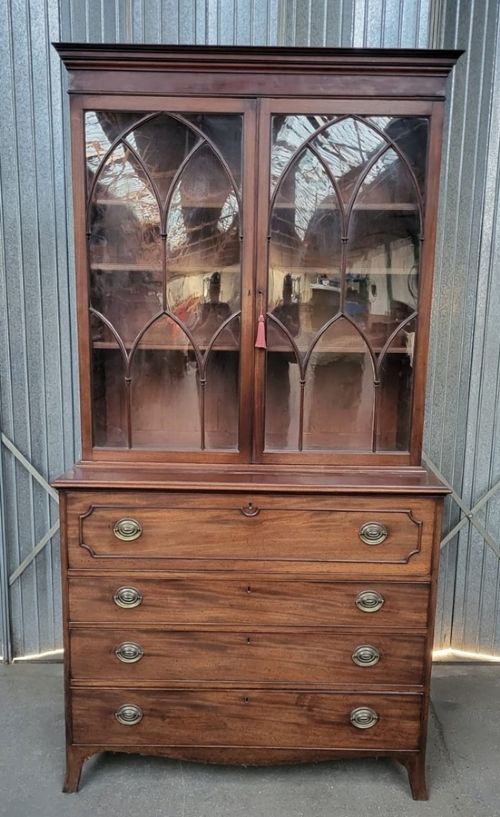
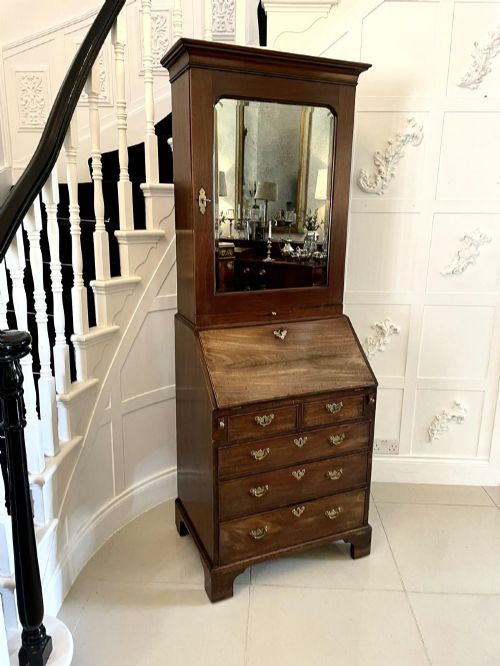
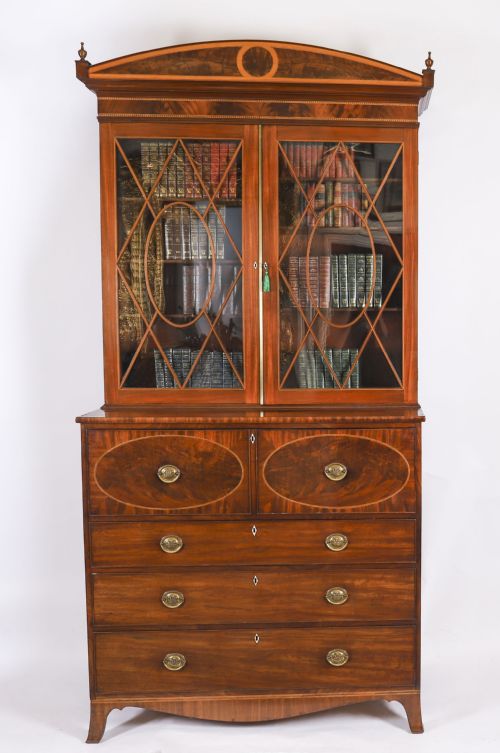
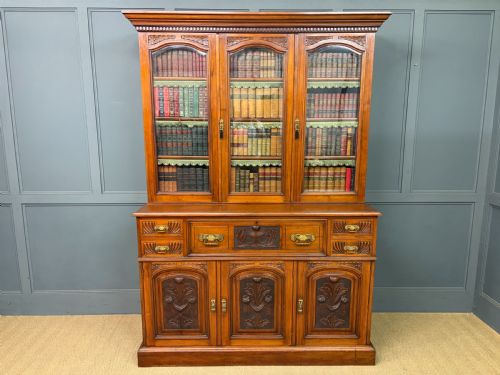


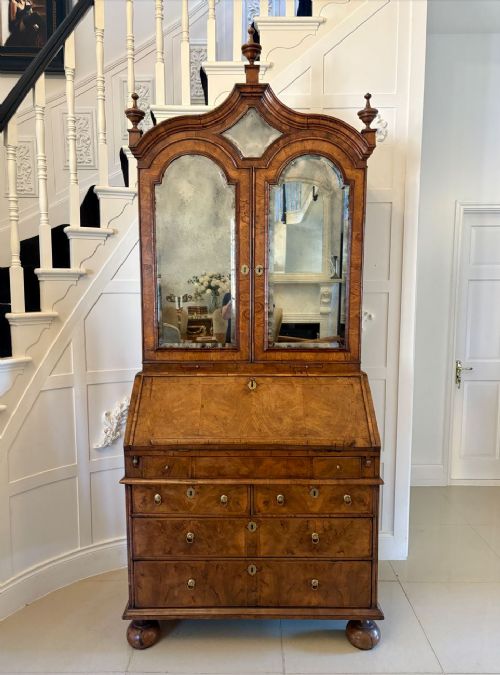
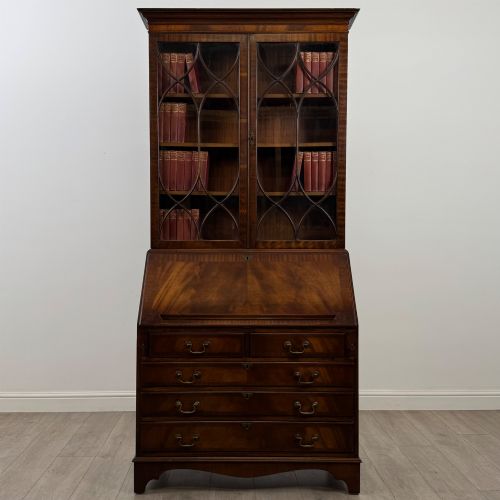
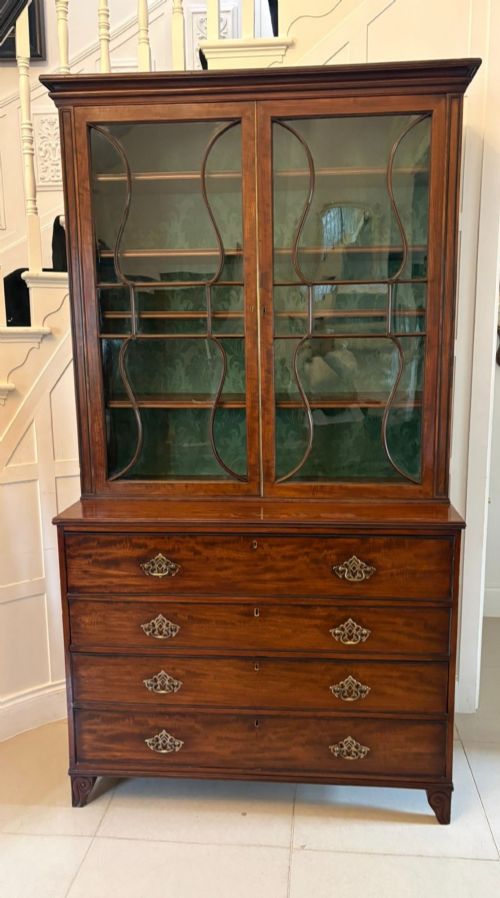
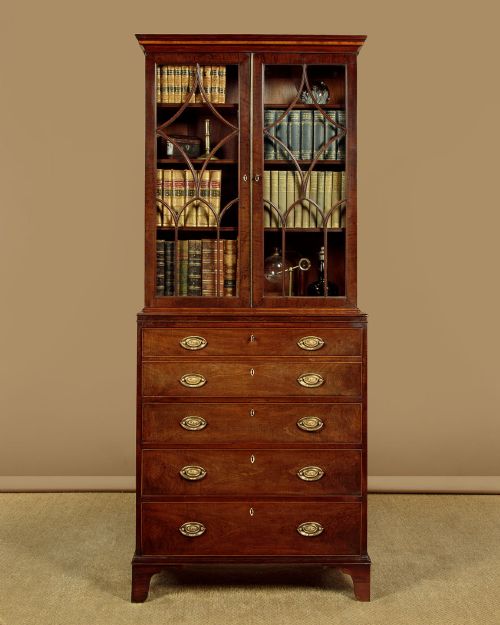
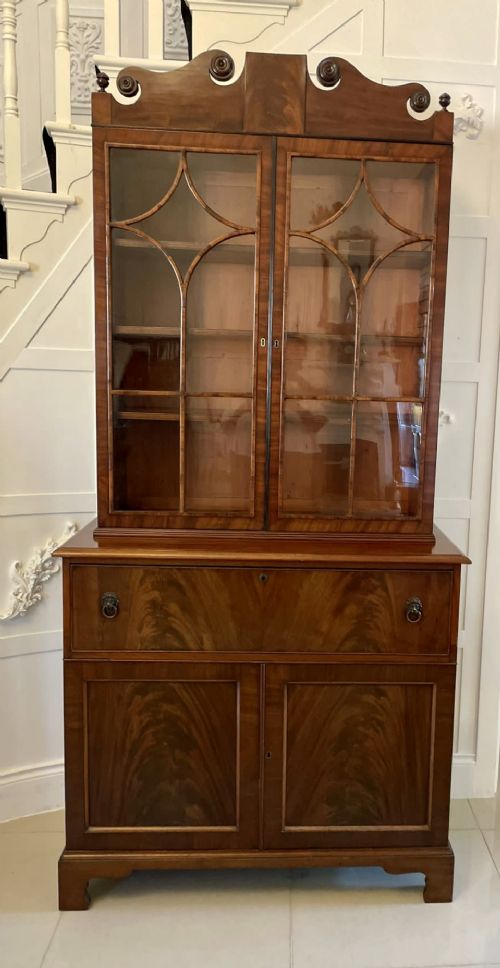
Antique Writing Bureau Bookcase
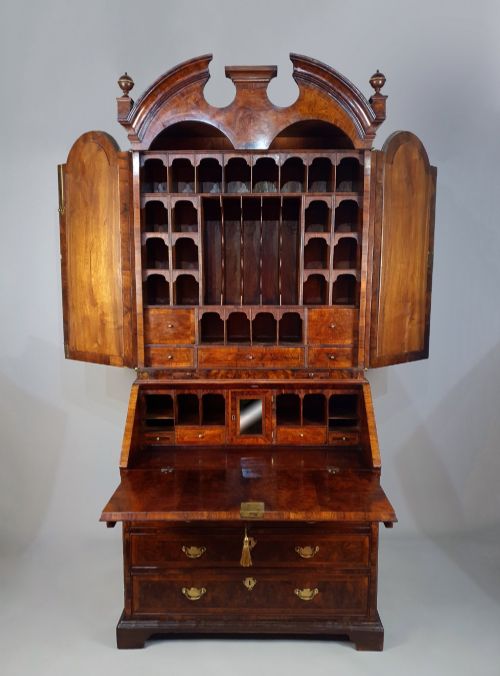
An antique writing bureau bookcase combines a desk and a display cabinet, giving you a fitted interior alongside shelved upper doors.
Antique Writing Bureau Bookcase
An antique writing bureau bookcase pairs a sloping fall-front desk or a pull-out secretaire drawer with a glazed or panelled upper shelving cabinet. You will encounter these dual-purpose pieces in multiple forms, from compact Edwardian oak examples to imposing George II figured mahogany versions.
The lower section provides a writing surface that opens to reveal small pigeonholes and drawers, while the upper bookcase displays books or porcelain behind glass doors. Surviving items span several centuries, with prominent groups originating in the Georgian, Regency and Edwardian eras.
Makers utilised various regional woods to suit changing interior fashions, meaning you find items ranging from simple oak and yew to elaborately figured walnut and flame mahogany. These pieces served as the administrative and literary hub of a home, combining storage with workspace.
Materials and construction methods
Cabinetmakers constructed the carcase of an antique writing bureau bookcase using dense native and imported timbers, frequently applying veneers of mahogany, burr walnut or satinwood over solid secondary woods. Crossbanding, stringing and featherbanding decorate the drawer fronts and fall-fronts of higher-status pieces.
Glazing bars divide the glass panes of the upper doors into geometric patterns, protecting the library within while permitting visibility. Brass hardware, including handles, escutcheons and candle slides, secures the drawers and assists candlelight usage.
Internal compartments incorporate intricate stepped arrangements, hidden compartments and small drawers, demonstrating precise joinery in solid wood.
The evidence records oak, mahogany, walnut and yew wood items spanning from the seventeenth century through the Edwardian era.
What distinguishes the standard
The quality of an antique writing bureau bookcase rests upon the selection of timber figures, such as matched flame mahogany or highly figured burr walnut. Finer workshops invested greater time in grain continuity across drawer fronts and harmonious proportions between the upper bookcase and lower desk.
Interior architecture signals grade, distinguishing simple pigeonholes from finely constructed stepped drawers with secret compartments and inlaid details. The execution of the glazing bars and the weight of the brass fittings further separate standard utility pieces from high-status commissions.
George Oakley·Gillows
The Antique Writing Bureau Bookcase Glossary
- Bureau
- A desk featuring a sloping hinged flap that opens to form a writing surface. It conceals internal compartments for papers and stationery.
- Secretaire
- A piece of furniture containing a drawer that pulls out to reveal a fitted writing desk with drawers and pigeonholes. This maintains the exterior appearance of a standard chest or cabinet.
- Featherbanding
- A decorative inlay technique using veneer strips cut across the grain to form a herringbone pattern around panel edges. It appears on walnut furniture from the early eighteenth century.
- Glazing bar
- A wooden strip that holds individual panes of glass within a sash door. Finer bars are narrower and shaped with mouldings.
- Candle slide
- A pull-out wooden board positioned beneath the upper doors to support candlesticks for illumination while writing. These slide back into the frame when not in use.
Antique Writing Bureau Bookcase: Frequently Asked Questions
How do I date an antique bureau bookcase?
Dating relies on timber choices, construction methods and stylistic markers visible in the feet, handles and interior layout. Walnut construction and herringbone banding often point towards the early eighteenth century, while brighter mahogany and specific inlay designs indicate the Georgian or Regency periods.
Later Edwardian and twentieth-century interpretations adopt earlier styles like Jacobean Revival or Queen Anne, yet reveal their age through machine-cut joints, secondary timbers and finishing techniques. Comparing the carcass construction and interior configuration against documented examples helps clarify the era of manufacture.
What is the difference between a bureau bookcase and a secretaire bookcase?
A bureau bookcase utilises a sloping fall-front flap that drops down at an angle to create the writing surface. When closed, the slant of the fall-front defines the upper portion of the lower desk block.
A secretaire bookcase conceals its desk within a horizontal drawer that pulls straight out from the chest. This design maintains a rectangular cabinet profile while still providing a fitted writing interior.
How were these pieces used historically?
These dual-purpose items functioned as the primary administrative and study furniture for households before dedicated rooms for paperwork became common. The upper cabinet housed library collections and valued volumes behind glass doors, protecting them from dust.
The drop-front or pull-out desk provided a private space for correspondence, account keeping and reading, with internal drawers storing inkwells, seals and documents.
Are the upper and lower sections original to each other?
Many tall case pieces were constructed in distinct upper and lower modules to ease transport and placement within historic homes. Evaluating the timber grain continuity, backboards, proportions and fixing points confirms whether the components originated together.
Because upper glazed cabinets and lower desks experienced different wear over centuries, checking for matching wood species and consistent patination ensures the integrity of the combination.