
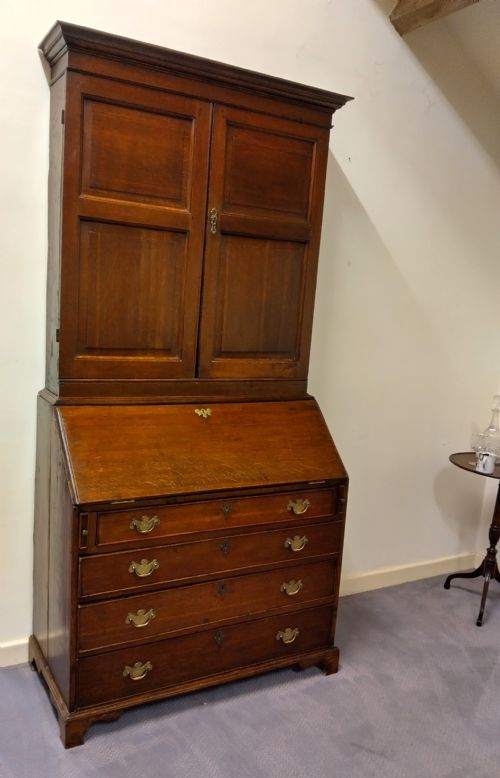
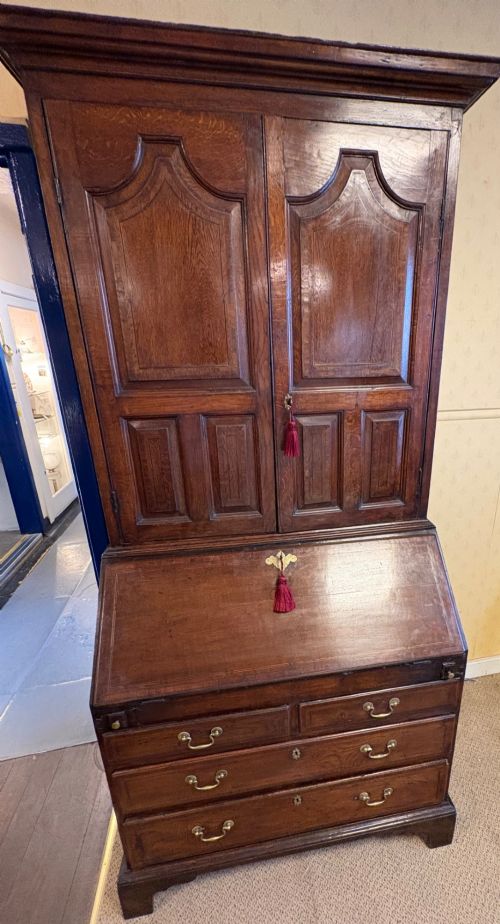
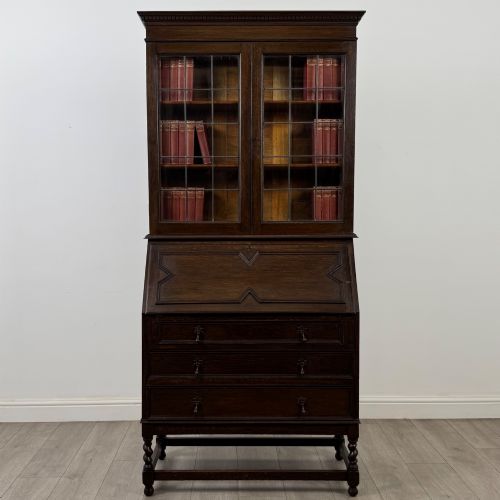


Georgian Oak Secretary Bookcase
A georgian oak secretary bookcase combines a fitted writing desk and a shelved cabinet in sturdy timber, giving a room both practical workspace and storage.
Georgian Oak Secretary Bookcase
When searching for a georgian oak secretary bookcase, collectors encounter substantial furniture designed to hold books above and provide a drop-front writing surface below. Most examples span the eighteenth century, with particular representation from the Georgian period alongside vernacular regional interpretations and later revivals.
The primary forms include bureau bookcases, bureau cabinets, and press cupboards equipped with fitted interiors featuring small drawers and pigeonholes. Dimensions vary from small proportions suitable for modest rooms to larger architectural pieces originating from workshops in Wales and other regions.
How they were made
Cabinet makers constructed these pieces principally from solid oak, sometimes accented with wood inlay to frame doors and drawers. Structural durability relied on traditional joinery techniques suited to heavy native timber.
Fittings incorporate brass hardware for handles and escutcheons, alongside glazed upper cabinet doors that protect libraries while displaying bindings. Secondary elements like stepped interior compartments required precise hand woodworking to create multi-tiered stationery storage.
One remarkably early oak bureau bookcase carries a past provenance linked directly to the Shakespeare Birthplace Trust.
What varies in quality
Quality rests upon the proportion and fidelity of the cabinet work, distinguishing refined metropolitan furniture from robust regional vernacular pieces. The integration of the fall-front desk mechanism with the upper bookcase dictates visual balance.
Originality of surfaces and interior configuration heavily influence distinction, particularly where stepped drawers or fitted pigeonholes survive intact without later alteration. Alterations for modern utility, such as television housing, alter the historic integrity of early frames.
The Georgian Oak Secretary Bookcase Glossary
- Bureau bookcase
- A dual-purpose piece combining a lower sloping desk with an upper glazed or panelled shelved cabinet. This form became popular for domestic study and storage during the eighteenth century.
- Stepped interior
- An arrangement of small drawers and pigeonholes built in tiers within the desk section. This feature allowed safe storage for letters and personal documents.
- Press cupboard
- A large storage cabinet featuring upper shelving enclosed by doors above a lower section. Welsh examples often utilised this regional term interchangeably with bureau cabinets.
- Wood inlay
- The insertion of contrasting timber veneers into the primary oak surface to create decorative patterns. It adds visual texture to drawer fronts and pediments.
Georgian Oak Secretary Bookcase: Frequently Asked Questions
How were these pieces used historically?
Owners used the drop-front writing surface for correspondence and household accounts, keeping stationery organised in the internal compartments and drawers.
The upper section provided dust-free storage for valuable libraries and ledgers behind glazed or solid timber doors.
How do I identify a period piece?
Period identification relies on timber characteristics, construction methods, and hardware styles consistent with eighteenth-century joinery traditions.
Examine the interior drawer construction and timber patination to understand the age and manufacturing origin of the cabinet.
How should I care for oak furniture?
Protect oak furniture by placing it away from direct sunlight and heat sources that cause timber to dry and split.
Maintain the wood with appropriate wax polishes and avoid excessive moisture during routine cleaning.