

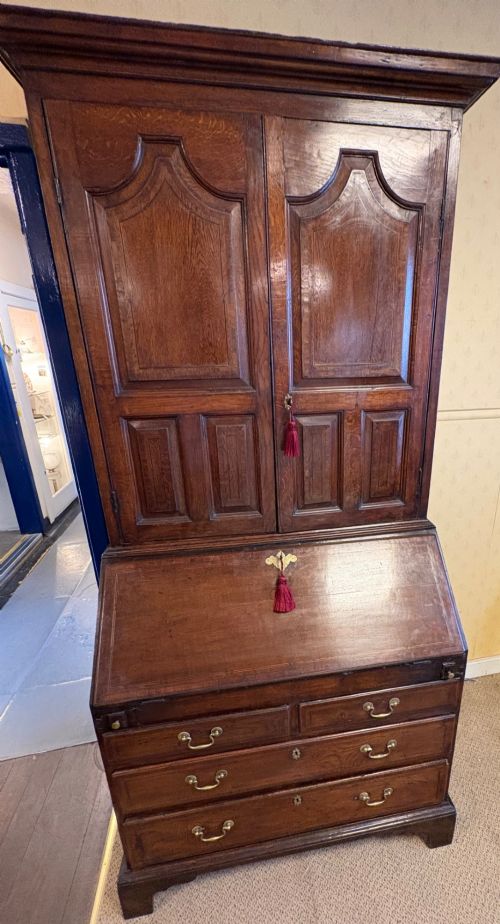
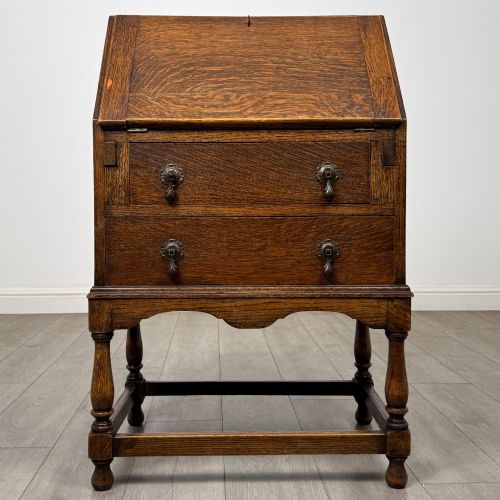
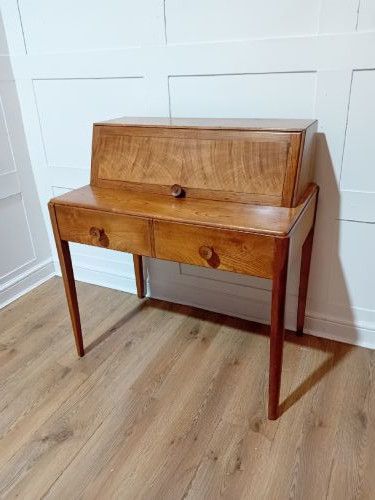
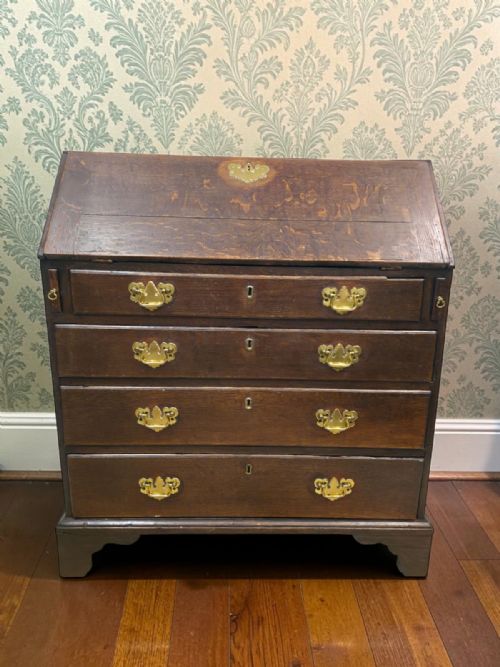
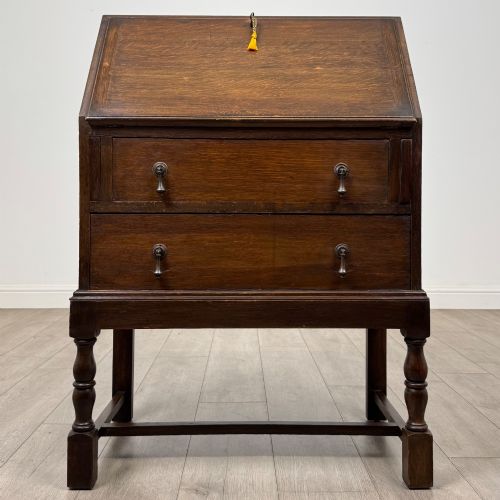
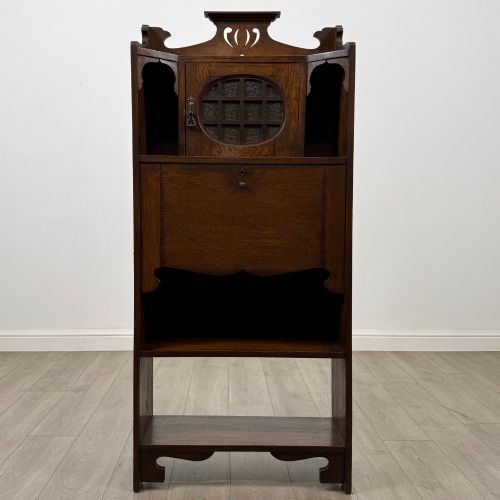
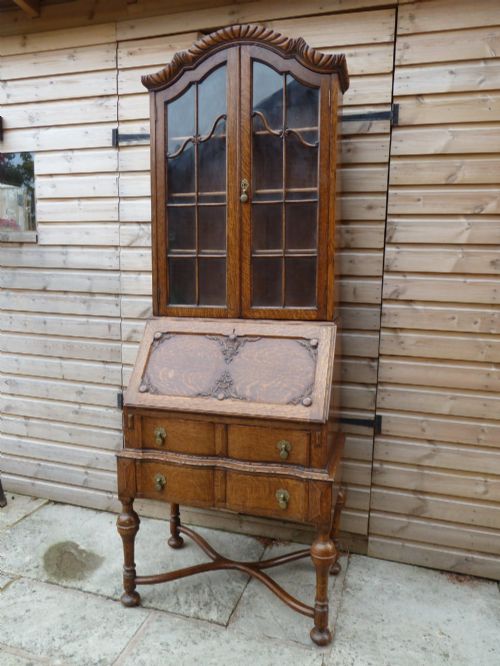
Oak Bureau Desk Cabinet
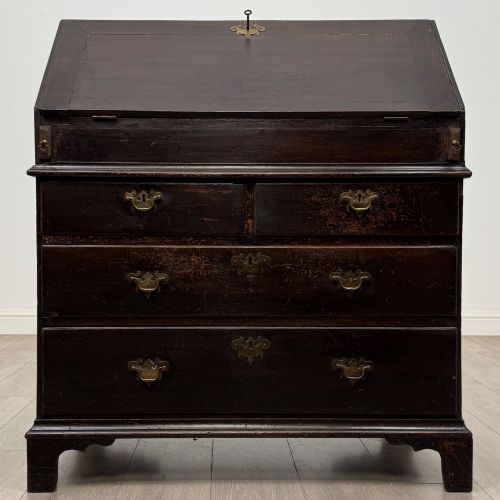
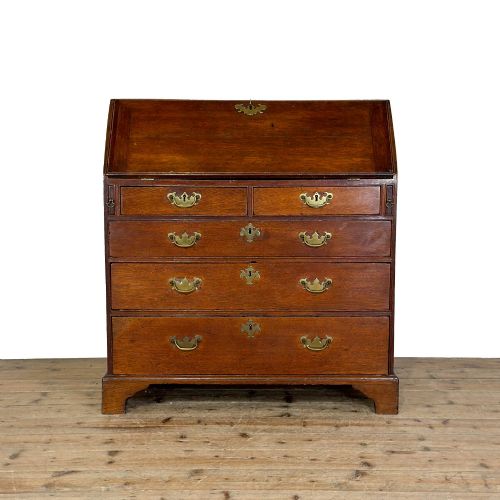
An oak bureau desk cabinet is a sturdy timber workspace with a sloping fall front, combining a writing surface and concealed pigeonholes.
Oak Bureau Desk Cabinet
The oak bureau desk cabinet category covers writing furniture spanning from the seventeenth century through the Georgian, Victorian, and Edwardian eras into the nineteen-thirties.
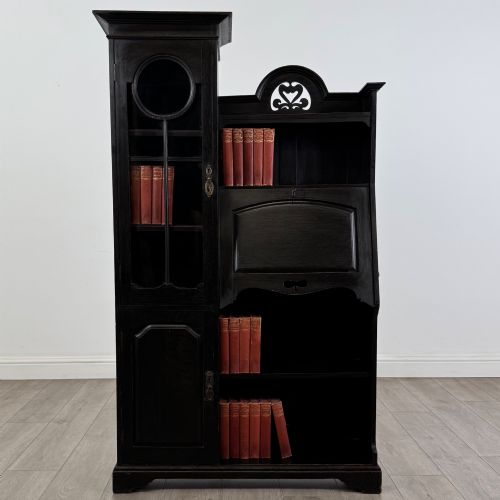
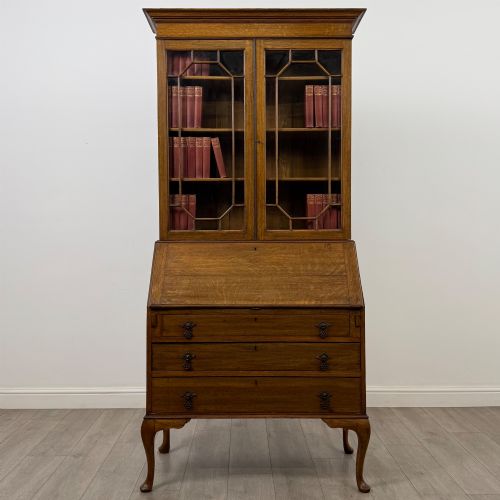
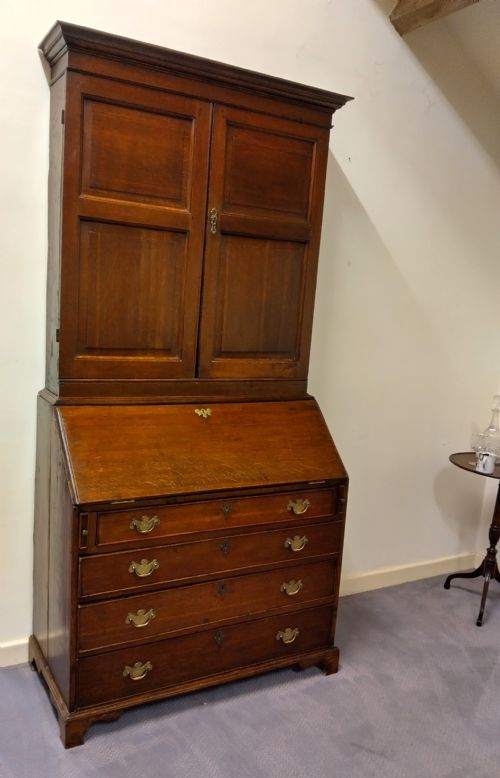
Buyers encounter everything from compact student desks and fall-front writing furniture to substantial bureau bookcases fitted with glazed upper display sections.
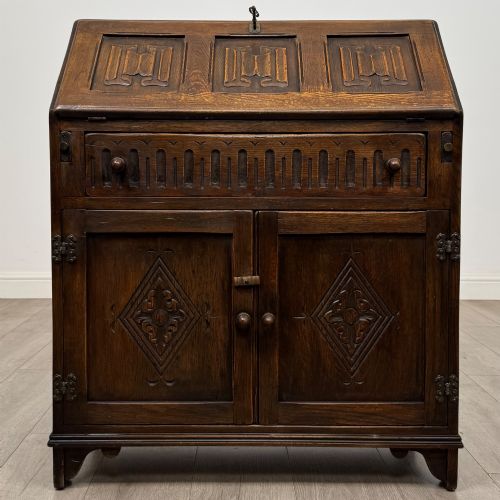
Earlier vernacular pieces from the seventeenth and eighteenth centuries sit alongside later Arts and Crafts interpretations and revival styles such as Jacobean and Tudor.
Materials and construction
Makers utilised solid oak alongside pollard oak veneers, incorporating brass hinges, handles, and occasional lead or iron fittings.
Interiors frequently feature stepped compartments, pigeonholes, and small drawers behind the sloping fall front.
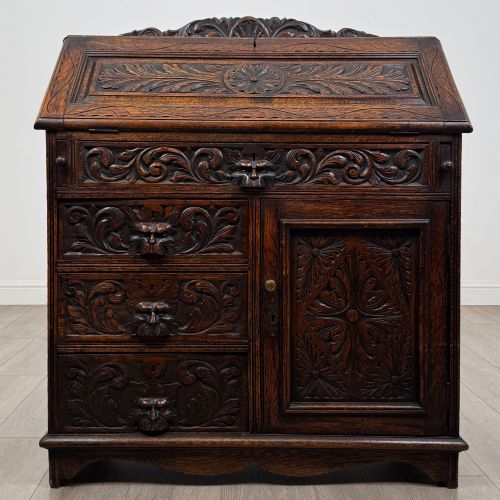
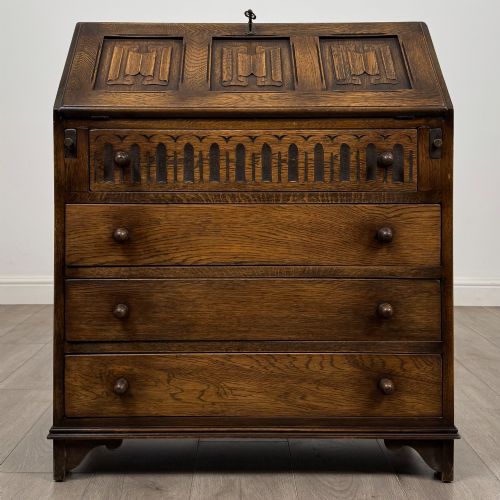
Carving, linenfold panels, and ebonised details appear on pieces ranging from Victorian library bookcases to Cotswold School writing cabinets.
One early seventeenth-century oak strong box survives alongside towering Edwardian bureau bookcases and green man carved Davenport desks.
Craftsmanship and character
Quality rests in the depth of the timber grain, the precision of the dovetail joints within the drawers, and the integrity of the fitted interior.
Pieces bearing specific maker labels or showing vernacular hand-carving command greater attention than standard commercial production.
The balance of proportions between the lower writing box and upper bookcase section dictates the visual success of taller cabinet forms.
Arthur Basil Reynolds·Stanley Webb Davies·Bryn Mawr·Morris And Co·George W Jack
The Oak Bureau Desk Cabinet Glossary
- Fall front
- The hinged sloping panel that drops down to form a writing surface. This hides the internal drawers and pigeonholes when closed.
- Bureau bookcase
- A combined piece featuring a sloping desk compartment below and a shelved cabinet above. Glazed doors often protect the upper section.
- Linenfold
- A carved wooden panel moulding that mimics folded cloth. It appears frequently on Edwardian and Arts and Crafts examples.
- Stepped interior
- An arrangement of internal compartments built on ascending tiers within the desk section. These house letters and small documents.
- Pollard oak
- Timber taken from trees that have been pollarded, producing a decorative mottled grain pattern. Cabinet makers used this veneer for luxury finishes.
Oak Bureau Desk Cabinet: Frequently Asked Questions
How do I use an oak bureau desk?
Lower the fall-front flap to reveal the internal writing ledge and pigeonholes for correspondence.
Keep the flap closed when not in use to conceal writing materials and protect documents from dust.
Where should I place a bureau cabinet?
Position the piece in a study, library, or living room away from direct heat sources that might dry the timber.
Ensure adequate clearance in front of the cabinet for the fall-front writing surface to open fully.
How do I distinguish eighteenth-century pieces?
Examine the drawer construction for hand-cut dovetails and inspect the timber for the patination accumulated over centuries.
Early pieces often display simpler vernacular joinery compared to later revival items.