
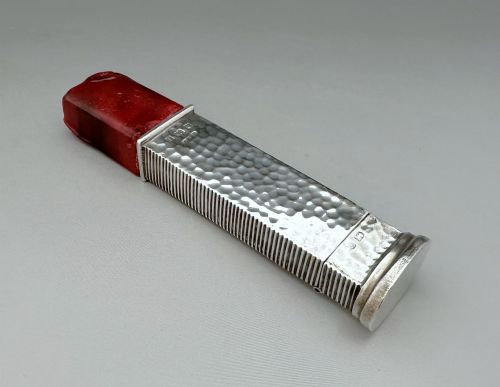
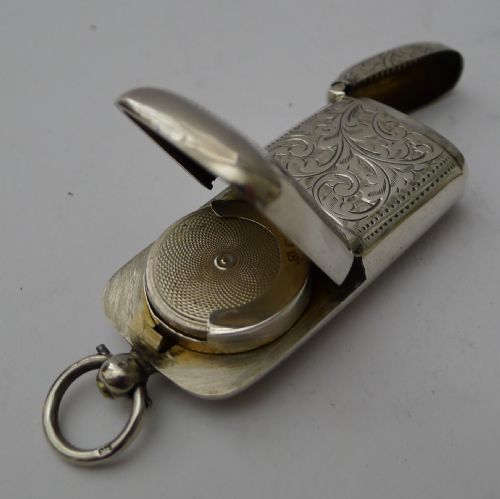
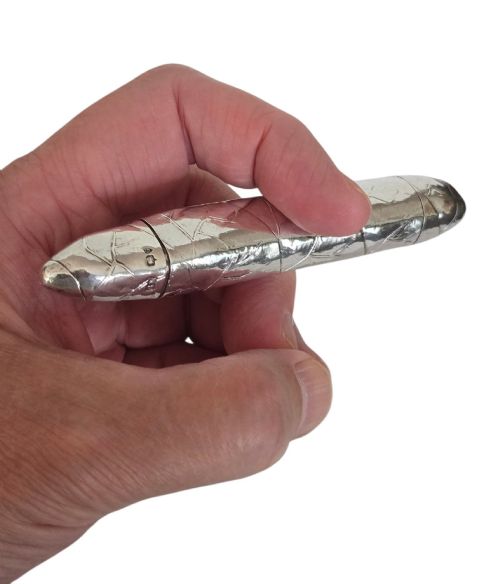
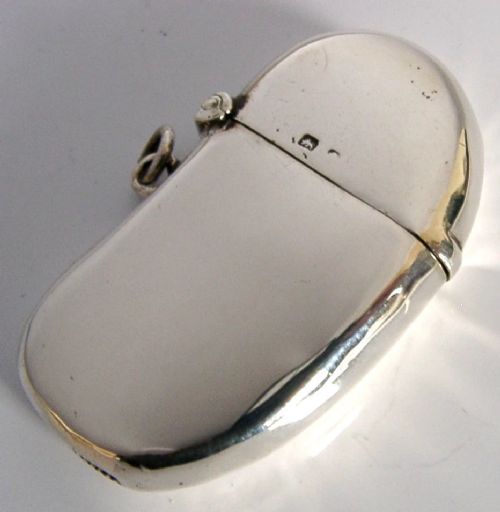
Silver Vesta Match Holder
A silver vesta match holder is a pocket-sized container designed to carry matches safely and strike them on demand.
Materials and Technique
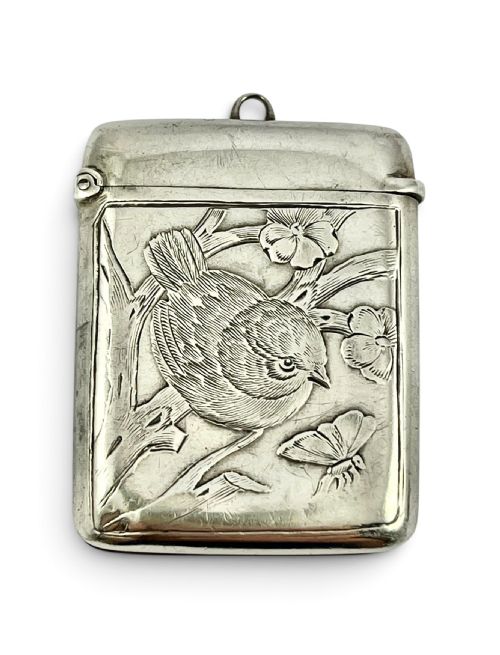
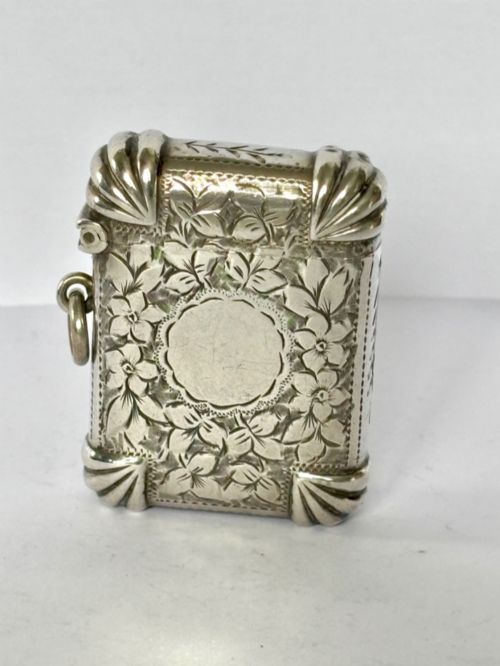
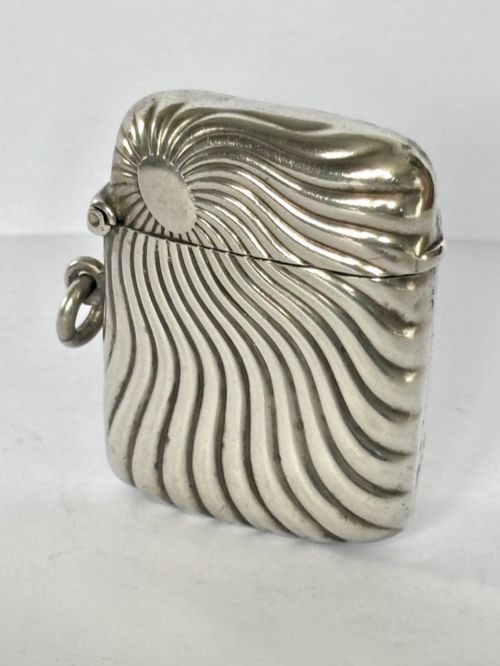
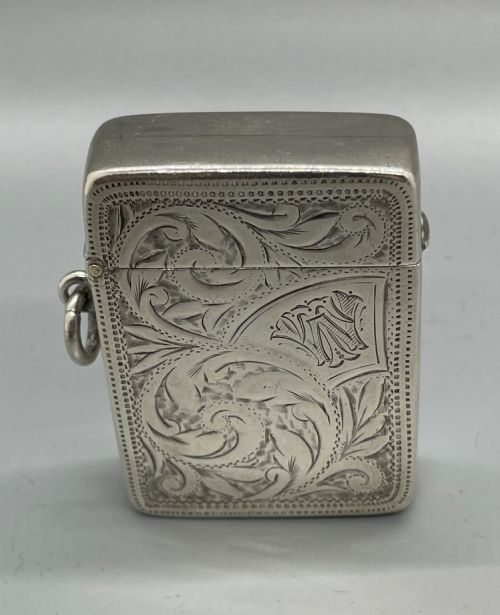
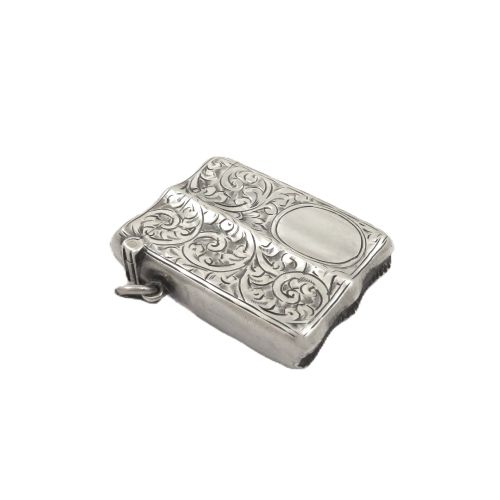
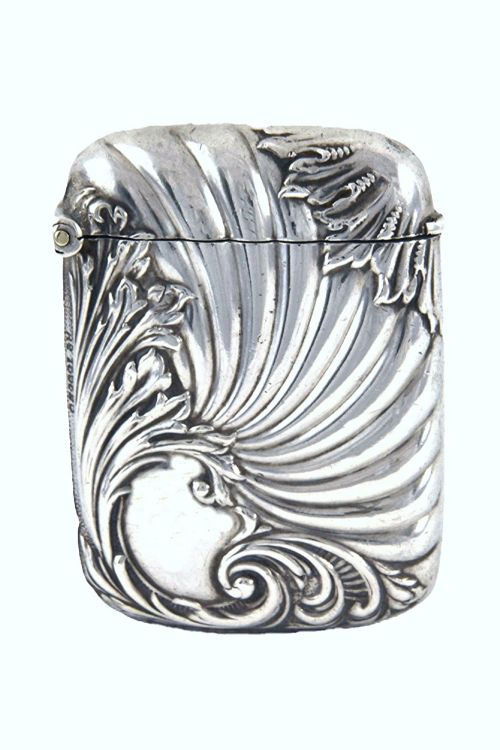
Silversmiths constructed these cases primarily from sterling silver, shaping sheet metal through pressing, stamping, and hand-engraving. Surfaces display engine-turned patterns, repoussé decoration, or smooth polished finishes.
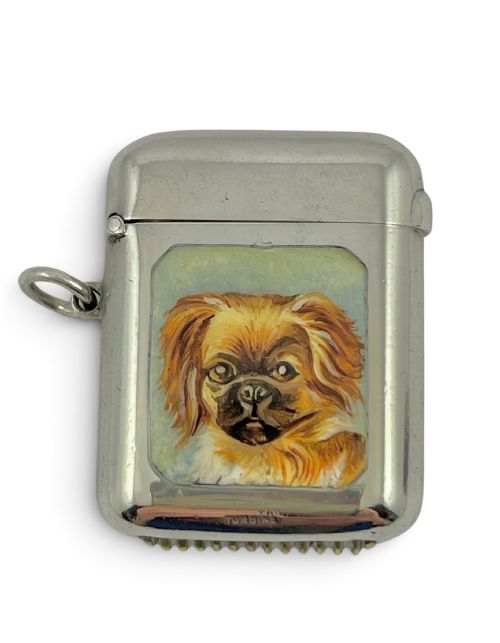
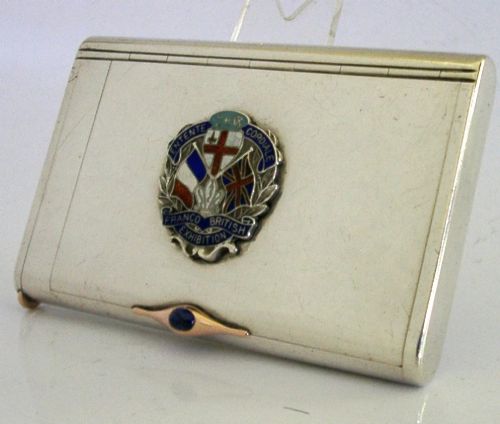
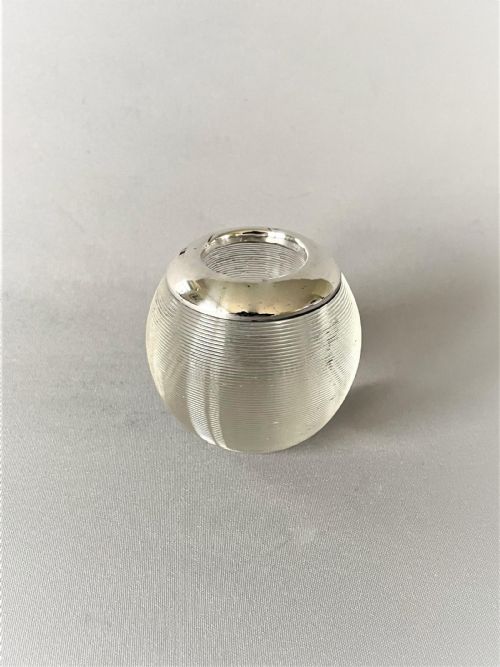
Many specimens integrate vitreous enamel, hand-painted details, or contrasting gold accents to highlight crests, floral motifs, or animal portraits. Table versions combine silver mounts with textured glass bodies or ceramic bases to provide a durable striking surface.
Hinged lids rely on internal steel springs to snap shut securely, keeping sulphur matches protected from moisture while carried in a pocket or waistcoat.
Quality and Distinction
Quality rests upon the crispness of the hallmark stamps, the weight of the sterling silver gauge, and the structural integrity of the spring hinge. Superior pieces maintain alignment when closed, without play in the lid or distortion to the body walls.
Artistry separates standard production items from exceptional work, particularly where hand-painted enamel, intricate engraving, or novelty mechanisms are involved. Pieces bearing specialised forms or documented maker marks display finer detailing in chasing and finishing.
Listings feature sterling silver, vitreous enamel, glass, and gold materials across Victorian, Edwardian, and George V periods.
Sampson Mordan & Co·A & J Zimmerman·EV Pledge & Son·Robert Chandler·William Neale·Robert Pringle·Alfred Clark
The Silver Vesta Match Holder Glossary
- Vesta
- A small match named after the Roman goddess of the hearth. These cases protected the matches and provided a grooved striking surface.
- Sovereign case
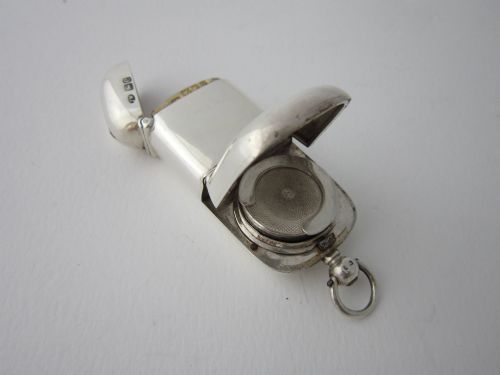
- A pocket container sized to hold gold coin currency. Makers frequently combined this compartment with a vesta case.
- Match striker
- A textured glass, ceramic, or metal surface designed to ignite friction matches. Table versions often integrated these alongside vesta holders.
- Wax taper
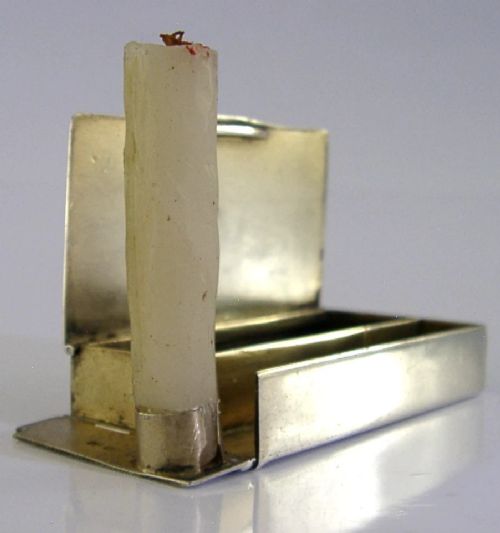
- A thin wax-coated wick carried inside specialised combination vestas for lighting pipes or cigars. They burned longer than standard matches.
- Hallmark
- An official stamp indicating metal purity, assay office, and year of manufacture. British sterling pieces carry these marks on the body and bezel.
Silver Vesta Match Holder: Frequently Asked Questions
How do I use a vesta case?
Open the spring-loaded lid to extract a match from the internal compartment. Close the lid and draw the match head quickly across the ribbed striking panel located on the exterior base of the case.
Modern safety matches require specific striking surfaces, so antique vestas work best with vintage-style or strike-anywhere matches if tested.
Were these carried in pockets?
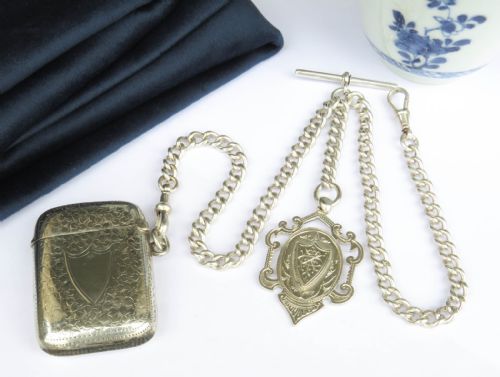
Pocket vestas were standard daily accessories for men and women in the nineteenth and twentieth centuries to light cigars, cigarettes, and gas lamps. They attached frequently to watch chains or slipped directly into waistcoat pockets.
Larger versions remained stationary on tables or desks alongside matching ash trays and matchbox holders.
What is a combination vesta?
Combination vestas integrate secondary functions into the standard match case body. Common dual-purpose designs house gold sovereign coins, wax tapers, or compartments for stamps and snuff.
These multifuncitonal accessories reflect Victorian and Edwardian ingenuity in personal gear.
How do I date an antique vesta?
British silver vestas carry hallmarks that identify the assay office, standard of silver, and a specific date letter corresponding to the year of manufacture. Stylistic clues such as Art Nouveau curves or Edwardian monograms also help narrow down the period.
Matching the maker's mark against historical records confirms the exact workshop origin.