


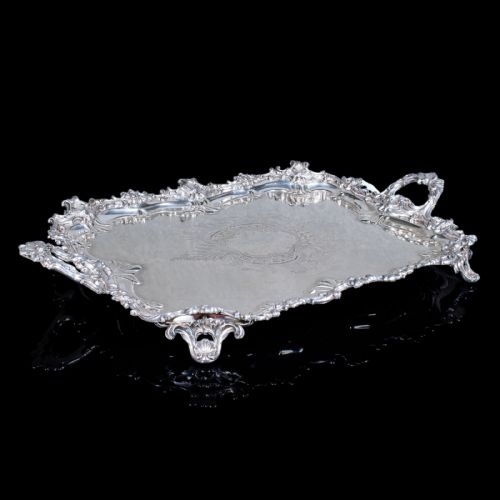
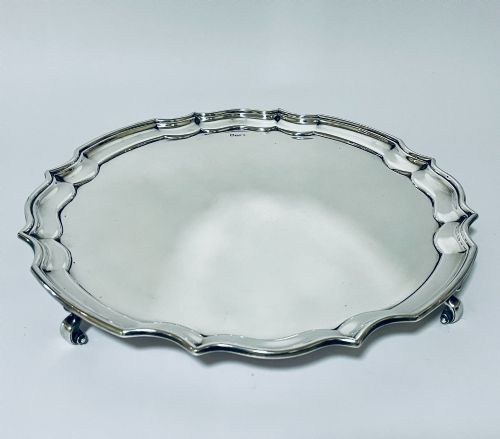
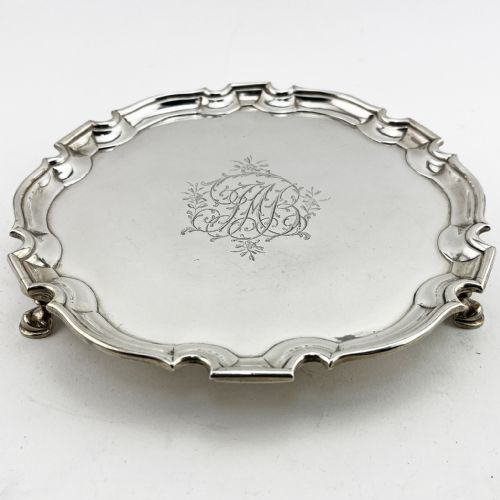


Silver Tray on Feet
A silver tray on feet brings raised elegance to any surface, offering a solid resting place for tea services, decanters or visiting cards.
Silver Tray on Feet
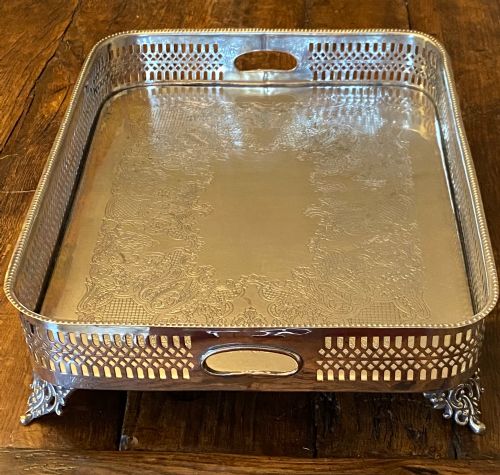
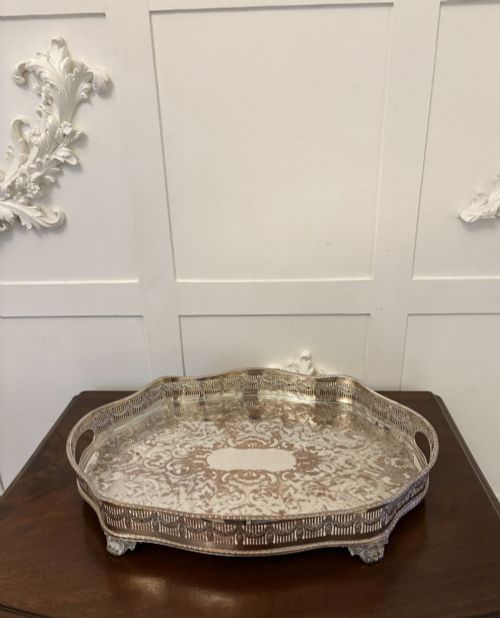
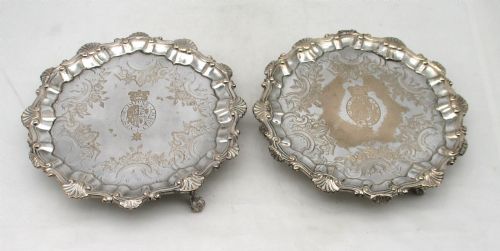
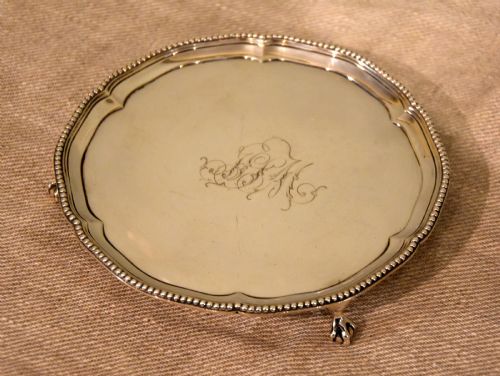
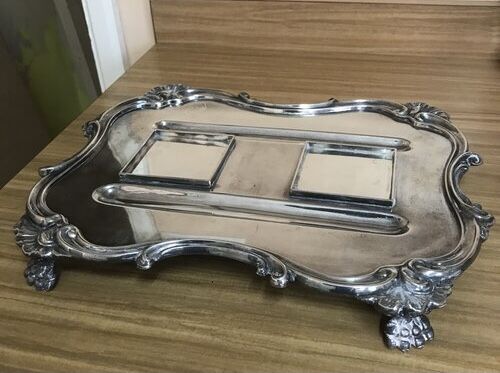
When you search for a silver tray on feet, you encounter solid sterling silver salvers, Old Sheffield plate serving platters, and silver-plated gallery trays raised on miniature supports. The forms span from compact card trays and teapot stands to large presentation trays and substantial meat warmers.
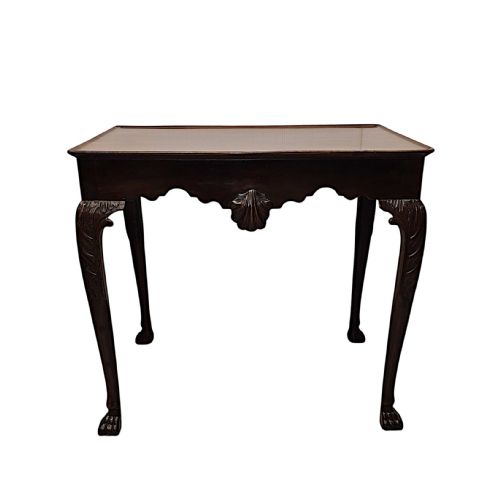
You will also find occasional side tables known as silver tables, constructed from mahogany, walnut, or coromandel with raised edges designed to hold silver items securely. The periods represented stretch from the eighteenth century through the Victorian and Edwardian eras into the early twentieth century.
The most frequent items on this page are silver-plated tea trays and salvers resting on small bracket, scroll, or paw feet. These pieces combine practical utility with decorative borders, pierced galleries, and engraved surfaces.
How they were made
Silversmiths hammered or cast sterling silver into salvers and dishes, often adding separately cast feet soldered to the underside. Plated examples utilised Old Sheffield plate fusing silver to copper, or later electroplated techniques applied over nickel silver or base metal.
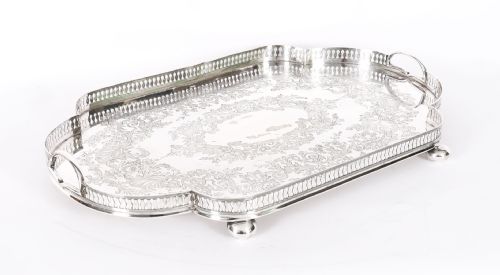
Gallery trays required meticulous assembly, joining pierced metal pierced side rails to a flat base alongside detailed cast rims. Wooden variants incorporated mahogany, walnut, and satinwood with raised tray tops, complemented by silver mounts, inkwells, or fitted compartments.
Silver Tray on Feet Retail Price Guide 2026
Typical asking prices for silver tray on feet among the pieces listed under this phrase on Sellingantiques today, from the lower quarter to the upper quarter. They describe what is for sale here now, not the wider market.
Materials range from solid sterling silver and Old Sheffield plate to mahogany, walnut, brass, and copper.
What varies in quality
The weight of the metal and the crispness of the chasing or engraving separate standard items from superior works. Thicker silver and heavier plating resist bending and show less wear on high points.
Maker execution dictates distinction, particularly evident in the balance of the feet and the rigidity of raised galleries. Well-balanced supports ensure the tray rests firmly without rocking, while superior handles and rims remain securely joined to the main body.
James Deakin·Robert Abercromby·Harrods·John Harrison·William Garrard·Padley Parkin·Rupert Favell·Peters Hamburg·Fenton Russel·Paul Storr·Robert W Smith
The Silver Tray on Feet Glossary
- Salver
- A flat metal plate or tray used for serving food or drinks, or for presenting items. These pieces frequently rest upon three or four small feet.
- Old Sheffield Plate
- An early composite material made by fusing a thin sheet of sterling silver to a thicker copper base. This technique creates a distinctive edge where the copper core shows through wear.
- Gallery Tray
- A serving tray featuring a pierced or solid upright metal wall around its perimeter. This raised border prevents items from sliding off during transit.
- Paten
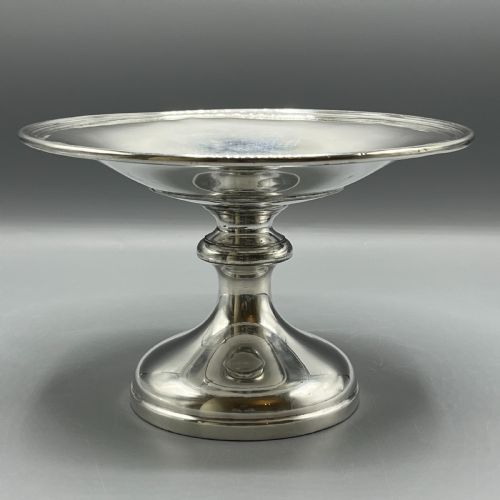
- A small flat plate or dish used in ecclesiastical settings or as a domestic stand. They often feature a single central foot or small pedestal base.
- Silver Table
- A specialised form of antique side table with a raised rim or gallery designed specifically to hold silver tea services or display pieces. Examples appear in mahogany, walnut, and Irish hardwoods.
Silver Tray on Feet: Frequently Asked Questions
What is the difference between a salver and a tray?
Salvers generally refer to flat, footed plates traditionally used for serving glasses or presenting calling cards. Trays tend to be larger, often rectangular or oval, designed for carrying tea services or heavy dishes.
Footed versions of both elevate the metal surface off polished tabletops, protecting fine wood from heat and moisture.
How do I clean an antique silver plated tray?
Use a gentle, non-abrasive silver polish applied with a soft cloth to remove tarnish without harming the underlying plating. Avoid harsh chemical dips that strip away the remaining finish, especially on older Old Sheffield plate where the copper base might expose itself.
Store the item in a dry environment and handle it with clean hands to minimise future tarnishing and preserve the engraved surface details.
What are silver tables used for?
Silver tables served as drawing room furniture designed to display collections of small silver items or to support afternoon tea services. Their raised edges prevented valuable pieces from sliding off during use.
Today they function well as decorative side tables or occasional stands in living spaces.
How can I tell the age of a footed silver tray?
Examine the hallmarks stamped into the metal for sterling pieces, or look for maker marks and plating stamps on silver-plated items. Stylistic clues such as Rococo revival scrolls, Georgian pierced galleries, or Edwardian engraved borders also point toward specific decades.
The weight, construction of the feet, and manufacturing technique provide further evidence of the period.