



Solid Silver Salver
A solid silver salver is a formal serving tray designed to hold glasses or documents, prized for its heavy metal weight and bright polished surface.
Solid Silver Salver
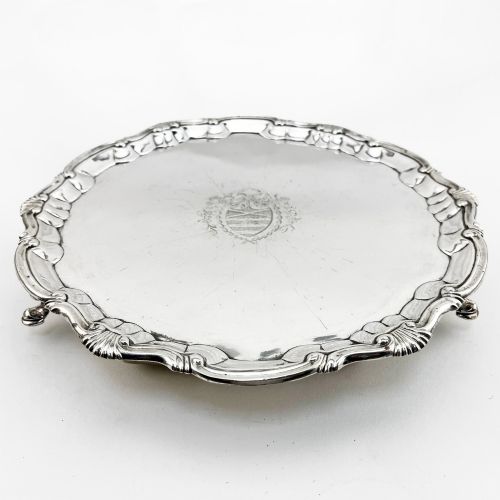
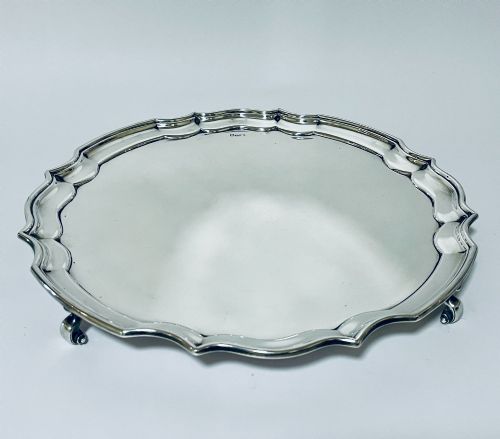
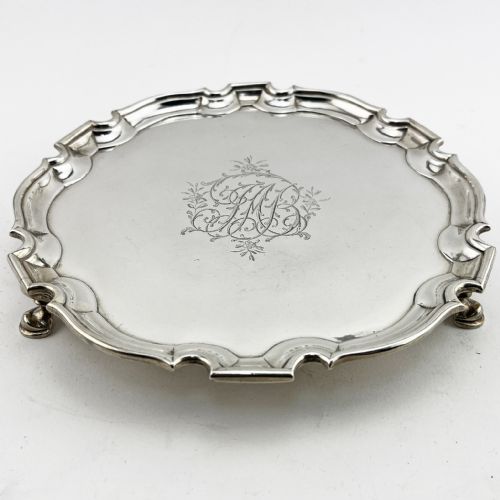
A solid silver salver appears most frequently as a circular flat platter or tray raised on small feet, utilised across British domestic spaces from the eighteenth century through the mid twentieth century. Buyers seeking this phrase encounter examples ranging from plain circular card trays to large presentation platters measuring up to seventy centimetres across.
The historical record on this page encompasses work from Georgian, Victorian, and Edwardian eras, alongside later twentieth century productions. Makers and assay offices span London, Sheffield, Birmingham, Chester, and Ireland, recording both domestic British craftsmanship and continental Dutch pieces.
Forms divide principally into small card trays, medium drinking service trays, and large display platters. Many incorporate raised rims decorated with chased borders, shell motifs, or rococo vine work, while others stand upon ball and claw or lion feet.
How They Were Made
Silversmiths constructed these pieces using sterling silver, hammering and shaping the metal sheet into circular platters with elevated rims. Heavier examples relied on substantial metal gauges to support the weight of glassware without flexing.
Surface ornamentation was applied by hand through chasing, engraving, and casting. Borders featuring rococo vine, figural masks, or shell decorations were typically cast separately and soldered onto the main tray body.
Supports such as ball and claw feet or high lion feet were cast independently and attached to the underside. Assay office marks, date letters, and maker stamps were then struck directly into the silver surface.
Listings record solid silver salvers produced across multiple centuries, featuring sterling silver objects from Georgian, Victorian, and Edwardian periods.
What Varies in Quality
The calibre of a solid silver salver rests primarily on the weight of the sterling silver used in its construction. Heavier metal gauges provide greater rigidity and substance, distinguishing substantial presentation pieces from lighter card trays.
Craftsmanship in the decorative borders separates standard production from exceptional work. Crisp, deeply chased rococo foliage or finely cast figural masks and lion feet indicate superior artisan input.
Provenance and maker reputation also determine distinction, with documented pieces by notable silversmiths commanding greater interest among collectors.
Goldsmiths and Silversmiths·Martin Hall and Co·Robert W Smith·William Marshall·Thomas Hannam and Richard Mills·Mappin and Webb·Walker and Hall·Elkington
The Solid Silver Salver Glossary
- Sterling silver
- A standard alloy consisting of ninety-two point five percent silver and seven point five percent other metals, mostly copper. This composition provides the necessary durability for functional domestic items while maintaining a bright metallic lustre.
- Chasing
- A metalworking technique where the silversmith indents the surface with punches and hammers to create raised ornamental designs without removing metal. It differs from engraving, which cuts material away.
- Assay mark
- An official stamp applied by an assay office to certify the purity of the precious metal. These marks often include symbols denoting the town, date of testing, and maker.
- Ball and claw
- A decorative foot style depicting a bird talon grasping a spherical ball. It appears frequently on eighteenth and early twentieth century furniture and silver supports.
Frequently Asked Questions
What is a solid silver salver used for?
These trays served historically for presenting visiting cards, letters, or serving wine and spirits in formal rooms.
Today, collectors utilise them as decorative table pieces or functional display trays for glassware.
How do I know if my salver is solid silver?
Examine the surface for British hallmarks, which typically include a lion passant indicating sterling standard, an assay office mark, and a date letter.
Solid silver pieces will also exhibit a heavy, substantial feel and proper metal hallmarks rather than electroplated stamps.
What is the difference between a tray and a salver?
While both hold items, a salver traditionally refers to a formal circular silver platter raised on small feet rather than flat-bottomed domestic serving trays.
Larger versions intended for drinks service are frequently catalogued interchangeably as trays or platters in historical records.
How should I clean a silver salver?
Maintain the surface using a soft cloth and specialised silver polish designed to remove tarnish gently without abrading the metal.
Avoid harsh chemical dips that can strip the natural darkening in chased recesses and remove historical patina.