




Silver Serving Waiter
A silver serving waiter is a sturdy, gleaming plateau for drinks and afternoon tea, prized for effortless hospitality.
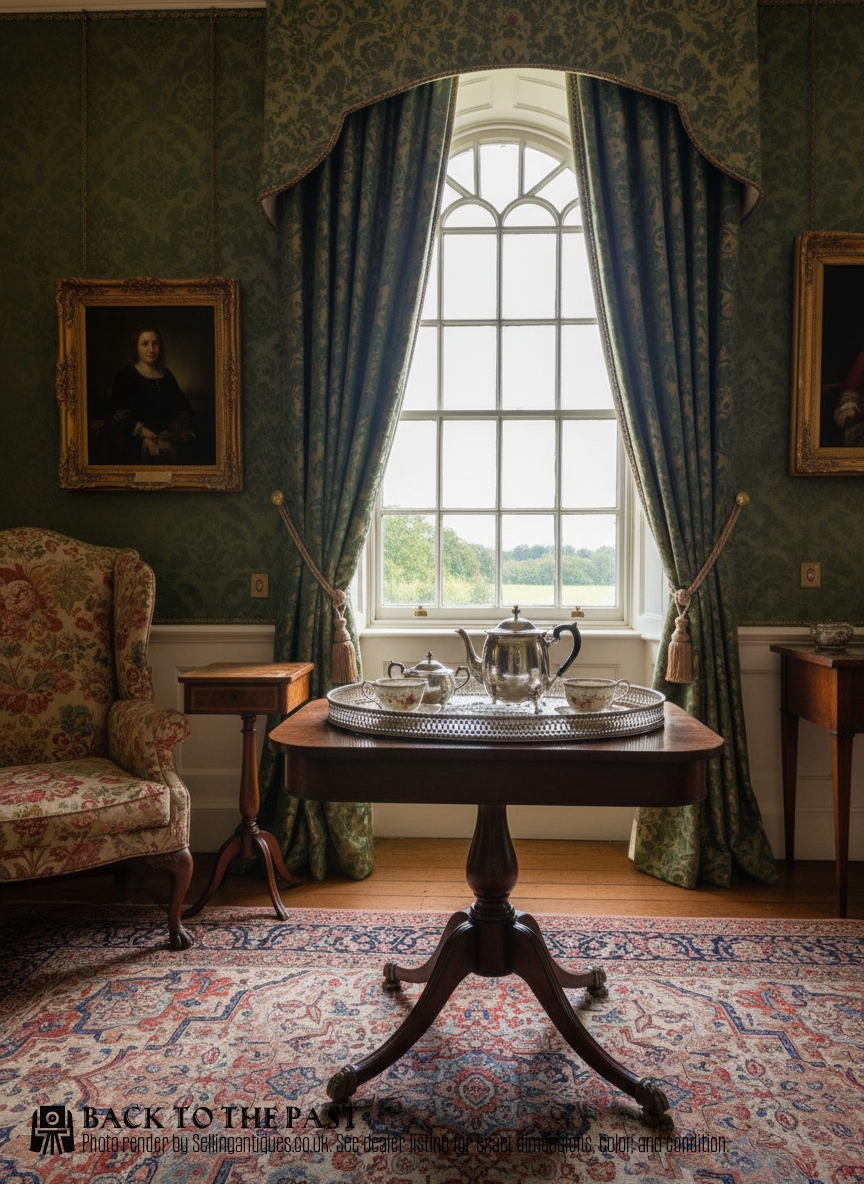
Silver Serving Waiter
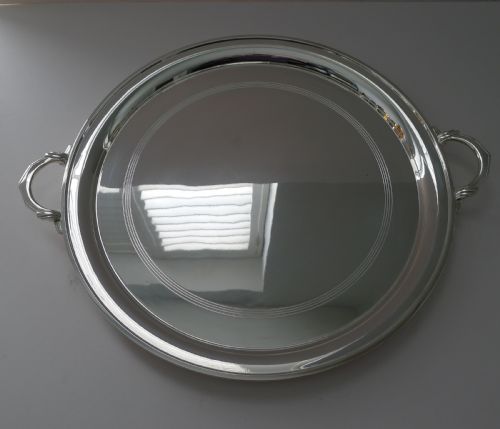
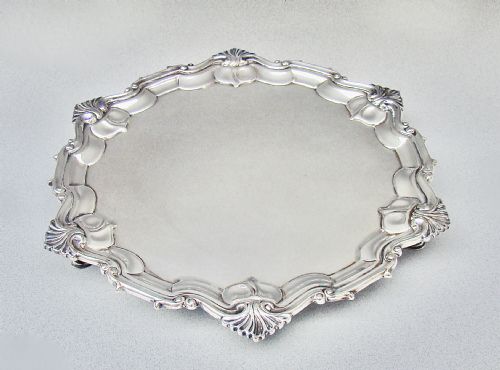
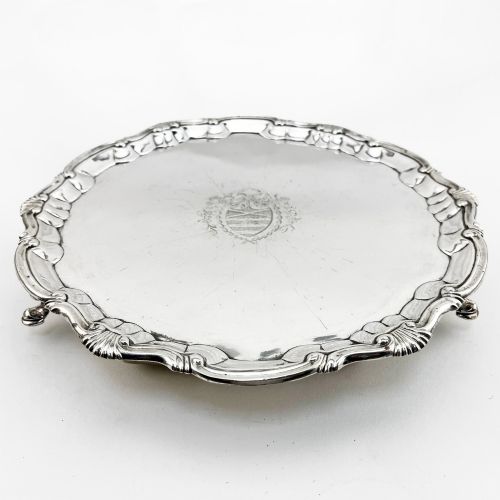
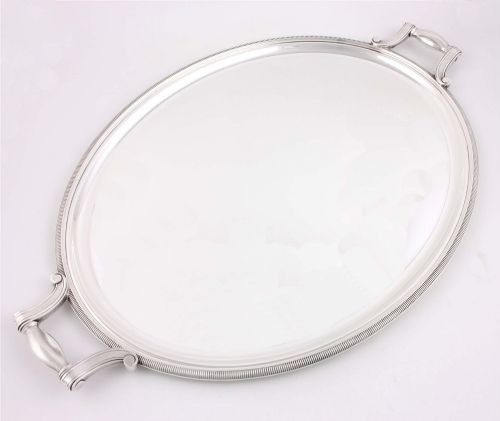
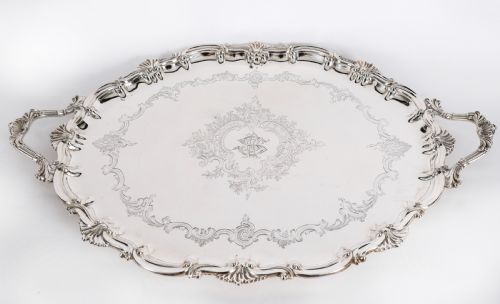
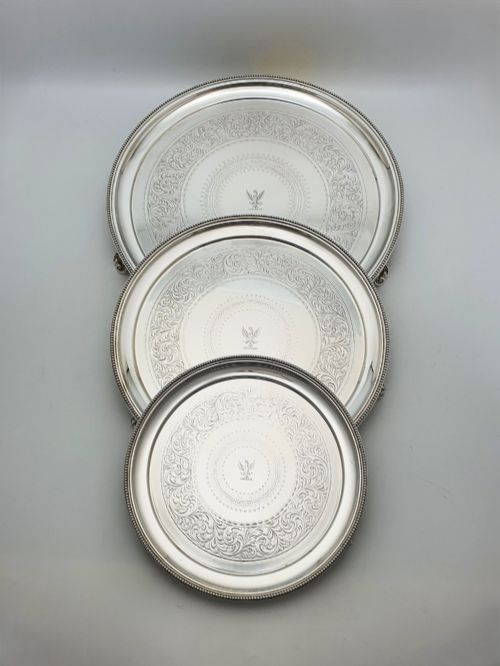
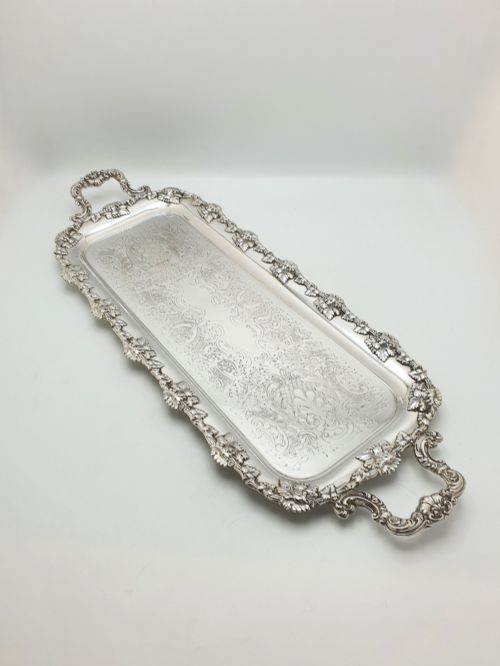
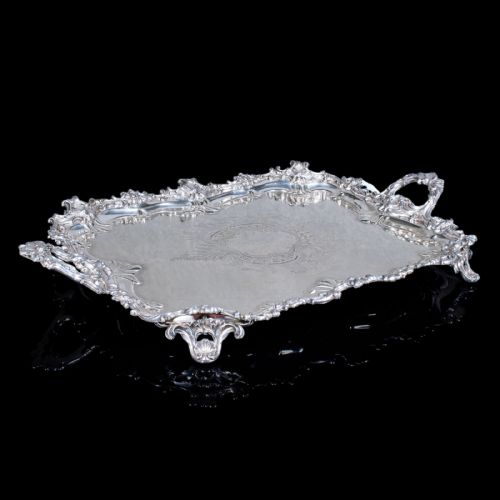
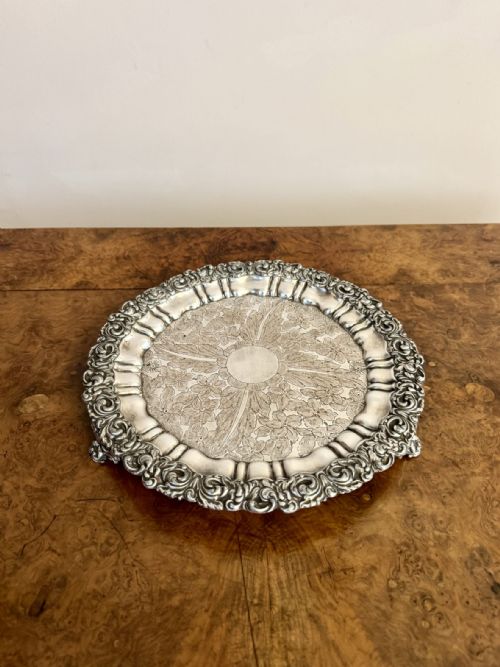
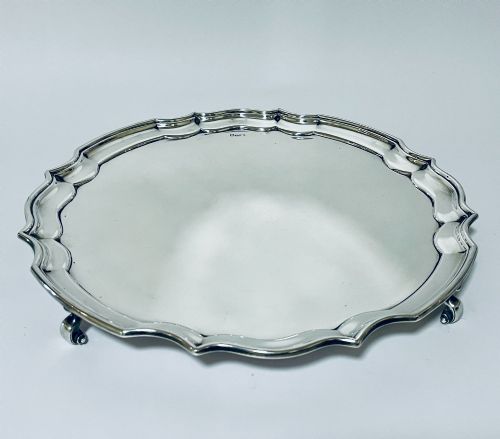
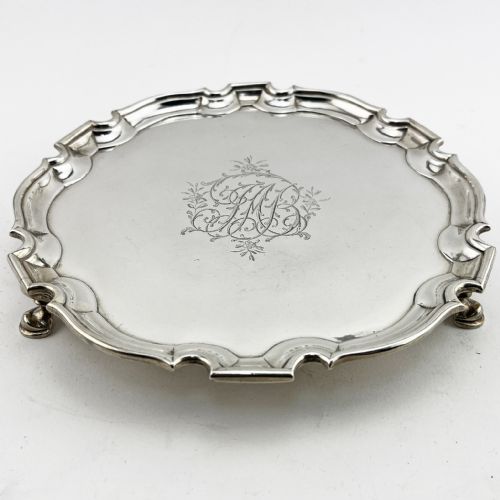
A silver serving waiter is typically encountered as an antique salver, tray, or platter intended for drinks, tea, and formal presentation. These pieces take circular, oval, square, or rectangular forms, often resting on feet or fitted with handles and gallery rails.
The versions most frequently met on this page date from the nineteenth and twentieth centuries, spanning Victorian, Edwardian, and Art Deco periods. Makers utilised both solid sterling silver and various plated compositions to suit domestic and institutional dining rooms.
Originating predominantly from English workshops, these items range from small card trays to monumental presentation pieces designed to hold decanters, glasses, and teapots securely during service.
Materials and construction
Makers constructed these pieces using sterling silver, Old Sheffield plate, and later electroplated nickel silver or standard silver plate over copper and base metal cores. The application of silver plating allowed workshops to produce substantial presentation items with the visual weight of solid metal.
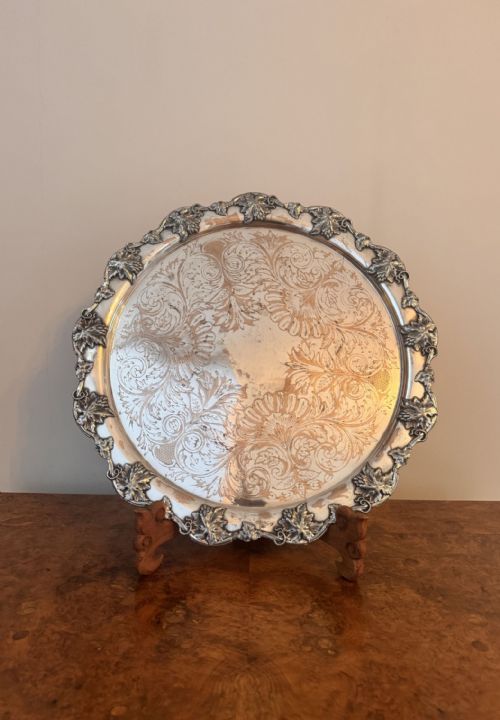
Surface decoration often involved hand engraving, chasing, and applied cast borders featuring motifs such as grapevines or geometric Art Deco lines. Raised rims and gallery rails were soldered or secured to the main body to contain glassware and porcelain during transport.
Some Victorian waiters feature secret engraved family crests that quietly hint at decades of forgotten dinner parties.
The markers of quality
Quality rests in the balance of weight, the crispness of chased or engraved surface details, and the integrity of applied borders and feet. Superior examples display substantial metal thickness beneath the plating, ensuring the tray resists flexing when loaded with heavy decanters.
The refinement of the maker's handwork separates standard production from exceptional pieces, visible in the precision of pierced galleries, tight soldering joints, and balanced proportions that feel entirely stable in the hand.
Keith Murray For Mappin & Webb·William Hutton & Sons·Thomas Bradbury & Sons·Elkington·Robert Abercromby·John Harrison·Padley Parkin·J B Chatterley & Sons·Walker & Hall
The Silver Serving Waiter Glossary
- Salver
- A flat tray, usually circular and supported on small feet, traditionally used for presenting letters, cards, or drinks. It forms a primary category of serving wares.
- Old Sheffield Plate
- A composite material made by fusing a thin sheet of sterling silver to a thicker copper ingot before rolling them together into sheets. This technique predates modern electroplating.
- EPNS
- Electroplated Nickel Silver, a durable base metal alloy coated with a layer of pure silver through an electrical process. It became widely utilised by major manufacturing silversmiths.
- Gallery Tray
- A serving tray featuring a pierced or solid vertical metal rim around its perimeter to prevent items from sliding off during movement. These often include fitted carrying handles.
- Chasing
- A metalworking technique where the smith pushes and depresses the front surface of the silver with hammer and punches to form low-relief decorative patterns.
Silver Serving Waiter: Frequently Asked Questions
What is a silver serving waiter used for?
These items serve primarily to transport and present beverages, teapots, glasses, and decanters between rooms during social gatherings. They provide a stable, protective surface that guards tabletops from spills and heat marks while adding formal elegance to hosting.
Historically, households also utilised smaller versions for presenting calling cards or letters. Their robust construction allows them to function reliably as both display centerpieces and practical serving aids.
How do I clean a silver plated waiter?
Maintenance requires gentle washing with warm water and mild liquid soap, followed immediately by thorough drying with a soft, lint-free cloth. Avoid abrasive sponges or harsh chemical dips that strip away thin plating over time.
When tarnish accumulates, apply a specialised silver polish formulated for plated wares, rubbing lightly in straight lines rather than circles. Regular, gentle care preserves the underlying lustre without wearing down the delicate metal surfaces.
How can I tell Victorian from Edwardian pieces?
Victorian examples frequently display heavy, ornate decoration, including elaborate grapevine borders, deep chasing, and Rococo Revival influences. Their forms lean toward dramatic proportions and substantial weight, reflecting mid-to-late nineteenth-century tastes for formal display.
Edwardian pieces often embrace lighter, more refined aesthetics, featuring neoclassical motifs, neat gallery rails, or restrained Edwardian Revival styling. They tend to prioritize crisp lines and balanced utility suited to early twentieth-century drawing rooms.
Can I use an antique tray every day?
Daily use remains entirely practical provided the tray is handled with care and washed by hand rather than placed in a dishwasher. Silver and silver plate are durable materials designed for active domestic service across generations.
To protect the surface during daily use, place felt coasters under heavy glass decanters or use linen doilies. Storing the tray flat or in a padded environment prevents accidental warping and surface scratches.