



Edwardian Silver Gallery Tray
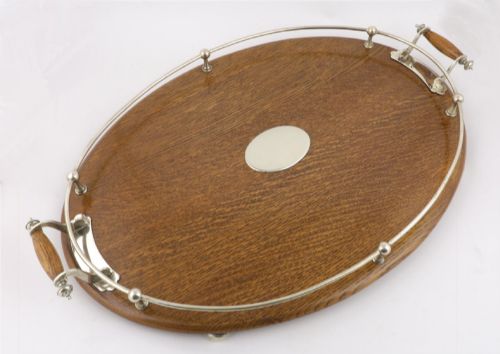
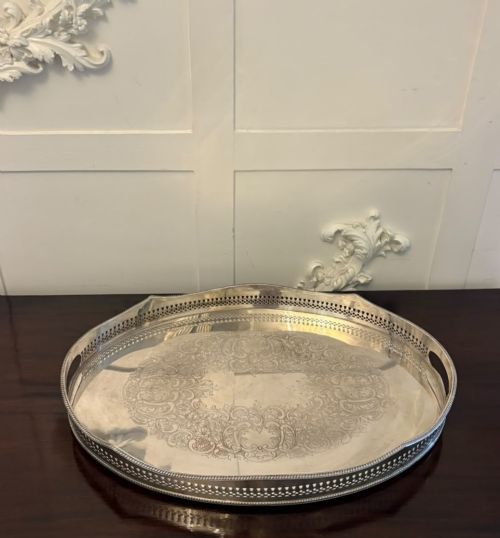
An edwardian silver gallery tray brings substantial metalwork and timber together for formal service, offering raised borders to secure glassware and decanters.
Edwardian Silver Gallery Tray
An edwardian silver gallery tray combines a flat wooden or plated base with an upright pierced metal rim, forming a sturdy vessel for drinks and tea service. These pieces emerge predominantly from the early twentieth century, carrying the stylistic weight of the Edwardian period alongside influences from Georgian and Victorian eras.
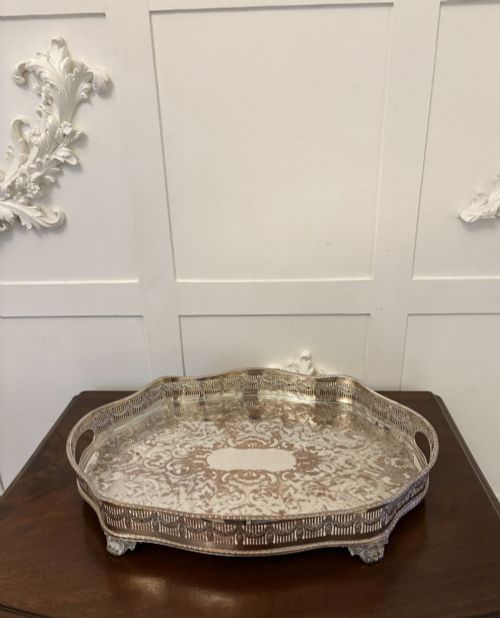
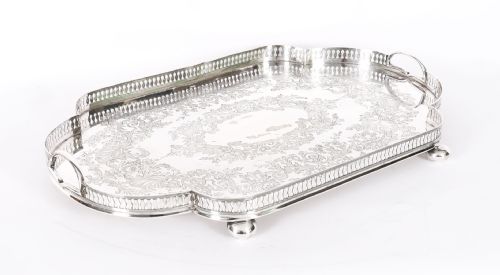
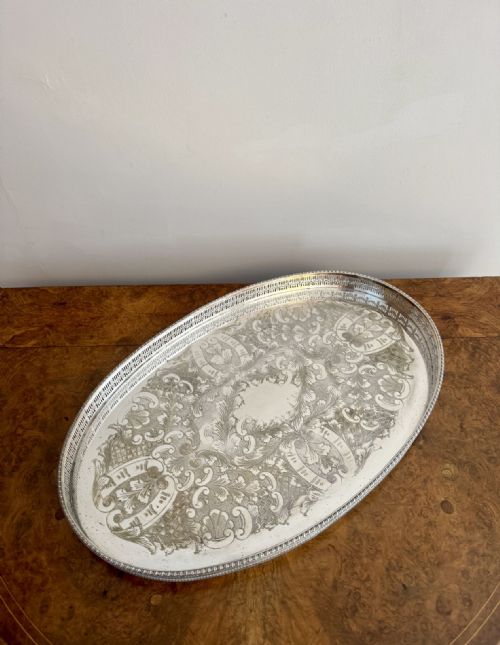
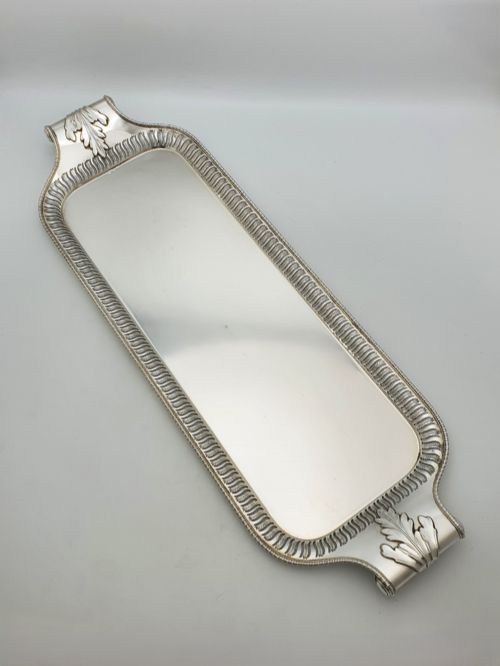
The version most commonly met on this page is the silver-plated oval or rectangular tray featuring pierced borders and integrated handles. Makers constructed these items to hold decanters, cocktail glasses, and tea sets securely during passage across a room.
Beyond standard serving duties, the broader record shows related forms including wine coasters, occasional tables, and larger drinks trays incorporating oak and mahogany.
How they were made
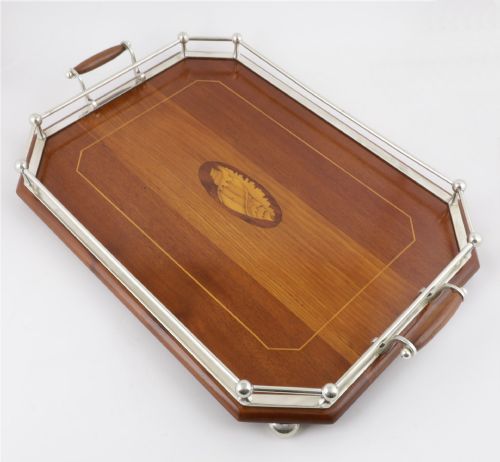
Constructors utilised silver plate, electroplated nickel silver, and base metals alongside timbers such as mahogany, satinwood, and oak. The metal galleries were often pierced or pierced and engraved before being mounted to wooden or plated bases.
Inlaid examples incorporate shell motifs into mahogany or satinwood surfaces, showing fine cabinetmaking skills running parallel to metal plating techniques. Oak variants frequently display carved details, linking the tradition of furniture making directly to the production of serving trays.
Edwardian Silver Gallery Tray Retail Price Guide 2026
Typical asking prices for edwardian silver gallery tray among the pieces listed under this phrase on Sellingantiques today, from the lower quarter to the upper quarter. They describe what is for sale here now, not the wider market.
Listings feature periods spanning from the eighteenth century through to the Edwardian era and the 1920s.
What varies in quality
The distinction between standard items and superior examples lies in the depth of the engraving and the crispness of the pierced gallery work. Hand-pierced metal rims require patient labour, resulting in cleaner geometric or floral apertures than simpler stamped alternatives.
Base material selection also divides the range, where heavy mahogany or figured oak foundations provide a rigidity that lighter composite woods lack. Maker attribution further separates ordinary production from pieces stamped by notable silversmiths.
James Deakin·Mappin And Webb·Atkins Brothers
The Edwardian Silver Gallery Tray Glossary
- Gallery
- A raised pierced border surrounding the edge of a tray to prevent items from sliding off. This architectural feature mimics the balcony railings found in domestic interiors.
- Electroplated Nickel Silver
- A base alloy coated with a layer of pure silver through an electrical process. This technique became widespread during the nineteenth century for producing durable tableware.
- EPNS
- An abbreviation for electroplated nickel silver, commonly stamped as a mark on the underside of metal wares. It indicates the underlying metal composition beneath the silver coating.
- Sheffield Plated
- An early method of fusing a thin sheet of silver to a thicker copper ingot by heat and pressure. Pieces created this way often show subtle variations in tone along exposed edges.
Edwardian Silver Gallery Tray: Frequently Asked Questions
What is an edwardian silver gallery tray used for?
These pieces served primarily for carrying and displaying tea sets, decanters, and cocktail glassware within the home. The raised metal rim kept bottles and cups secure while servants carried them between rooms.
Today, they function practically as drinks trays on sideboards or coffee tables, bringing period character and reflective metal surfaces into modern reception rooms.
How do I clean an edwardian silver gallery tray?
Maintenance requires gentle silver polish applied with a soft cloth to preserve the plated surface without wearing through to the base metal. Care must be taken around pierced sections and wooden bases to avoid excess moisture.
Regular dusting with a dry microfiber cloth keeps tarnish at bay between deeper cleaning sessions. Harsh chemical dips should be avoided to protect any wooden inlays or ebonised finishes.
How can I tell the period of a tray?
Dating relies on maker marks, style revivals, and the combination of materials such as oak or mahogany with silver plate. Edwardian pieces often display lighter proportions and specific floral or geometric piercing styles distinct from earlier Victorian heavy castings.
Examining the construction of the gallery and the type of base wood provides further clues to whether a piece belongs to the early twentieth century or an earlier Georgian revival.
Are these trays suitable for daily use?
Solid construction and durable silver plating allow these items to handle regular use for serving drinks or displaying objects. The sturdy wooden bases provide sufficient support for heavy glass decanters and bottles.
Care should be taken to protect wooden surfaces from prolonged liquid exposure by using coasters or mats where appropriate. Treating the metal with respect ensures the plating remains intact over years of service.