





Silver Tea Cutlery
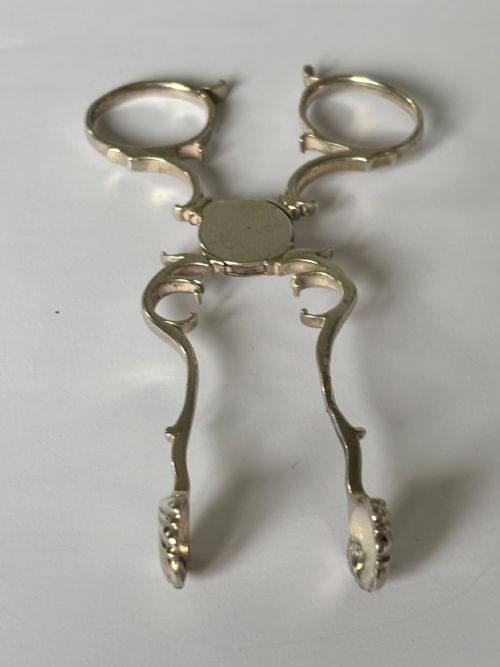
Silver tea cutlery encompasses specialised implements like teaspoons, butter knives, and sugar tongs designed for the table, spanning Georgian to Mid-Century Modern periods.
Silver Tea Cutlery
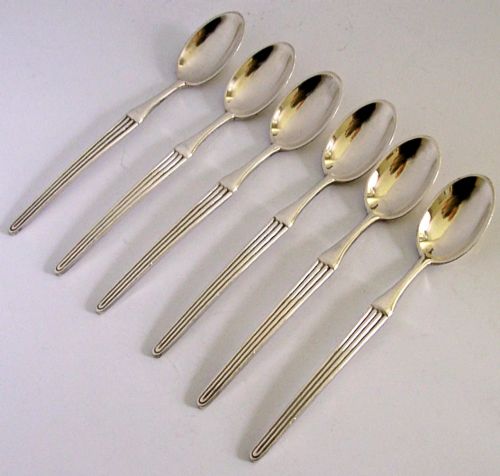
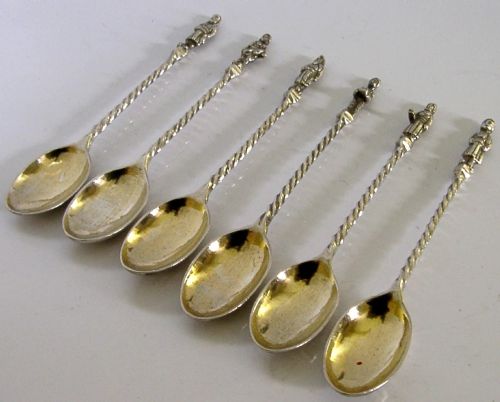
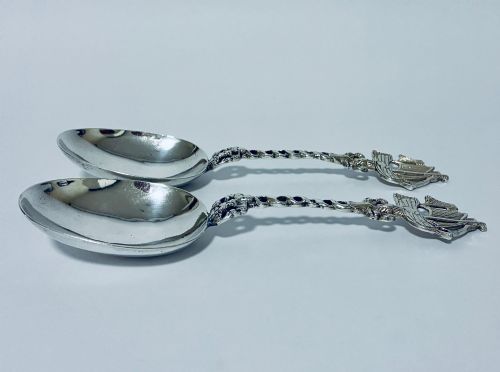
When searching for silver tea cutlery, collectors encounter an assortment of small implements designed for the table, including teaspoons, cake forks, butter knives, and sugar tongs. These pieces emerge from periods spanning the Georgian era through the 1930s, reflecting changing domestic habits around afternoon tea.
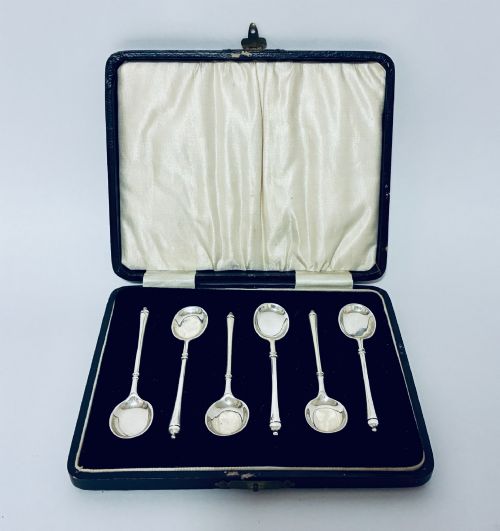
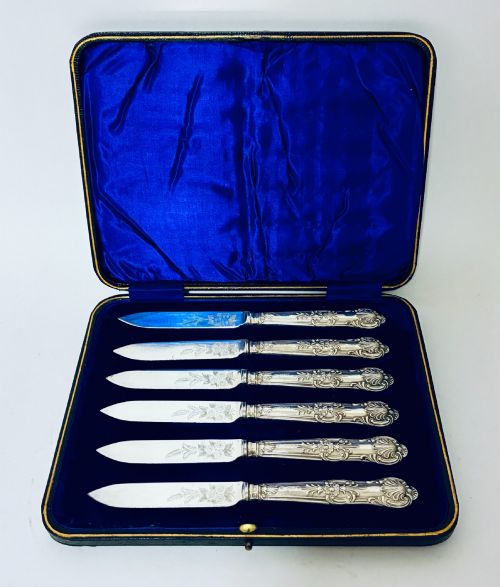
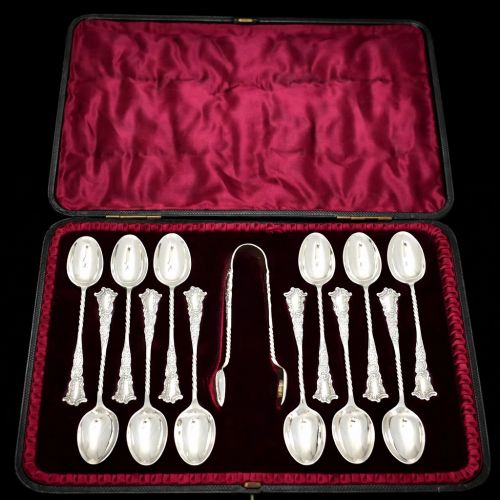
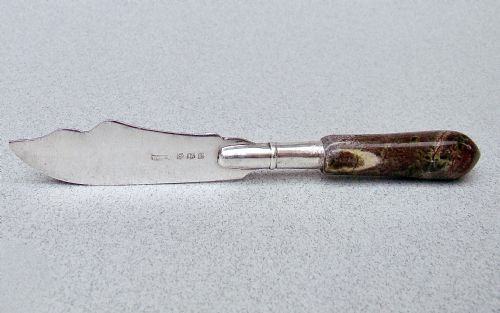
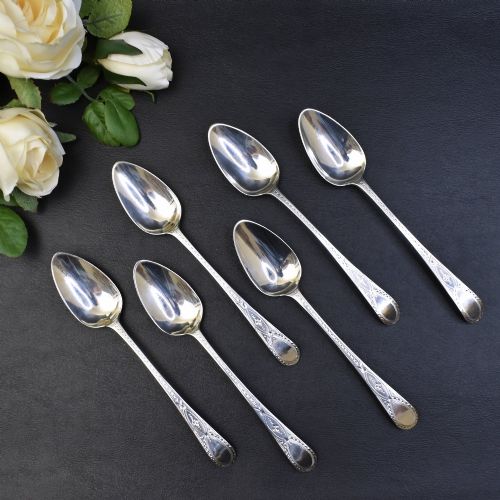
The version most commonly met on this page is the cased set of six teaspoons, often accompanied by matching sugar tongs. Alongside these, single caddy spoons and butter knives with silver blades or handles appear frequently.
Makers utilised various companion materials for handles and fitted presentation boxes, combining the silver with velvet, silk, leatherette, satin, and mother-of-pearl. Items range from simple bright-cut Georgian designs to colourful Art Deco enamel work.
Materials and Construction
Solid silver and sterling silver form the primary structural material for bowls and tines, often shaped by hammering and piercing during the Georgian and Victorian periods. Makers also employed steel for knife blades and added decorative elements in enamel.
Handles frequently incorporate alternative organic materials such as mother-of-pearl or shell, secured to metal shafts with pins. Fitted cases lined with silk, satin, or velvet protect these delicate service items.
Card suits carved into handles allow players to match their teaspoon directly to their bridge hand.
Distinctions in Quality
The standard of silver tea cutlery rests upon the crispness of the original chasing, engraving, and bright-cut work. Hand-engraved detail executed by skilled silversmiths stands apart from simpler, machine-stamped production.
Preservation of the original fitted presentation case and the completeness of a matched set heavily influence the standing of a group. Full sets retaining all original pieces display greater uniformity than assembled collections.
Thomas Tookey·P A W Bateman·George Unite·Vale And St John·Georg Jensen·Evald Nielsen·Vasily Agafonov
The Silver Tea Cutlery Glossary
- Bright-cut
- A method of engraving using faceted cuts to reflect light from the silver surface. It creates sparkling geometric or floral borders on Georgian spoons.
- Caddy spoon
- A short-handled spoon specifically designed for measuring loose tea leaves from a caddy. These frequently feature shell-shaped bowls.
- Cloisonné
- An enamelling technique where metal strips form compartments on the silver base to hold coloured glass paste. Russian makers utilised this method extensively.
- Sugar tongs
- Small spring-action implements used for lifting sugar lumps into a cup. They often mirror the decorative pattern of accompanying teaspoons.
- Hallmark
- Official stamps struck into precious metals to indicate the assay office, standard of purity, and date of manufacture. British pieces carry these marks as standard.
Silver Tea Cutlery: Frequently Asked Questions
How were silver tea cutlery sets used?
These implements served formal afternoon tea gatherings for portioning sugar, spreading butter, and stirring tea. Individual guests utilised specific pieces for distinct tasks during the meal.
Complete cased sets remained stored in velvet-lined boxes between uses, appearing on the table only for entertaining visitors.
What is the difference between Georgian and Victorian spoons?
Georgian spoons typically feature hand-wrought bowls and delicate bright-cut engraving or crisp fiddle patterns. They reflect an era of smaller, distinct tea service traditions.
Victorian examples often showcase heavier cast handles, more ornate floral decoration, and are frequently found in fitted boxed sets with sugar tongs.
How should antique silver tea cutlery be stored?
Storing pieces in original fitted cases lined with silk or velvet protects the soft silver surfaces from scratching. Tarnish develops slower when items avoid exposure to household air and humidity.
Avoid stacking unprotected pieces directly on top of each other to preserve delicate engraving and mother-of-pearl handles.
Can antique silver tea cutlery be used daily?
Solid silver and sterling pieces withstand regular use provided they receive gentle hand washing without harsh abrasives. Mother-of-pearl handles require particular care and must stay out of dishwashers.
Frequent handling actually prevents heavy tarnish from forming, though very delicate enamel or antique gilt surfaces warrant sparing use.