





Antique Butter Knife
These antique butter knife pieces bring the precise craftsmanship of the Victorian, Edwardian and George V periods straight to the breakfast table.
Antique Butter Knife
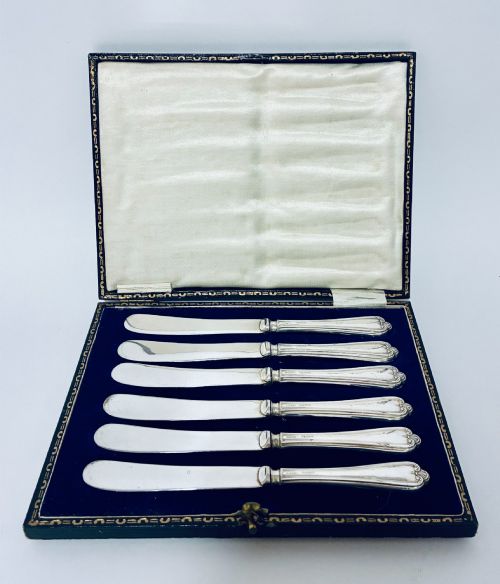
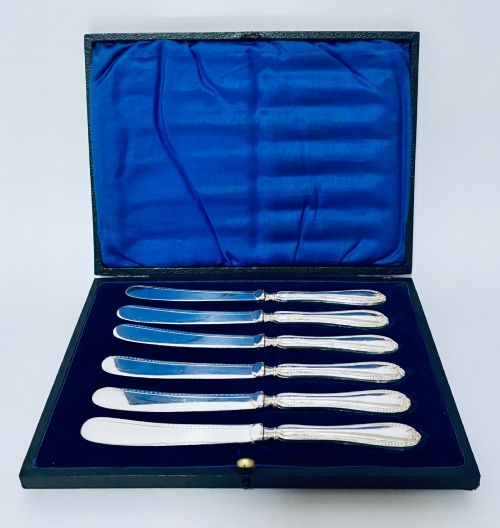
An antique butter knife is a specialised piece of tableware designed specifically for slicing and spreading butter during formal dining and tea services. These utensils appear as standalone pieces, matched pairs, or within fitted presentation cases alongside butter dishes and jam spoons.
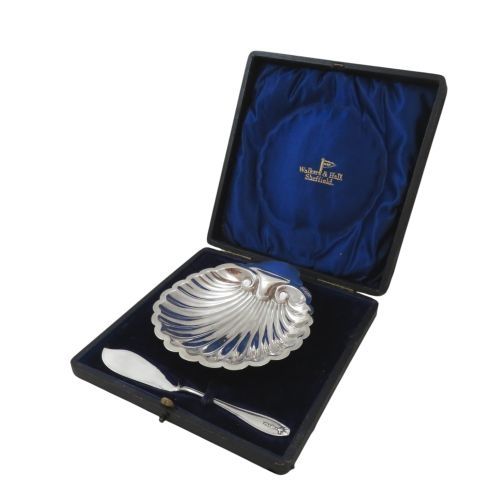
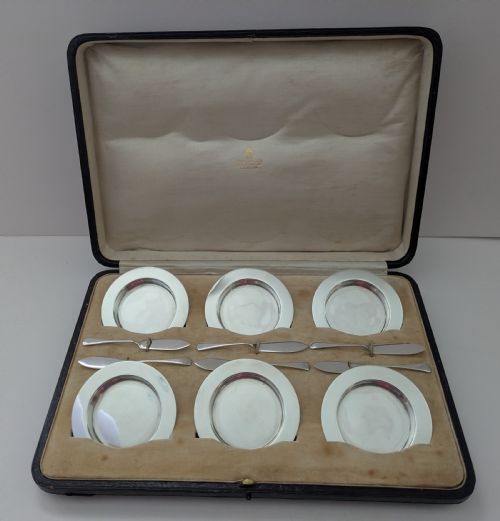
Buyers will most frequently encounter individual sterling silver knives, cased sets featuring shell-shaped dishes, and multi-piece cutlery sets spanning the late Victorian and Edwardian eras. These implements often form part of broader tableware collections that include pickle forks and preserve spoons.
Materials and Construction
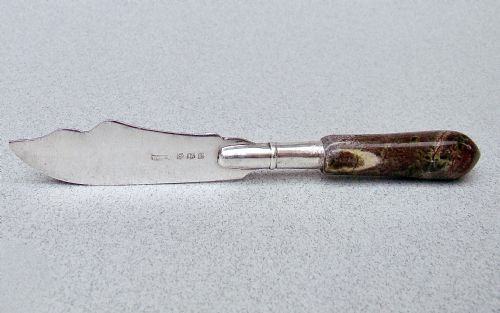
Makers utilised sterling silver and solid silver for the blades and handles, often pairing them with natural materials such as mother-of-pearl and agate for individual handles. Presentation cases employ rigid structures lined with velvet and silk, protected by external leather coverings.
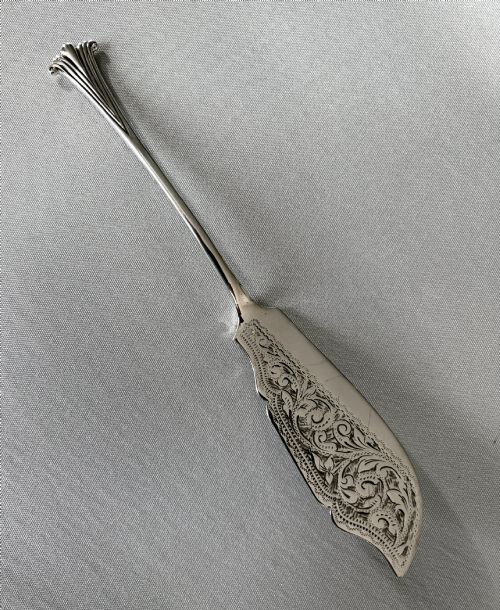
Silversmiths applied techniques including piercing, embossing, and traditional patterning like the fiddle pattern to shape the metal components. Fitted boxes incorporate custom-moulded interiors designed to securely house the knife alongside matching glass or silver dishes.
Even butter required its own dedicated Sheffield steel blade before the era of communal spreads.
Distinctions in Quality
Quality rests upon the crispness of the silversmith's piercing and engraving work, alongside the structural integrity of the handle joints. Pieces produced by prominent makers display more refined proportions and deeper hallmarks.
The survival of the original presentation case with intact silk linings and leather exteriors elevates the standing of cased sets. Material selection also dictates standard, with natural agate and mother-of-pearl inserts reflecting higher manufacturing ambition than plain metal handles.
The Goldsmiths & Silversmiths·Vale & St John·Asprey & Co·Adie Brothers·Tiffany & Co·William Eaton
The Antique Butter Knife Glossary
- Fiddle pattern
- A traditional nineteenth-century flatware handle design featuring a distinctive violin-like shoulder tapering towards the terminal. This style remains a common indicator of Victorian cutlery manufacture.
- Hallmark
- An official stamp applied by an assay office to precious metal items, indicating purity, origin, and the year of manufacture. These marks allow collectors to date silver butter knives precisely.
- Mother-of-pearl
- The iridescent internal layer of certain mollusc shells used historically for knife handles. This material provides a smooth tactile surface contrasting with the metal blade.
- Piercing
- A decorative metalworking technique involving the cutting out of sections from the silver to create openwork patterns. This method appears frequently on Edwardian butter dishes and knife blades.
Antique Butter Knife: Frequently Asked Questions
What is an antique butter knife used for?
An antique butter knife is designed to cut and spread butter from a communal dish onto individual plates. These implements were essential elements of formal Victorian and Edwardian breakfast and tea tables.
Unlike modern table knives, their blades are often broad and feature decorative engraving or piercing. They appear both as single utensils and as matched components within larger cased silver sets.
How do I date an antique silver butter knife?
Dating relies upon the assay office hallmarks stamped directly onto the silver metal components. These official marks record the specific year of production alongside the maker and standard of silver.
Stylistic indicators such as fiddle pattern handles or Edwardian shell motifs also help narrow down the period of manufacture. Surviving presentation cases often add contextual clues to the date.
Are these knives dishwasher safe?
Antique butter knives require hand washing with mild soap and warm water to protect their delicate surfaces. Modern dishwashers utilise harsh detergents and excessive heat that can damage silver and natural handle materials.
Items featuring mother-of-pearl or agate handles, as well as those housed in velvet and silk-lined cases, must be kept entirely away from automated washing environments.
Why do some butter knives come in fitted cases?
Fitted presentation cases were produced to protect high-quality silverware sets during storage and transportation. These boxes feature moulded interiors lined with silk and velvet to secure the knife and matching dish.
Such cased sets were frequently purchased as wedding gifts or presentation pieces during the Victorian and Edwardian periods. The presence of the original case often indicates a higher tier of original manufacture.