





Silver Butter Knife
These silver butter knife pieces bring traditional charm to the table, offering practical service alongside period craftsmanship.
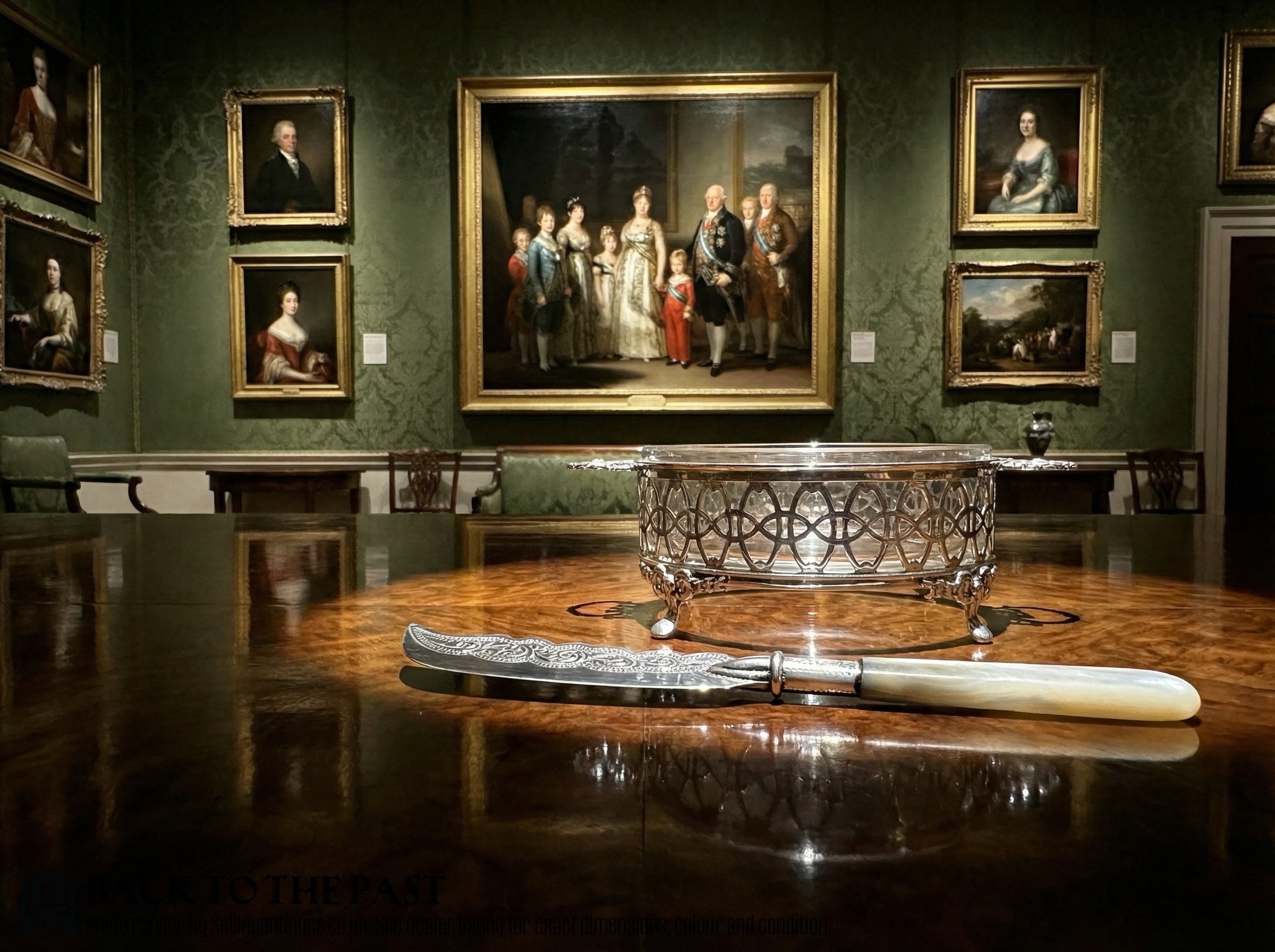
Silver Butter Knife Forms and Origins
A silver butter knife is a small piece of cutlery designed specifically for cutting and spreading table butter, often found individually or paired with butter dishes. When searching for a silver butter knife, buyers encounter items spanning from the Georgian period through the Victorian, Edwardian, and George V eras.
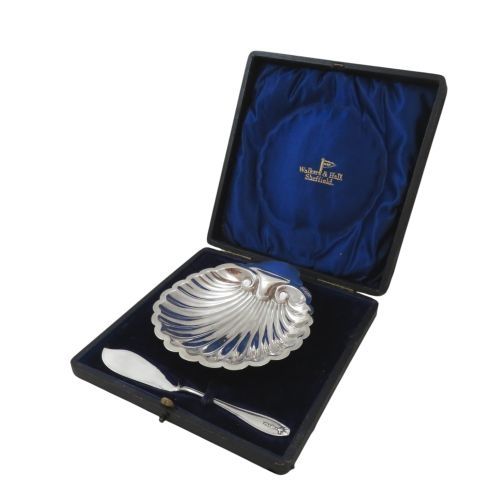
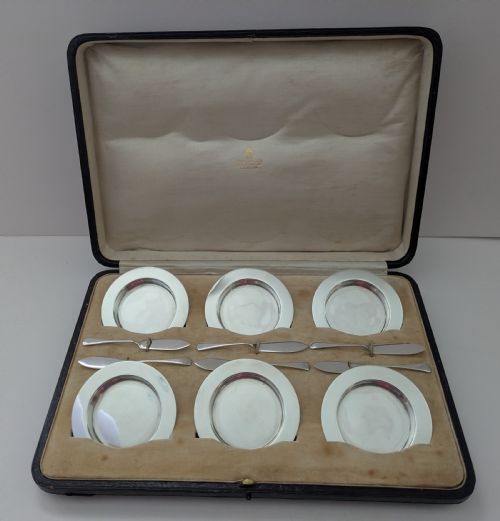
Many examples appear within fitted cases alongside jam spoons and pickle forks, or accompany cut glass and silver butter dishes. Makers from regional assay offices in cities like Birmingham and Sheffield produced these utensils alongside international firms.
Materials and Construction
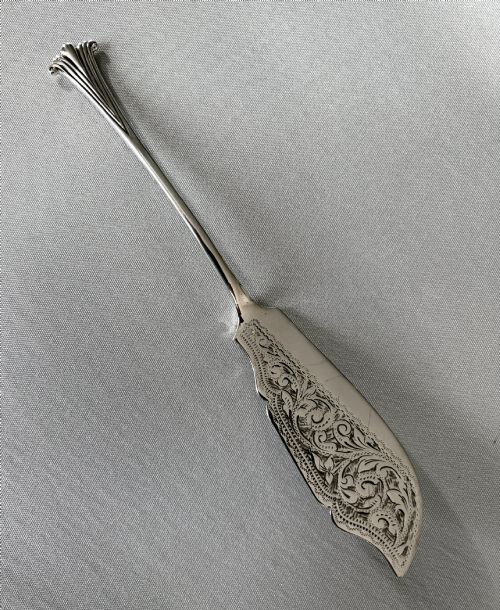
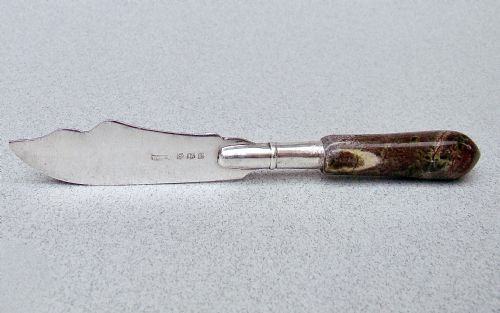
These pieces utilise sterling silver and silver blades paired with handles fashioned from mother-of-pearl, agate, jade, nephrite jade, glass, and Connemara marble. Metalwork techniques include piercing, engraving, and casting, often applying traditional patterns such as Fiddle and Kings.
Fitted cases lined with velvet and silk housed sets destined for dining tables, while specific designs incorporated novelty elements like bookmark adaptations or hollowware dishes with glass liners.
Distinctions in Quality
The standard of a silver butter knife rests on the crispness of its pierced or engraved decoration and the integrity of its handle material. Natural handles such as mother-of-pearl, agate, and jade show variations in grain, polish, and secure seating within the silver collar.
Pieces originating from notable makers or bearing clear provincial and city assay marks carry greater distinction than unmarked examples. The survival of original fitted velvet and silk-lined cases also elevates the standing of cased sets.
Vale and St John·Elkington and Co·Hilliard and Thomason·Adie and Lovekin·Georg Jensen·Tiffany and Co
The Silver Butter Knife Glossary
- Sterling silver
- A silver alloy containing 92.5 percent pure silver by mass and 7.5 percent other metals, usually copper. This standard composition guarantees durability and metal purity for dining flatware.
- Fiddle pattern
- A traditional 19th-century flatware silhouette featuring a narrow stem that broadens gracefully towards the terminal into a shape resembling a violin. It remains a staple of Victorian table service.
- Kings pattern
- An ornate decorative flatware style distinguished by a shell and scroll motif at the terminal. It represents a heavier and more elaborate design tier.
- Assay mark
- A stamp indicating the purity of the metal, the city of testing, and the date letter. These symbols provide historical provenance for British items.
- Mother-of-pearl
- The iridescent internal layer of pearl oyster shells used widely for knife handles. Its natural lustre provides a tactile contrast to polished metal.
Frequently Asked Questions
What is a silver butter knife used for?
A silver butter knife serves to slice and spread butter at the dining table during meals. These utensils function either as standalone implements or as part of larger cased cutlery sets.
Historically, they accompanied butter dishes on formal tables, allowing guests to serve themselves neatly. Today, they remain functional items for daily use or collection.
How do I identify the date of a silver butter knife?
Dating relies upon the hallmarking stamped directly into the silver blade or collar. These marks typically include a lion passant, a city assay symbol, and a date letter.
Comparing the style, such as Victorian Fiddle pattern or George V piercing, helps narrow down the manufacturing decade when marks are worn.
Are these knives made entirely of silver?
Many examples feature solid silver construction throughout the blade and handle, while others pair a silver blade with a decorative handle. Alternative handle materials include mother-of-pearl, agate, jade, and glass.
Each variation reflects the specific aesthetic choices popular during periods like the Edwardian era or the reign of George V.
How should I care for a silver butter knife?
Gentle hand washing in warm soapy water preserves both the silver metal and organic handle materials like mother-of-pearl or jade. Avoid harsh abrasives or dishwashers to protect the polished surfaces.
Storing pieces in dry conditions or anti-tarnish rolls prevents excessive oxidation of the silver over time.