
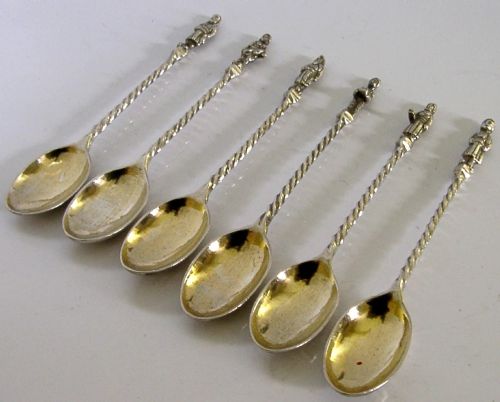
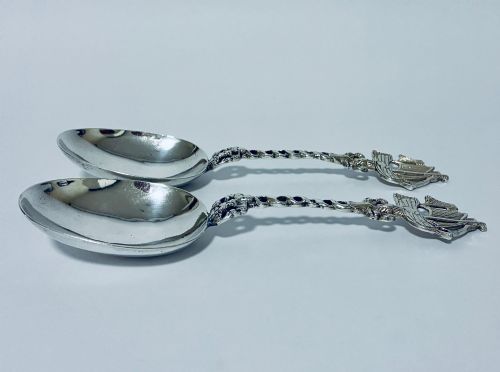


Vintage Silver Preserve Spoon
These vintage silver preserve spoon items bring period charm to the table, offering a purposeful utensil for sweet condiments.
Vintage Silver Preserve Spoon
A vintage silver preserve spoon is a specialist dining utensil designed specifically for serving jams, jellies, and fruit preserves. These items appear across various historical periods, including the Victorian, Edwardian, and early twentieth-century eras.
The selections available on this page encompass individual spoons, matched sets with condiment pots, and pieces paired with cranberry glass or cut glass bowls. Forms range from simple flatware to figural designs and pierced bowls intended to drain liquid from fruit.
Origin and stylistic influences vary significantly across the inventory. Pieces reflect diverse regional aesthetics such as Art Nouveau, Arts and Crafts, Dutch regional work, and Ottoman craftsmanship.
How they were made
Makers utilised sterling silver, solid silver, and silver plate for the metal elements of these utensils. Construction techniques combined traditional silversmithing with specialised piercing and shaping to form bowls suited for serving thick preserves.
Many examples incorporate contrasting materials, pairing metal spoons with cut glass, cranberry glass, and velvet components. These assemblies frequently unite the work of glassblowers and silversmiths into a single serving set.
Some preserve spoons feature pierced bowls specifically engineered to let sticky syrup drip off fruit before it reaches the toast.
What varies in quality
Quality in a vintage silver preserve spoon rests upon the weight of the metal and the precision of any decorative work. Heavier gauges of silver and intricate detailing distinguish finer examples from standard production pieces.
The integration between spoon and accompanying vessels also defines the standard of the item. Well-balanced proportions and harmonious pairing with cut or cranberry glass demonstrate superior design and execution.
Amy Sandheim·Whiting Co.
The Vintage Silver Preserve Spoon Glossary
- Sterling Silver
- A standard alloy consisting of a high purity of silver, valued for durability and lustre in domestic tableware. It provides the primary metal for many better-quality spoons.
- Silver Plate
- A base metal coated with a thin layer of silver, offering an accessible alternative to solid silver items. This material appears frequently in Edwardian condiment sets.
- Cranberry Glass
- A distinctive pinkish-red glass created by adding gold chloride to the molten mixture. It forms vibrant bowls and jars designed to accompany matching preserve spoons.
- Arts and Crafts
- A design movement emphasising handcraftsmanship and simple, honest construction over industrial mass production. Spoons from this tradition display distinct handmade characteristics.
- Art Nouveau
- A style characterised by flowing, organic lines inspired by natural forms. This aesthetic influences the decorative handles of specific spoons in the collection.
Vintage Silver Preserve Spoon: Frequently Asked Questions
What is a vintage silver preserve spoon used for?
These spoons serve jams, jellies, marmalades, and fruit preserves from tabletop pots or bowls. Their specific bowl shapes help scoop viscous preserves cleanly.
They function as dedicated serving utensils rather than personal flatware, often accompanying crystal or glass condiment jars.
How do I clean antique silver preserve spoons?
Wash the pieces gently in warm water using a mild detergent and dry them immediately with a soft cloth. Avoid harsh chemical dips that can damage delicate surfaces.
Store them in a dry environment to maintain the finish of the silver and protect any integrated glass or velvet elements.
How can I tell the period of a spoon?
Examine the overall design style, such as Art Nouveau curves or Arts and Crafts simplicity, which often reflect specific eras. Hallmarks and stamps on the metal also provide clues to the manufacturing date and origin.
Materials like cranberry glass or cut glass jars can further help date the piece to the late nineteenth or early twentieth century.
Are these spoons made of solid silver?
The inventory includes items made from sterling silver, solid silver, and silver plate. Descriptions specify the exact material used for each individual piece.
Heavier items often indicate solid construction, while plated pieces offer the appearance of silver over a different base metal.
Can I use these items daily?
These spoons suit regular table use provided they receive careful hand washing and proper maintenance. Their durable construction makes them practical for serving preserves and condiments.
Treating them with care preserves their historical character and finish over years of use.