
Silver and Glass Dish
A silver and glass dish combines reflective metal with coloured or cut vessels for butter, preserves, and condiments on the dining table.
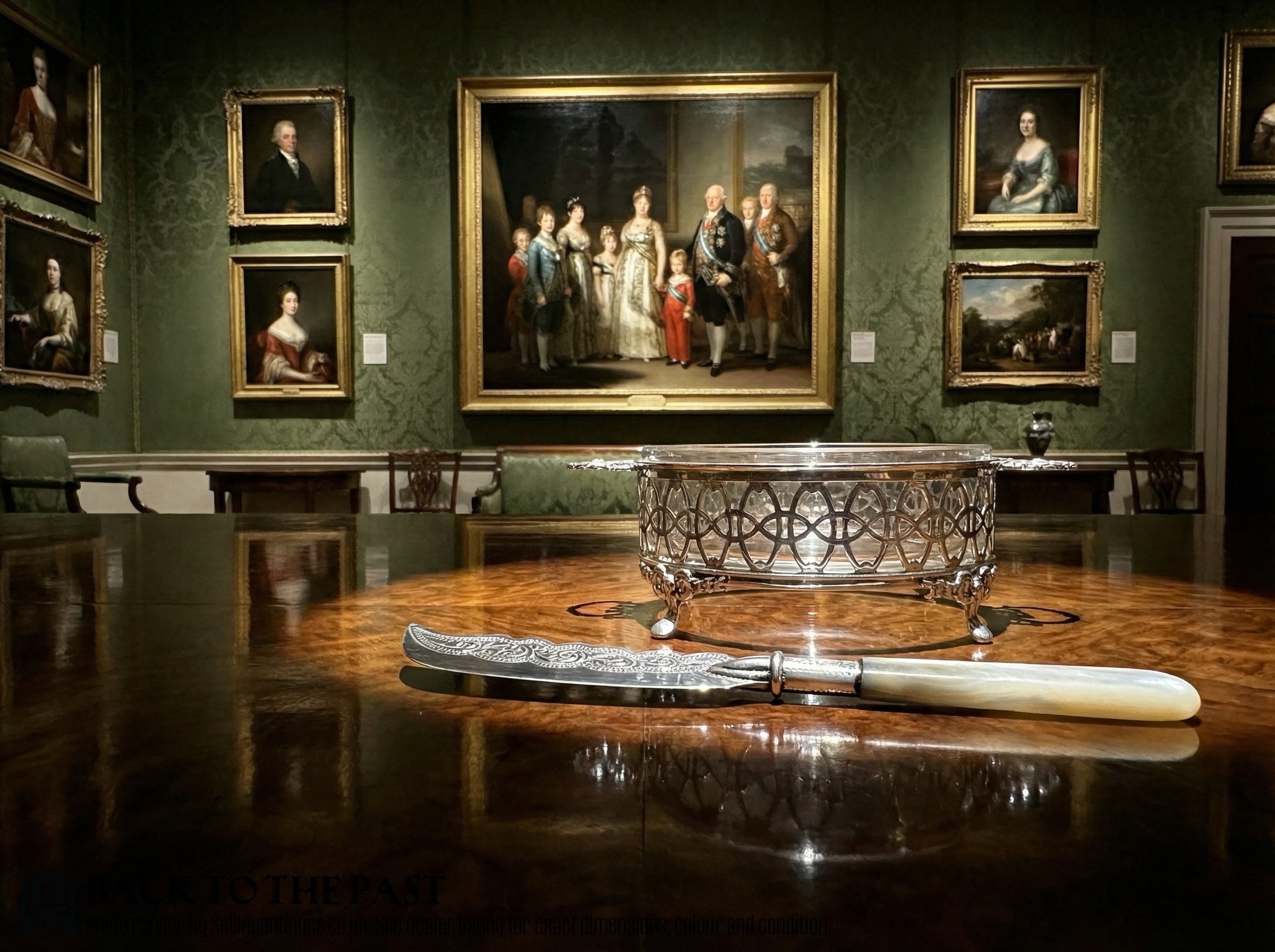
Silver and Glass Dish
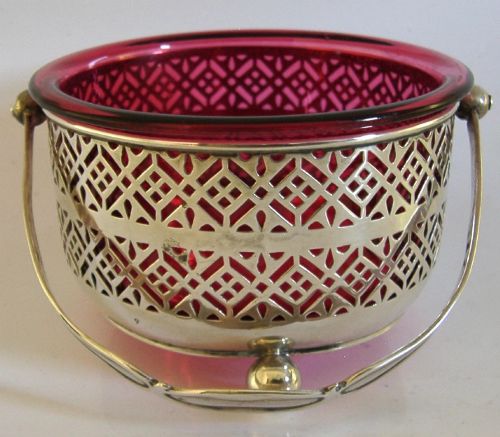
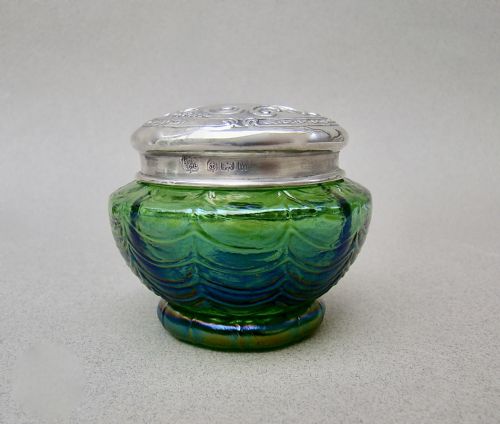
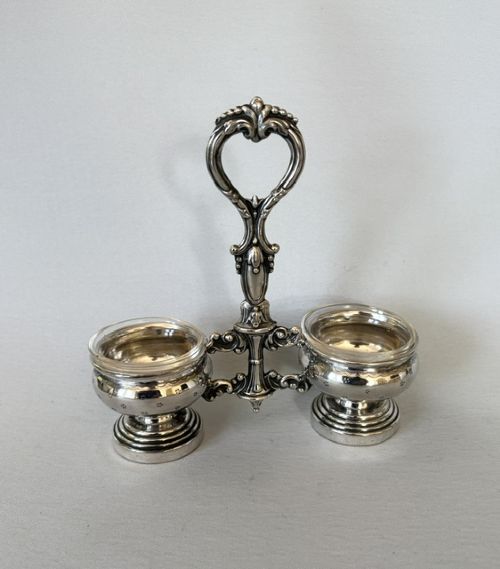
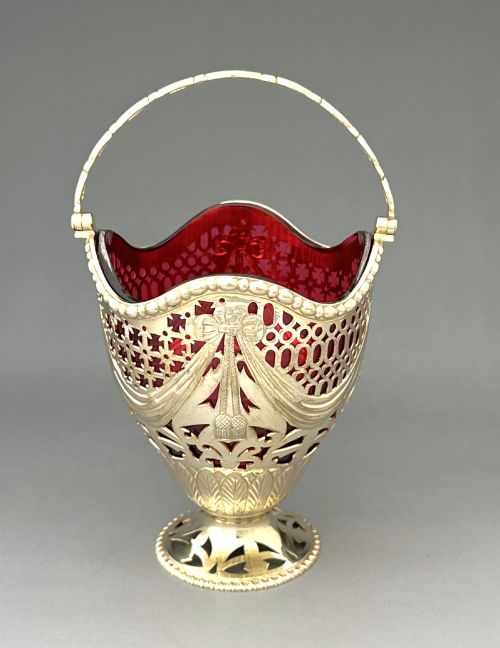
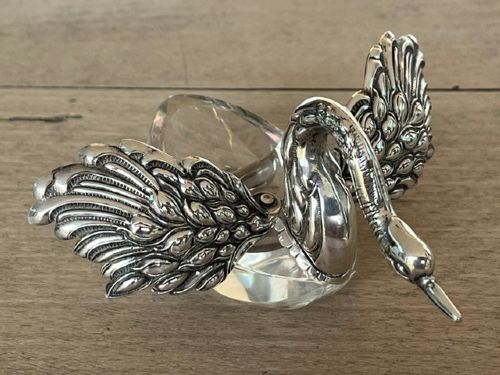
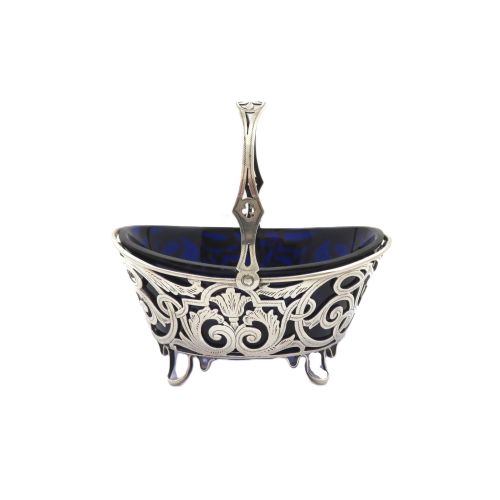
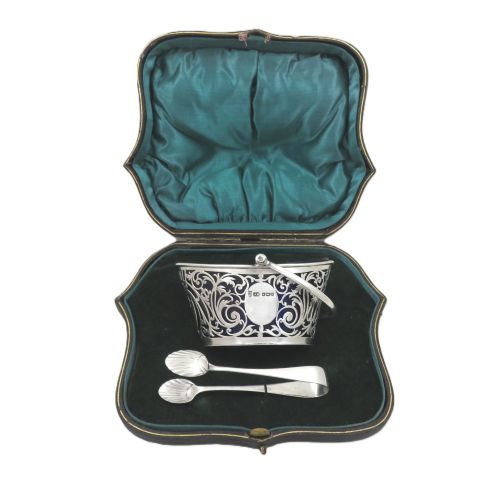
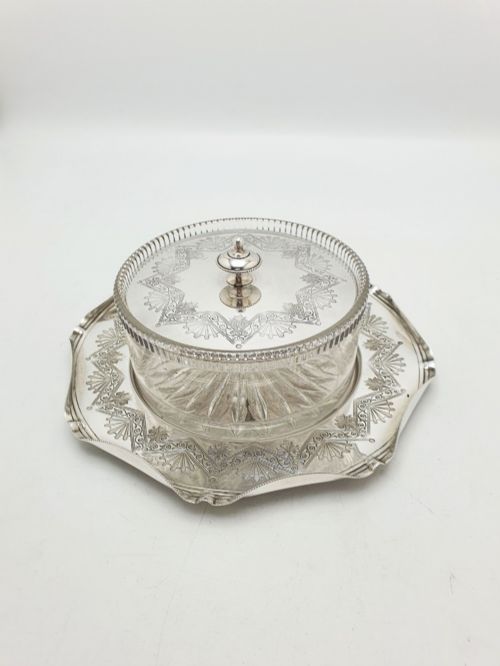
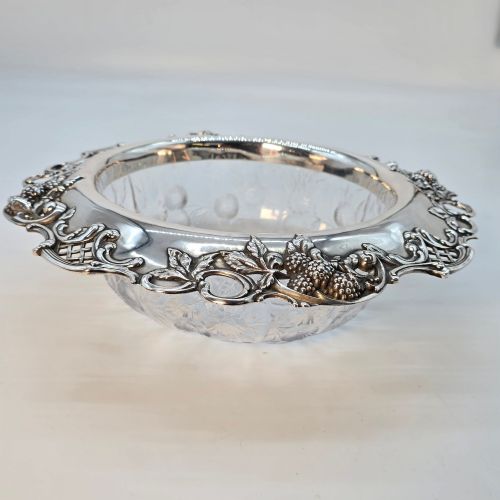
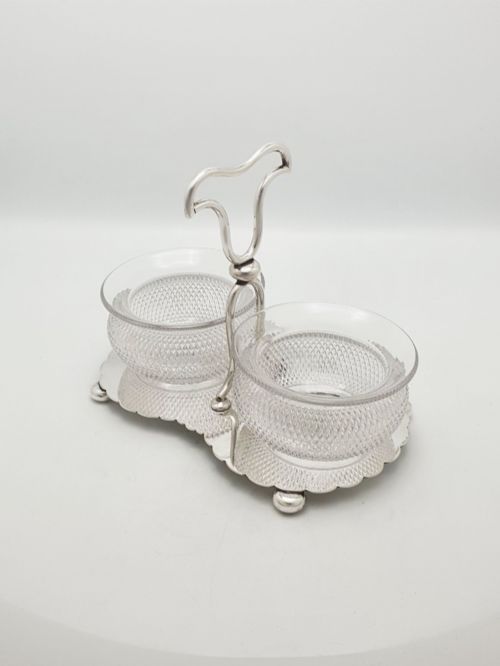
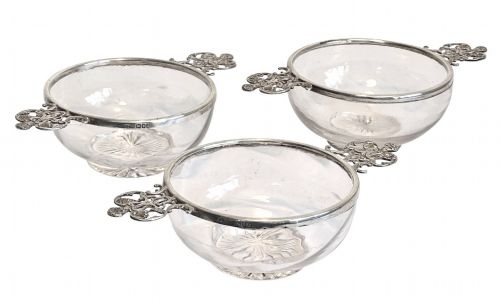
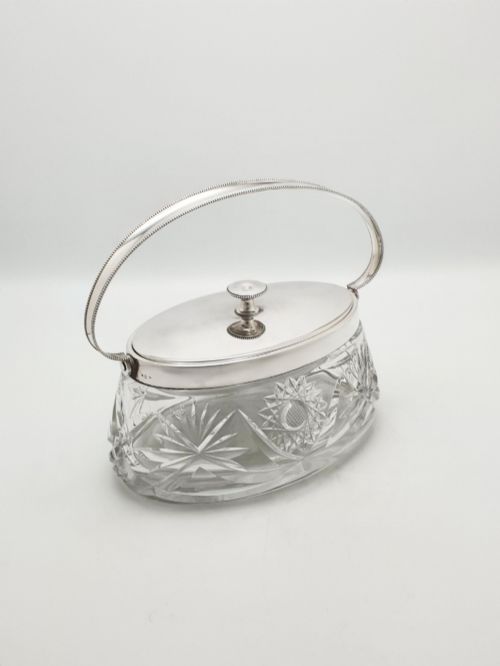
A silver and glass dish brings together metal mounts, frames, or lids with blown, pressed, or cut glass inserts designed for the dining table and dressing table. These domestic objects include butter dishes, sugar baskets, condiment stands, trinket boxes, and open salt cellars.
The most common examples on this page date from the late nineteenth century through the Edwardian period and the 1930s Art Deco era. They appear in sterling silver and silver plate, paired with clear cut glass, cobalt, cranberry, and vaseline glass inserts.
How They Were Made
Silversmiths shaped sterling silver or applied silver plating to base metals through piercing, casting, and stamping to form frames, rims, and swing handles. Molten glass was blown into moulds or free-blown, then finished by hand-cutting, polishing, or casing with coloured layers.
Makers united the two mediums by engineering snug silver collars, hinged lids, and wirework baskets to securely hold removable glass liners, jars, and bowls.
Listings feature items from the nineteenth century through the 1960s, spanning Victorian, Edwardian, and Art Deco styles in sterling silver, silver plate, and cut glass.
What Varies in Quality
Quality rests on the weight and gauge of the silver mount, the crispness of pierced or cast ornamentation, and the depth and clarity of the glass cutting. Thicker sterling silver and heavy hand-cut lead glass represent the upper tier of production.
Attention to detail in the fit between metal and glass, alongside the artistic merit of coloured glass varieties like cranberry and vaseline, distinguishes standard tableware from finer workshop output.
A. J. Pepper & Co·A. Bromet & Co·Tiffany & Co·William Comyns·WMF·Hukin and Heath·William Hutton & Son
The Silver and Glass Dish Glossary
- Cranberry glass
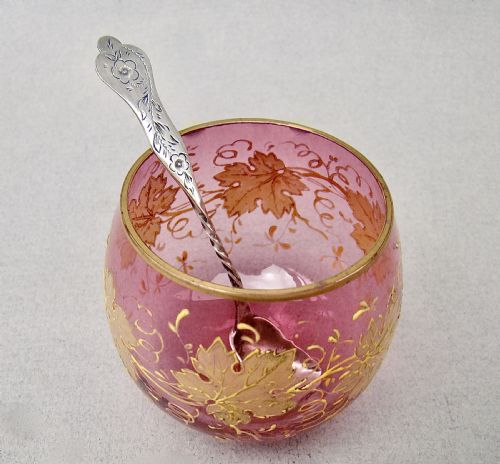
- A transparent pinkish-red glass produced by adding gold chloride to the molten batch. It gained popularity during the Victorian period for decorative tableware.
- Vaseline glass
- A yellow-green glass containing uranium dioxide that glows under ultraviolet light. It was widely utilised in Victorian and Edwardian decorative bowls and liners.
- Salt cellar
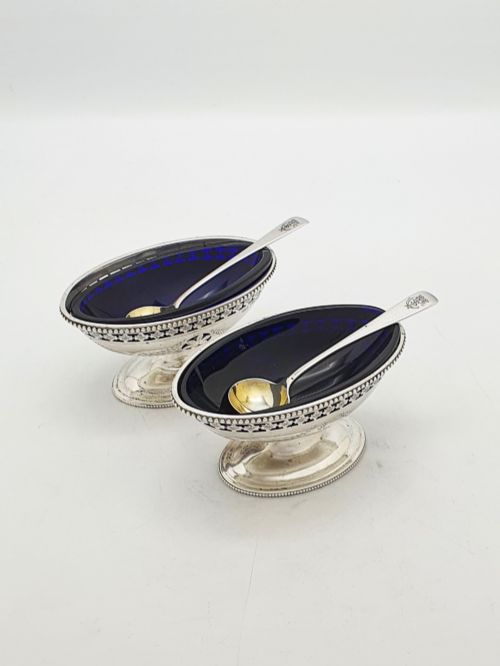
- A small open vessel or dish used to hold loose salt at the table, frequently fitted with a cobalt blue glass liner. Wealthier households used pairs or sets alongside individual spoons.
- Silver plate
- A base metal, typically copper or nickel-silver, coated with a thin layer of silver through electroplating. This technique allowed Victorian manufacturers to produce ornate tableware affordably.
- Trinket box
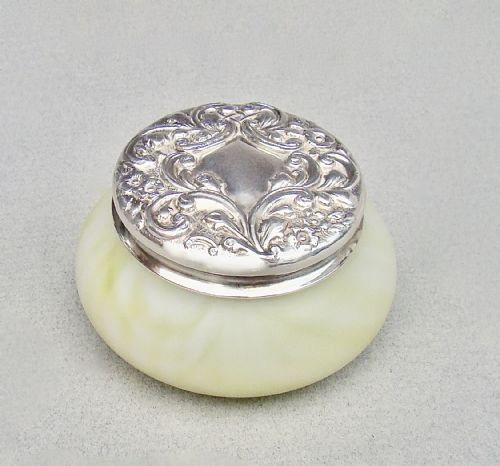
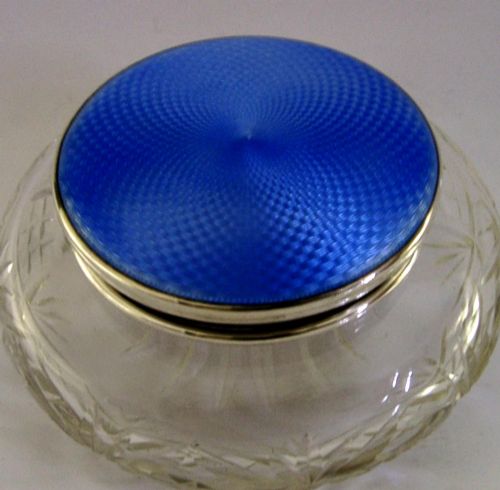
- A small lidded container designed for dressing tables to hold jewellery or pins. These pieces combined silver lids with cut, satin, or coloured glass bases.
Silver and Glass Dish: Frequently Asked Questions
What were glass liners used for?
Glass liners protected delicate or corrosive contents, such as butter, jam, or mustard, from direct contact with silver or base metal. They also allowed the vessel to be easily removed for washing between courses.
In pieces like butter dishes and jam pots, the removable glass insert ensured hygiene while maintaining the decorative appearance of a silver exterior.
How do I clean silver and glass dishes?
Wash the glass liner separately in warm soapy water using a soft cloth, avoiding harsh abrasives that might scratch the surface. Clean the silver mount with a dedicated silver polish, taking care to keep polish away from the glass.
If the piece has enamel or delicate coloured glass, ensure liquids do not seep beneath mounted rims during cleaning.
Are these dishes safe for food use?
Most antique pieces function well for serving dry foods, condiments, or individually wrapped items. Caution is advised with acidic foods, which can react with older silver plate or antique metals over time.
Items containing uranium glass, such as vaseline glass liners, are generally considered safe for display and occasional use but are not recommended for storing acidic foods.
How do I identify the date of a piece?
Sterling silver items usually bear British hallmarks indicating the assay office, date letter, and maker's mark. These stamped symbols provide an exact year of manufacture for pieces produced in towns like Birmingham, Sheffield, or London.
Unmarked silver plated items rely on stylistic clues, registration numbers, and manufacturing techniques to narrow down their period of origin.