


Silver Tea Knife
These silver tea knife examples bring the refined ritual of the afternoon table directly to hand.
Silver Tea Knife
A silver tea knife is a specialised piece of cutlery designed for the formal dining table, predominantly appearing in Victorian and Edwardian iterations. Buyers find these utensils grouped within broader cutlery sets or offered as individual service items.
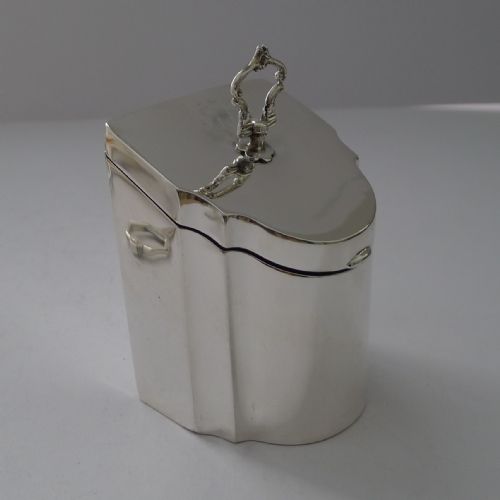
The selections recorded on this page span the Victorian and Edwardian eras, alongside George V productions. They frequently manifest as butter knives, fruit knives, or components of larger tea caddy and cutlery configurations.
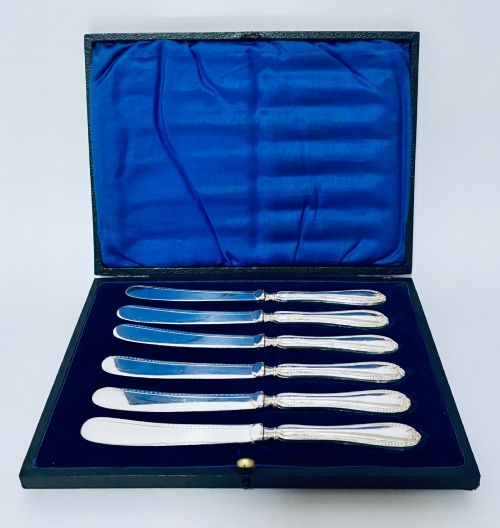
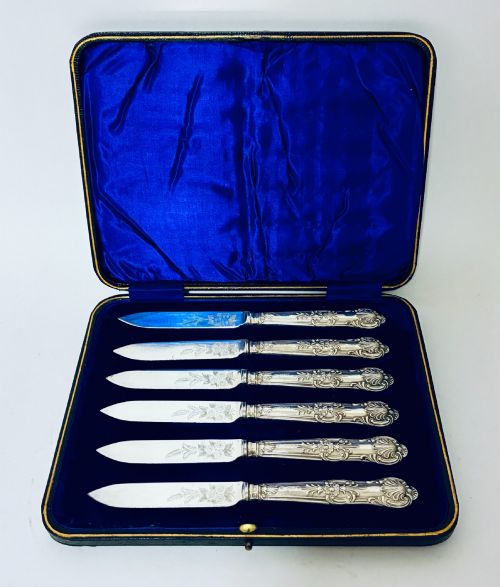
Origin points include notable assay centres such as Sheffield and Birmingham, reflecting the robust manufacturing output of nineteenth and early twentieth-century workshops. The forms range from cased sets of six to singular items housed in fitted boxes.
How they were made
Makers utilised sterling silver and silver plating for the handles and mounts, frequently combining them with durable steel blades. This dual-metal construction provided the necessary rigidity for cutting whilst retaining a polished silver exterior.
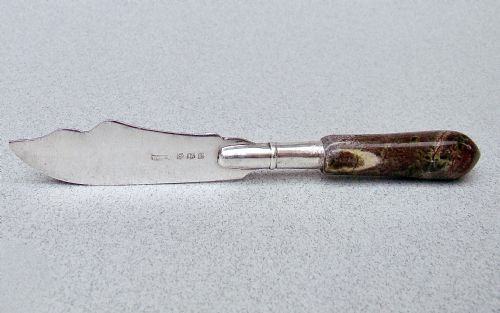
Natural decorative materials such as mother-of-pearl and agate were expertly shaped and pinned to form intricate handles. Fitted presentation cases often lined the interior with silk, velvet, or satin to protect the delicate items.
Listings feature items from the Victorian and Edwardian periods, utilising sterling silver, mother-of-pearl, agate, silk, velvet, and steel.
What varies in quality
The sophistication of the handle material heavily dictates the distinction between standard items and superior examples. Natural inclusions in mother-of-pearl or the rich patterning within agate sections elevate the visual appeal of individual pieces.
The integrity of the original fitted case, particularly the preservation of interior silk or velvet linings, significantly influences the overall desirability of cased sets. Complete sets displaying uniform hallmarks across every component hold greater distinction than assembled groupings.
The Silver Tea Knife Glossary
- Assay office
- An official body that tested precious metals and stamped items with hallmarks. Birmingham and Sheffield are prominent examples found on these pieces.
- Mother-of-pearl
- The iridescent inner layer of certain mollusc shells used to fashion decorative knife handles. It provides a luminous surface that contrasts with polished metal.
- Sterling silver
- An alloy consisting of pure silver and other metals added for durability. It represents the standard material for quality tableware.
- Cased set
- A collection of items housed in a custom-fitted box for storage and presentation. These boxes often feature fabric linings such as satin or velvet.
Silver Tea Knife: Frequently Asked Questions
What is a silver tea knife used for?
These utensils were created for spreading butter or slicing fruit during formal afternoon tea service. They served delicate functions rather than heavy daily dining.
Over time, many of these implements found new utility on modern breakfast tables or remained preserved within collector displays.
How do I date my silver tea knife?
Dating relies heavily on the hallmarks stamped into the metal by official assay offices. These marks reveal the specific year and location of manufacture.
Stylistic indicators, such as the use of mother-of-pearl or specific handle shapes, also help distinguish Victorian examples from Edwardian ones.
Are these knives made of solid silver?
Many examples feature sterling silver handles paired with steel blades for practical cutting strength. Some pieces utilise silver plating over a base metal foundation.
Checking the individual hallmarks clarifies the specific metal composition of the handle versus the blade.
How should I care for antique cutlery?
Gentle cleaning with a soft cloth helps maintain the polish of the silver without damaging delicate handle materials. Avoid abrasive polishes that can wear away historic hallmarks.
Storing pieces in lined boxes prevents unnecessary scratching and protects organic components like mother-of-pearl and agate.