



Silver Server Utensil
A silver server utensil brings period silver directly to the table for fish, salad, pastry, or cheese.
Silver Server Utensil
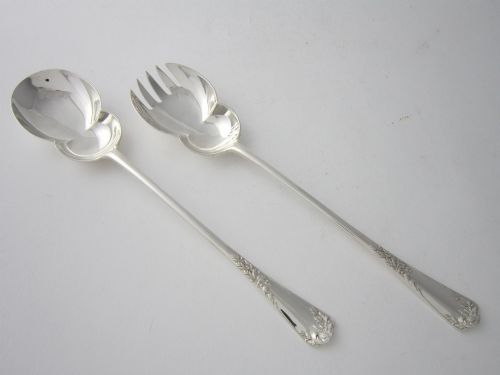
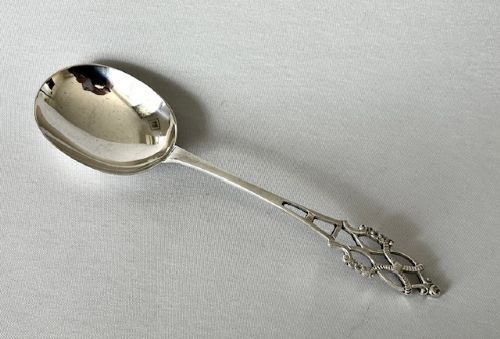
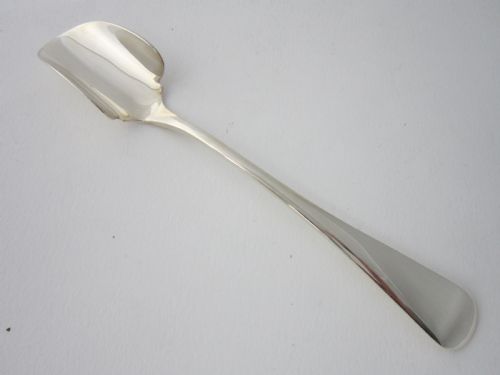
A silver server utensil covers specialised tableware from the Georgian, Victorian, and Edwardian periods, designed for specific foods rather than general dining. Buyers encounter fish slices, salad servers, serving tongs, and cheese scoops across these eras.
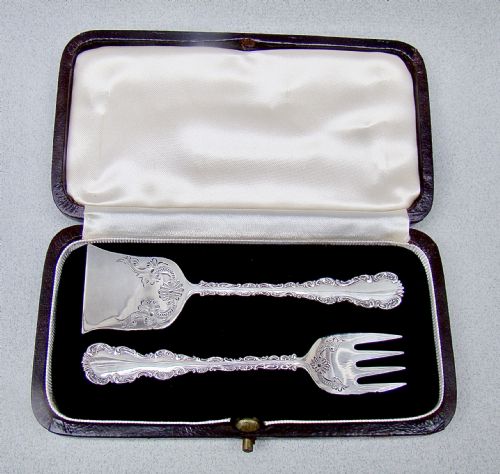
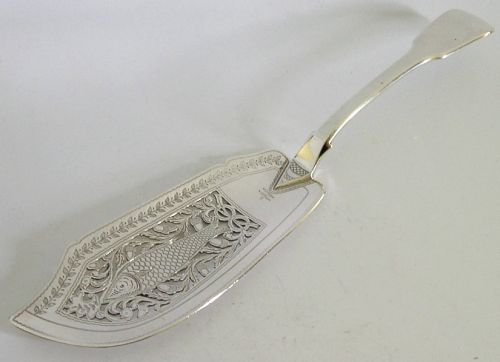
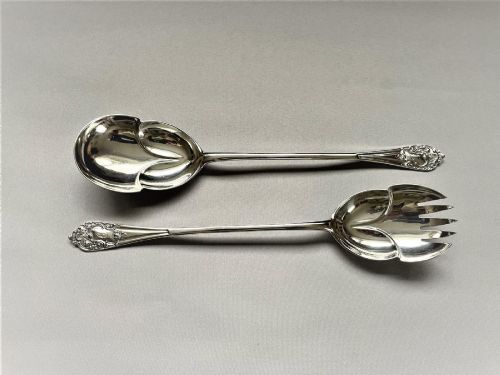
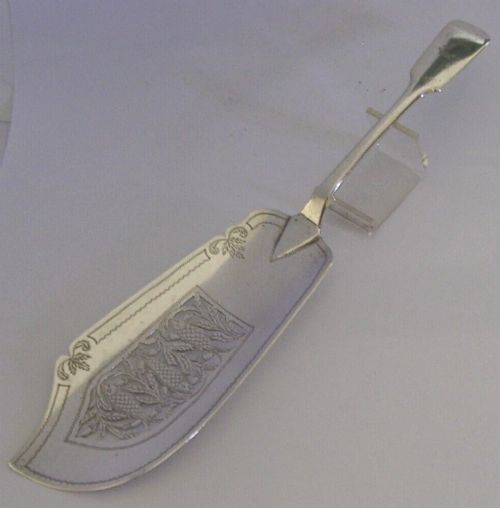
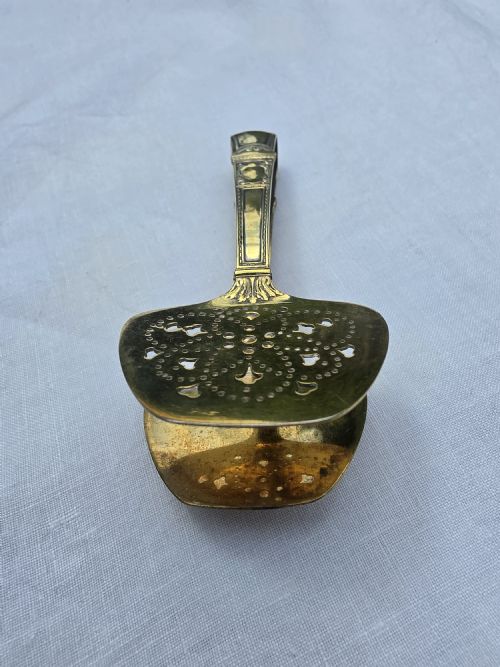
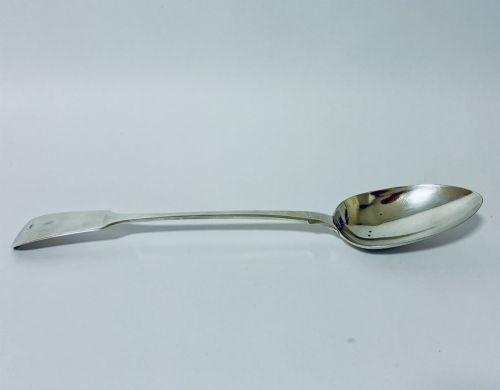
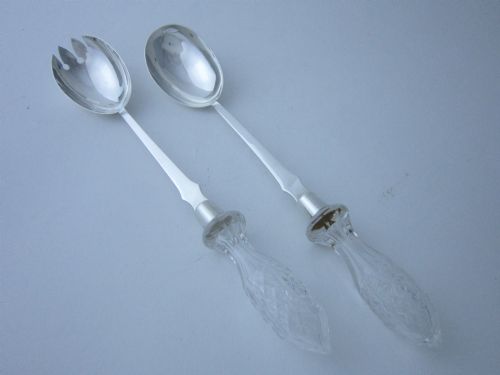
The most frequent examples on this page are fish slices and salad servers, often found in fitted cases or matching pairs. These utensils range from George III flatware to Edwardian silver gilt pieces.
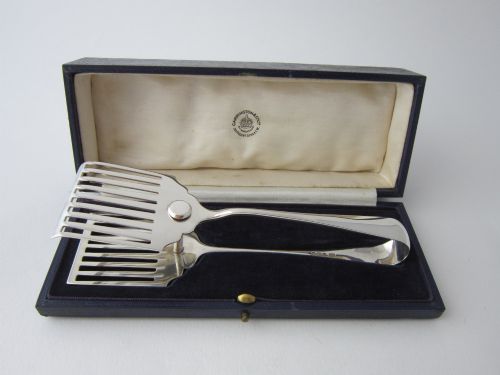
Forms span from 18th century serving tongs to early 20th century asparagus tongs and pastry servers. Each item reflects the dining habits of its respective period.
How they were made
Silversmiths utilised sterling silver and silver plate, frequently shaping blades through piercing and engraving. Many pieces combine silver with materials such as mother of pearl, horn, velvet, leather, and cut glass.
Handles and blades show distinct regional techniques, including London hallmarks, Sheffield silver work, and French silver production methods. Detail work often incorporates cast crests and silver gilt finishes.
The listings here span several periods, from the 18th Century through the Georgian, Victorian, and Edwardian eras up to the 1930s.
What varies in quality
The distinction between standard items and superior examples lies in the crispness of pierced decoration and the weight of the solid sterling silver. Pieces bearing clear maker marks and original crests command greater interest.
The integration of secondary materials, such as fitted satin and velvet cases or high grade cut glass elements, separates standard production from finer workshop output.
Henry Wilkinson·Tiffany and Company·Wilkes Booth·George Adams·Charles Boyton
The Silver Server Utensil Glossary
- Fish slice
- A wide, flat utensil designed for serving fish, frequently featuring pierced blade decoration.
- Silver gilt
- Silver that has been coated with a thin layer of gold on the surface.
- Stilton scoop
- A cylindrical scoop intended for serving hard cheeses such as Stilton.
- Hallmark
- An official stamp applied to precious metals indicating standard of purity, place of assay, and date letter.
Silver Server Utensil: Frequently Asked Questions
What is a silver server utensil used for?
These utensils serve specific foods at the dining table, including fish, salads, asparagus, pastries, and cheese. Different forms correspond directly to the dish they were manufactured to handle.
Heavier items like fish slices managed whole portions, while smaller scoops and tongs handled cheese or condiments.
How do I identify the period of a silver server?
Hallmarks stamped into the metal provide the most reliable guide to a piece's date and origin. Town marks, date letters, and maker marks pinpoint the exact year of manufacture.
Stylistic indicators, such as George III or Edwardian design motifs, also signal the era in which the utensil was made.
Are these utensils made of solid silver?
Listings include both solid sterling silver and silver-plated examples. Hallmarks indicate solid silver content, while other items utilise silver plating over a base metal.
Additional materials like mother of pearl, horn, and glass frequently appear alongside the silver components.
How should I care for antique silver servers?
Regular handling and gentle cleaning maintain the surface condition of silver tableware. Avoiding harsh abras<bos>6 preserves the original engraving and pierced details on the metal.
Storing items in lined boxes or appropriate cases protects vulnerable elements like horn handles and glass inserts.