



Engraved Silver Knife
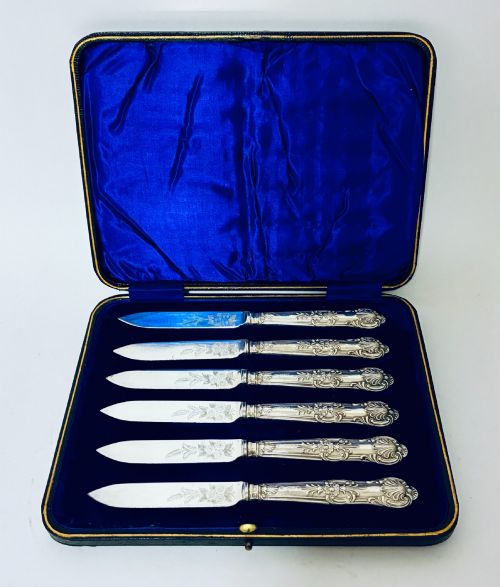
An engraved silver knife carries personal crests, foliate scrolls or delicate birds onto the dining table and the desk.
Engraved Silver Knife
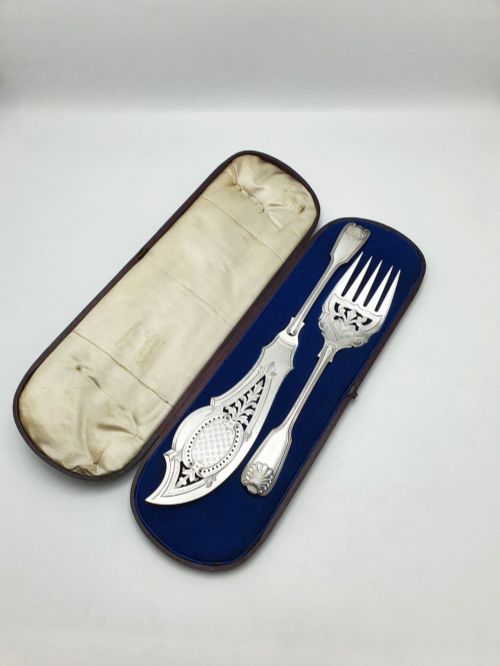
When you search for an engraved silver knife, you meet functional implements shaped for dining, writing and ceremonial duties. The selection spans fruit knives, butter knives, cake knives and folding pen knives alongside fish servers and page turners.
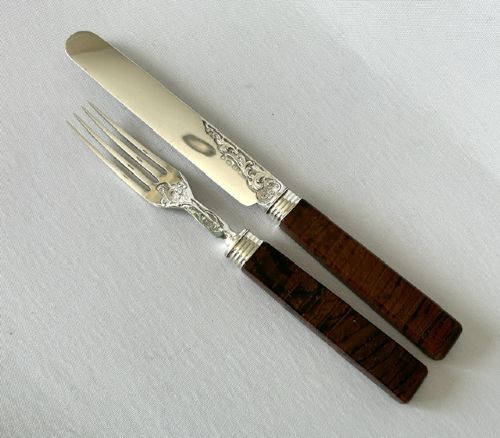
The Victorian period dominates the pieces seen here, alongside examples from the Georgian era, the Edwardian years and the early twentieth century. You regularly encounter fruit knives with mother of pearl handles and butter knives paired with delicate piercework or fitted boxes.
Materials and Technique
Silversmiths utilised sterling silver and silver plate for blades and handles, frequently combining metal with natural materials such as mother of pearl, agate, horn and velvet. Steel blades appear on specific surgical and folding pocket designs, while silver handles provide the canvas for detailed decoration.
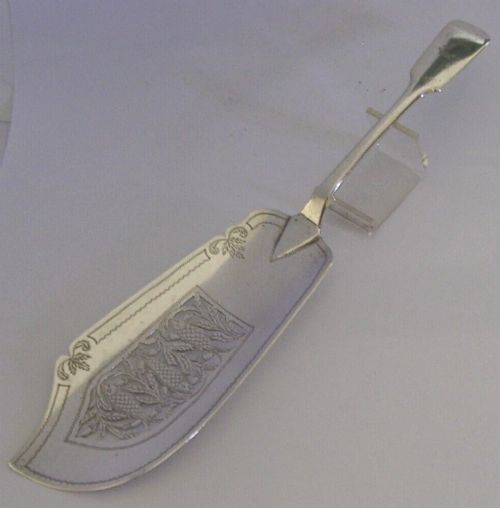
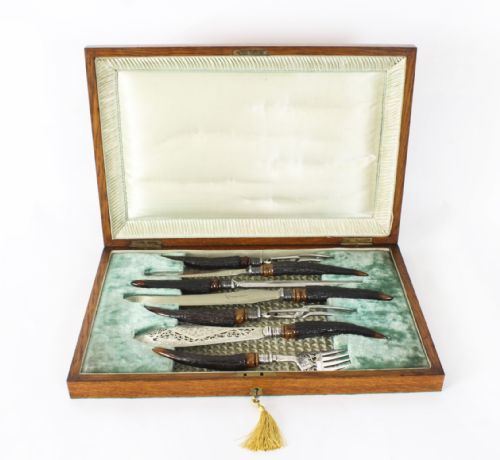
Engraving was executed by hand using gravers to cut foliate patterns, crests, birds and ferns directly into the metal surface. Piercing and casting created openwork designs on fish slices and fruit servers, while fitted boxes lined with silk housed matched sets.
A surprising number of nineteenth-century folding fruit forks survived alongside pocket knives, designed for eating citrus without staining delicate fingers.
Distinctions in Quality
The crispness of the hand engraving determines much of the distinction between standard items and superior examples. Deeply cut, legible lines on crests and foliate scrolls maintain their definition through generations of use.
The choice of handle material and its physical integration with the blade dictates the standing of a piece. Solid silver elements paired with unblemished mother of pearl or shaped agate demonstrate superior original manufacture compared to simpler plated alternatives.
Charles Boyton·Henin and Cie·Harry Atkin
The Engraved Silver Knife Glossary
- Sterling Silver
- A standard of silver containing 92.5 percent pure silver by weight, often stamped with hallmarks indicating assay office and date.
- Mother of Pearl
- The iridescent internal layer of pearl oyster shells, shaped into smooth scale panels for knife and fruit utensil handles.
- Fish Server
- A large serving implement with a broad, pierced and engraved blade designed for lifting portions of fish at the table.
- Page Turner
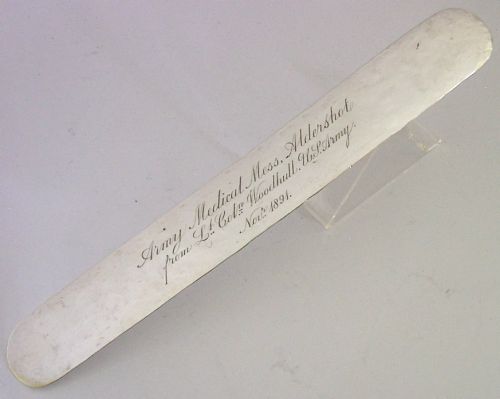
- An elongated implement with a flat blade used for turning book pages, frequently fashioned with silver handles and ivory or paper panels.
Engraved Silver Knife: Frequently Asked Questions
What were engraved silver knives used for?
These implements served specific domestic and social duties, ranging from slicing soft fruits and butter to serving fish and turning pages in bound books. Many smaller pocket knives and pen knives were carried daily for personal utility.
Larger boxed items functioned as presentation pieces or formed part of extensive Christening sets and dining services, reflecting the formal habits of nineteenth-century households.
How do I care for an engraved silver knife?
Store these pieces away from rubber bands and high humidity to prevent tarnishing and damage to delicate handle materials like mother of pearl or silk-lined boxes. Gentle cleaning with a soft cloth preserves the fine hand-cut lines of the engraving.
Avoid immersion in harsh chemical dips, particularly on items with organic handles or plated surfaces where aggressive cleaning strips the original finish.
How do I tell Victorian from Georgian pieces?
Georgian pieces display the heavier proportions and simpler lines typical of the late eighteenth and early nineteenth centuries, such as early fiddle patterns. Victorian examples introduce more varied handle materials and complex pictorial engraving.
Examining the hallmarks provides precise dating where stamps remain legible on the metal components.
Are these knives safe for modern dining?
Most antique fruit and butter knives function adequately for soft foods, though delicate mechanisms and thin silver-plated blades require mindful handling. Folding varieties should be opened with care to protect the pivot and old joints.
Many collectors prefer to display these items or use them strictly for appropriate light dining tasks rather than heavy daily service.