


Silver Cutlery Piece
A silver cutlery piece is a functional tableware item of sterling silver or silver plate, prized for elegance and heritage dining use.
Silver Cutlery Piece
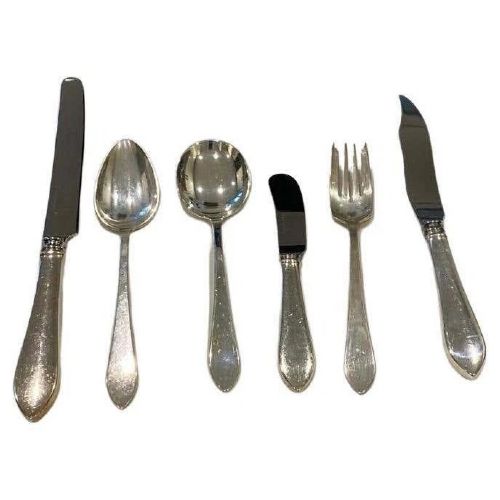
A silver cutlery piece encompasses individual items, serving pieces, and complete canteens spanning the Victorian, Edwardian, and Art Deco periods. Buyers search for these items to acquire functional tableware that carries historical craftsmanship into modern dining settings.
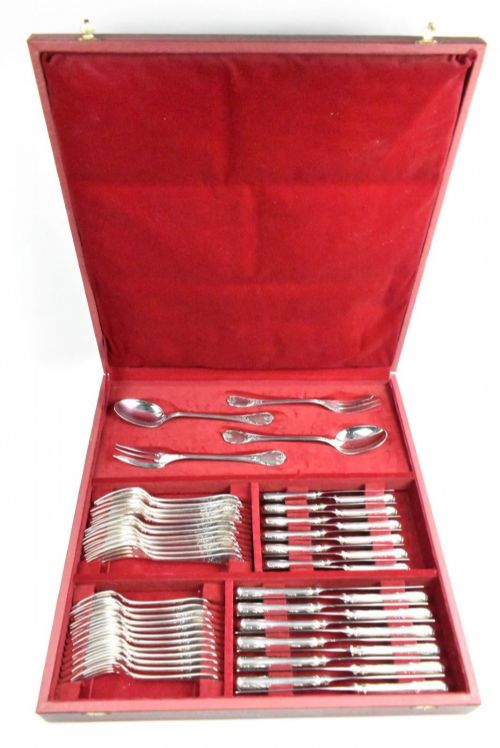
The options range from single butter knives and caddy spoons to extensive canteens containing over one hundred pieces. The evidence shows frequent appearances of sets housed in fitted wood cases lined with fabric, silk, or velvet.
Smaller presentations like christening sets and fish cutlery sets appear alongside grander table services for multiple settings. This variety allows collectors to find single replacements or complete dining services matching specific historical styles.
Materials and construction methods
Manufacturing methods rely heavily on sterling silver and silver plate applied over base metals, combined with auxiliary materials for handles. Mother of pearl appears frequently on handles for knives and smaller service items.
Cased sets integrate fitted enclosures constructed from wood and lined with fabric, silk, or velvet to protect the metal surfaces. Metal components undergo shaping, stamping, and pattern application in styles ranging from Rococo Revival to Art Deco.
Evaluating craftsmanship and distinction
Quality differentiates through the weight of the silver, the crispness of the pattern stamp, and the integrity of the underlying base metal or hallmarks. Maker attribution significantly elevates a piece, as seen in items bearing marks from established silversmiths.
The condition of accompanying fitted cases and original linings influences overall completeness. Pieces retaining matching sets within intact wood and fabric housings command greater interest than mixed or assembled groupings.
Christofle·Tiffany·Elkington and Co·George Unite·Mappin and Webb·Mappin Brothers·Cartier·Posen
The Silver Cutlery Piece Glossary
- Sterling Silver
- A standard alloy consisting of a high percentage of pure silver combined with other metals for durability. Items marked as sterling reflect a traditional precious metal standard.
- Silver Plate
- A base metal substrate coated with a thin layer of pure silver through electroplating or older techniques. This method provided an accessible alternative to solid silver table services.
- Canteen
- A fitted box or cabinet designed specifically to store a complete set of cutlery. These containers often feature internal slots and compartments lined with velvet or silk.
- Flatware
- Table cutlery comprising knives, forks, spoons, and serving implements used for dining. The term groups both individual place settings and serving pieces together.
- Mother of Pearl
- The iridescent internal layer of mollusc shells utilised for knife handles and decorative inlays. It provides a smooth, tactile surface contrasting with metal blades.
Silver Cutlery Piece: Frequently Asked Questions
How do I store silver cutlery?
Store items in designated canteens or lined boxes to prevent tarnishing and physical damage. Keeping pieces away from excessive moisture preserves both the metal and the interior fabric.
Using fitted wooden cases with silk or velvet linings helps maintain individual pieces in orderly sets ready for use.
Are these pieces suitable for daily use?
Many solid silver and silver-plated items remain entirely functional for contemporary dining and entertaining. Proper handling and gentle cleaning ensure these historic utensils endure regular use.
Care should be taken with delicate handles made of mother of pearl or specific plated finishes to preserve their condition.
How do I identify the period of a set?
Stylistic indicators such as Art Deco geometric lines or Victorian Rococo Revival ornamentation provide initial chronological clues. Makers' marks and hallmarks stamped onto the metal offer definitive dating evidence.
Comparing pattern names and case construction styles further clarifies the era of manufacture.