
Silver Tableware Pair
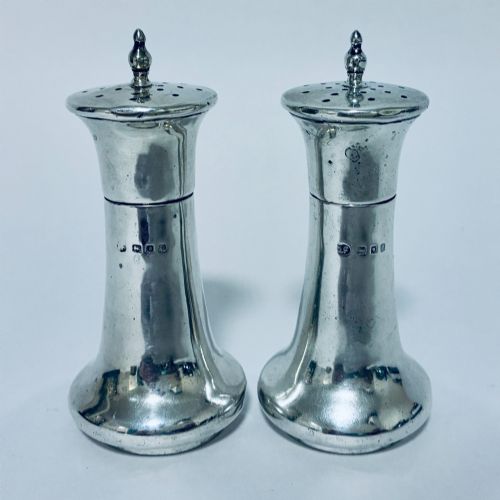
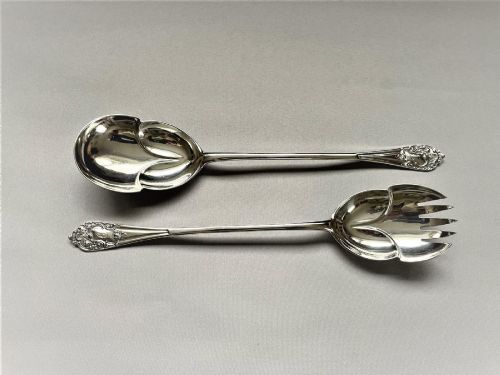
A silver tableware pair brings matching refinement to the dining table, offering everything from salts and peppers to serving spoons.
Silver Tableware Pair
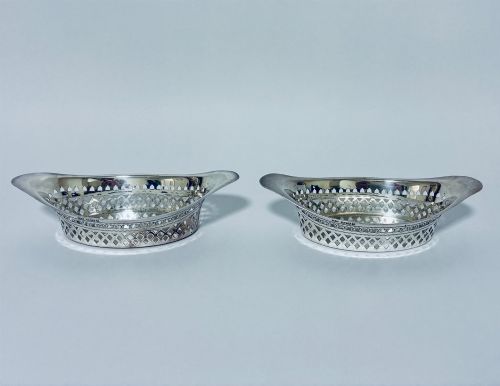
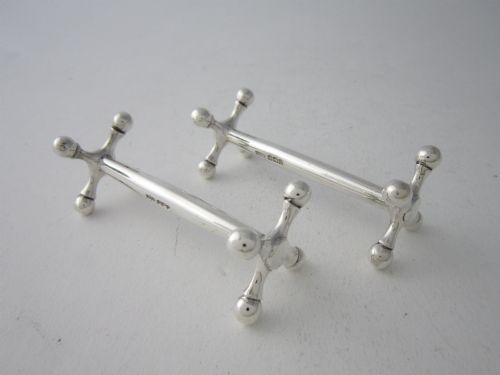
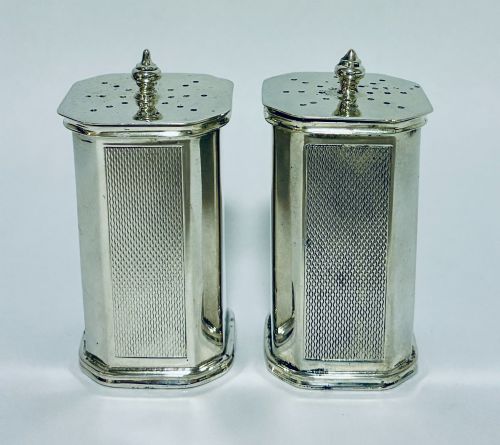
A silver tableware pair comprises dual items designed for dining and serving, ranging from salt cellars and pepper pots to napkin rings, knife rests and sauce boats.
The pieces span multiple eras including Georgian, Victorian, Edwardian and mid-century modern periods, reflecting shifting domestic habits.
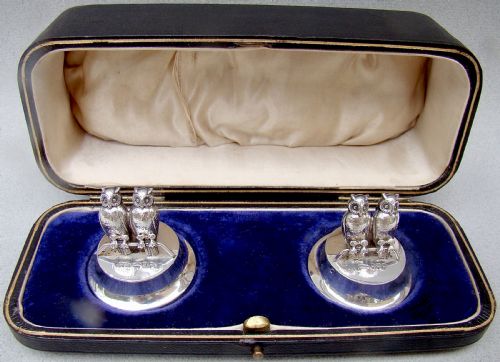
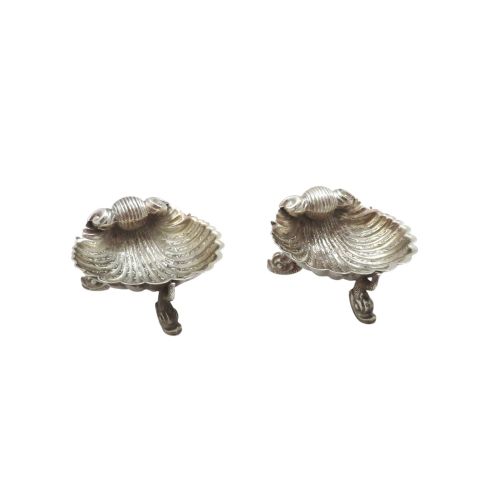
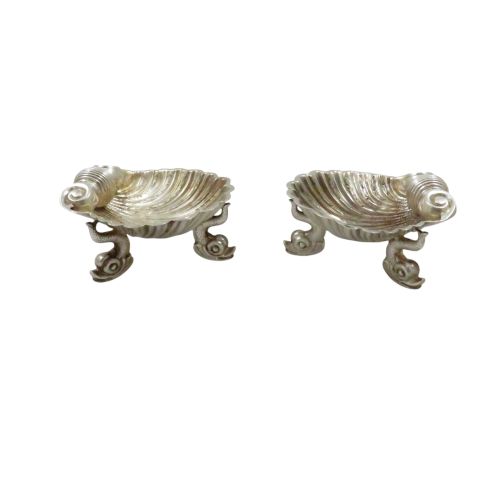
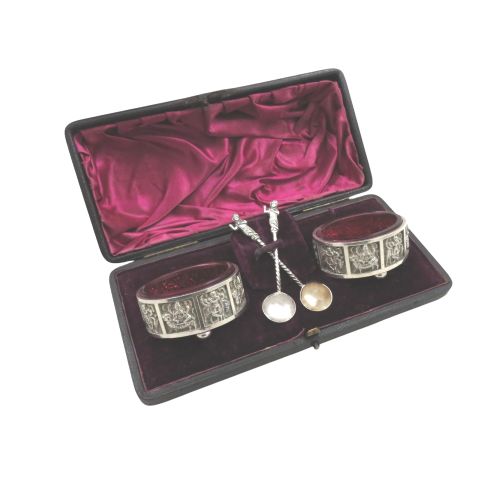
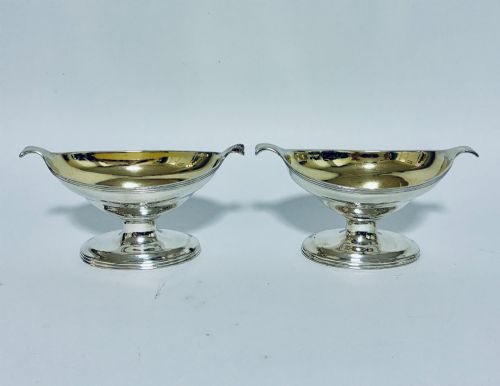
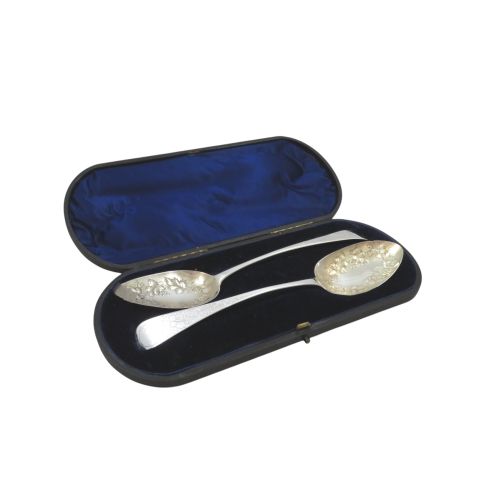
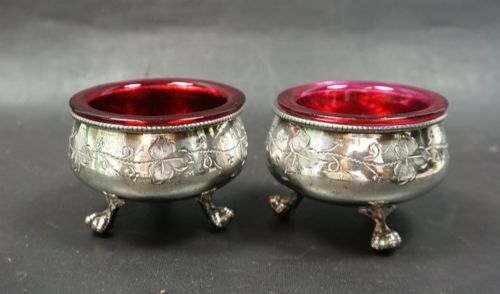
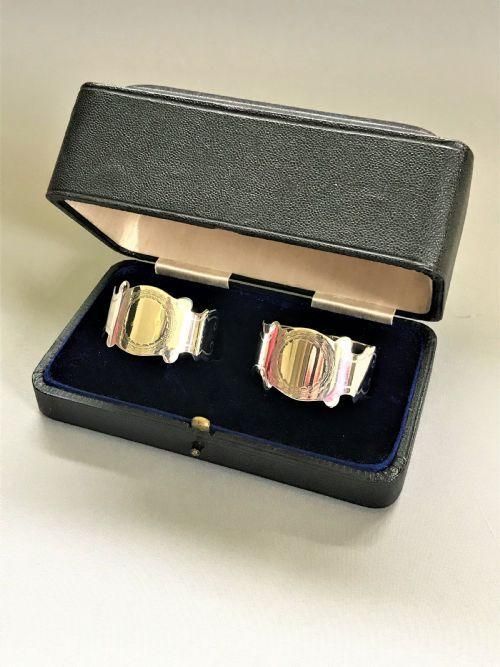
Common forms on this page include cased napkin rings, shell-shaped salt cellars with glass liners, menu holders in novelty animal shapes and matched berry spoons.
Materials and construction
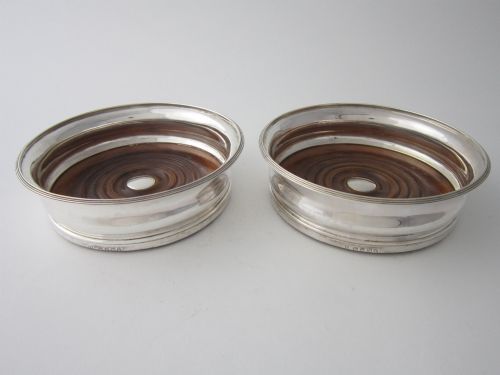
Makers utilised sterling silver, silver plate, silver gilt and old Sheffield plate alongside functional additions such as velvet, silk, leather, leatherette and coloured glass liners.
Production techniques visible across the listings involve piercing, casting, wirework, engraving and gilding, particularly on items like butter dishes, grape scissors and toast racks.
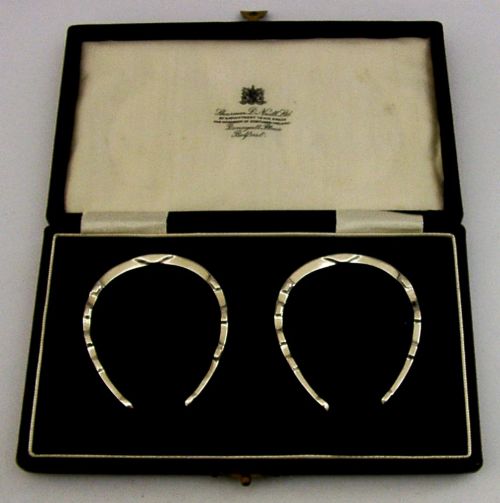
Dining tables gained personality through silver novelties, including tiny perched owls holding menu cards and miniature lucky horseshoes.
Distinctions in quality
Quality rests in the crispness of chased and engraved detail, particularly on novelty items like owl menu holders or bull head knife rests where expression matters.
The integrity of matching sets, original velvet-lined presentation cases and intact glass liners contribute significantly to the standing of a pair.
Levi & Salaman·William Plummer·David Hennell·Goldsmiths & Silversmiths Co·Hester Bateman·Mappin and Webb
The Silver Tableware Pair Glossary
- Sterling silver
- An alloy consisting of pure silver and other metals, usually copper, meeting a specific fineness standard. It forms the primary metal for the majority of these dining accessories.
- Silver plate
- A base metal foundation coated with a layer of pure silver. This method offered a practical alternative to solid sterling for larger serving pieces and sauce boats.
- Vermeil
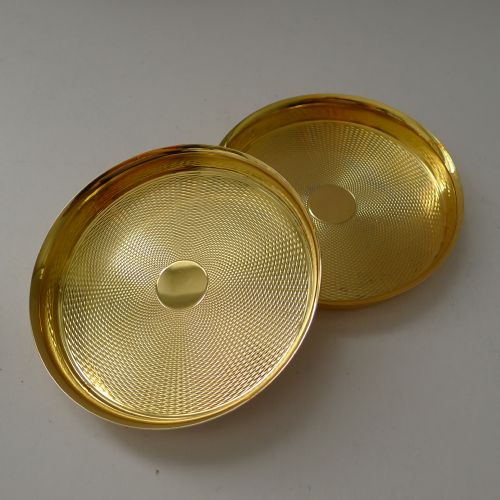
- Sterling silver plated with a layer of gold. This finish appears on coasters and napkin rings, providing a warm two-tone appearance.
- Old Sheffield plate
- A fused composite of copper and silver created before modern electroplating. It is identified by thin silver layers showing traces of copper at exposed edges.
- Salt cellar
- A small open vessel used to hold table salt before the invention of the spring-action shaker. They frequently feature cobalt, cranberry or clear glass liners.
Silver Tableware Pair: Frequently Asked Questions
How were salt cellars used?
Diners used salt cellars by taking pinches of salt from the open vessel using small spoons or fingers to season food at the table.
These pieces were typically paired with glass liners to protect the silver from corrosion caused by the salt.
What are knife rests for?
Knife rests kept carving and dining knives elevated above the tablecloth between courses to keep linen clean.
They appear in various forms, from simple bars to novelty animal figures.
How do I date Victorian silver?
Victorian silver is dated using the set of hallmarks stamped into the metal, which include city assay marks, date letters and maker's marks.
Additional clues come from the stylistic preferences and packaging conventions of the nineteenth century.
Are cased items original?
Many Victorian and Edwardian pairs remain inside their original velvet or silk-lined presentation cases manufactured specifically for the set.
These fitted boxes indicate items intended as gifts or special domestic purchases.