




Edwardian Silver Bonbon Dish
An Edwardian silver bonbon dish brings delicate, pierced metalwork and coloured glass liners to a table setting with distinctive period charm.
Edwardian Silver Bonbon Dish
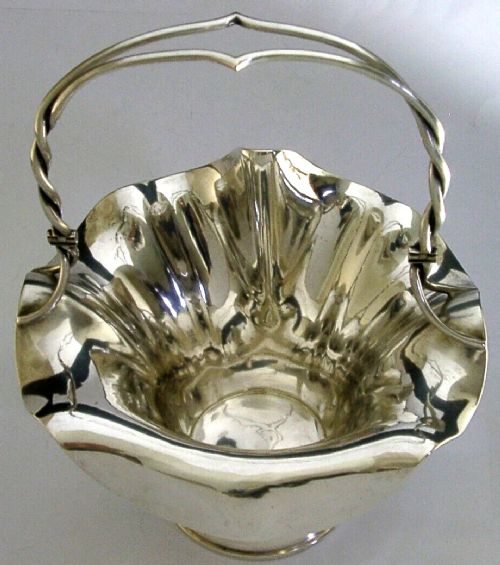
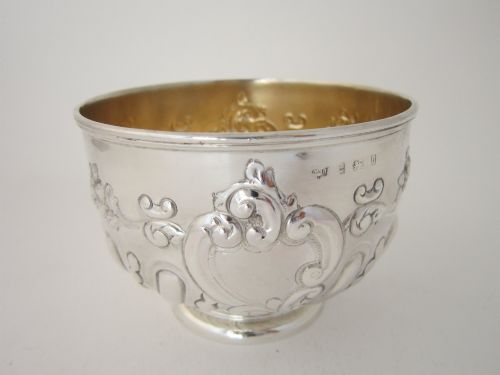
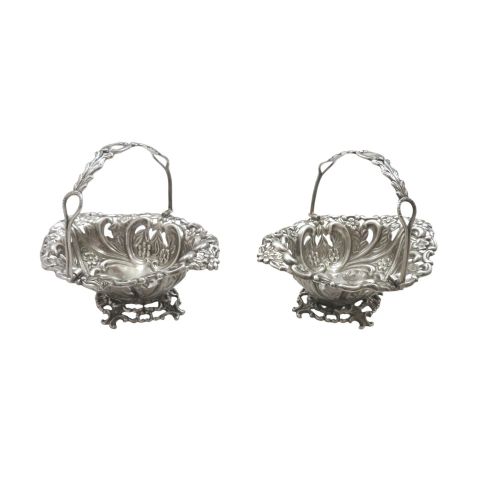
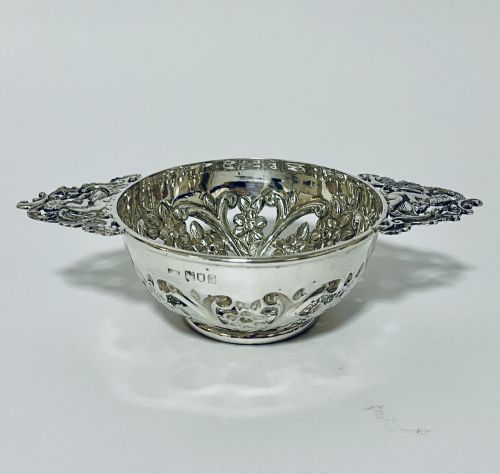
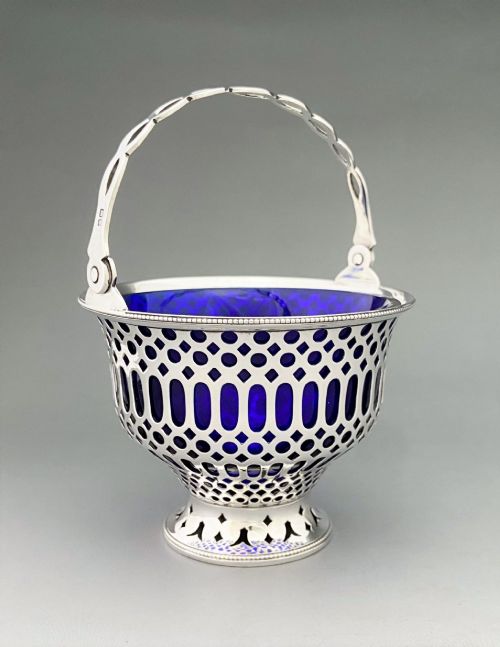
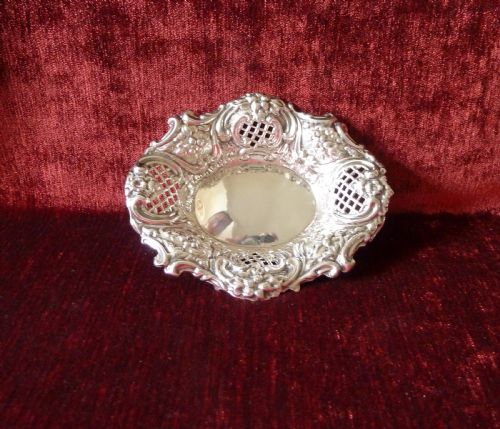
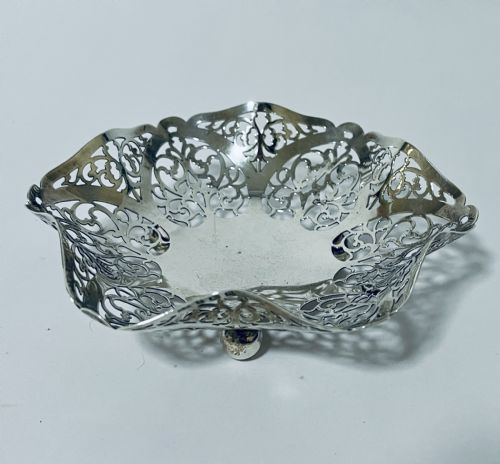
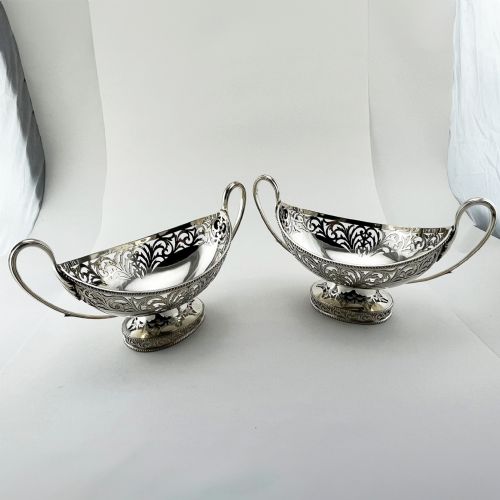
An edwardian silver bonbon dish is typically a small, open vessel designed for holding sweets, nuts, or sugar lumps during formal dining. The pieces seen here span the Edwardian period and adjacent decades, taking forms such as small decorative baskets, swing-handled vessels, and footed bowls.
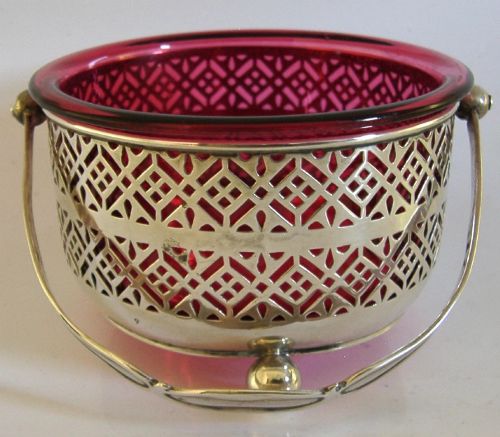
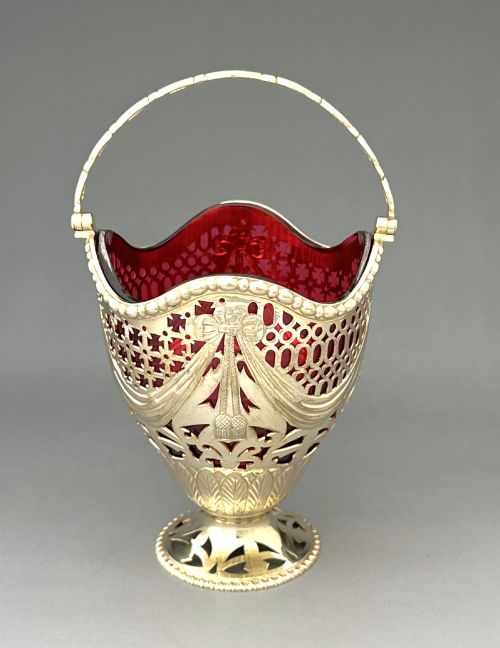
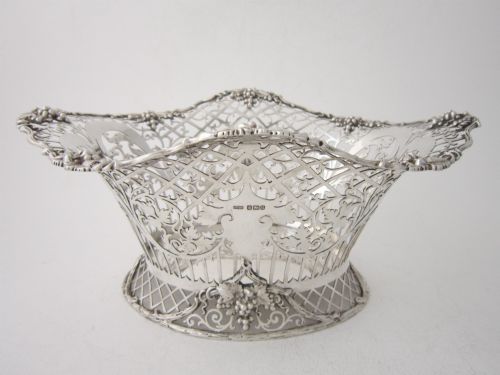
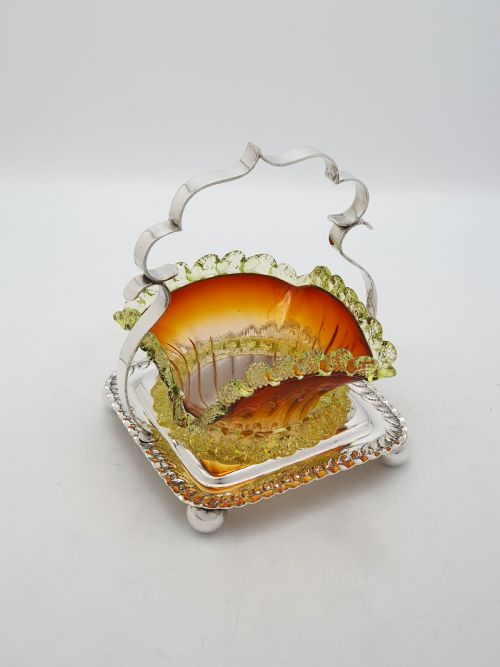
The version most commonly met on this page is an Edwardian sterling silver or silver-plated dish featuring pierced or lattice detailing. Many examples incorporate coloured glass liners in shades of cranberry, ruby, amber, vaseline, or cobalt blue.
How they were made
Silversmiths utilised sterling silver and silver plate, shaping metals through casting, hammering, and intricate piercing to create lightweight lattice and wickerwork patterns. Many vessels incorporate swing handles secured with pins or screws to movable mounts.
Glass liners were blown or moulded separately, often in vibrant colours, to sit snugly inside pierced silver frames or baskets.
Geometric lattice and naturalistic floral piercing appear frequently across bowls, baskets, and sweet stands from this era.
What varies in quality
Quality rests upon the crispness of the piercing and the weight of the metal utilised in the body and handle. Finer pieces display refined hand-piercing rather than simpler stamped patterns, alongside well-proportioned swing handles that hold their position upright.
The integrity of the glass liner also matters, with undamaged coloured glass fitting the silver mount precisely distinguishing superior examples.
William Comyns·Mappin & Webb·Henry Matthews·James Dixon & Sons·Goldsmiths & Silversmiths Co
The Edwardian Silver Bonbon Dish Glossary
- Pierced
- Metalwork perforated with decorative patterns or lattice designs to reduce weight and create visual lightness.
- Swing handle
- A movable arch of metal attached to opposite sides of a dish or basket, allowing it to swing freely.
- Silver gilt
- Sterling silver that has been coated with a thin layer of gold on its surface.
- Quaich
- A shallow two-handled drinking vessel of Scottish origin, occasionally adapted in silver for decorative serving.
- Tudric
- A trade name used by Liberty and Company for pewter wares produced during the early twentieth century.
Edwardian Silver Bonbon Dish: Frequently Asked Questions
What were edwardian silver bonbon dishes used for?
These dishes held small confectionery items, sweetmeats, or sugar lumps during afternoon tea and formal dinner parties. Guests served themselves from these small open vessels placed centrally on the table.
They also functioned as decorative ornaments or trinket trays on dressing tables and sideboards when not in dining use.
How do I clean an edwardian silver bonbon dish?
Use a soft cloth and a gentle, non-abrasive silver polish to remove tarnish from the metal surfaces. Avoid getting polish into crevices of pierced work or onto glass liners.
Remove glass liners and wash them separately in warm soapy water, drying them thoroughly before placing them back into the silver frame.
Are these dishes made of solid silver or plated?
The listings include both solid sterling silver and silver-plated metal wares. Hallmarks stamped directly onto the metal usually indicate solid sterling silver, while unmarked pieces or specific maker designations often denote silver plate.
Glass liners accompany many examples in both categories, adding contrasting colour to the polished metal frames.
How can I tell an Edwardian dish from a Victorian one?
Edwardian pieces generally date from the reign of Edward VII between 1901 and 1910, often displaying lighter Art Nouveau influences or neoclassical revival motifs. Victorian items date earlier and frequently feature heavier ornamentation or different hallmarks.
Assay office marks and date letters stamped on silver components provide definitive confirmation of the exact year of manufacture.