


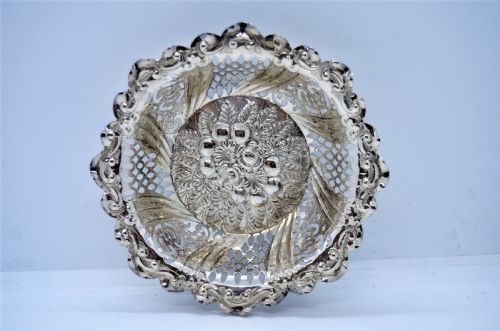


Silver Sweetmeat Dish Pair
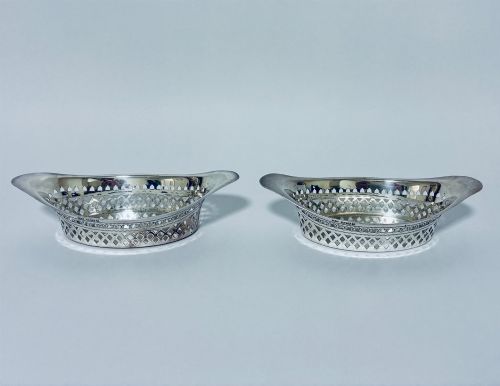
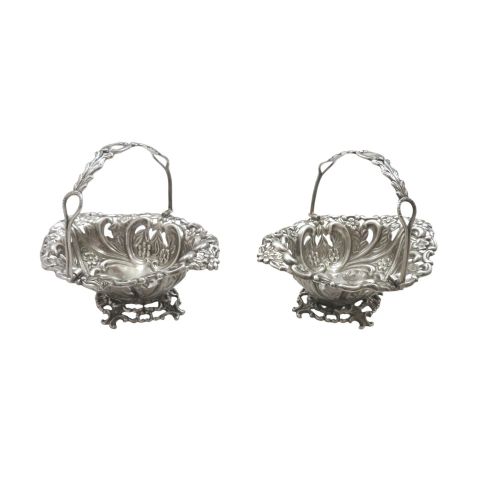
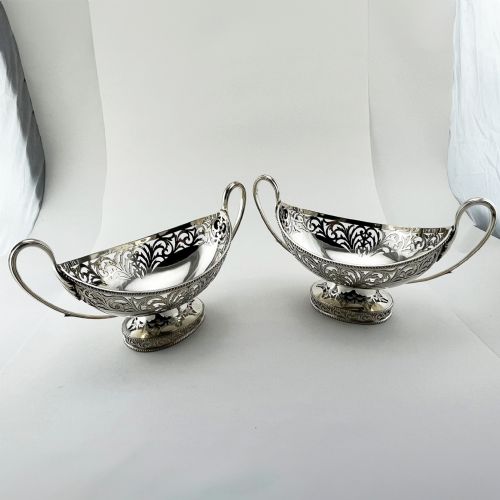
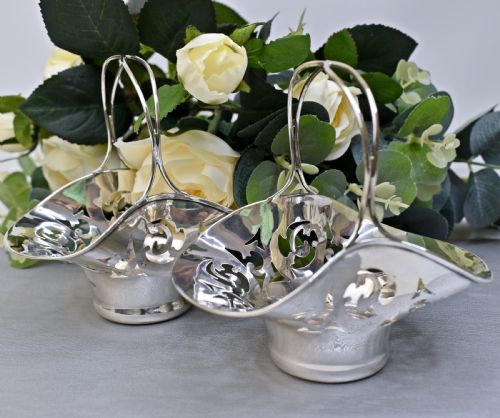
A silver sweetmeat dish pair brings matched symmetry to the table, designed for serving small confections, fruits, and delicacies.
Silver Sweetmeat Dish Pair
A silver sweetmeat dish pair comprises matched vessels created for the presentation of small sweet treats, nuts, or dried fruits during formal dining. These items emerge across multiple periods, including the Victorian, Edwardian, and Art Deco eras, reflecting shifting domestic habits.
The forms vary from pedestal dishes and handled baskets to shallow bowls and pierced trays. Buyers frequently encounter sterling silver examples alongside silver-plated variations, occasionally fitted with glass liners or tortoiseshell elements.
Originating in domestic dining traditions of the eighteenth, nineteenth, and twentieth centuries, these paired sets survive in diverse decorative styles such as Rococo Revival, Arts and Crafts, and Georgian designs.
What varies in quality
The standard of craftsmanship depends on the precision of the piercing, the weight of the metal, and the crispness of any cast decorative motifs. Heavier sterling silver pieces generally demonstrate superior structural integrity compared to lighter or plated alternatives.
Maker attribution and the presence of original fitted cases or matching glass liners elevate the desirability of a set. Well-preserved gilding on interior surfaces also indicates higher original manufacture.
Listings feature sterling silver, silver plate, vermeil, glass, and tortoiseshell across Victorian, Edwardian, Art Deco, and Georgian styles.
Thomas Bradbury·Fenton Brothers·William Comyns·Viners·D and M Davis
The Silver Sweetmeat Dish Pair Glossary
- Sweetmeat dish
- A small vessel specifically designed for holding confections, small sweets, or nuts at the table. These items often feature decorative piercing or pedestal bases.
- Vermeil
- Sterling silver coated with a thin layer of gold on the interior or exterior surface. This technique provided a rich decorative contrast and protected the silver from acidic foods.
- Pierced work
- A decorative technique involving the cutting or piercing of patterns through the silver sheet. This openwork design lightened the visual weight of baskets and dishes.
- Swing handle
- A movable handle attached to the sides of a basket or dish via pivots. It allowed the piece to be easily lifted and passed during service.
- Pedestal dish
- A vessel raised upon a central foot or stem. This form elevated sweetmeats above the surface of the dining table for better visibility.
Silver Sweetmeat Dish Pair: Frequently Asked Questions
How were sweetmeat dishes used?
These dishes held sweet confections, sugared almonds, and small dried fruits served at the conclusion of formal meals. They sat upon the dining table or sideboard for guests to help themselves.
Over time, their usage shifted from active dining service to decorative display within cabinets and on side tables.
Are these dishes made of solid silver?
The pieces span both solid sterling silver and silver-plated metal, with hallmarks often stamped on the base or rim to indicate the metal purity and maker.
Some examples also incorporate materials like glass, tortoiseshell, or velvet within their construction.
How do I identify the period?
Stylistic indicators such as Rococo Revival curves or geometric Art Deco lines offer initial clues to the date of manufacture. Hallmarks, date letters, and maker marks provide precise verification of the year and origin.
Consulting assay office symbols helps narrow down the exact decade of production.
How should I care for silver dishes?
Regular dusting with a soft cloth helps maintain the surface, while occasional cleaning with a specialist silver polish removes tarnish. Avoiding harsh abrasives protects delicate piercing and engraved details.
Items with glass liners or tortoiseshell require careful handling to prevent damage to the secondary materials.