


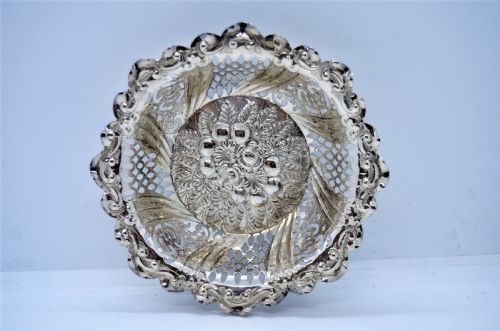

Openwork Silver Dish
An openwork silver dish brings intricate pierced metalwork to the table, offering a decorative vessel shaped by Victorian, Edwardian, and interwar makers.
Openwork Silver Dish
When you search for an openwork silver dish, you encounter pierced and lattice vessels designed for presentation and service. These pieces span the Victorian and Edwardian eras, alongside later interwar and Art Deco examples.
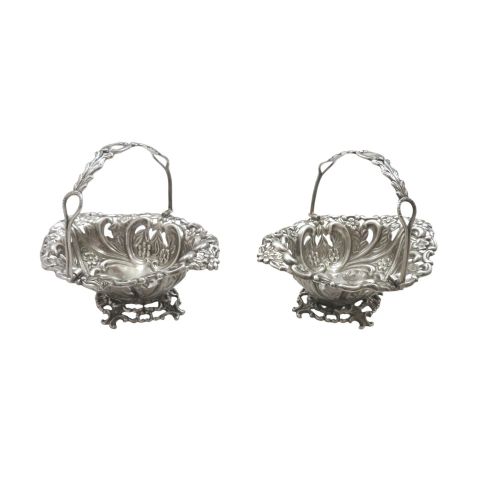
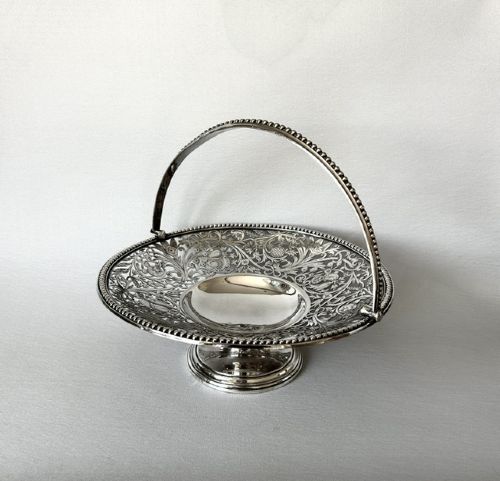
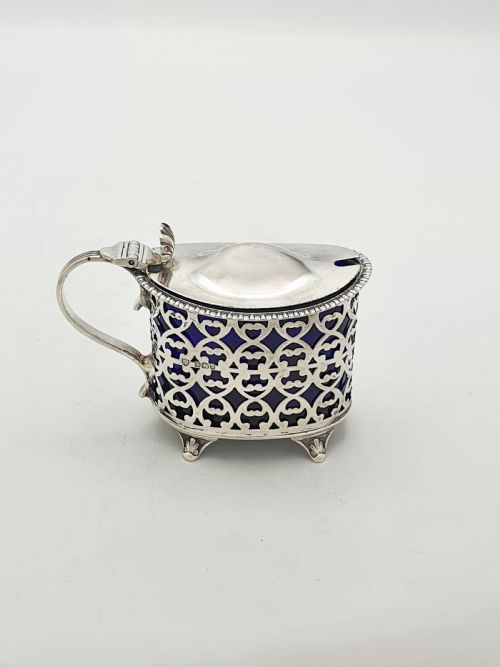
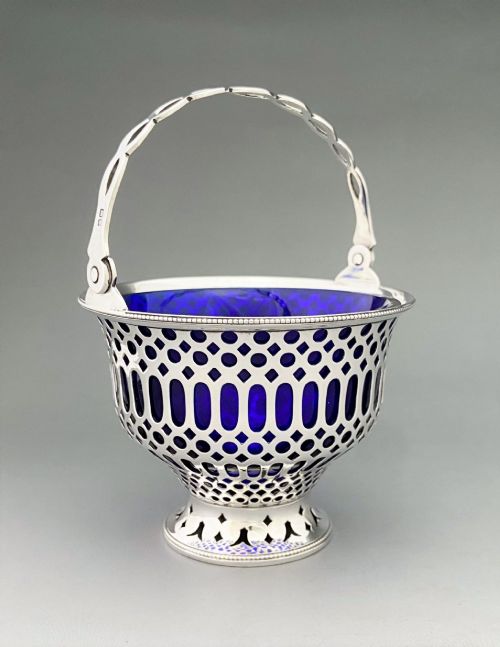
The selections on this page encompass decorative baskets, bonbon dishes, mustard pots, and oval serving dishes. Solid silver and silver plate forms appear frequently, alongside examples featuring blue glass liners.
Origins range from British provincial assay offices to continental workshops such as Vienna. Buyers meet matched pairs alongside single footed bowls and swing-handled fruit baskets.
Materials and construction
Silversmiths utilised sterling silver and silver plate to form these vessels, employing piercing and lattice techniques to create openwork walls. Solid silver examples often bear hallmarks indicating specific towns and assay years.
Certain serving pieces incorporate fitted blue glass liners, contrasting with the pierced metal exterior. Footed bowls and baskets frequently utilise cast or applied bases to support the openwork body.
Several Edwardian baskets feature movable swing handles designed for easy carriage around the Victorian tea table.
Assessing quality
Quality rests upon the precision of the piercing and the crispness of the lattice design. Finer pieces demonstrate careful hand-piercing that maintains structural integrity across the openwork walls.
The weight of the metal and the balance of swing handles or feet distinguish superior production. Maker marks and clear hallmarks further establish the origin and standing of the piece.
Fenton·Martin Hall
The Openwork Silver Dish Glossary
- Openwork
- Metalwork featuring patterns cut through the body to create decorative empty spaces. This technique defines the primary aesthetic of these dishes and baskets.
- Piercing
- A method where silversmiths cut shapes directly out of the metal sheet. It creates the intricate fretwork seen on Victorian and Edwardian serving vessels.
- Sterling silver
- An alloy consisting of pure silver and other metals for durability. British pieces of this standard typically bear the lion passant hallmark.
- Silver plate
- A base metal coated with a thin layer of silver. This material offered a decorative alternative during the Victorian period.
- Assay office
- An official body that tests the purity of precious metals and stamps items with hallmarks. Towns such as Chester and Sheffield operated notable offices.
Openwork Silver Dish: Frequently Asked Questions
How do I date these silver dishes?
Dating relies on hallmarks stamped directly into the metal, which indicate the assay office, the year of production, and the maker. Stylistic clues such as Rococo Revival curves or Art Deco geometries also point to specific decades.
Victorian and Edwardian pieces often display distinct registration marks or town ciphers that narrow down the exact year of manufacture.
Were glass liners original?
Many openwork silver baskets and mustard pots were manufactured with fitted blue glass liners. These liners protected the silver from acidic foods and provided a striking colour contrast beneath the pierced metal lattice.
When present, the glass adds authenticity and completes the intended functional design of the piece.
How should I care for pierced silver?
Care involves gentle cleaning with a soft brush and specialised silver polish to prevent tarnish buildup within the intricate piercing. Avoid harsh chemical dips that can damage the metal surface or delicate soldered joints.
Store pieces in dry environments away from direct sunlight to preserve the finish of both solid silver and silver plate.