
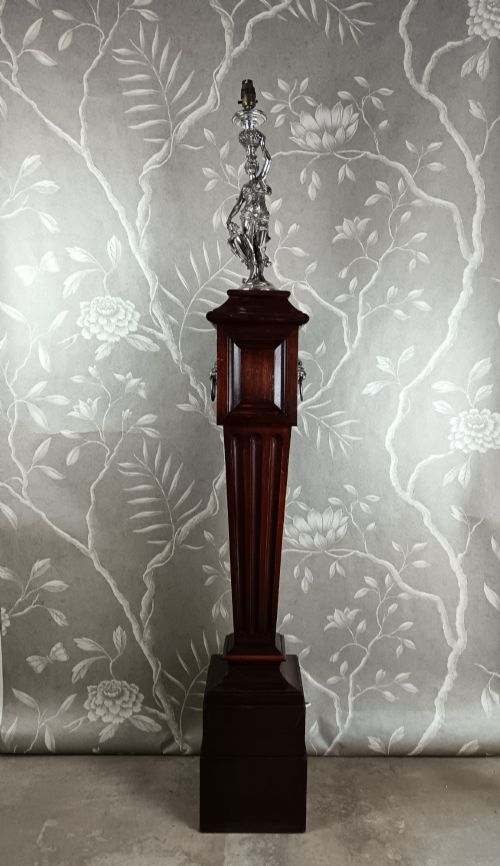


Silver Pedestal Stand
A silver pedestal stand elevates your display, bringing height and distinction to dining tables or sideboards through polished metals and glass.
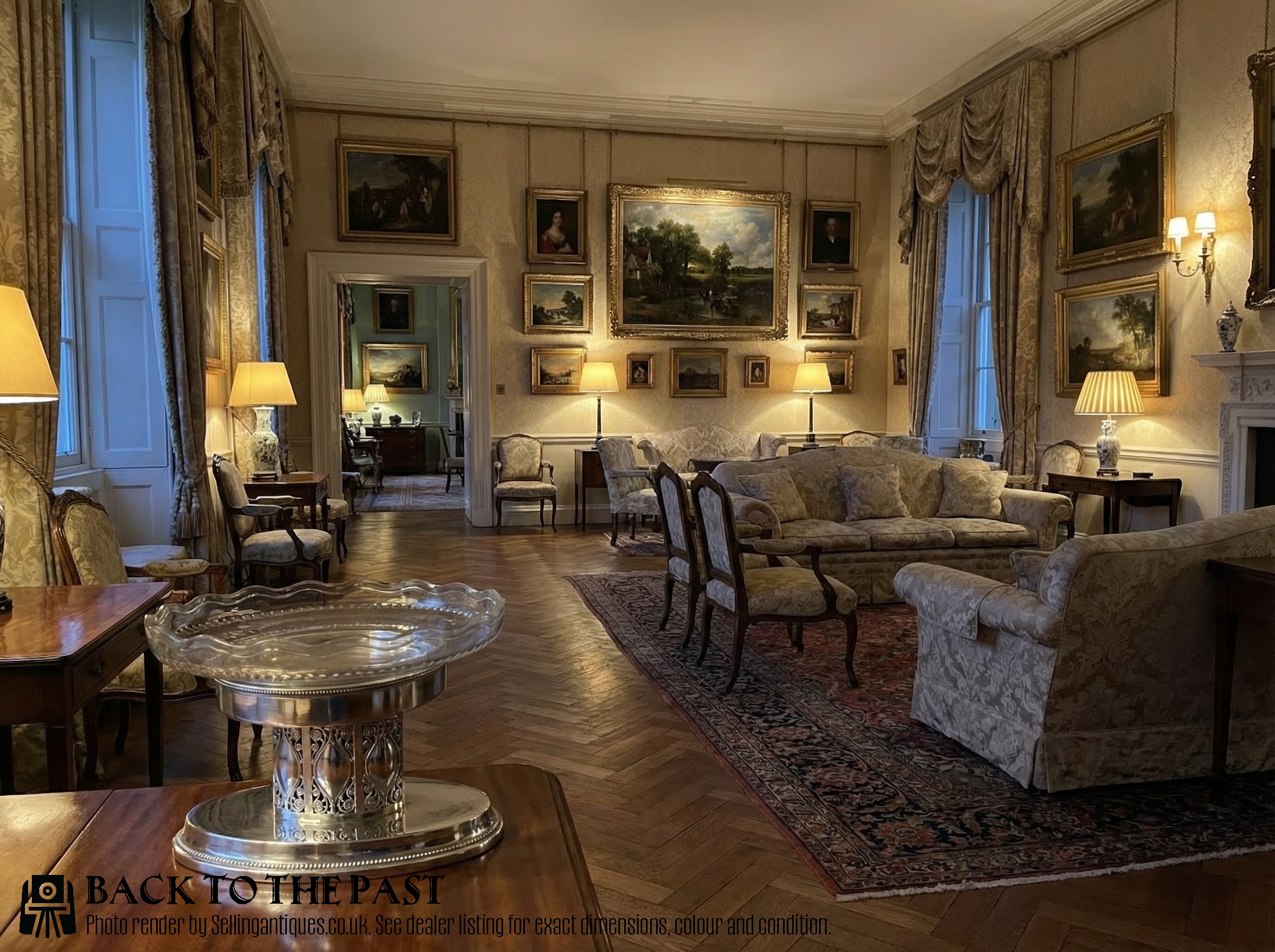
Silver Pedestal Stand
When you search for a silver pedestal stand, you encounter elevated vessels and supports designed to lift items above the table surface, spanning centrepieces, cake stands, and tazzas.
The most common examples on this page date from the Edwardian era and the early twentieth century, taking the form of pierced silver bowls, presentation dishes, and sweet stands.
These pieces draw on Victorian, Art Nouveau, and Art Deco styles, shifting from elaborate floral ornamentation to the clean geometric lines of the interwar years.
Materials and construction
Makers utilised both solid sterling silver and silver plate over base metals, often combining metalwork with cut crystal glass inserts or mahogany components.
Techniques such as piercing, wirework, and silvered bronze casting allowed artisans to create intricate openwork galleries and sturdy raised feet.
The listings combine solid sterling silver and silver plate alongside cut crystal, mahogany, and chrome across Edwardian, Art Deco, and Art Nouveau styles.
Distinguishing quality
Superior quality rests in the weight of the metal and the crispness of the chasing or piercing, separating substantial cast pieces from lighter stamped alternatives.
The integration of materials also defines the tier, where heavy hand-cut crystal securely fits a dedicated silver-plated or sterling mount.
Mappin and Webb·Theodore B Starr·James Dixon and Sons·Christofle et Cie·Elkington and Co
The Silver Pedestal Stand Glossary
- Tazza
- A shallow bowl or plate mounted on a pedestal foot. This form frequently appears in Edwardian silver sweet stands and presentation pieces.
- Silver Plate
- A thin layer of silver fused to a base metal core such as copper or Britannia metal. Many cake stands and centrepieces use this method for durability.
- Sterling Silver
- An alloy containing a high proportion of pure silver alongside strengthening metals. Pieces of this standard carry specific hallmarks indicating their purity and origin.
- Pierced
- A decorative technique where metal is cut through to form openwork patterns. This method lightens the visual weight of large bowls and centrepieces.
Silver Pedestal Stand: Frequently Asked Questions
What were silver pedestal stands originally used for?
These elevated vessels served distinct functions in formal dining, holding fruit, confectionery, or floral arrangements to create varied heights across the table.
They also acted as central display pieces for presentation or ceremonial occasions, projecting status through polished metal and glass.
How do I clean a silver pedestal stand?
Maintenance requires a soft cloth and a reputable silver polish formulated to remove tarnish without abrading the surface or damaging applied plate.
For pieces incorporating cut crystal or glass inserts, remove the glass entirely before cleaning the metal mount to prevent liquid damage.
Can I use these stands for daily dining?
Solid silver and silver-plated stands handle regular use well provided you avoid abrasive sponges or harsh chemical detergents during washing.
Glass and crystal components should be washed by hand in warm soapy water rather than placed in an automatic dishwasher.
How do I tell Edwardian stands from Art Deco ones?
Edwardian examples typically display floral motifs, scrolling borders, and pierced galleries influenced by earlier Victorian and Rococo revivals.
Art Deco stands favour stark geometric forms, symmetrical tiers, and streamlined surfaces that reflect the design shifts of the 1920s and 1930s.