


Silver Novelty Tableware
Silver novelty tableware brings wit to the dining table through ingenious zoomorphic and mechanical shapes crafted in precious metal.
Silver Novelty Tableware
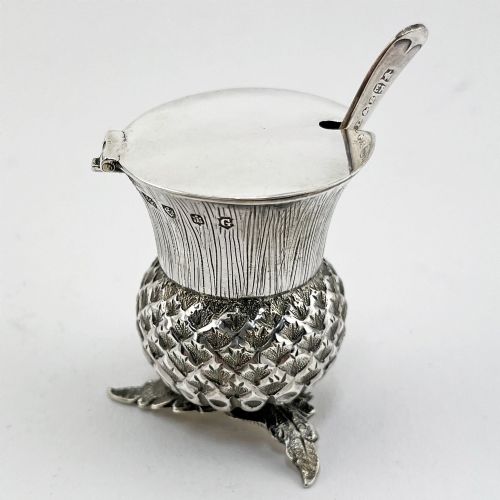
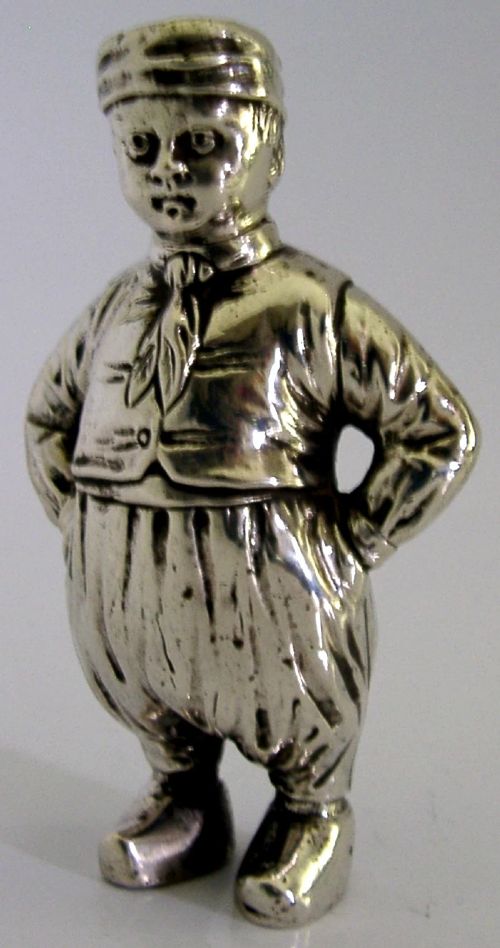
Silver novelty tableware encompasses functional dining items fashioned into playful, unconventional shapes, ranging from animals to vehicles and everyday objects. When exploring silver novelty tableware on this page, a buyer encounters pieces designed to amuse diners while serving a practical purpose at the table.
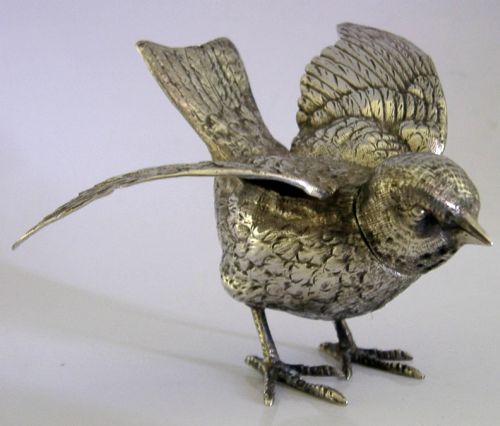
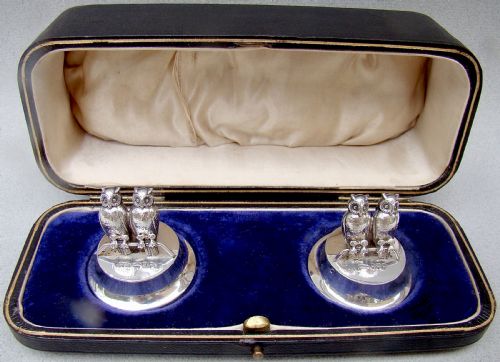
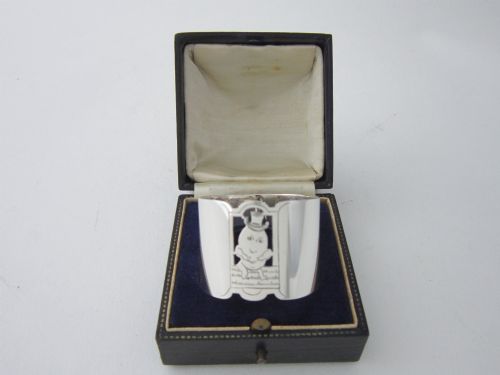
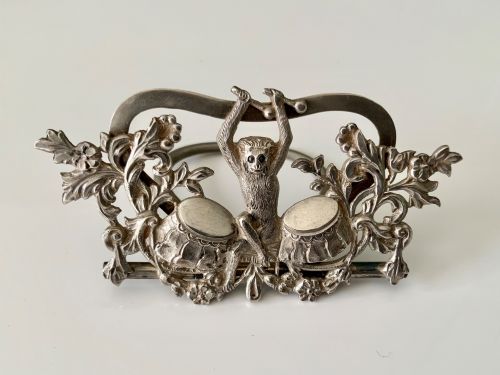
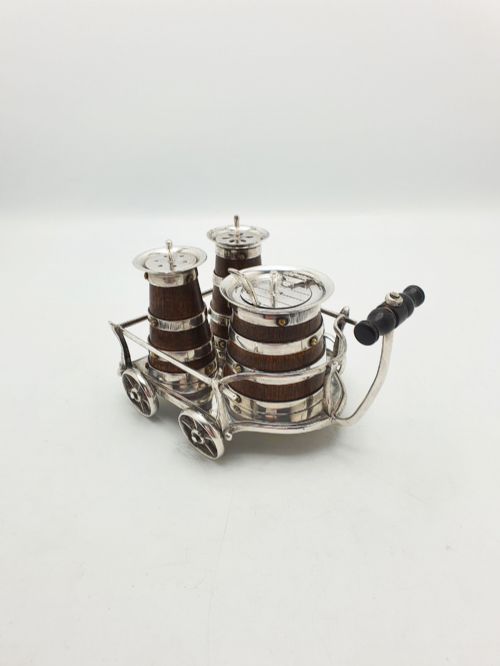
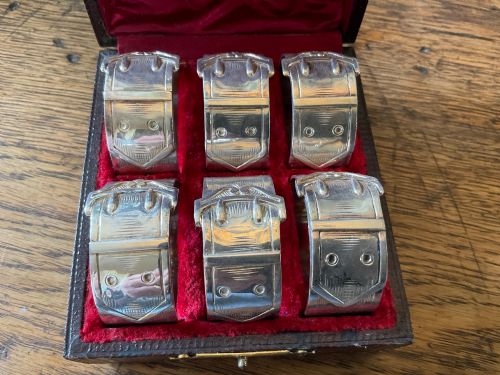
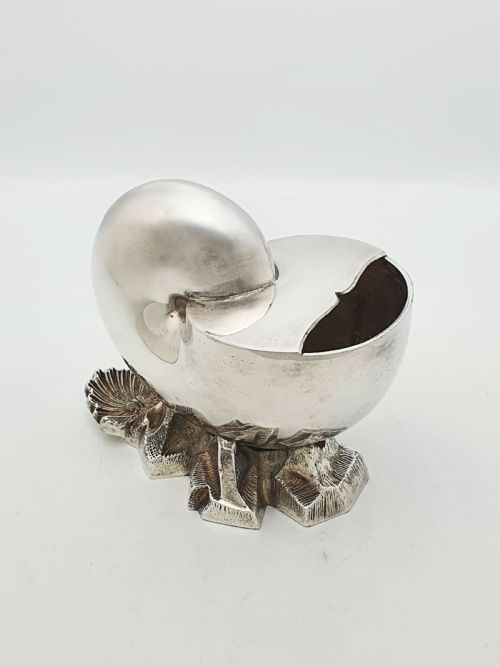
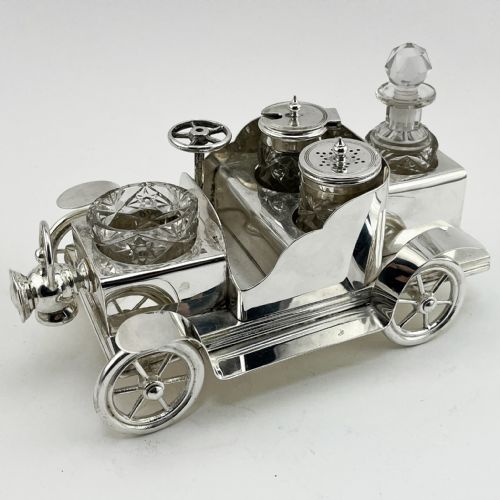
The selection spans numerous forms including cruet sets, salt and pepper pots modelled as birds and animals, napkin rings shaped like belts and stirrups, and menu holders depicting monkeys and owls. Spoon warmers shaped like nautilus shells and caddy spoons shaped like jockey caps also appear frequently.
These items originate primarily across the Victorian and Edwardian eras, alongside pieces from the nineteenth and twentieth centuries up to the mid-century period. Makers utilise both sterling silver and silver plate, frequently incorporating glass or cut glass components within cruet frames.
Materials and Techniques
Silversmiths constructed these pieces predominantly using sterling silver or silver plate over a base metal, frequently combining them with cut glass, silk, velvet, or solid silver components. Artisans shaped sheet metal through hammering and spinning, then cast figural elements such as birds, monkeys, and owls in separate moulds before soldering them to the main body.
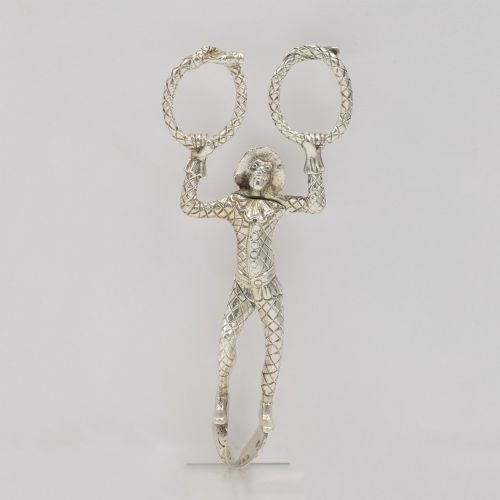
Detailing was achieved through hand chasing, engraving, and piercing, particularly evident on feathers, fur, and architectural elements of carriage and barrel cruets. Articulated pieces required intricate internal hinges and pins to allow movement in items such as sugar tongs shaped as eagle claws or monkeys.
Silver Novelty Tableware Retail Price Guide 2026
Typical asking prices for silver novelty tableware among the pieces listed under this phrase on Sellingantiques today, from the lower quarter to the upper quarter. They describe what is for sale here now, not the wider market.
Diners once used miniature silver monkeys and owls to hold menu cards and pass mustard.
Evaluating Quality
The integrity of the mechanism dictates value in mechanical pieces; smooth operation in sugar tongs or securely fitted lids on cruets demonstrate superior workshop standards. Maker marks and clear hallmarks further distinguish master silversmith production from anonymous commercial output.
Levi & Salaman·Grey & Co·Hukin and Heath·Dee & Fargus·Henry Stuart Brown·Thomas Johnson·Reid and Summers
The Silver Novelty Tableware Glossary
- Cruet set
- A matched collection of small containers for holding condiments such as salt, pepper, mustard, and vinegar at the dining table. These often sit within decorative frames or stands.
- Spoon warmer
- A Victorian vessel designed to hold hot water and warm silver spoons before serving pudding or soup. They frequently take imaginative shapes like nautilus shells or barrels.
- Caddy spoon
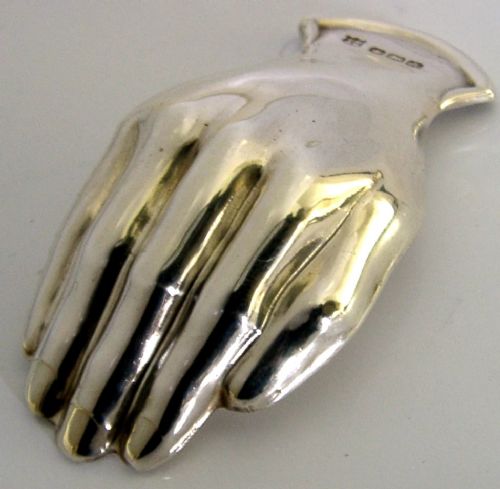
- A short-handled spoon specifically designed for measuring loose tea leaves from a caddy. Novelty versions often mimic jockey caps or hands.
- Hallmark
- An official stamp applied to precious metals indicating the standard of purity, the assay office, the maker, and the year of manufacture. These provide vital clues for dating.
- Chasing
- A metalsmithing technique where the artisan punches and pushes metal from the front to create raised surface decoration. This method brings texture to animal feathers and clothing details.
Silver Novelty Tableware: Frequently Asked Questions
How were spoon warmers used?
Victorian diners filled spoon warmers with hot water to keep silver serving spoons warm before guests scooped soup or pudding. This prevented cold spoons from chilling hot food.
They frequently took whimsical forms such as nautilus shells, animal figures, or barrels.
How do I clean antique silver?
Clean antique silver gently with a specialist silver cloth or a mild, non-abrasive liquid polish designed for precious metals. Avoid harsh scrubbing that can wear away thin silver plating or soften hand-chased details.
Store pieces in a dry environment away from direct sunlight to slow down the natural tarnishing process.
How can I date my piece?
Dating silver relies on reading the hallmarks stamped into the metal, which typically include a date letter corresponding to a specific assay year. Makers' marks and style indicators also help narrow down the decade of production.
Victorian and Edwardian pieces often feature registration numbers that record the exact year the design was legally protected.
Can I use these items daily?
Many novelty pieces, such as napkin rings, cruet sets, and caddy spoons, remain fully functional for modern dining use. Solid silver and sturdy silver plate withstand gentle everyday handling if cleaned properly.
Fragile items with delicate articulated parts or historical glass liners are better suited for careful display.