
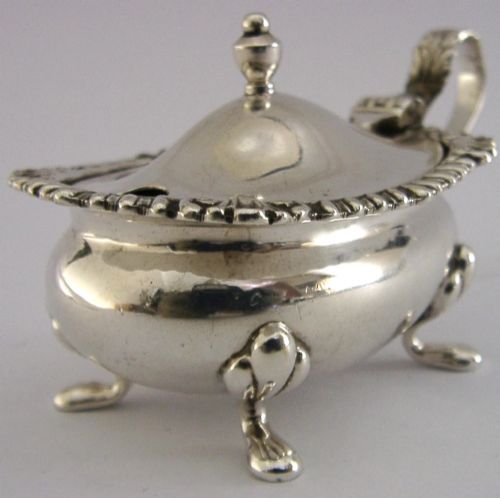
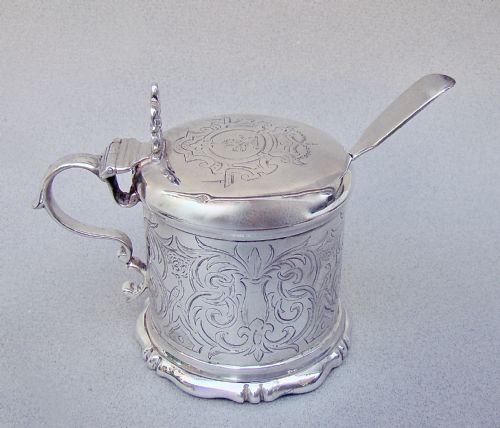
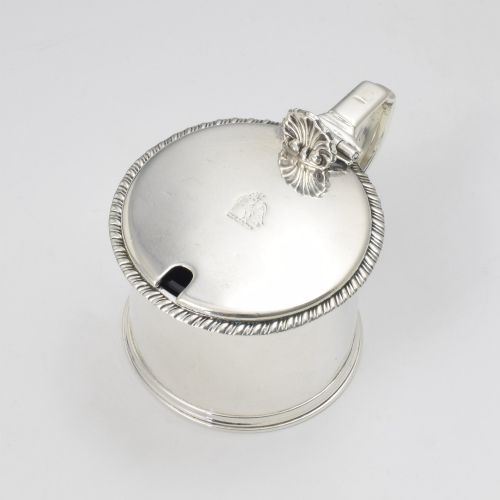


Silver Lidded Condiment Pot
A silver lidded condiment pot is a table vessel for mustard or preserves, prized for precious metal and glass.
Silver Lidded Condiment Pot
A silver lidded condiment pot is a table vessel designed to hold mustard, pepper, or preserves during dining. The pieces seen on this page span the Georgian, Victorian, Edwardian, and mid-century periods, showing how table service evolved over centuries.
Most examples take the form of mustard pots or preserve jars paired with precious metal lids. Many incorporate glass liners in blue or ruby red, holding the contents securely within the pierced or solid silver framework.
Makers shaped these pots in styles ranging from early Georgian designs and their later revivals to mid-century modern pieces. They appear in solid sterling silver and silver-mounted glass, reflecting domestic habits across British eras.
How they were made
Silversmiths formed these condiment pots using sterling silver and silver mounts, often combining the metal with blown or cut glass. Artisans shaped the silver through casting and hammering, sometimes piercing the body to reveal the coloured glass liner within.
Makers fitted hinged or removable lids to the silver frames, occasionally pairing the vessels with matching spoons. The glass liners were individually blown or moulded to fit snugly inside the metalwork.
Some mustard pots wear tiny blue glass coats to survive the bite of English mustard.
What varies in quality
Quality rests in the weight and handling of the silver, alongside the clarity and colour of any glass liner. Thicker gauge silver and crisp piercing show superior workmanship.
The integration between the metal mount and the glass vessel dictates the finesse of the piece. Well-balanced proportions and smooth lid hinges distinguish finer examples from standard production.
Charles and George Fox·Charles Fox II·Robert Hennell I·Walker and Hall·Heath and Middleton
The Silver Lidded Condiment Pot Glossary
- Sterling silver
- A silver alloy containing substantial pure silver by mass, standard for quality British tableware.
- Cut glass
- Glass decorated by cutting facets into the surface, seen on preserve jars and pots.
- Liner
- A removable glass vessel, often blue or ruby red, placed inside pierced silver mustard pots.
- Hallmark
- A stamp indicating the metal standard, assay office, and date letter.
Silver Lidded Condiment Pot: Frequently Asked Questions
What is a silver lidded condiment pot used for?
These vessels held table condiments such as prepared mustard, pepper, or sweet preserves during formal meals.
They sat upon the dining table for guests to serve themselves using small spoons.
How do I date a silver condiment pot?
Dating relies upon the hallmarks stamped into the silver, which record the assay office and year.
Stylistic details like Georgian drum shapes or Edwardian cut glass also indicate the period.
Why do some pots have coloured glass liners?
Liners protected the silver from the corrosive effects of mustard and vinegar inside the pot.
Colours like blue and ruby red added a decorative contrast against pierced silver work.
Are these pots still practical for modern dining?
Many collectors use mustard and preserve pots daily for dining table service.
Careful hand washing preserves the vintage glass liners and sterling silver surfaces.