


Georgian Sterling Silver Mustard
Georgian sterling silver mustard pots are small, hinged table vessels designed for dining, prized by collectors for their intricate silverwork and cobalt glass liners.
Georgian Sterling Silver Mustard
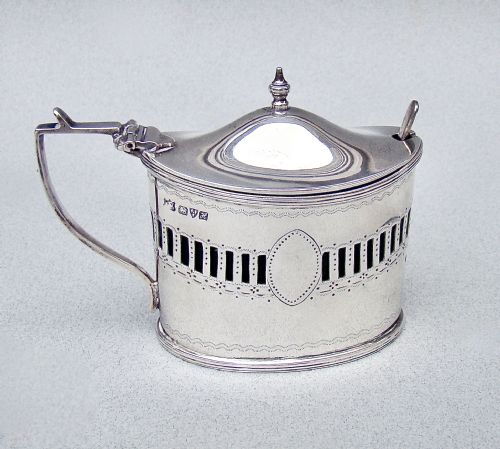
When you search for georgian sterling silver mustard, you are looking at small tableware vessels intended to hold prepared mustard on the dining table. These pieces range from drum mustard pots to larger condiment sets featuring matching spoons and cruet bottles.
The versions you are most likely to meet on this page hail primarily from the Georgian and Victorian periods, alongside later revival styles. They often incorporate glass liners and hinged lids, serving both functional dining roles and as cabinet collectables.
How they were made
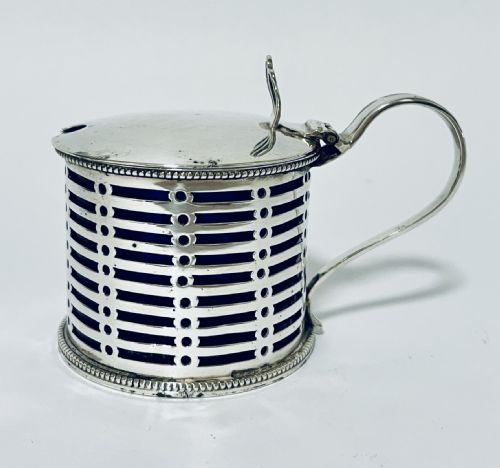
Makers fashioned these pots using sterling silver, shaping the metal into drums, urns, and cylindrical bodies. Many examples include pierced gallery work or chased decoration applied by hand.
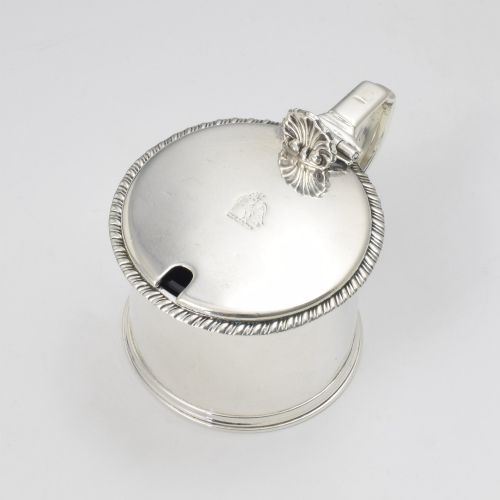
Interiors typically house removable glass liners, frequently in cobalt blue or clear cut glass, designed to protect the silver from acidic mustard. Fitted hinged lids often feature small thumbpieces and finials.
Some nineteenth-century mustard pots required tiny matching spoons so diminutive they look like garden tools for a very small fairy.
What varies in quality
Quality rests upon the crispness of the maker's mark and the weight of the sterling silver used in the body and lid. Finer examples display detailed hand-chased decoration or intricate piercing rather than simple stamped elements.
The presence of an original, undamaged glass liner and a matching silver spoon elevates the standing of a piece. Maker attribution to notable silversmiths further separates standard tableware from exceptional masterworks.
Alfred Marston·Charles Fox II·Matthew Boulton·Robert Hennell I·Charles Stuart Harris·Viners
The Georgian Sterling Silver Mustard Glossary
- Sterling silver
- An alloy consisting of ninety-two point five percent silver and seven point five percent other metals, typically copper, used to ensure durability in tableware.
- Liner
- A removable glass insert, often cobalt blue, placed inside the mustard pot to prevent corrosion of the silver from condiments.
- Drum mustard pot
- A cylindrical form of mustard pot with straight sides, a flat hinged lid, and a scroll handle, popular in the eighteenth century.
- Cruet set
- A fitted frame holding multiple bottles or pots for condiments such as mustard, oil, vinegar, and pepper.
- Provincial
- Silver manufactured outside of the main assay office towns, such as in Scottish or regional workshops.
Georgian Sterling Silver Mustard: Frequently Asked Questions
What is a silver mustard pot?
A silver mustard pot is a small tabletop vessel created to hold prepared mustard during meals. They became essential dining accessories across the Georgian and Victorian eras.
Most examples include a hinged lid, a handle, and a removable glass liner to protect the precious metal from the condiment.
How do I know my mustard pot is Georgian?
Authentic Georgian pieces display hallmarks indicating the city of assay, the date letter, and the sterling standard. Stylistic markers such as drum shapes and pierced galleries also point to the period.
Examining the maker's mark helps connect the piece to recorded silversmiths active during the eighteenth and early nineteenth centuries.
Why do these pots have blue glass liners?
Mustard is acidic and can tarnish or corrode sterling silver if placed in direct contact for extended periods. The cobalt blue glass liner provided a safe, removable barrier.
These liners also added a striking visual contrast when viewed through the pierced scrollwork or open fretwork of the silver body.
How do I clean antique silver mustard pots?
Cleaning requires warm water, a mild detergent, and a soft cloth to preserve the patina and hallmarks. Harsh abrasives must be avoided on both the silver and the antique glass liners.
Proper storage in a dry environment prevents rapid tarnishing between uses on the dining table or display shelf.