



Silver Cream and Sugar
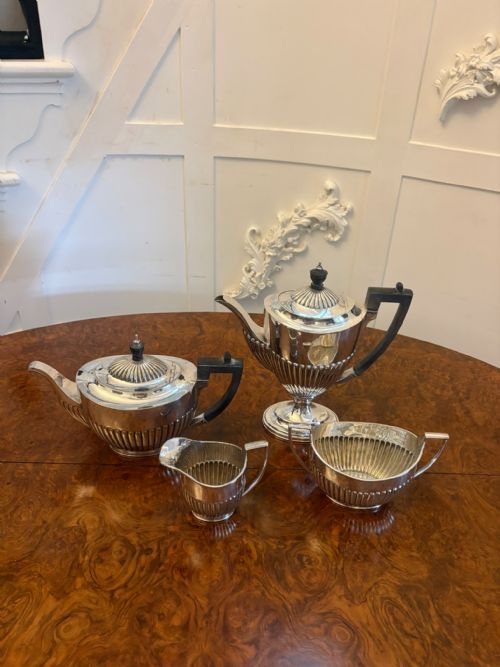
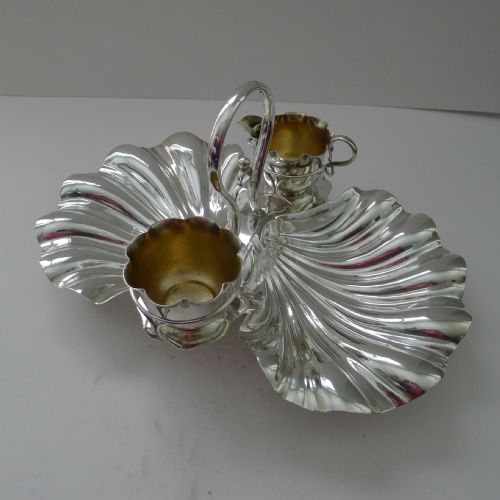
These silver cream and sugar sets bring matched pairings of jugs, bowls, and baskets to the table for tea service.
Silver Cream and Sugar
When you search for silver cream and sugar, you encounter matched pairs and larger services dating from the eighteenth century through the mid twentieth century. These sets combine a milk or cream jug with a sugar bowl, open basin, or pierced basket.
The pieces appear in solid sterling silver and silver plate, frequently grouped alongside tea and coffee services, strawberry dishes, and sugar sifters. Examples range from compact Georgian wirework pails to substantial Edwardian and Art Deco multi piece sets.
Originating largely from British workshops and retailers, these items span periods including the Victorian era, William IV, and the twentieth century. They manifest as paired tableware designed to coordinate the service of hot drinks.
Materials and construction
Makers shaped these vessels from sterling silver and various plated bases such as electroplated nickel silver and Sheffield plate. Many interiors feature a gold wash applied over the silver surface.
Craftsmen utilised techniques including piercing, wirework, and casting to produce ornate grapevine detailing, neoclassical motifs, and zodiac decoration. Elements of wood, ebonised wood, glass, and silk appear in structural handles, stands, and fitted presentation cases.
Listings feature sterling silver and silver plate items spanning the eighteenth to the twentieth centuries.
Distinctions in quality
Quality rests upon the crispness of chased or pierced ornament and the weight of the metal used in the walls of the jug and bowl. Heavier gauge silver and deeply defined grapevine or wirework patterns distinguish finer productions from lighter wares.
The integrity of the original plating or hallmarks and the presence of fitted presentation cases or matched accessories like tongs and sifters elevate specific sets. Articulation in handles, mounts, and stands further separates standard tableware from masterworks.
Aldridge & Green·Daniel Arter·Walker & Hall·Joseph Craddock·Benjamin Smith·Mappin & Webb·Roberts and Belk·George Fox·Harry Atkin·Robert Hennell·S Blanckensee & Co Ltd·James Deakin and Sons
The Silver Cream and Sugar Glossary
- Sterling silver
- A silver alloy containing 92.5 percent pure silver by mass, widely utilised for British tableware and hallmarked to indicate purity and origin.
- Silver plate
- A base metal object coated with a thin layer of silver, encompassing techniques like Sheffield plating and electroplated nickel silver.
- Gold wash
- A thin layer of gold applied to the interior of silver cream jugs and sugar bowls to protect the metal from acidic contents.
- Sugar basket
- An open vessel, often featuring intricate wirework or piercing, designed to hold lump sugar at the tea table.
- Sugar sifter
- A perforated vessel used for sprinkling powdered or castor sugar over fruit or desserts during tea service.
- Sheffield plate
- An early form of silver plating created by fusing a sheet of sterling silver to a copper base.
Silver Cream and Sugar: Frequently Asked Questions
How do I clean my silver cream and sugar set?
Use a dedicated silver cloth and warm soapy water to remove tarnish without damaging the underlying metal or plating. Avoid harsh abrasive cleaners that strip thin silver layers.
Dry each piece thoroughly with a soft cloth after washing to prevent water spots and maintain the polished surface.
Can I use these sets for daily dining?
Solid sterling silver pieces handle regular use well, provided you wash them by hand rather than placing them in a dishwasher. Silver plated items require slightly more care to preserve the plated surface over time.
Using non abrasive utensils prevents scratching the interior gold wash or delicate silver bowls.
What is a gold wash interior?
A gold wash is a thin layer of gold applied to the inside of silver cream jugs and sugar bowls. It prevents the acidic content of dairy and sugar from tarnishing or corroding the silver.
Over decades of use, this interior coating can soften in tone while remaining visible.
How do I date an unmarked set?
Examine the overall style, such as neoclassical wirework, Victorian floral chasing, or geometric Art Deco lines, to narrow down the era. Handle construction and matching accessory types offer additional chronological clues.
Comparing the form to documented pieces from known makers helps establish a probable decade of manufacture.