




Fitted Case Silver Tableware
These fitted case silver tableware pieces combine practical dining sets with fitted protective boxes from Georgian, Victorian, and Edwardian periods.
Fitted Case Silver Tableware
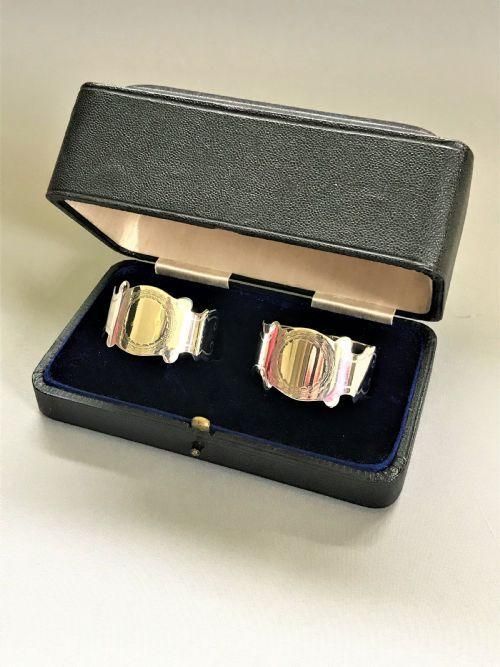
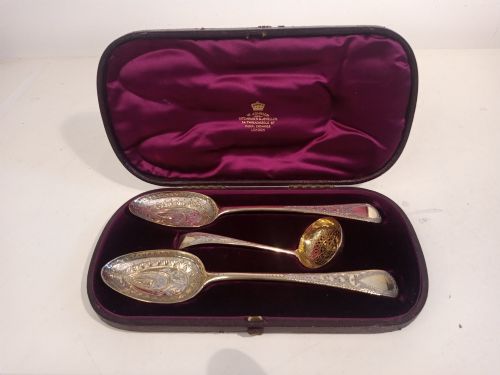
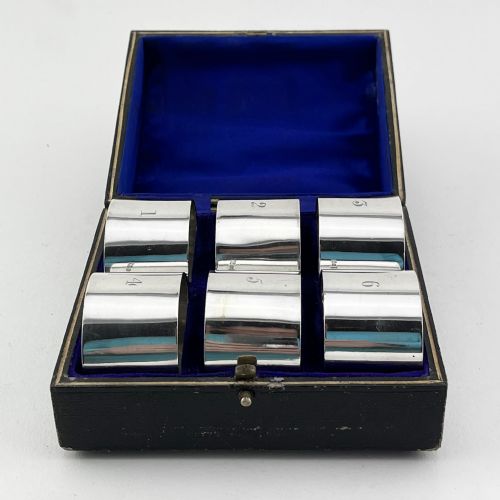
When you search for fitted case silver tableware, you encounter dining implements and service sets housed in custom protective boxes lined with silk or velvet. The listings show a range of forms, including napkin rings, berry spoons, sugar bowls, cream jugs, grape scissors, and condiment sets.
You are most likely to meet Victorian and Edwardian examples on this page, alongside earlier George III pieces and later Art Deco designs. These sets bring together sterling silver or silver-gilt items with fitted leather, leatherette, or wooden cases designed for preservation and presentation.
How they were made
The metal components utilise sterling silver, silver-gilt, and gold gilt, fashioned through traditional silversmithing techniques into flatware, bowls, and condiment stands. Many pieces feature detailed embossing or plain polished surfaces designed for formal dining.
The protective cases combine durable exterior materials such as leather and leatherette with soft interior linings of silk and velvet. These bespoke enclosures are shaped specifically to hold each individual spoon, ring, or vessel securely in place.
Grape scissors arrived in fitted cases specifically to prevent delicate silver blades and handles from bending inside dining room sideboards.
What varies in quality
Quality rests upon the preservation of both the silver items and their original fitted case. Complete sets retaining their matching silk and velvet linings command attention over items with replacement or heavily worn enclosures.
The precision of the silversmith's work, from the crispness of the chased decoration on berry spoons to the structural integrity of the hinges and clasps on the outer case, distinguishes finer examples.
The Fitted Case Silver Tableware Glossary
- Sterling silver
- A silver alloy containing 92.5 percent pure silver and 7.5 percent other metals, usually copper, ensuring durability for tableware.
- Silver-gilt
- Sterling silver that has been coated with a thin layer of gold on its surface, often seen on the interior of sugar bowls and condiment spoons.
- Berry spoon
- A large serving spoon with fruit motifs chased or embossed on the bowl, popular during the Georgian and Victorian periods.
- Condiment set
- A matched collection of small vessels holding salt, pepper, or mustard, frequently housed in a fitted presentation case.
- Leatherette
- A synthetic material mimicking leather, utilised for the durable outer coverings of protective cases on later pieces.
Fitted Case Silver Tableware: Frequently Asked Questions
What is fitted case silver tableware?
These are dining utensils and serving sets sold alongside their original custom-made protective boxes. The boxes feature fitted interiors lined with soft materials to secure the pieces.
Such items include napkin rings, berry spoons, grape scissors, and condiment cruets dating from the eighteenth to the twentieth century.
How were these sets used?
These pieces served formal dining and entertaining needs in domestic households. They provided guests and hosts with specialised implements for fruit, condiments, sugar, and napkins.
When not in use, the tableware remained protected inside its designated leather or leatherette case to prevent tarnishing and damage.
How do I identify the period?
Period identification relies on stylistic cues, hallmarks, and the construction of the fitted case. Georgian pieces often display ornate chased fruit designs, while Edwardian and Art Deco items show cleaner lines.
Examining the silver hallmarks alongside the materials used in the box lining helps narrow down the exact decade of manufacture.
How should I care for cased silver?
Store the silver items inside their fitted cases in a stable environment away from direct sunlight and damp conditions. The original silk and velvet linings help buffer against atmospheric moisture.
Clean the silver sparingly with appropriate polishes, taking care to avoid getting cleaning agents onto the fabric interiors of the box.