


Silver Plate Tea Accessories
Silver plate tea accessories are functional table pieces designed for serving tea, and these examples bring Victorian and Art Deco elegance to any room.
Silver Plate Tea Accessories
When you search for silver plate tea accessories, you are looking at items created for the formal service of tea and associated table routines. These objects span several decades, reaching from Georgian Sheffield plated wares up to Art Deco pieces of the nineteen thirties.
The selection here includes biscuit barrels, sugar bowls, cream jugs, spirit kettles, trays, and complete sets. Victorian and Edwardian examples sit alongside later designs, showing how domestic tableware evolved across the nineteenth and twentieth centuries.
How they were made
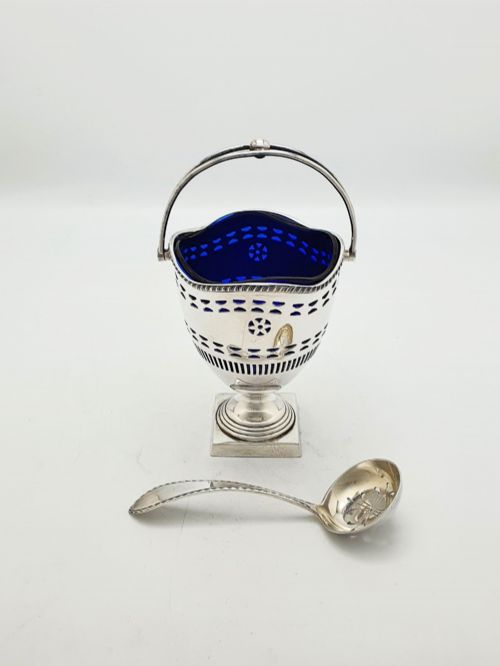
Makers utilised base metals such as copper and nickel silver, applying a thin coating of silver through electroplating or older Sheffield plating techniques. Many items incorporate other materials, pairing silver plate with cut glass bodies, cobalt glass liners, and gold gilt highlights.
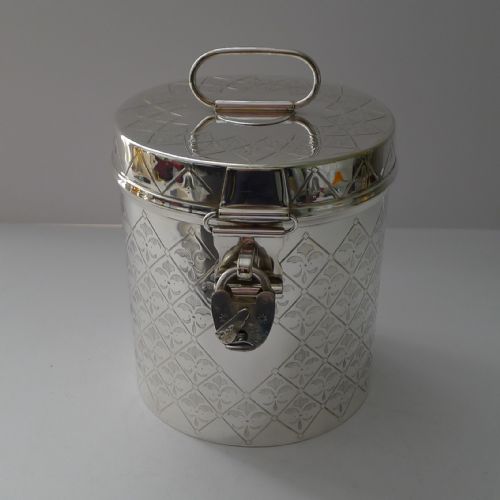
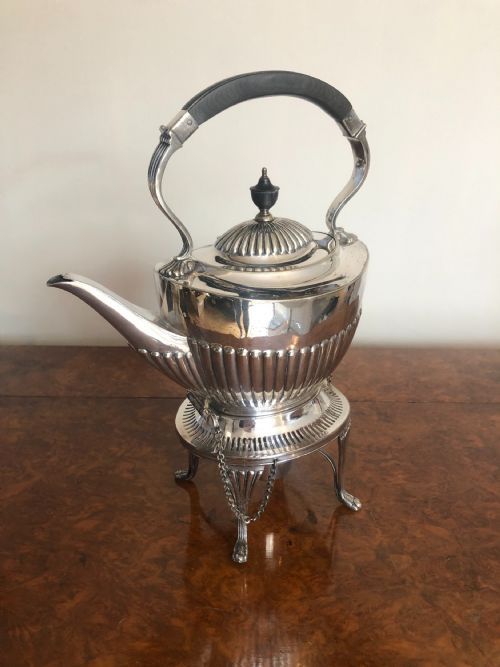
Structural elements involve pierced metalwork, hinged locking mechanisms for biscuit boxes, and fitted stands for spirit kettles. Surfaces often display engraved decoration, chased motifs, or the clean geometric lines typical of the Art Deco period.
What varies in quality
Quality in these pieces rests on the weight of the underlying metal, the crispness of any pierced or engraved ornament, and the integrity of the applied silver layer. Heavier items with substantial metal gauges and thick plating retain their finish far better through generations of use.
The incorporation of secondary materials like deeply cut crystal glass or unblemished cobalt liners elevates a piece. Maker attribution also plays a role, with established firms demonstrating superior finishing in mounts, handles, and locking mechanisms.
Mappin and Webb·Walker and Hall·Asprey London
The Silver Plate Tea Accessories Glossary
- Electroplated Nickel Silver
- A base alloy of copper, nickel, and zinc coated with a layer of pure silver using an electrical process. This method became standard for mass production from the mid-nineteenth century onward.
- Sheffield Plate
- An earlier technique where a thin sheet of silver was fused to a thicker copper core by heat and pressure. Pieces made this way often show subtle hints of copper where the silver layer has worn thin at high points.
- Biscuit Barrel
- A covered container designed to keep dry baked goods fresh on the tea table. Victorian examples often feature locking lids or spring-loaded mechanisms operated by a handle.
- Spirit Kettle
- A tea kettle mounted on a stand above a small burner fueled by spirit or alcohol. This apparatus allowed water to be kept hot at the table during long afternoon tea services.
- Cobalt Glass
- A deep blue glass used for decorative liners inside open sugar bowls or baskets. The rich colour provides a sharp visual contrast against pierced silver plated metalwork.
Silver Plate Tea Accessories: Frequently Asked Questions
How do I clean silver plated tableware?
Use a soft cloth and a specialised silver polish designed for plated items. Avoid harsh abrasives that can wear away the thin silver layer over the base metal.
Wash pieces in warm soapy water and dry them thoroughly immediately after cleaning to prevent water spots and tarnishing.
Can I use these items daily?
These pieces were built for regular use in period homes, but modern dishwashers are too aggressive for antique plating. Hand washing is essential to preserve the finish.
Store them in a dry environment and use them regularly, as handling helps prevent heavy tarnish accumulation on display surfaces.
What is the difference between Sheffield plate and EPNS?
Sheffield plate involves fusing a sheet of silver to a copper block before rolling them into sheets. This older process produces a distinctive weight and warmth.
EPNS relies on electrochemistry to deposit silver onto a nickel silver base metal. This newer method replaced Sheffield plate during the Victorian era.
How do I date a silver plated biscuit barrel?
Examine the overall design style, such as heavy Victorian floral embossing or sleek Art Deco geometric forms. Maker marks and registration numbers often stamped on the base provide precise chronological markers.
Associated materials like cut crystal glass patterns and cobalt liner styles also help narrow down the decade of manufacture.