


Silver Cobalt Glass Cellar
A silver cobalt glass cellar brings intense blue brilliance and polished precious metal to the dining table.
Silver Cobalt Glass Cellar
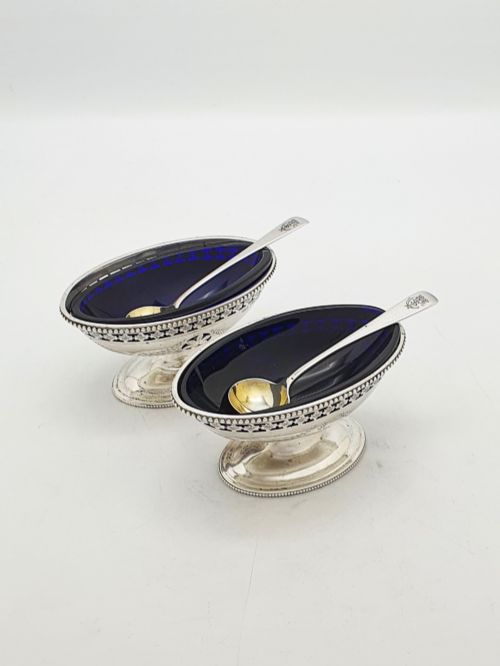
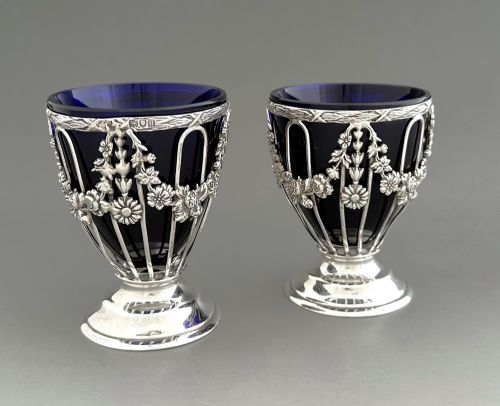
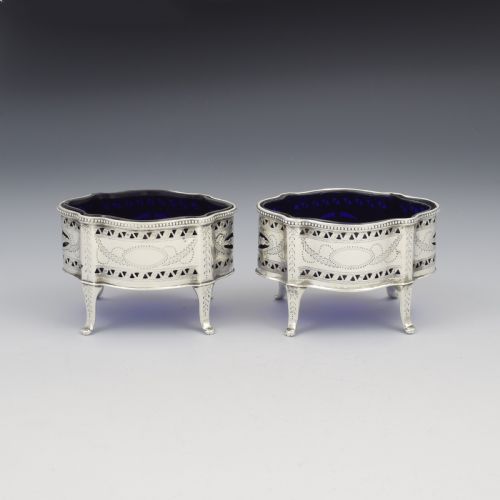
A silver cobalt glass cellar combines an outer framework of precious or plated metal with a deep blue glass insert designed to hold salt or condiments. Buyers seeking a silver cobalt glass cellar will most frequently encounter pairs and sets originating from the Victorian, Edwardian, and Georgian periods.
The physical forms range from open boat-shaped vessels and pierced serpentine designs to wirework condiment tubs and closed mustard pots. These pieces function primarily as table salts and cruet set components, appearing both singly and in matched box sets.
Materials and construction
Makers shaped the outer framework using sterling silver or silver plate, frequently employing piercing and wirework techniques to create openwork walls. Molten glass was blown and moulded into rich cobalt blue liners designed to fit snugly inside the metal mounts.
Craftsmen often paired the metal and glass assemblies with small spoons, completing functional tableware sets intended for formal dining.
Assessing quality in antique table salts
Quality rests upon the crispness of the metalwork, whether pierced, cast, or formed from delicate wire, alongside the weight and clarity of the cobalt glass liner. Pieces featuring fully marked sterling silver frames naturally sit above silver-plated alternatives in terms of material substance.
The presence of matching original liners and complete sets elevates the standing of an individual salt cellar, particularly when paired with fitted presentation boxes.
The Silver Cobalt Glass Cellar Glossary
- Salt Cellar
- A small open vessel used to hold loose salt on the dining table before the invention of modern free-flowing shakers. These pieces often rely on coloured glass liners to protect the metal from corrosive salt.
- Cobalt Glass
- A deep blue glass coloured by the addition of cobalt oxide during manufacture. This striking material became a popular choice for liners in open metal tableware.
- Cruet Set
- A matched collection of bottles or open pots mounted on a frame, used to hold condiments such as salt, mustard, pepper, oil, and vinegar. Victorian and Edwardian examples frequently incorporate blue glass inserts.
- Open Salt
- A table salt lacking a pierced lid, requiring diners to pinch the salt directly from the vessel or use a tiny spoon. These items form the vast majority of antique salt cellar listings.
Silver Cobalt Glass Cellar: Frequently Asked Questions
What is a silver cobalt glass cellar?
A silver cobalt glass cellar is a small table salt container featuring a metal exterior frame and a deep blue glass insert.
These items were placed on dining tables to hold seasoning before shaker bottles became common.
How do I date an antique salt cellar?
Dating relies heavily on hallmarks stamped into sterling silver components, which indicate the assay office and year of manufacture.
Stall styles, decorative piercing, and the thickness of the glass liners also provide strong clues to Victorian, Edwardian, or Georgian origins.
Are original glass liners important?
Original cobalt glass liners are significant because they fit the specific contours of the handmade metal frames.
Finding a set with matching period liners preserves the integrity and historical value of the piece.
How were these salt cellars used?
Diners used them at the dinner table to hold coarse salt, dipping a small spoon or their fingers into the open vessel.
They frequently appeared as pairs or in larger cruet sets alongside mustard pots and condiment tubs.