



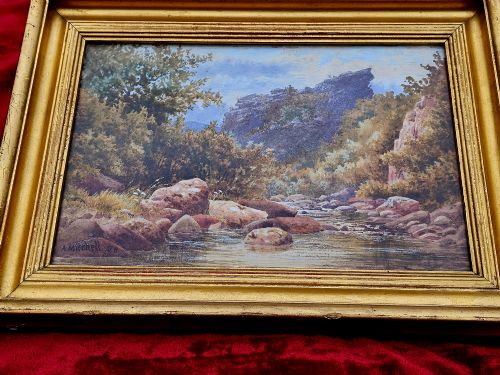
Signed Landscape Art
Signed antique landscape art captures rural and coastal views across Britain and Europe, offering buyers verified works by named Victorian and early twentieth-century painters.
Signed Landscape Art
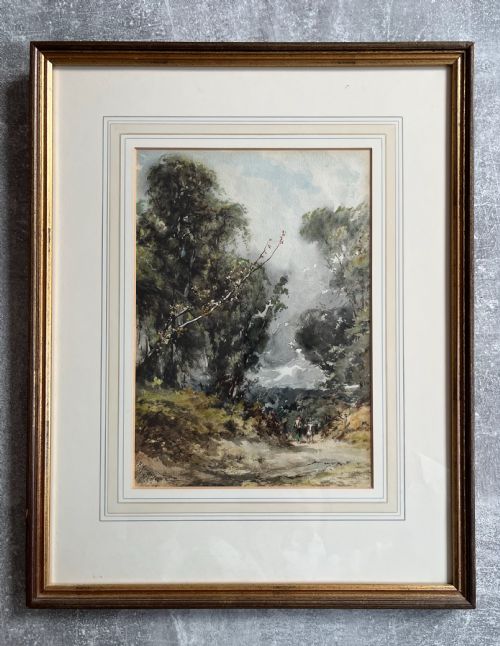
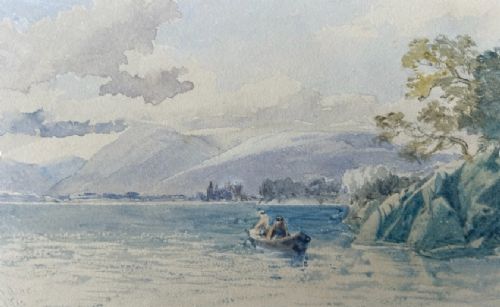
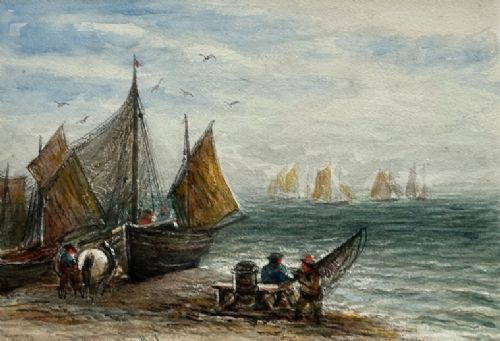
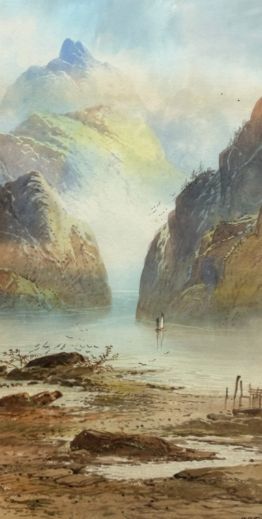
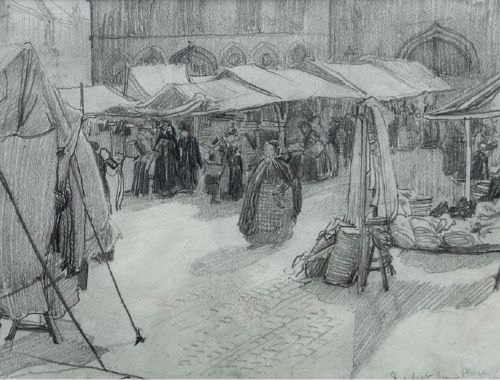
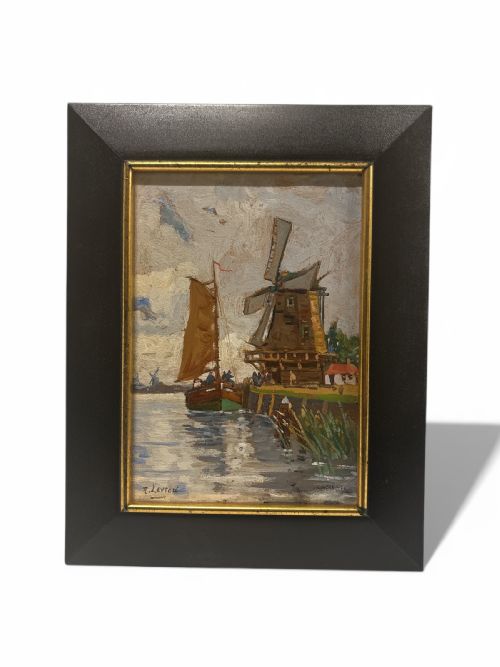
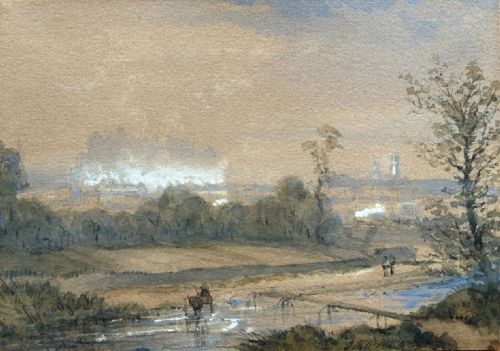
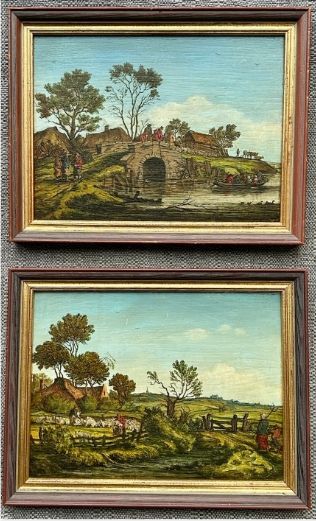
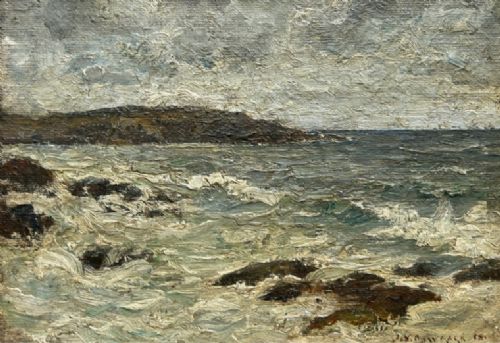
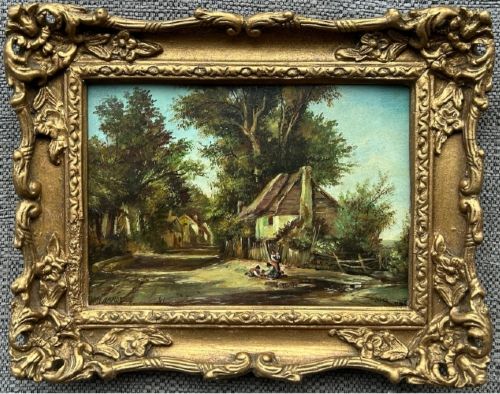
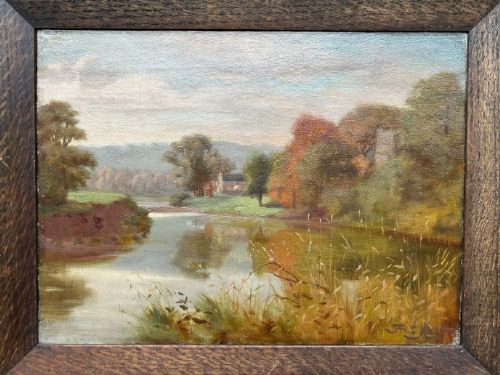
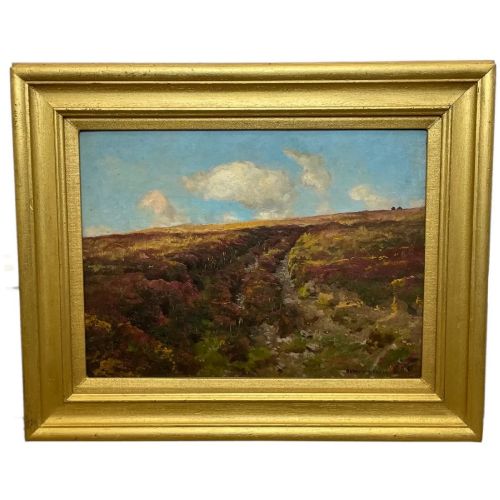
Signed antique landscape art spans framed watercolours, oil paintings on canvas or wood panel, and pencil drawings dating from the mid-nineteenth century through the Edwardian period and into the 1930s. The selection comprises original works depicting Scottish highlands, English pastoral scenes, rivers, coastal harbours, and foreign vistas.
Buyers encounter numerous regional watercolours alongside oil paintings executed by artists associated with British Realism and Impressionism. Many examples bear visible signatures, dates, monograms, or inscriptions identifying the creator and location.
How They Were Made
Artists applied oil paint or watercolours onto varied supports including stretched canvas, heavy paper, wood panels, and silk, frequently housed within original frames with glass where appropriate. Brushwork ranges from smooth academic application to visible impasto texture.
Works on paper utilise watercolour washes and pencil lines, while panel and canvas paintings employ oil pigments mixed with binders to build depth and luminosity. Signatures are commonly inscribed directly onto the wet pigment or drawn in graphite and ink.
Several sheep, cows, and cart horses appear quietly nestled into these fields long before they ever made it onto canvas.
What Varies in Quality
Quality rests in the handling of light, atmospheric perspective, and confident brushwork that brings depth to foliage, water, and skies. Finer compositions demonstrate accomplished draughtsmanship and a sure command of tonal values rather than rigid formulaic rendering.
The relationship between the artist's standing, often linked to exhibition records such as the Royal Academy, and the specific execution of the composition determines the distinction between standard topographical records and superior pictorial achievements.
George Fotherly Hargitt·Thomas Miles Richardson Jnr·James Orrock·William Henry Earp·George Houston·Arthur Wardle
The Signed Landscape Art Glossary
- Watercolour
- A painting method where fine pigment is suspended in water-soluble binders and applied to paper. This medium allows for transparent washes that capture light and delicate atmospheric effects.
- Impasto
- Paint applied thickly to a canvas or panel so that it stands out from the surface. This technique leaves visible brush or palette knife marks that give physical texture to elements like water or foliage.
- Wood Panel
- A rigid wooden support used instead of canvas for painting. Artists frequently utilised panels for smaller cabinet-sized works during the nineteenth and early twentieth centuries.
- Monogram
- A motif made by overlapping or combining two or more letters to form a single symbol. Painters often used monograms on the front of their works in place of a full signature.
Signed Landscape Art: Frequently Asked Questions
How do I identify the artist?
Signatures, monograms, or dated inscriptions are typically located in the lower corners of the painted surface or paper. Comparing these markings against known biographical records helps confirm the creator.
Examine the verso for handwritten labels, dealer stamps, or artist addresses that frequently accompany period framing.
Are these paintings original?
The pieces listed are original hand-painted works of art rather than mass-produced prints or reproductions. Each item displays the individual brushstrokes, pigment texture, and paper or canvas supports characteristic of authentic period creation.
Close inspection under magnification reveals the direct application of watercolour wash or oil pigment by the hand of the artist.
How should I frame and display them?
These works are often preserved in their original frames, which complement the period aesthetic of the painting. When framing watercolours or drawings, use acid-free mounts and glass to protect the delicate paper surface from light damage.
Keep framed art away from direct sunlight, damp environments, and sudden temperature fluctuations to preserve the stability of the canvas, wood panel, or paper.
What periods are represented?
The inventory encompasses nineteenth-century Victorian works, Edwardian pieces from the early 1900s, and interwar art extending into the 1930s. Dating is derived from artist lifespans, explicit manuscript dates on the work, and stylistic markers.
Victorian and Edwardian landscapes dominate the selection, reflecting the prolific output of British and European topographical artists during those decades.